










Analysis of the current development status, technological trends and applications of silver contact materials
Jun 04, 2026
Leave a message
Silver contacts are key functional materials in electrical equipment for connecting, transmitting, and disconnecting current, and are widely used in relays, contactors, circuit breakers, and various switching systems. With the development of new energy, power equipment, industrial automation, and automotive electronics industries, high-performance silver contact materials are becoming an important component in the field of electrical connections.
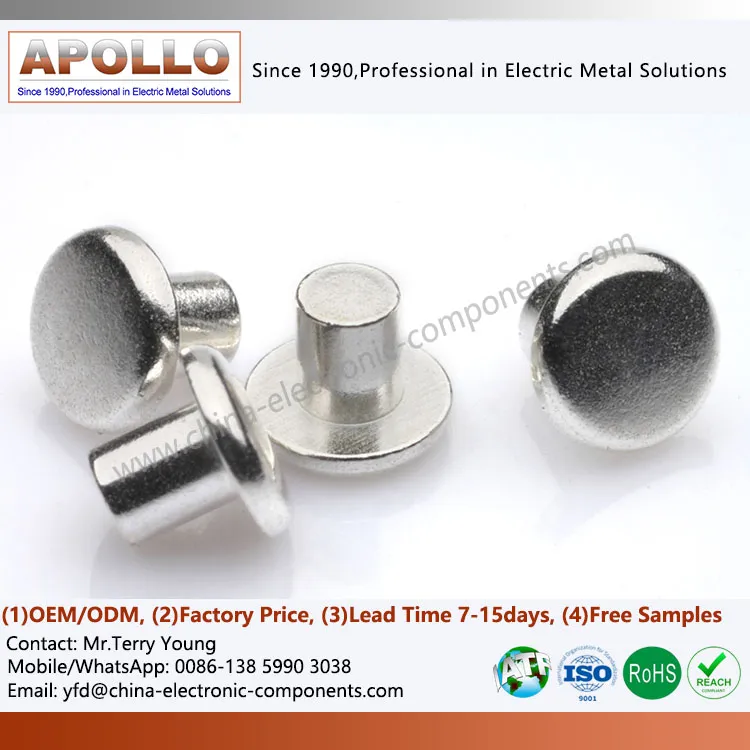
What are Silver Contact Materials?
Silver contacts are conductive contact elements made primarily of silver and silver-based alloys, possessing excellent electrical conductivity, thermal conductivity, and arc resistance. Based on their material composition, they can be classified into pure silver contacts, silver alloy contacts, and silver-based metal oxide contacts.
As typical silver electrical contacts, their main function is to complete the connection and disconnection of current during the operation of electrical equipment, while ensuring low contact resistance and a long service life.
Currently, silver contacts are widely used in:
Silver contacts for relays
Silver contacts for switches
Silver contacts for breakers
Silver contacts for MCCBs
Industrial control equipment
Automotive electrical systems
Smart grid equipment
New energy storage systems
As equipment develops towards higher voltage, higher current, and higher frequency switching, the performance requirements for electrical contacts for industrial applications are constantly increasing.
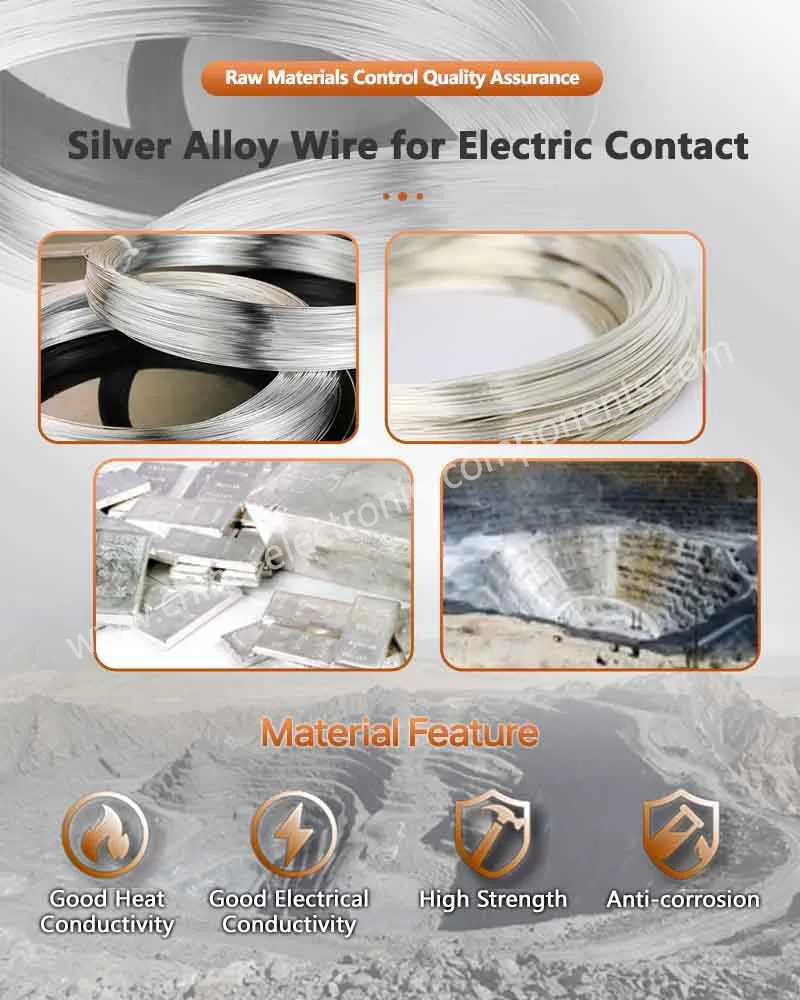
Main Classifications of Silver Contact Materials
Based on differences in material structure and composition, silver contacts on the market currently mainly include the following types:
Pure Silver Contacts
Pure Silver Solid Contacts have extremely high conductivity and thermal conductivity, low contact resistance, and are suitable for low-current, low-contact-pressure, and high-sensitivity electrical products.
Main Features:
Excellent conductivity
Stable contact resistance
Good processing performance
Relatively weak resistance to welding
Silver Nickel Contacts
Silver Nickel Contacts are one of the most widely used silver-based materials.
The addition of nickel enhances the material's hardness and wear resistance, making it widely used in:
Contaminators
Power relays
Industrial switches
In industrial control, Silver Nickel Electrical Contacts for Contactors have become a common solution.
Key advantages:
Strong resistance to arc erosion
Excellent wear resistance
Moderate cost
Good machinability
Silver Cadmium Oxide Contacts
Silver Cadmium Oxide Contacts were long used in high-current switching equipment.
Features include:
Excellent resistance to welding
Long electrical life
Strong resistance to arc erosion
However, due to increasingly stringent environmental regulations, its application is gradually shrinking.
Silver Tin Oxide Contacts
Silver Tin Oxide Contacts are a leading representative of current environmentally friendly electrical contact materials.
Compared to traditional materials, it possesses the following advantages:
Non-toxic and environmentally friendly
Strong resistance to welding
Long electrical life
Excellent resistance to arc erosion
Therefore, it is widely used in:
AC contactors
DC relays
New energy control systems
Electric vehicle high-voltage systems
Silver Zinc Oxide Solid Contact
Silver Zinc Oxide Solid Contact combines good conductivity and arc resistance, and is used in some special electrical products.
Silver Alloy Contact
Silver Alloys Contact achieves a balance between conductivity and mechanical properties by incorporating different reinforcing phases, meeting the needs of various operating conditions.
The Development History of Silver Contact Materials
Early electrical equipment mainly used pure silver as contact elements. Due to silver's excellent conductivity, it effectively reduced contact resistance and heat loss.
As the power of industrial equipment continued to increase, pure silver materials gradually revealed the following problems:
Low hardness
Easy to weld
Limited wear resistance
Severe arc erosion
To improve these defects, new materials such as silver-nickel, silver-cadmium oxide, silver-tin oxide, and silver-zinc oxide have been gradually developed.
In recent years, environmental regulations and the development of the new energy industry have further promoted the widespread adoption of cadmium-free silver contact materials, making silver-tin oxide systems a key development direction for the industry.
Development Trends in Silver Contact Manufacturing Technology
Modern electrical silver contact point manufacturing processes mainly include:
Powder metallurgy technology
Internal oxidation technology
Pre-oxidation alloy technology
Reaction synthesis technology
High-energy ball milling technology
Hot isostatic pressing technology
Among these, powder metallurgy technology has become the mainstream process route.
Powder Metallurgy Technology
Powder metallurgy processes achieve material forming through:
Powder preparation
Mixing
Pressure mixing
Pressure pressing
Sintering
Extrusion
Drawing
Advantages include:
Precise composition control
Uniform microstructure
High material utilization
Suitable for large-scale production
Currently, a large number of customized electrical contact products are manufactured using this process.
Pre-oxidation Alloy Technology
This technology combines the advantages of alloying and powder metallurgy methods.
Features include:
Uniform oxide particle distribution
Good conductivity
Long electrical life
High production efficiency
It has significant advantages for high-reliability switchgear.
Reactive Synthesis Technology
Reactive synthesis technology generates a reinforcing phase in situ within the material, creating a more stable bond between oxide particles and the silver matrix.
Key Advantages:
Lower contact resistance
Better microstructure uniformity
Excellent subsequent processing performance
Suitable for high-performance contact material production
This technology is considered one of the important development directions for future high-end silver contact manufacturing.
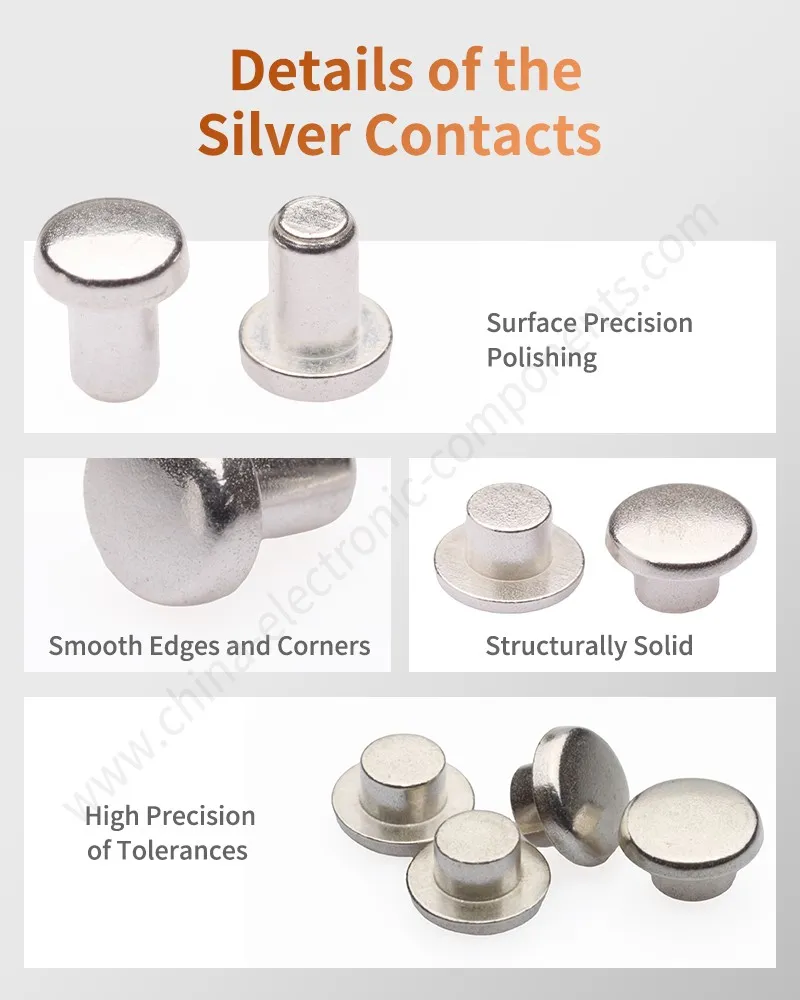
Current Major Challenges Facing the Industry
With the development of electrical equipment towards intelligence and high power density, the silver contact industry faces new technical requirements.
Major challenges include:
Increasingly stringent product reliability requirements
New energy vehicles, energy storage systems, and smart grid equipment require contact materials to possess:
Higher current-carrying capacity
Longer electrical life
Stronger resistance to welding
Continuously upgrading environmental regulations
Traditional cadmium-containing materials are gradually being restricted, leading to rapid growth in demand for environmentally friendly materials.
Increasing demand for domestic production of high-end products
High-performance contact materials still face high technical barriers in:
Industrial automation
High-voltage switchgear
New energy vehicles
Energy storage systems
Continuously upgrading manufacturing processes
Advanced equipment and precision manufacturing technology have become key factors in improving product consistency and reliability.
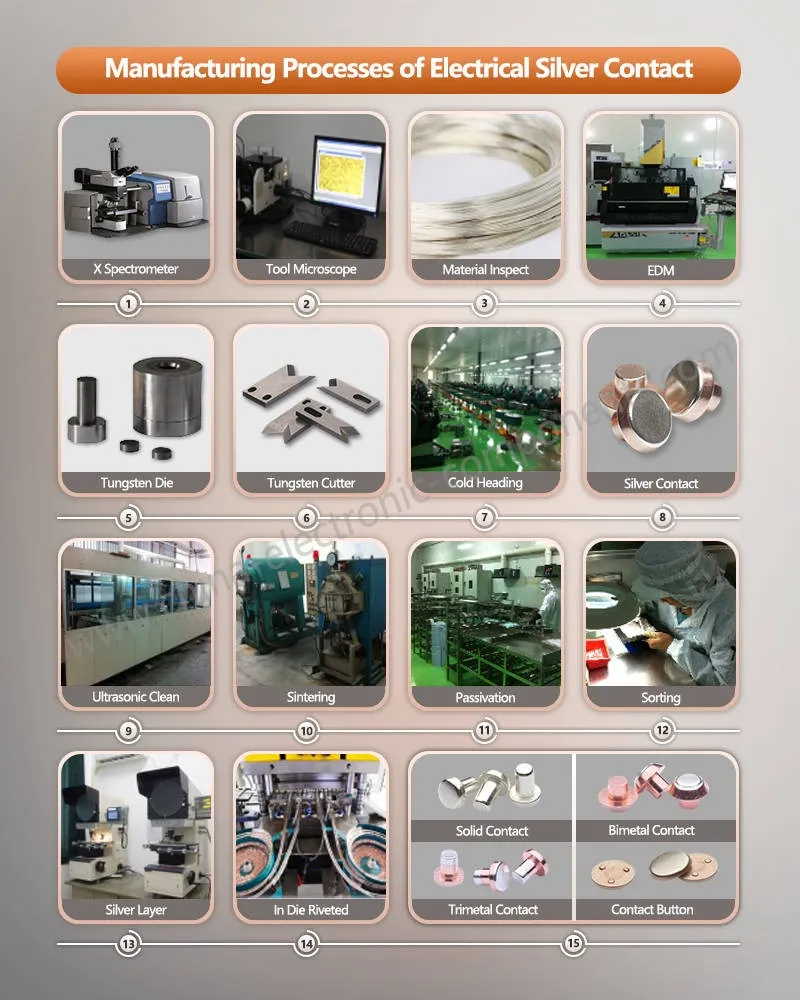
Development Directions of Silver Contacts
The future development of the silver contact industry will revolve around the following directions:
First, environmentally friendly development, with cadmium-free materials gradually replacing traditional cadmium-containing systems.
Second, high-performance development, improving resistance to arc erosion and service life through optimized material formulations and microstructure.
Third, intelligent manufacturing upgrades utilize automated equipment to improve product consistency and production efficiency.
Finally, customized development, developing specialized silver electrical contact manufacturer solutions for different application scenarios to meet the differentiated needs of new energy, power equipment, rail transportation, and industrial automation.
With the continued advancement of high-voltage DC systems, energy storage devices, and smart grid construction, AgNi electrical contacts for contactors, silver tin oxide contacts, and novel composite silver-based materials will play an increasingly important role in the future market, becoming crucial foundational materials for the reliable operation of modern electrical equipment.
contact us
Send Inquiry