










Analysis of Aluminum Alloy Battery Casing Sheet Metal Process: Key Points for Improving Structural Reliability and Mass Production Consistency
Jun 20, 2026
Leave a message
With the rapid development of new energy vehicles, energy storage systems, and industrial power equipment, aluminum alloy casings have become a crucial component of lithium battery systems. Whether it's an aluminum case for EV lithium battery packs, LFP battery aluminum cases, or aluminum cases for Powerwall lithium battery packs used in energy storage, their manufacturing quality directly impacts the safety, heat dissipation performance, and lifespan of the battery system.
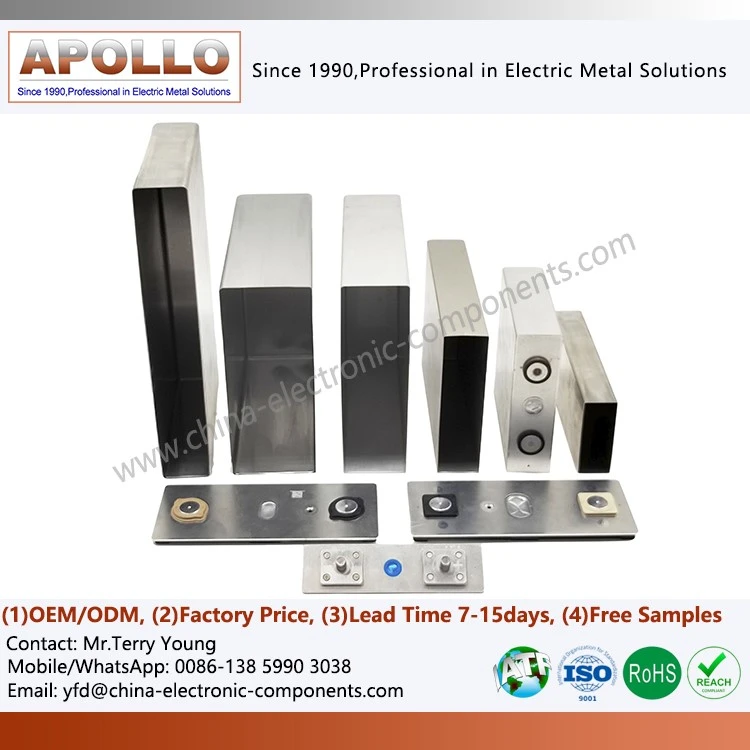
Aluminum alloy sheet metal processing refers to the manufacturing of battery casings that meet structural design requirements using aluminum alloy sheets through laser cutting, CNC stamping, bending, welding, assembly, and surface treatment. Compared to steel casings, aluminum alloys are lightweight, have excellent thermal conductivity, good corrosion resistance, and are flexible in processing, thus being widely used in power batteries, energy storage batteries, and industrial power systems.
Currently, common applications include aluminum cases for automotive batteries, aluminum cases for car LiFePO4 battery packs, and large energy storage battery enclosures. For battery systems, the casing not only provides mechanical protection but also needs to meet multiple functional requirements such as heat dissipation, dustproofing, waterproofing, and electromagnetic shielding.
Core Processes of Aluminum Alloy Sheet Metal Fabrication
Laser Cutting and CNC Stamping
Laser cutting is a crucial step in aluminum alloy shell manufacturing, enabling high-precision machining of complex contours, mounting holes, and ventilation structures. For precision battery shells, such as lithium prismatic battery aluminum shells, cutting accuracy directly impacts subsequent assembly quality.
During processing, a well-planned layout is essential. Insufficient material spacing can lead to heat-affected zones and sheet metal deformation, affecting dimensional accuracy and product flatness.
Bending Forming Process
Aluminum alloys exhibit significant springback characteristics, making bending a critical step in sheet metal manufacturing. For products such as the Aluminum Case for Electric Bike Battery Packs and the Aluminum Case for Li-ion Electric Bike Battery Packs, insufficient bending compensation can increase assembly gaps or reduce sealing performance.
Engineering design typically recommends:
Bending radius not less than sheet metal thickness;
Avoid bending lines completely parallel to the rolling direction;
Sufficiently consider springback compensation parameters;
Allow reasonable assembly tolerances.
Through proper design, the risk of cracking can be effectively reduced, and product consistency can be improved.
Welding and Connection Processes
For battery casings with high sealing requirements, laser welding and argon arc welding are common choices. For products requiring later maintenance or cell replacement, detachable structures such as riveting and bolting are more commonly used.
For example, in large-scale power battery projects such as the Aluminum Case for EV Electric Bus LiFePO4 Battery Pack, the connection process not only affects structural strength but also relates to reliability under long-term vibration environments.

Key Factors Affecting Aluminum Alloy Shell Quality
Material Selection
Different grades of aluminum alloys have different mechanical and processing properties.
The 5052 series materials have good formability and corrosion resistance, making them suitable for most battery casing manufacturing; the 6061 series combines high strength with good machinability.
For applications such as lithium prismatic cell aluminum shells and prismatic LFP cell aluminum shells, material consistency directly affects the subsequent anodizing effect and product lifespan.
Dimensional Accuracy Control
Battery casings typically require precise alignment with the battery cell, BMS system, and heat dissipation structure.
Taking the Aluminum Case for a 12V LiFePO4 Battery Pack, Primatic Type Cell Aluminum Shell as an example, excessive deviation in hole positions can lead to problems such as connector installation difficulties, insufficient sealing ring compression, or structural stress concentration.
Therefore, the following aspects need to be carefully controlled during production:
Hole dimensional tolerances;
Bending angle accuracy;
Flatness control;
Assembly dimensional consistency.
Surface Treatment Processes
Aluminum alloy casings commonly employ surface treatments such as sandblasting, brushing, powder coating, and anodizing.
For high-end electronic products such as aluminum shells for Samsung Li ion batteries, surface quality not only affects the appearance but also impacts corrosion resistance and long-term stability.
High-quality surface treatment should possess the following characteristics:
Uniform color;
No significant color difference;
No runs or pinholes;
Good coating adhesion;
Stable salt spray resistance.
Common Technical Problem Analysis
Why are cracks prone to occur when bending aluminum alloys?
Bending cracks are mainly caused by the following reasons:
Insufficient bending radius;
Excessive material hardness;
Bending direction coinciding with rolling direction;
Internal defects in the material.
For the manufacturing of Aluminum shells for lithium iron phosphate battery cells, the appropriate selection of material state and bending process parameters is particularly important.
How to balance heat dissipation and protection performance?
Lithium battery systems typically need to meet both heat dissipation and protection requirements simultaneously.
For example, in the Aluminum Case for Electric Motor Car Lifepo4 Battery Pack, good thermal management and dust and water resistance can be achieved through heat dissipation fin design, optimized thermal conductivity structure, and sealing strips.
Why do different batches of products exhibit color differences?
Anodizing color differences are usually affected by the following factors:
Differences in aluminum grade;
Differences in surface roughness;
Variations in anodizing bath concentration;
Inconsistent current density control;
Differences in anodizing time.
Therefore, for products with high appearance requirements, such as Samsung prismatic cell Aluminum shells or cell lithium battery Aluminum shells, a strict process control system should be established.
Development Trends of Aluminum Alloy Battery Shells
With the continuous development of the new energy industry, aluminum alloy shells are evolving towards lighter weight, higher strength, and greater integration.
Currently, the market is seeing continuous structural innovation and process upgrades in products such as Aluminum Cases for soft-pack LiFePO4 Rechargeable Batteries, Aluminum Cases for Motor Replacement Lead Acid Battery Packs, and Aluminum Cases for Primary Lithium Iron Batteries (LiFeS2).
Meanwhile, for different types of battery applications, including lithium cell aluminum shells, lithium prismatic cell aluminum shells, lithium cell battery aluminum shells, and lithium iron cell aluminum shells, manufacturers are continuously optimizing processing precision, surface treatment processes, and automated production capabilities to meet higher safety and reliability requirements.

Conclusion
Aluminum alloy battery shells are not merely simple structural components; they are crucial elements connecting mechanical strength, thermal management, safety protection, and product appearance. From material selection to sheet metal processing, from dimensional control to surface treatment, every process step affects the final product performance.
For new energy vehicles, energy storage systems, and industrial lithium battery applications, choosing a reasonable aluminum alloy structure design and amateur manufacturing process can effectively improve product reliability, reduce manufacturing risks, and lay a solid foundation for subsequent large-scale production.
contact us

Send Inquiry