




Accelerated Delivery of Complete AI Server Racks: High-Density Computing Drives Coordinated Upgrades for Data Center Racks and Liquid Cooling Systems
Nov 29, 2026
Leave a message
As the demand for training and inference of large-scale artificial intelligence (AI) models continues to grow, and the computing power of GPU clusters steadily increases, data center infrastructure is undergoing a new round of technological transformation. The deployment model for servers is shifting from traditional, individual-unit delivery toward rack-scale integration, where compute nodes, network interconnects, power supply systems, rack structures, and liquid-cooling solutions are incorporated into a unified design and testing process. Data center construction is also transitioning from an engineering model centered on on-site installation to one characterized by standardization, modularity, and pre-integration at the factory.
This shift not only impacts server manufacturing and data center construction workflows but also imposes more rigorous requirements on rack structural design, power distribution, thermal management, cabling, and long-term maintenance. Particularly in high-power AI computing scenarios, the rack is no longer merely a metal enclosure for housing servers; it has evolved into a critical piece of infrastructure that integrates computing, power supply, networking, and thermal management systems.

Rising AI Compute Density and the Shift Toward Rack-Scale Server Delivery
In traditional data centers, servers are typically procured and deployed as individual units or racks. Once the equipment arrives at the facility, on-site engineering teams handle rack installation, power connections, network cabling, and the commissioning of cooling systems. While this approach offers flexibility for conventional computing workloads, it becomes increasingly complex when dealing with high-density GPU clusters, as it necessitates extensive on-site construction and intricate system integration and debugging.
As the power density of AI servers rises, the requirements for computing, power, and cooling per unit continue to grow. Concentrating multiple high-power servers within a single rack significantly alters power loads, heat distribution, cabling requirements, and space utilization. Relying solely on traditional racks and on-site assembly is no longer sufficient to meet the stringent demands of large-scale computing projects regarding deployment timelines, system compatibility, and operational stability.
Consequently, the rack-scale delivery model has gained momentum. In this approach, compute nodes, switching equipment, rack-level power distribution, network cabling, and liquid-cooling components are integrated during the server manufacturing phase, with comprehensive system testing completed before the equipment leaves the factory. Upon arrival at the data center, the entire assembly requires only the connection of power, network, and cooling media to proceed directly to the final deployment and commissioning stage.
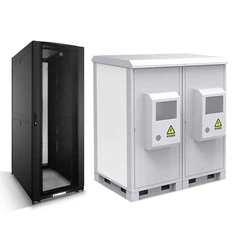
This trend is also driving the evolution of server racks toward higher levels of integration. Whether it is a standardized network server rack for data centers or a network rack cabinet designed for the centralized installation of networking, switching, and computing equipment, such enclosures require systematic design in terms of load-bearing capacity, internal space, mounting structure, and cable management. For large-scale computing clusters, high-capacity enclosures-such as 42U server or data cabinets-remain highly valuable; however, their specific dimensions must be determined based on server size, equipment weight, cooling requirements, and necessary maintenance space.
Liquid Cooling: A Key Thermal Management Solution for High-Power Cabinets
As the computational loads of AI servers continue to rise, components such as GPUs, CPUs, and other high-performance chips generate significant heat during operation. Traditional air cooling relies on airflow to dissipate heat; however, as power density within cabinets increases, managing airflow distribution, cooling capacity allocation, and localized "hot spots" becomes increasingly challenging.
Liquid cooling technology removes heat from the cabinet by facilitating heat exchange between a coolant and the heat-generating components or heat-exchange equipment. Depending on the system architecture, liquid cooling can be implemented through various technical approaches, such as cold-plate cooling, immersion cooling, or liquid-to-liquid/liquid-to-air heat exchange. The optimal solution is selected based on the server platform, the specific cooling medium, data center infrastructure, and operational/maintenance requirements.
In "rack-scale" (or full-cabinet) delivery models, the integration between the liquid cooling system and the cabinet structure is critical. The placement and connection methods for coolant distribution units (CDUs), piping interfaces, quick-connect couplings, cooling lines, and heat-exchange equipment must be defined during the design phase. The layout of the piping not only affects the efficiency of coolant distribution but also consumes internal cabinet space, thereby impacting equipment installation, maintenance, and cable routing.
For equipment utilizing air cooling or hybrid thermal management, server rack fans remain a standard component of the cabinet's thermal control system. The number of fans, their orientation, airflow volume, and static pressure must be carefully matched to the equipment's heat output, intake/exhaust paths, and the overall cabinet structure. For high-power liquid-cooled equipment, the primary focus shifts to the flow rate, pressure, and temperature within the liquid cooling loop, as well as the reliability of the fluid interfaces. Some projects utilize integrated designs, such as enclosed server racks with cooling, which combine an enclosed cabinet structure with a thermal management system to improve the operating environment for equipment and enhance control over thermal management.
Higher Requirements for Cabinet Structure and Electrical System Design
Delivering at the "full-rack" level implies not only an increase in the number of servers but also that the cabinets must withstand more complex mechanical, electrical, and thermal loads. As equipment weight and power consumption rise, the cabinet frame, vertical posts, crossbeams, mounting rails, base, and load-bearing connections must all be designed accordingly.
In terms of structural design, cabinets must account for static load-bearing capacity, vibrations and shocks during transport, the center of gravity after equipment installation, and structural stability during long-term operation. For large-scale data center projects, cabinets must also accommodate the mounting dimensions and maintenance requirements of various server platforms, ensuring that equipment can be easily installed, removed, and replaced.
The application environment also influences the cabinet's structural design. While indoor data centers typically use standard rack-mount structures, deployments in industrial parks, telecommunication base stations, edge computing nodes, or outdoor settings may require outdoor server cabinets, outdoor data cabinets, or outdoor server racks. Beyond meeting equipment installation and load-bearing requirements, these units must also address factors such as dust and water resistance, corrosion protection, tolerance for ambient temperature fluctuations, and specific ingress protection (IP) ratings.
For small-scale network and communication equipment deployments, there is greater diversity in installation space and usage methods. Floor-standing data cabinets are suitable for floor-based installation and centralized equipment management, while in-wall network cabinets are designed for space-constrained environments, allowing for recessed or wall-mounted deployment. Specifications such as 12U network racks, 12U network cabinets, and 12U wall-mounted data cabinets are frequently used for small-to-medium network nodes, surveillance systems, and communication equipment. For smaller-scale environments, cabinets of varying capacities-such as 6U or 18U data cabinets-can be selected based on the quantity of equipment, cabling requirements, and the need for future expansion.
Furthermore, some projects incorporate server racks on wheels, based on the data center layout and the need to relocate equipment, allowing for flexible movement during installation, maintenance, or laboratory testing. However, when incorporating casters, one must carefully consider the total weight of the equipment, stability during movement, and requirements for locking the unit in place; ease of mobility should not be the sole criterion for selection.
Modular Delivery Shifts Cabinet Manufacturing and Quality Verification Upstream
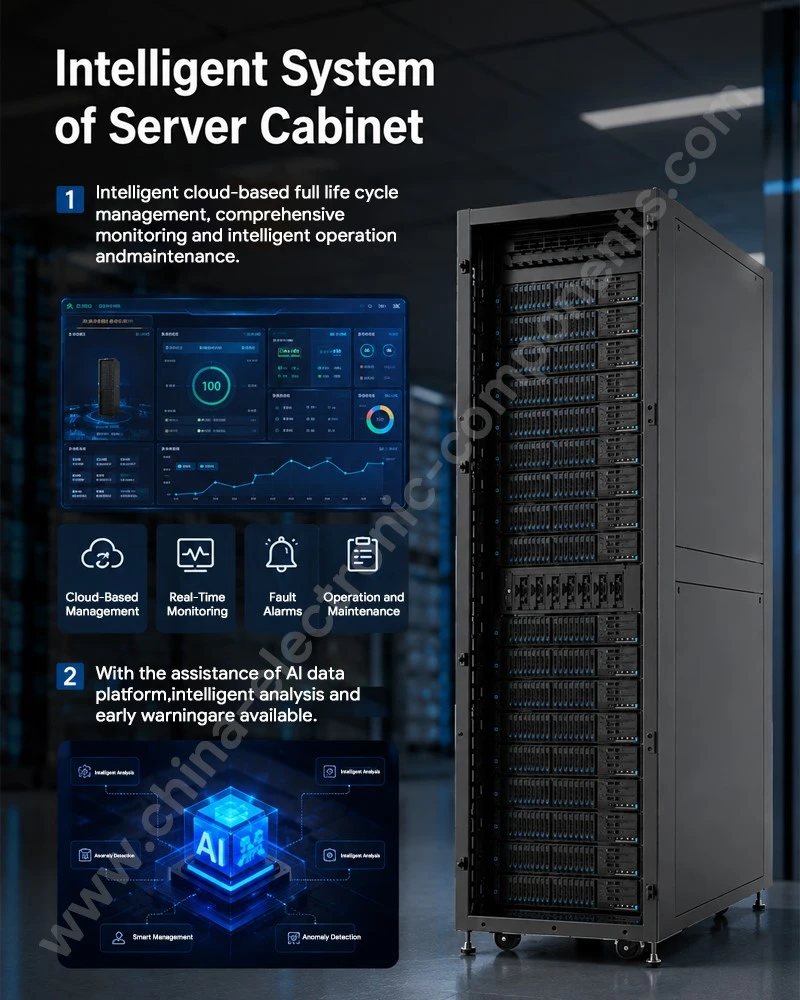
The "full-cabinet delivery" model places new demands on the production organization of cabinet manufacturers. Traditional cabinet manufacturing primarily focuses on sheet metal processing, welding, surface treatment, structural assembly, and final factory inspection. In high-density AI server projects, however, the cabinet must also undergo integrated verification alongside servers, power distribution units (PDUs), cabling systems, and liquid-cooling equipment.
Consequently, during the cabinet design phase, it is essential to define key parameters in advance, including equipment mounting dimensions, internal layout, cable entry/exit paths, power distribution interface locations, cooling pipeline routing, and maintenance access. For non-standard projects, the structural design must be customized based on the client's specific equipment list and system architecture to prevent issues such as spatial conflicts, mismatched interfaces, or maintenance difficulties once the equipment arrives on-site.
During the manufacturing process, operations such as sheet metal stamping, laser cutting, bending, welding, and surface treatment collectively determine the cabinet's dimensional accuracy and structural reliability. Consistency across column mounting holes, equipment rails, connecting plates, and load-bearing structures is critical to ensuring the successful, large-scale installation of equipment. For high-power cabinets, electrical connection zones require special attention regarding grounding continuity, the mechanical strength of fasteners, and insulation/protection.
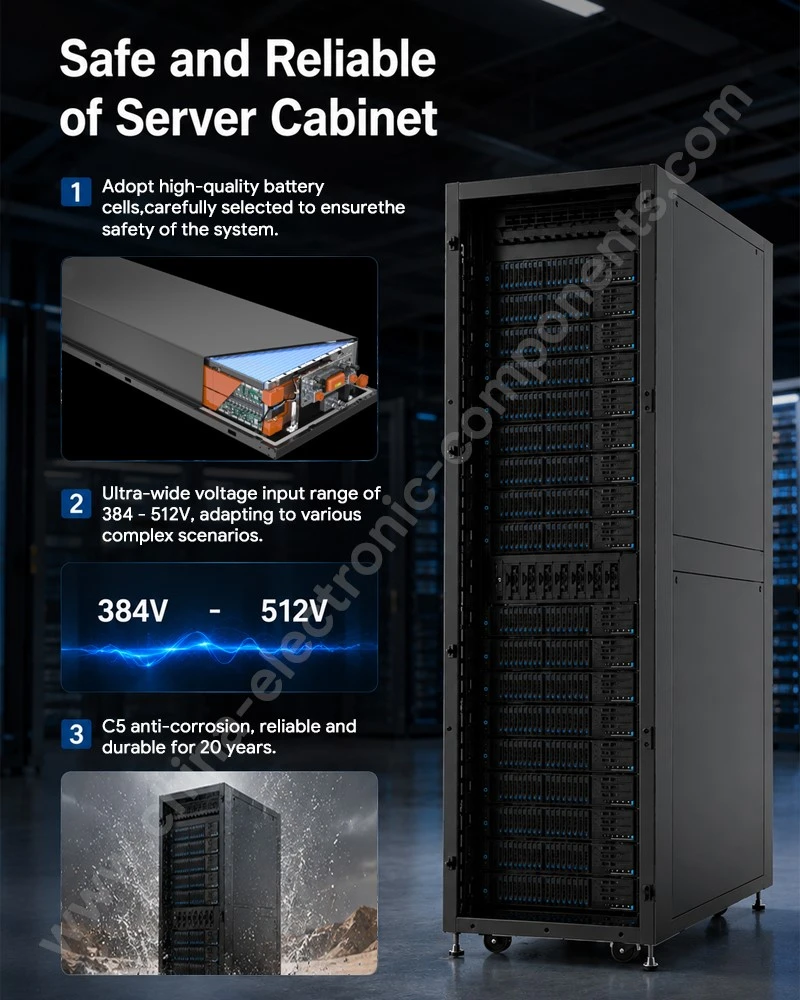
Surface treatment is also vital for ensuring the long-term operational integrity of the cabinet. Depending on the intended operating environment, options such as powder coating, electroplating, or other appropriate anti-corrosion treatments may be applied. For outdoor cabinets, additional environmental factors-such as high humidity and heat, salt spray, UV exposure, and temperature fluctuations-must be accounted for to ensure that the enclosure and structural components remain durable over the long term.
During the factory pre-integration phase, in addition to verifying cabinet dimensions and assembly quality, it is necessary to validate the fit of installed equipment, cable connections, power interfaces, and cooling systems. For liquid-cooled projects, this also includes pipeline cleaning, pressure testing, leak detection, and verification of material compatibility. By shifting a portion of the testing process upstream to the manufacturing facility, the complexity of on-site commissioning can be reduced, thereby lowering the risk of rework.
The Evolution of Data Center Racks Toward Scenario-Specific and Customized Solutions
As AI computing, cloud services, edge computing, and enterprise network infrastructure continue to expand, the application scenarios for rack products have become increasingly specialized. Large-scale intelligent computing centers prioritize high-density equipment capacity, rack-level power distribution, liquid cooling integration, and the ability to support large-scale, batch deployments. In contrast, small-to-medium-sized enterprise server rooms place greater emphasis on equipment management, space utilization, and ease of maintenance.
The selection of racks must be based on the specific equipment configuration. Large server clusters typically require racks with higher capacity and greater load-bearing strength, while network communication nodes may utilize wall-mounted or smaller-scale enclosures. In some projects, factors such as color, aesthetics, and overall facility design may influence the choice-for instance, opting for white server cabinets-but such visual considerations should never replace technical evaluations of structural integrity, thermal management, and protective performance.
For procurement professionals, the price of a server rack should not be the sole criterion for selection. Factors such as material thickness, structural design, load-bearing capacity, surface treatment, thermal management features, power distribution compatibility, mounting accessories, and the level of customization all influence both the total procurement cost and long-term operational performance. This is especially true for "rack-level" delivery projects, where the rack must function in tandem with the servers and thermal management systems; therefore, comparing only the external dimensions or the purchase price of a rack is insufficient to accurately assess the suitability of the overall solution.
Looking ahead, as AI server platforms continue to evolve, data center racks will increasingly trend toward higher load-bearing capacities, modularity, enhanced maintainability, and compatibility with liquid cooling systems. Greater collaboration among rack manufacturers, server vendors, liquid cooling suppliers, and system integrators will be essential to improving the efficiency of data center construction.
Customization and Manufacturing Requirements for Engineering Procurement
For procurement projects involving server racks, network racks, and related data center structural components, it is advisable to provide comprehensive specifications during the inquiry phase. This includes the physical dimensions of the equipment, required rack capacity, mounting methods, total equipment weight, power distribution layout, cooling strategy, and the operational environment. For projects involving liquid-cooled rack systems, it is also necessary to specify the positioning of coolant pipe interfaces, reserved space for piping, requirements for Coolant Distribution Unit (CDU) installation, and access paths for future maintenance.
Providing these details allows manufacturers to properly evaluate the feasibility of the structural design and the manufacturing process. For projects involving outdoor server cabinets, data center server racks, network/telecommunications enclosures, or custom-designed cabinets, the manufacturing process requires careful consideration of factors such as sheet metal materials, plate thickness, precision in stamping and bending, welding structure, surface finishing, and assembly tolerances. For bulk procurement, it is also essential to establish requirements for sample validation, first-article inspection, dimensional verification, load-bearing testing, and packaging/transportation to ensure consistency across different production batches.
If you are developing AI server cabinets, liquid-cooled server racks, network enclosures, or outdoor telecommunications cabinets, you may provide the manufacturer with product drawings, technical specifications, equipment configurations, and projected procurement quantities. Through an initial engineering review, the cabinet structure, manufacturing processes, mounting interfaces, and surface treatment solutions can be finalized-establishing a reliable foundation for prototype development and subsequent volume production.
contact us

Send Inquiry