




An Analysis of Automotive Automatic Start-Stop Systems and Specialized Battery Technology: Performance Differences and Application Requirements for EFB and AGM Batteries
Nov 26, 2026
Leave a message
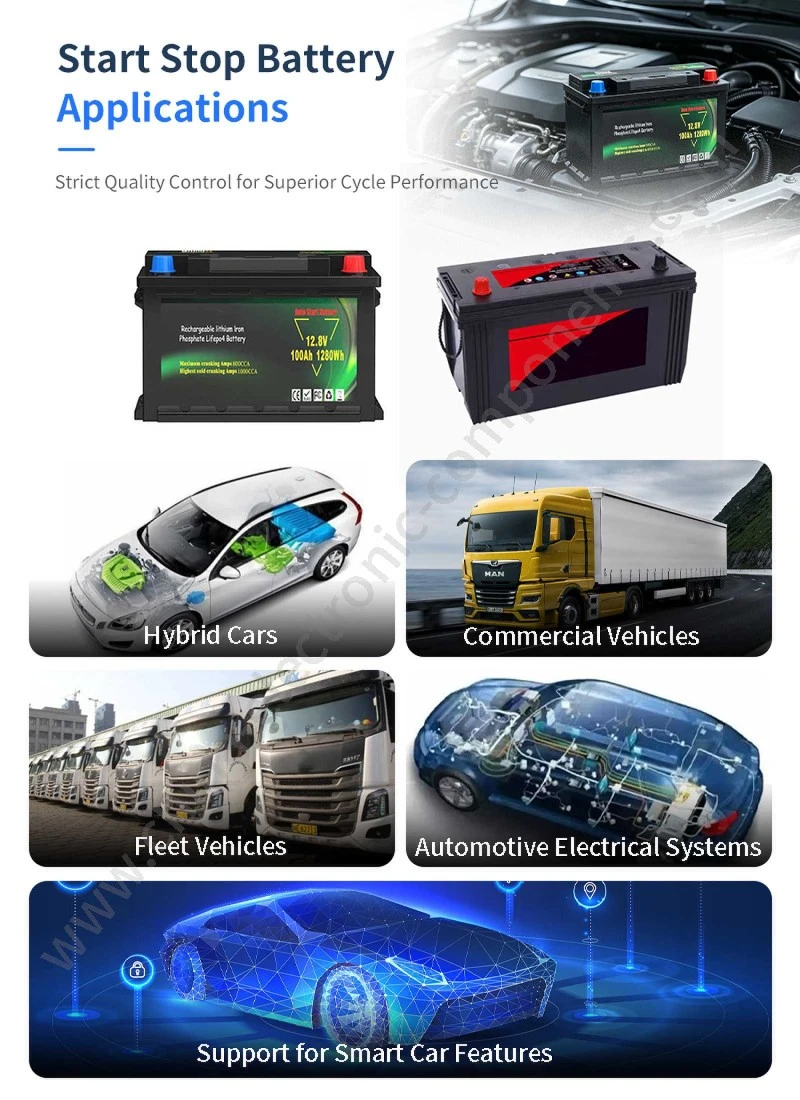
As automotive energy-saving and emission-reduction technologies continue to evolve, automatic start-stop systems have become a common feature in the powertrains of passenger vehicles. By monitoring the vehicle's operating status, these systems automatically shut off the engine during brief stops and restart it when the driver is ready to move, thereby reducing fuel consumption and exhaust emissions during idling. At the same time, frequent restarts place higher demands on a vehicle battery's cycle life, instantaneous discharge performance, and ability to recover its charge.
The automatic start-stop function itself does not necessarily shorten battery lifespan; rather, longevity depends on whether the battery type is correctly matched to the vehicle's electrical system, as well as on proper daily usage and maintenance. While standard starter batteries are designed to meet the requirements of conventional engine ignition, vehicles equipped with automatic start-stop systems typically require Enhanced Flooded Batteries (EFB) or Absorbent Glass Mat (AGM) batteries to accommodate frequent restarts, higher electrical loads, and complex operating conditions.
Automatic Start-Stop Systems Impose Higher Demands on Vehicle Batteries
Traditional automotive starter batteries are designed to deliver a high surge of current to crank the engine, after which the alternator replenishes the battery's charge. During normal driving, the battery's charge-discharge state remains relatively stable. In contrast, vehicles with automatic start-stop systems-frequently encountering city traffic, stoplights, or congestion-may experience repeated engine shutdowns and restarts, requiring the battery to maintain a stable power supply through more frequent operational cycles.
Consequently, the core design requirements for batteries used in start-stop systems extend beyond mere engine-cranking capability; they also encompass cycle durability, state-of-charge management, dynamic charge acceptance, and voltage stability under high electrical loads. Even when the engine is shut off, the battery must continue to power various components, such as lighting, in-car entertainment systems, control modules, and other electronic devices.
Compared to standard starter batteries, those designed for start-stop applications typically feature reinforced plate structures, optimized active material formulations, and internal designs better suited for cyclic operation, which helps mitigate performance degradation caused by frequent charging and discharging. For vehicle manufacturers, battery performance is critical-not only for the reliability of engine restarts but also for the effective operation of the start-stop system's control strategy and the vehicle's overall power management.
Differences in Structure and Performance: EFB vs. Standard Starter Batteries
EFB (Enhanced Flooded Battery) is a type of battery commonly used in vehicles equipped with automatic start-stop systems. Based on the design of traditional flooded lead-acid batteries, EFB technology incorporates improvements to plate structure, active material composition, and separator performance, resulting in enhanced cycle durability and superior charge acceptance.
In practical applications, EFB "carbon" start-stop batteries are specifically engineered to perform well under conditions involving frequent engine restarts and operation in a partial state of charge (PSOC). Compared to standard starter batteries, EFB batteries are better suited for vehicles that require repeated engine restarts and are capable of handling the cyclical electrical loads generated by the operation of start-stop systems.
If a standard starter battery is used for an extended period in a vehicle with an automatic start-stop system, the cyclic load may exceed its design specifications, leading to issues such as capacity degradation and reduced starting performance. Therefore, when replacing a vehicle's battery, one should not rely solely on physical dimensions and nominal capacity. It is essential to verify the original battery type, capacity, cold-cranking amps (CCA), and the specific requirements of the vehicle's power management system.
Regarding product specifications, an EFB 12V 80Ah starter battery is defined primarily by its 12V system voltage and 80Ah nominal capacity. Selecting the correct battery also requires considering the cold-cranking amps, physical dimensions, terminal configuration, available installation space, and specific vehicle compatibility requirements; capacity alone is not a sufficient criterion for determining suitability for a particular vehicle model.
Technical Characteristics and Application Differences: EFB vs. AGM Batteries
Currently, vehicles with automatic start-stop systems primarily utilize either EFB or AGM (Absorbent Glass Mat) batteries. Both types feature structural optimizations designed to withstand higher cyclic loads, though they differ in their electrolyte management, internal construction, and ideal operating conditions.
EFB batteries utilize an enhanced flooded design, with improvements to the plates and separators that boost their cycle life. This manufacturing technology is relatively mature and cost-effective, making it a common choice for passenger vehicles equipped with basic automatic start-stop systems.
EFB start-stop automotive batteries are designed to meet the demands of frequent engine restarts, daily electrical loads, and the standard charging management protocols of such vehicles. AGM (Absorbent Glass Mat) batteries utilize a structure where the electrolyte is absorbed and held within glass fiber separators. This design offers superior sealing and enhanced cycle performance. AGM batteries are typically suited for vehicles equipped with numerous electrical components, those requiring high levels of energy recovery, or those featuring complex power management systems.
Products such as the "AGM Start Stop Plus" battery are specifically designed for applications that demand greater cycle durability and a stable power supply.
In terms of structure and performance, EFB (Enhanced Flooded Battery) and AGM batteries are not freely interchangeable. If a vehicle is factory-equipped with an AGM battery, it should continue to use an AGM product that meets the manufacturer's specifications; similarly, vehicles originally equipped with an EFB battery should use a replacement that adheres to the manufacturer's requirements. Replacing one battery type with another without proper verification can lead to a mismatch with the vehicle's charging strategy, potentially shortening the battery's lifespan and impairing the operation of the start-stop system.
Battery lifespan is closely linked to daily usage habits. The actual service life of a start-stop battery is influenced by various factors, including temperature, driving distance, state of charge (SoC), electrical load, and maintenance practices. Frequent short-distance driving is a common cause of insufficient battery charge. Each engine start consumes a certain amount of power; if the engine does not run for long enough, the alternator may be unable to replenish the energy used during the starting process. Keeping a lead-acid battery in a low state of charge for extended periods accelerates the sulfation process, leading to a gradual decline in both capacity and starting capability.
Using in-car electrical devices while the engine is off also places an additional burden on the battery. When the engine is not running, components such as interior/exterior lighting, the audio system, and other electronic devices may continue to draw power from the battery. If the battery is continuously discharged without being recharged, it may reach a deep state of discharge, which can compromise its ability to start the vehicle in the future.
Furthermore, long-term vehicle storage also requires monitoring the battery's charge level. Even when a vehicle is parked, systems such as anti-theft alarms and control modules continue to draw a small amount of "parasitic" (static) current. For vehicles left parked for extended periods, it is advisable to check the battery status periodically-following the manufacturer's recommendations-and, if necessary, use a compatible smart charger to maintain the battery.
For maintenance-free start-stop batteries, such as the "Stop-Start EFB MF" (Maintenance-Free) type, "maintenance-free" does not mean they require no inspection or monitoring. Regularly checking terminal connections, the condition of the battery casing, charging voltage, and overall battery health remains a crucial measure for ensuring the reliable operation of a vehicle's power supply system.

Key Parameters for Selecting and Replacing Start-Stop Batteries
When replacing a battery for an automatic start-stop system, the primary focus should be on the vehicle's original factory specifications and the battery's technical type, rather than simply comparing price or capacity. Selection typically requires considering parameters such as rated voltage, nominal capacity, cold-cranking amps (CCA), physical dimensions, terminal positioning, mounting method, and operating temperature range.
For vehicles equipped with EFB (Enhanced Flooded Battery) technology, one should select an "EFB Start-Stop Plus" battery that meets the original electrical system requirements, ensuring its cycle life and charge acceptance capabilities align with the vehicle's operational needs. For vehicles using AGM (Absorbent Glass Mat) technology, it is essential to verify that the replacement battery matches the original unit in terms of construction, capacity, and electrical specifications.
The application of AGM batteries in start-stop vehicles highlights the suitability of the AGM design for such systems. However, actual compatibility must be determined based on the specific vehicle's battery configuration and charging management strategy; one should not rely solely on the product name when making a selection.
When replacing a battery, it is also important to check whether the vehicle is equipped with a Battery Management System (BMS) or a battery sensor. Some vehicles require the new battery to be registered, capacity parameters updated, or the system recalibrated using diagnostic equipment. This allows the vehicle to adjust its charging strategy according to the state of the new battery. Neglecting these steps can impair battery charging management and the proper functioning of the start-stop system.
Evolution of Starting Batteries for New Energy and Various Vehicle Types
As the number of electronic devices in vehicles increases and electrical architectures continue to evolve, the range of available starting batteries has expanded. Beyond traditional lead-acid batteries, some vehicle models and specialized applications utilize auxiliary power sources or low-voltage batteries based on different chemical compositions to meet specific requirements regarding weight, power density, and power management.
Lithium-ion starting batteries represent the application of lithium-ion technology in the realm of vehicle starting power. Compared to traditional lead-acid batteries, lithium-ion batteries offer higher energy density and lower weight; however, their implementation requires an integrated Battery Management System (BMS), thermal safety design, and a compatible charging control strategy. Different chemical systems vary in terms of low-temperature performance, instantaneous discharge capability, cycle life, and safety protection; therefore, selecting a battery cannot be based solely on the replacement logic used for traditional lead-acid batteries.
In the realm of conventional start-stop batteries-such as the EFB Powerline Start-Stop and EFB Start-Stop Plus series-the focus is primarily on enhancing the cycle performance, starting power, and vehicle compatibility of lead-acid batteries. As the electrical load in modern vehicles continues to rise, manufacturers must further optimize plate materials, separator structures, interconnection processes, and production consistency to meet the power system requirements of various vehicle models.
Manufacturing and Quality Control for Automotive Start-Stop Batteries
The performance of a start-stop battery depends not only on its underlying technology but also on material selection, manufacturing processes, and quality inspection. For lead-acid batteries, factors such as the alloy composition of the plates, the structure of the active material, the properties of the separators, and electrolyte management all influence the battery's starting power and cycle durability.
During production, plate manufacturing requires precise control over material ratios, the uniformity of the active material paste, and curing conditions to ensure a stable electrochemical structure for the electrodes. The assembly phase focuses on critical steps-such as connecting the plate groups, welding terminals, sealing the battery casing, and injecting the electrolyte-to minimize internal resistance and the risk of seal failure.
Testing of finished products typically includes capacity, cold-cranking performance, charge acceptance, cycle durability, and seal integrity. For batteries designed specifically for automatic start-stop systems, performance must also be evaluated based on the operating conditions of the target vehicle, including frequent engine restarts, operation at partial states of charge (PSOC), and varying ambient temperatures.
Whether dealing with EFB or AGM start-stop batteries, product quality is ensured through consistent raw material control, in-process inspections, and rigorous performance verification of the final product. Aligning battery design with the specific requirements of a vehicle's power system is essential to enhancing reliability in real-world operating conditions.
Conclusion: Proper Battery Selection Is Key to the Reliable Operation of Start-Stop Systems
Automatic start-stop systems are not the direct cause of premature battery failure. The primary factors that actually affect battery lifespan include mismatched battery types, chronic undercharging, excessive discharging, and unsuitable operating environments. EFB and AGM batteries are suited for different vehicle power architectures; the specific choice should be based on the technical requirements set by the vehicle manufacturer.
For automotive OEMs, component procurement teams, and battery system integrators, selecting a start-stop battery involves more than just considering rated voltage, capacity, and cold-cranking amps (CCA). It also requires a comprehensive evaluation of cycle durability, charge acceptance, temperature adaptability, physical dimensions/interfaces, and batch-to-batch consistency. The practical value of products such as "Stop-Start EFB MF" (maintenance-free) car batteries must be verified through clear technical specifications and rigorous reliability testing.
If you are currently developing or sourcing automotive start-stop batteries and related power components, please provide relevant technical data-such as the target vehicle model, original equipment (OE) battery specifications, rated capacity, cold-cranking amps (CCA), installation dimensions, and operating environment. By defining the specific application conditions and performance requirements, we can evaluate the appropriate technology path (EFB vs. AGM), product architecture, and testing protocols, providing the technical support needed for sample validation, vehicle integration, and subsequent volume procurement.
contact us

Send Inquiry