










A Brief Discussion on the Performance Parameters of Pure Silver Contacts and Key Points for Identifying Pure Silver Contacts
Mar 19, 2026
Leave a message
Among various electrical contact types, silver-based materials have long been considered one of the best-performing conductive contact materials. Silver (Ag) has the highest conductivity among metals, approximately 106% IACS, thus exhibiting extremely low contact resistance in low-voltage, low-current electrical connections. Due to its stable conductivity, silver is widely used in electrical silver contacts in relays, microswitches, communication equipment, and automatic control systems. At the same time, silver also possesses good thermal conductivity and low contact resistance, making it a core material in many precision electrical connection structures.
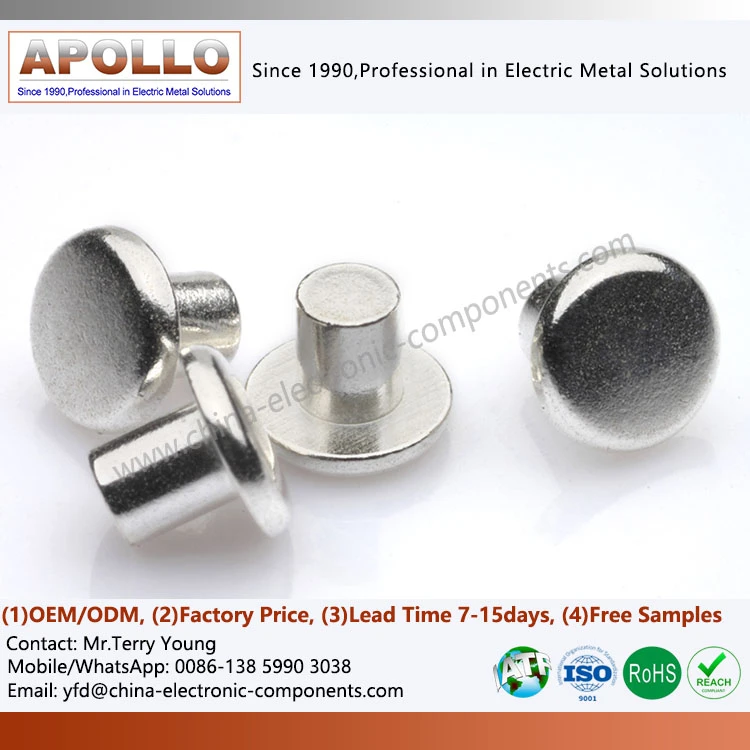
From a material performance perspective, pure silver contacts have excellent conductivity and thermal conductivity, but they also have some inherent drawbacks. For example, silver is prone to sulfidation in sulfur-containing environments, forming a black silver sulfide film, which affects the appearance and, to some extent, alters the contact performance. Furthermore, pure silver has low hardness and is prone to wear in high-frequency mechanical contact environments. Therefore, in some practical applications, alloying or composite material designs are used to improve contact performance, such as silver alloy electrical contacts or silver alloy contacts, to improve wear resistance and arc resistance while maintaining conductivity.
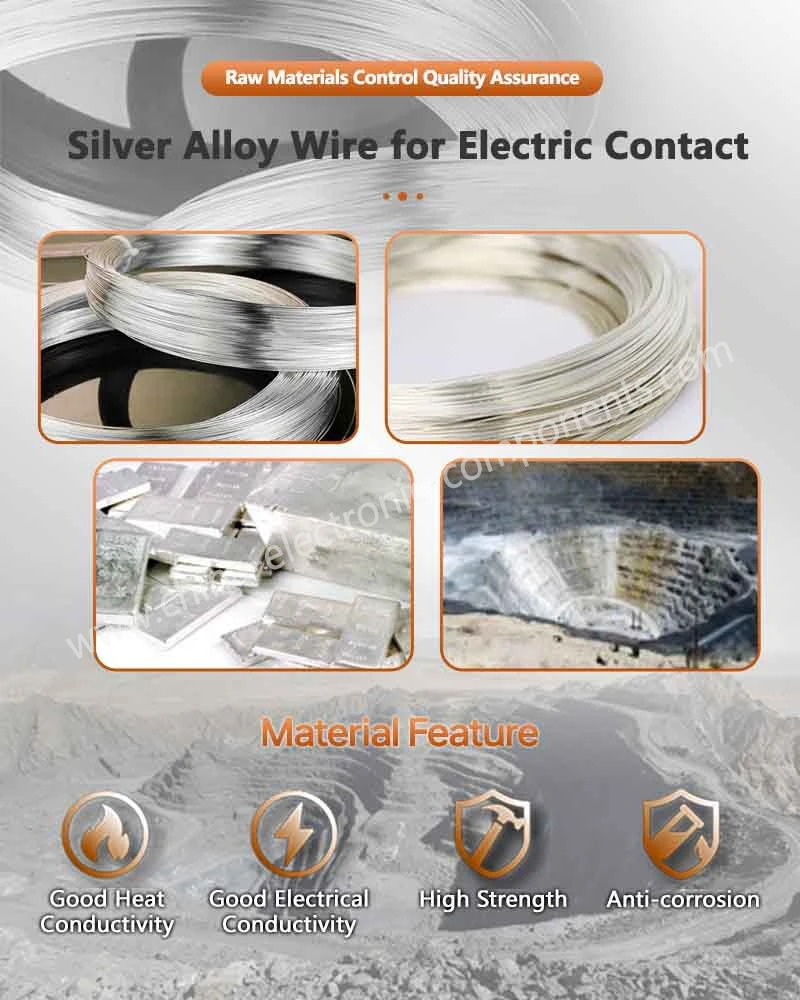
In electrical engineering, pure silver contacts are often formed into composite structures with other metals to meet the performance requirements of different application scenarios. For example, the common Ag/Cu silver-copper composite contact uses a copper substrate to improve the overall structural strength while maintaining the excellent conductivity of the silver layer. Another type of material is the Ag/CuNi silver-copper-nickel composite contact, where the addition of a copper-nickel alloy improves weldability and enhances the stability of the contact in mechanical connections. In some contact connections, such as flexible copper alloy structures or bimetallic structures, welding rather than riveting is often required for fixation. This type of design is common in electrical contact rivet structures and flexible contact assemblies.
In modern electrical equipment, silver contacts not only exist in pure silver but also have evolved into various silver-based composite materials. For example, silver cadmium oxide contacts and silver cadmium oxide electrical contacts are widely used in high-load switching equipment. These materials possess excellent resistance to arc erosion and high mechanical strength, maintaining stable performance even under frequent current interruption. Additionally, nickel-containing alloy contact materials, such as Agni contact, combine good conductivity with wear resistance, making them widely used in relays and automatic control systems.

In certain high-load or high-arc applications, AgCDO contact or silver cadmium contact are also found. These materials enhance contact stability under high-temperature, arc, and mechanical shock conditions by introducing different metal oxides or alloying elements into the silver matrix. Therefore, in practical electrical equipment design, engineers typically select appropriate contact materials based on current rating, switching frequency, and environmental conditions, rather than using only pure silver.
Besides the material itself, the contact structure design also affects overall electrical performance. For example, in electrical connection structures requiring resilient contact, common forms include spring-loaded electrical contacts, electrical spring contacts, and spring electrical contacts. These resilient contacts maintain stable contact pressure through a spring structure, effectively reducing contact resistance and improving connection reliability. In some switches or connection modules, leaf spring electrical contacts are also used. These contacts provide a stable mechanical return force through leaf springs, ensuring long-term stable conductivity.
During market procurement, distinguishing the true composition of contact materials is equally important. Due to the higher cost of silver, some low-cost products may use copper or silver-plated copper contacts instead of pure silver. Visually, copper and brass can usually be initially identified by color, while silver and silver alloys show little difference in color, but they differ in mechanical properties. Pure silver is generally softer, while silver alloys, due to the addition of other metallic elements, have significantly increased hardness. Furthermore, in circuits where arcs or sparks occur, contacts are often made of silver or silver alloys because the oxide layer formed under arcing still retains some conductivity, which is one of the important reasons for its widespread use in electrical contacts.
Overall, silver-based contact materials, with their excellent conductivity, good thermal conductivity, and stable contact resistance, still occupy an important position in the field of low-voltage electrical connections. Through alloying, composite structure design, and the application of different contact structures, the reliability and lifespan of contacts in complex electrical environments can be further improved.
Related Product Solutions
In modern electrical systems, high-performance contact materials are crucial for the reliable operation of equipment. We offer a variety of electrical contact solutions for different current ratings and application scenarios, including silver alloy contacts, composite electrical contact rivet structures, and electrical silver contacts suitable for relays and switches. These products are widely used in new energy, power equipment, relays, automotive electronics, and industrial automation, meeting the requirements for high conductivity, arc resistance, and long-term stable operation.
If you are looking for contact material solutions for relays, switches, or high-reliability electrical connection systems, you can also learn more about our silver-based contact and composite contact product series for more stable and efficient electrical connection performance.
contact us

Send Inquiry