










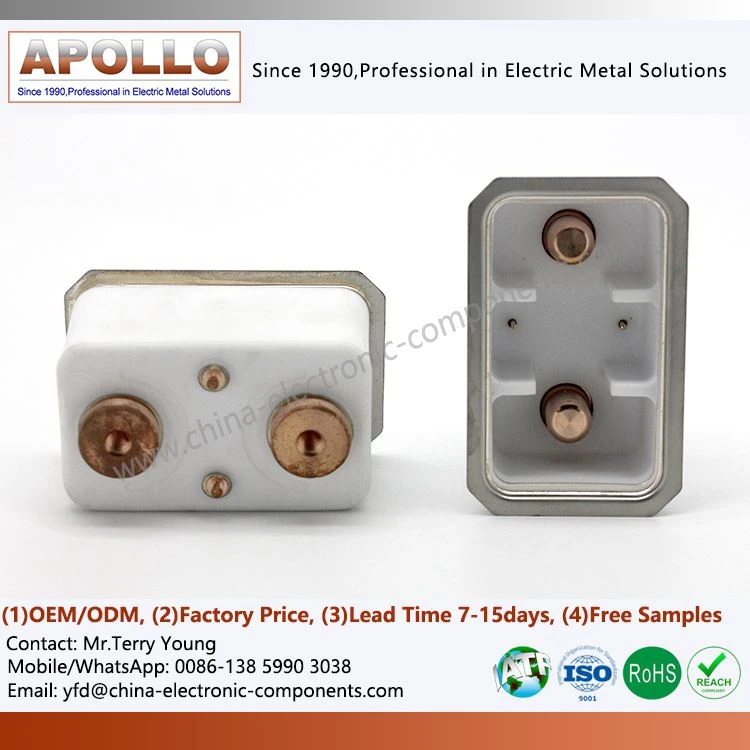
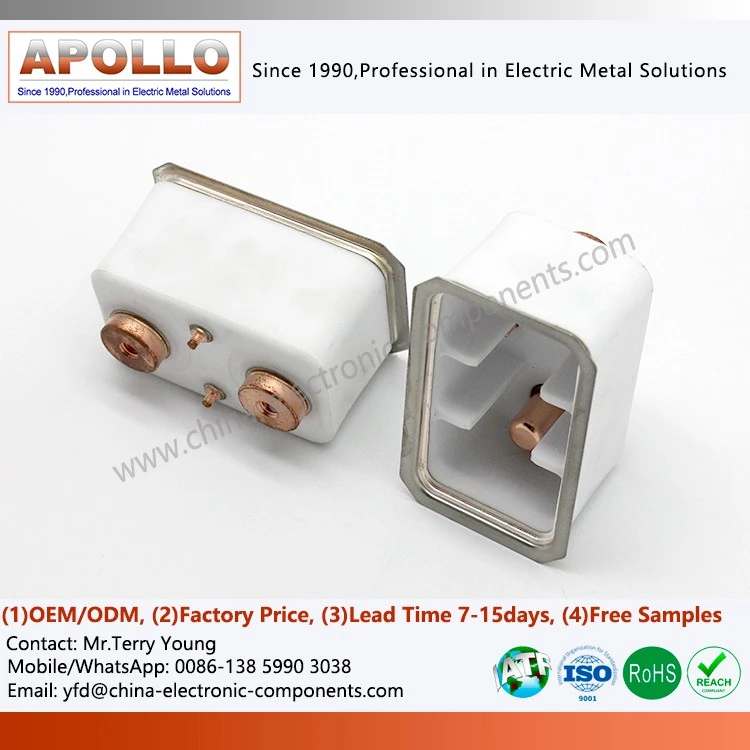
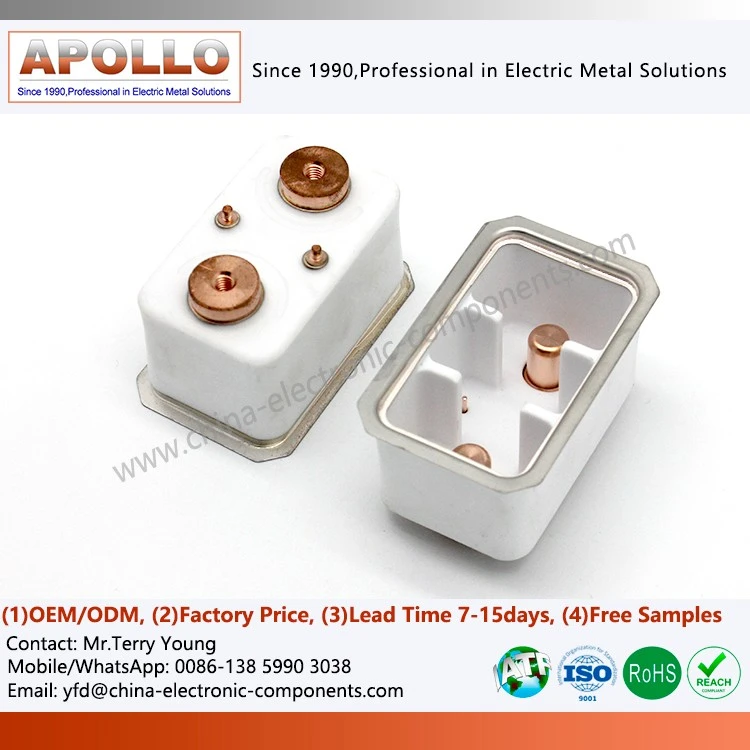
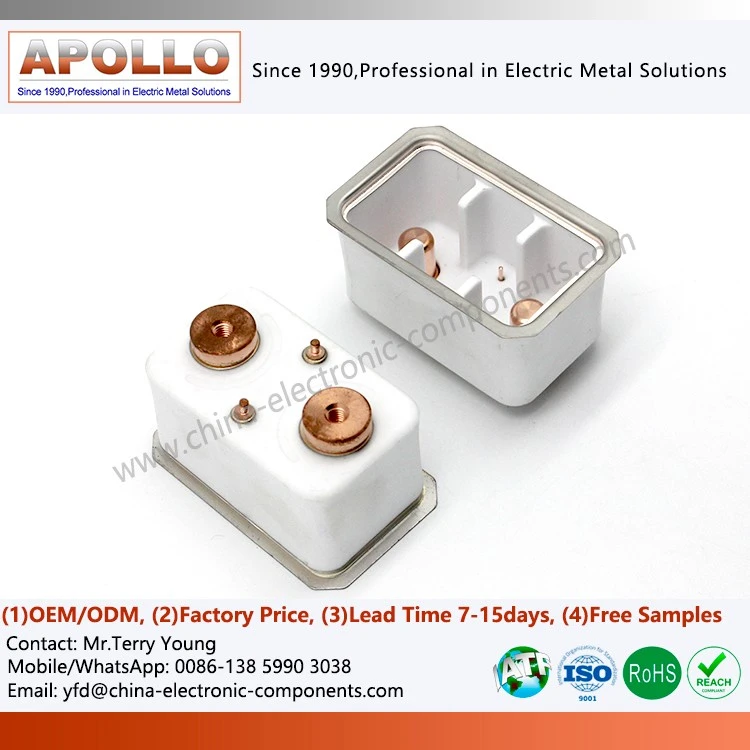
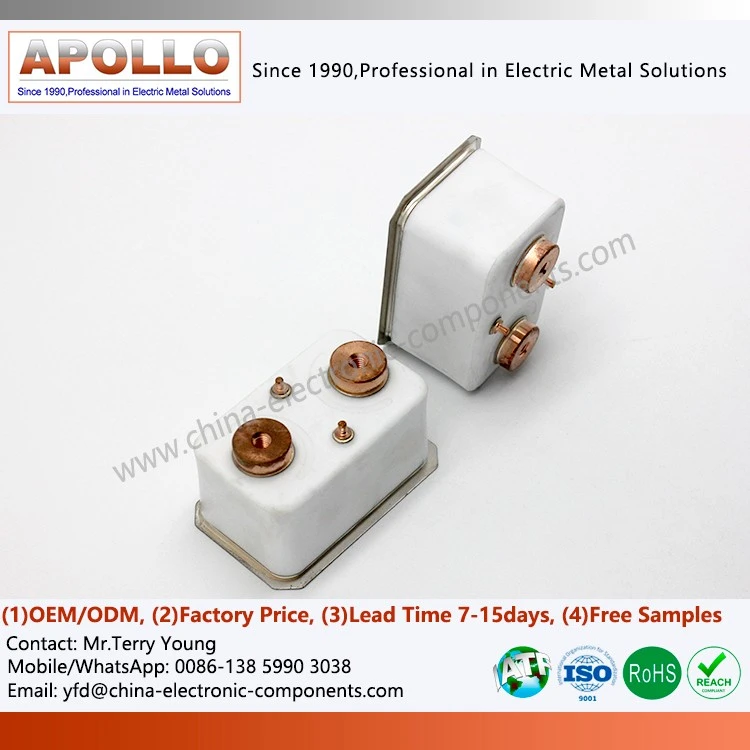
Metallized Ceramics For Electrical Components
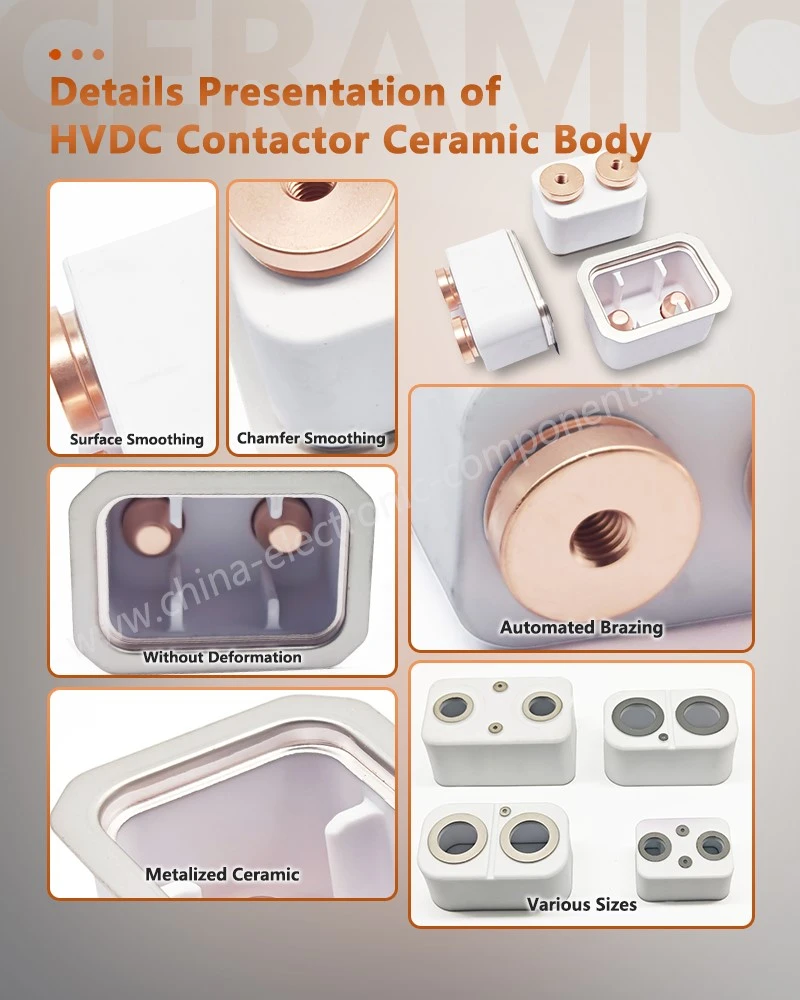
What are metallized ceramics for Electrical Components?
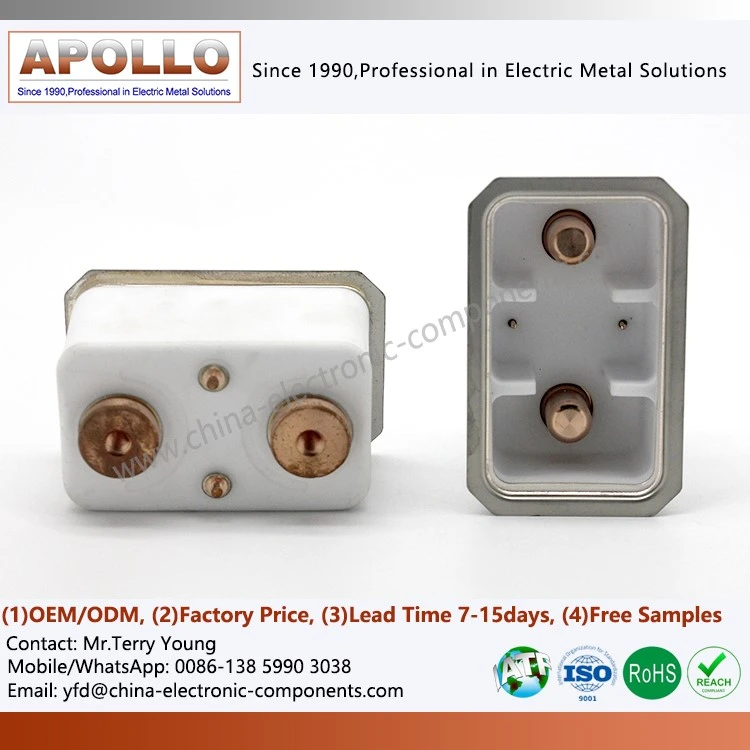
In the bill of materials for high-voltage DC contactors, metallized ceramic components are often classified as "structural parts." However, when broken down by function, they actually serve four distinct roles:
Airtight Enclosure: When brazed to the upper and lower metal covers, it forms a sealed arc-extinguishing chamber. It must maintain a specific internal atmosphere over the long term, as even a minute leak could alter the arc-quenching medium.
Insulation and Creepage Boundary: It provides bulk insulation and surface creepage distances between high-potential terminals, the housing, and adjacent phases; the metallized patterns themselves are integral to the electric field design.
Arc-Resistant Surface: Exposed directly to the arc radiation, metal vapors, and spatter generated during contact separation, the condition of this surface determines whether the surface insulation integrity can be maintained.
Assembly and Structural Datum: The flatness of the flange, the positioning holes, and the boundaries of the metallized areas collectively dictate the alignment during sealing, the distribution of assembly torque, and the coaxiality of the entire device.
The crucial insight is that the metallized layer is not merely a "coating," but a gradient transition layer between the ceramic and the metal.
Key Functions for Metallized Alumina Ceramics for Electrical Components
Electrical Insulation and Isolation
Isolates live components from the housing in high-voltage circuits and can withstand both operating voltages and transient impulse voltages.
Vacuum-Tight Sealing
Forms a zero-leakage interface when brazed to metal components, maintaining the vacuum environment within the arc-extinguishing chamber.
Mechanical Support and Positioning
Provides rigid support and a precise positioning reference for moving components, such as the contact system and bellows.
Resistance to Arc Environments
Withstands thermal shock from high-temperature arcs generated during contactor interruption without degrading the ceramic material.
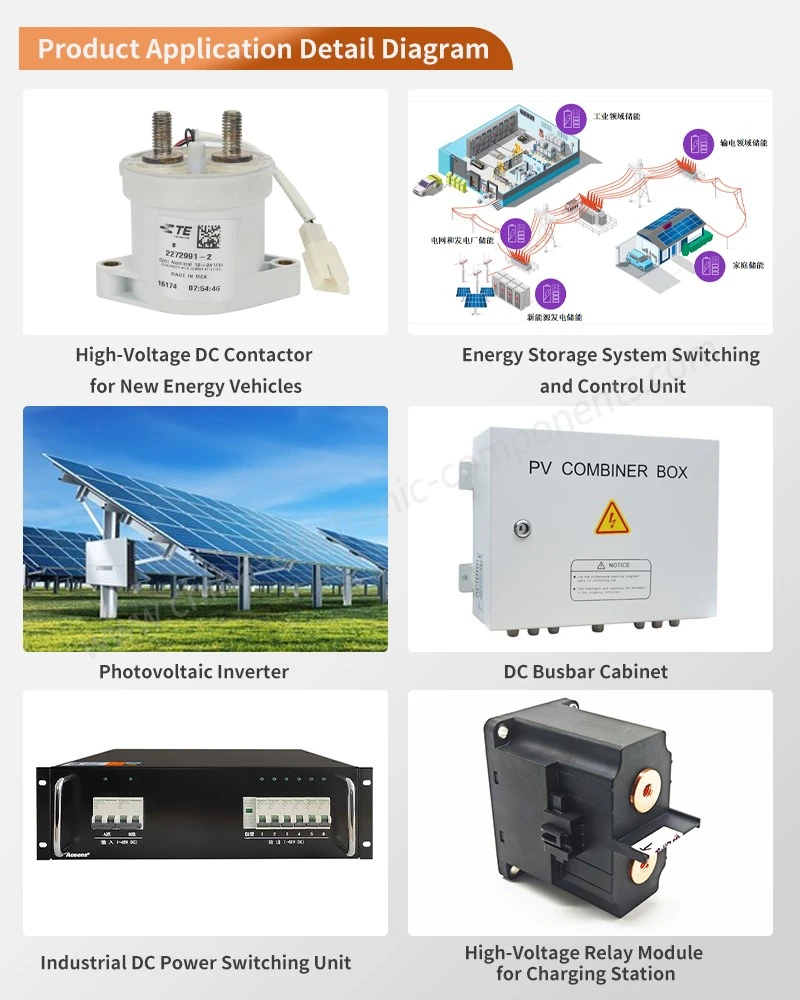
Technical Characteristics and Key Functions for Metalized Ceramic Insulating Tubes Metalizating Ceramic Part
Hermetic Sealing and Insulation Integration
The ceramic body, combined with metallized sealing rings, forms a hermetically sealed arc-extinguishing chamber. This prevents the ingress of external moisture and dust, ensuring long-term stability of the internal insulation.
01
High-Voltage Isolation and Creepage Distance Design
By optimizing wall thickness, internal cavity geometry, and the positioning of metallized boundaries, the surface discharge path is controlled. This ensures sufficient insulation margins for long-term operation under high-voltage DC conditions.
02
Thermal Path Construction
The metallized layers, in conjunction with terminals and heat-dissipation carriers, create a continuous thermal conduction path. This reduces the temperature rise at the contacts and connection points, improving thermal equilibrium during high-current operation.
03
Mechanical Support and Positioning
The ceramic body serves as the assembly foundation for the contact system, arc-extinguishing structure, and terminals. Its flatness, perpendicularity, and hole-positioning precision directly influence the assembly yield of the final device.
04
Solderability and Assembly Compatibility
Metallized areas are designed according to specific soldering processes-delineating wetting zones, non-solderable zones, and transition zones-to minimize assembly defects such as excessive solder wicking, cold joints, and solder accumulation.
05
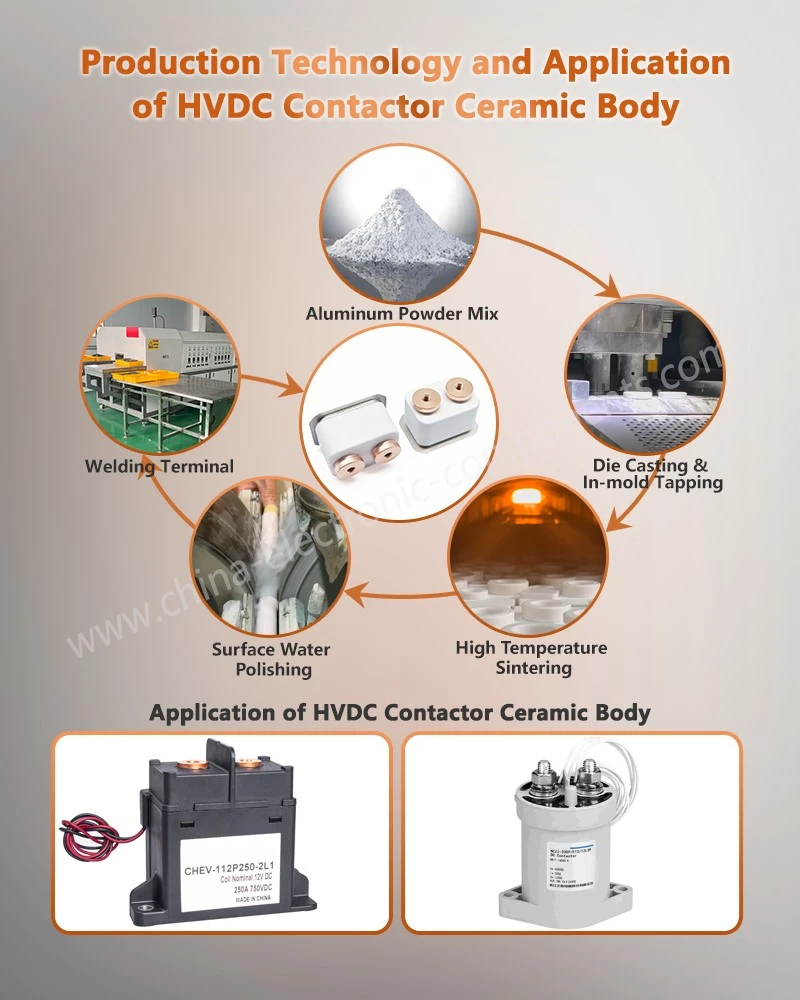
Frequently Asked Questions for Metallized Alumina Ceramics Relay Parts
Q1: What are metallized ceramics used for in electrical components?
-
Metallized ceramics are primarily used in electrical components that require both electrical insulation and metallic connectivity-for example, in high-voltage DC contactors, vacuum electronic devices, and ceramic-to-metal sealed structures.
Q2: Why is metallization required on alumina ceramics?
-
While alumina ceramics possess excellent insulating properties, they generally cannot be joined directly to other materials using conventional metal brazing techniques. A metallized layer creates an interface on the ceramic surface that is suitable for subsequent plating and brazing processes.
Q3: What is the difference between metallized alumina ceramic and ordinary alumina ceramic?
-
Ordinary alumina ceramics primarily serve functions such as electrical insulation, structural support, and heat resistance. Metallized alumina ceramics, by contrast, feature a metallized layer in specific areas, enabling them to be joined or sealed to metal components.
Q4: Can metallized ceramics be used in EV high-voltage DC contactors?
-
Yes. Metallized ceramics can be used for insulation and ceramic-to-metal sealing within high-voltage DC contactors. The specific material, dimensions, and metallized areas are determined based on the contactor's design and sealing requirements.
Q5: What information is needed for custom metallized ceramic components?
-
To evaluate the product structure and manufacturing process, it is recommended to provide the following: the ceramic material grade, product dimensions, drawings indicating the metallized areas, the metal materials to be joined, the sealing method, and specific requirements regarding electrical insulation and hermeticity (gas-tightness).
contact us
Focusing on engineering compatibility and process reliability, we provide stable, verifiable solutions for metallized ceramic components used in high-voltage DC contactors. We invite professional procurement and engineering teams to submit their technical requirements and drawings via our inquiry page, so that we may collaborate on sample validation and project implementation.
Hot Tags: Metallized Ceramics for Electrical Components, Metallized Alumina Ceramic, Metallized Ceramic Components, Alumina Metallized Ceramics, Metallization Ceramic, Metallized Ceramic Components, new energy hvdc part, New Energy HVDC Parts, New Energy Relay Yoke
You Might Also Like


Send Inquiry