










Upgrades in Thin-Wall Skin Assembly Technology For Low-Altitude Aircraft: Self-Drilling Pop Rivet Drives Structural Lightweight Innovation
May 13, 2026
Leave a message
The rapid rise of the low-altitude economy and the accelerating industrialization of equipment such as drones, electric vertical takeoff and landing aircraft, and light sport aircraft have created a comprehensive demand for upgrades in thin-wall skin assembly technology. In R&D design that balances aerodynamic shape, structural load-bearing capacity, and load transfer, lightweighting and connection reliability have become core research priorities. Self-Drilling Pop Rivet, with its single-sided operation advantage, is gradually becoming the core connector choice for assembling thin-walled components in low-altitude aircraft.
Thin-wall skins are mostly made of aluminum alloys, titanium alloys, and composite materials, with sheet thickness generally controlled between 0.6 and 2.0 mm. Weight reduction design directly affects the aircraft's range and energy consumption. Industry data shows that every kilogram reduction in aircraft structural components can effectively increase range and reduce operational energy consumption. This has driven the upgrading of assembly processes towards refinement and lightweighting. Drill-Point Blind Rivet can adapt to the special conditions of thin-walled panels, balancing the dual requirements of structural strength and weight reduction design.
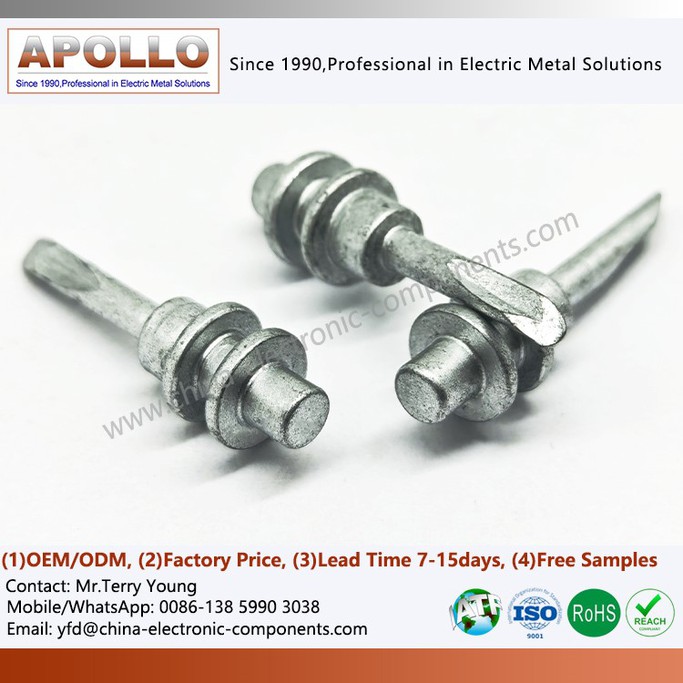
Traditional connectors rely on double-sided construction, which suffers from low efficiency and poor adaptability in the assembly of thin-walled components in enclosed spaces. The new connection process, however, can complete single-sided installation and fixation using specialized tools. After tensile deformation, the component can tightly fill the connection gaps, forming a stable clamping and sealing effect. Self-Drilling Break-Stem Rivet effectively avoids the problem of aluminum alloy skin denting under stress, making it suitable for automated production line mass production.
The assembly of thin-walled components has strict standards for processing precision, material matching, and sealing protection. Drilling tolerances, clamping thickness control, anti-corrosion treatment of dissimilar materials, and airtight sealing design are all key aspects to ensure assembly quality. By combining fatigue testing, shear strength testing, and finite element simulation to optimize the layout, the service life of the connection structure can be further improved. Blind Self-Drilling Rivet is adaptable to various thin-walled component applications, avoiding the risk of electrochemical corrosion, and is suitable for high-sealing scenarios such as aircraft fuel tanks and cabins.
Data from practical experience in lightweight electric aircraft manufacturing shows that after optimizing the selection of connectors and assembly processes, the self-weight and assembly cycle of thin-walled structures are significantly optimized, while the fatigue life of joints is steadily improved. With the accelerated development of urban air mobility, the industry's requirements for the standardization and high reliability of connectors continue to increase. Self-Drilling Rivet conforms to international standards for aerospace fastening systems and is now widely used in the assembly of core components such as UAV shells, aircraft cabin skins, and support beams.
The manufacturing industry is transforming towards digital assembly and standardized components. Fastener performance testing strictly follows industry quality system standards, with key indicators such as forming rate, pull-out force, and shear strength all benchmarked against international standards. A comprehensive warehousing and delivery system meets the just-in-time production needs of low-altitude equipment companies. Self-Drilling Blind Rivet, relying on a mature parameter adaptation system, can quickly match specifications for different aircraft models, shortening the R&D and production cycle.
The era of mass production for low-altitude aircraft has arrived, and automated precision assembly has become the mainstream trend in the industry. The deep integration of materials engineering, structural mechanics, and intelligent manufacturing is reshaping the thin-walled component assembly technology system. Skin structure safety, standardized assembly processes, and long-term weight reduction solutions constitute the core competitiveness of low-altitude equipment manufacturing. Drill-Point Rivet, with its excellent comprehensive adaptability, continuously provides standardized connection solutions for the industry, contributing to the high-quality development of the low-altitude economy.

Our self-developed and mass-produced Self-Drilling Pop Rivet is compatible with various working conditions, such as aerospace thin-walled skin and UAV shells. It boasts advantages such as high precision, corrosion resistance, light weight, and excellent sealing performance. With a full range of specifications and quality meeting international standards, it can meet the needs of batch assembly and customized selection. We welcome manufacturers from all sectors to consult us for product selection and bulk purchase orders at any time, and work together to create high-quality, lightweight connection solutions.
contact us

Send Inquiry