










Flat-head Hexagon Socket Stainless Steel Screws: Surface Treatment Impacts On Thread Fit
Oct 01, 2026
Leave a message
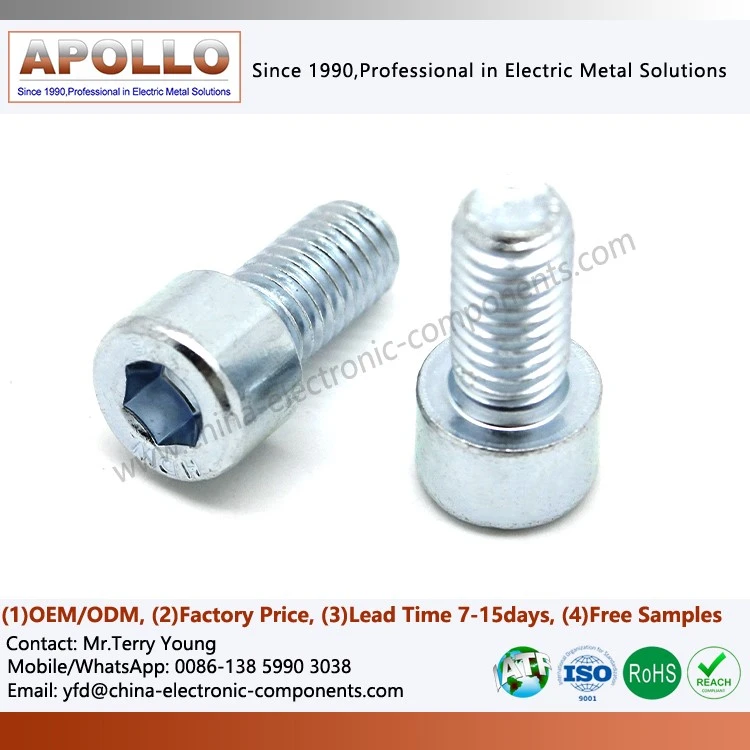
Surface treatment changes not only the appearance and corrosion resistance of Flat-head Hexagon Socket Stainless Steel Screws, but also thread dimensions, friction coefficient, turning resistance, and torque-preload relationship.
Electrogalvanizing, zinc-nickel alloy plating, and zinc flake coating form a covering layer on thread flanks and thread roots. If allowance for coating thickness is not reserved before machining, or if coating is too thick or unevenly deposited, the pitch diameter of the screw increases. This causes tight turning, failed go gauge inspection, and jamming with mating nuts. In severe cases, thread scratching, coating peeling, or thread seizure may occur.
For this reason, finished screws after surface treatment shall be inspected for thread fit. Inspection shall not rely only on thread dimensions measured before surface treatment.
Impacts of Different Surface Treatments on Thread Fit
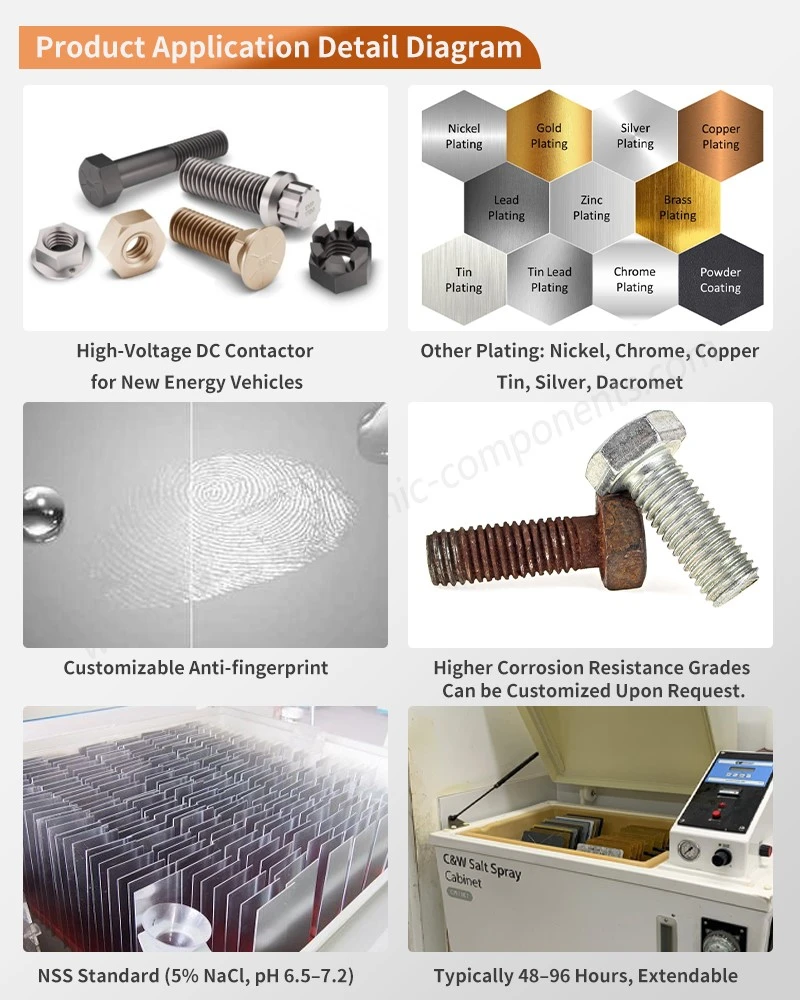
| Surface Treatment | Main Impacts on Thread Fit | Key Points for Selection and Inspection |
|---|---|---|
| Black Oxide | Thin film, minor dimensional influence | Check friction coefficient from rust preventive oil |
| Electrogalvanizing | Coating increases thread pitch diameter | Control film thickness, uniformity, and post-plating go-gauge test |
| Zinc-Nickel Alloy | Balances corrosion resistance and dimensional control | Confirm coating thickness and sealer system |
| Zinc Flake Coating | Local build-up may form at thread roots and flanks | Control coating cycles, spin-off, and curing process |
| Hot-Dip Galvanizing | Thick coating with obvious dimensional change | Use cautiously for small-size precision threads |
| Electroless Nickel | Relatively uniform coverage, yet dimensional increase remains | Reserve thread tolerance according to final film thickness |
| Lubrication or Sealing Treatment | Limited dimensional change but modified friction | Recheck assembly torque and preload |
Why Thin Coating May Still Cause Difficult Thread Engagement
Thread mating is achieved through contact on thread flanks. Coating covers thread crests, flanks and roots rather than only the major diameter. Given the inclined profile of thread geometry, small variations in coating thickness can notably alter pitch diameter.
If Hexagon Socket Head Cap Screws and nuts adopt tight tolerance bands, interference is more likely after coating. Excessive coating cycles for zinc flake systems can leave deposits at thread roots or hard-to-drain zones, leading to inconsistent turning resistance.
Methods to Prevent Tight Thread Engagement after Surface Treatment
First, define surface treatment type and target film thickness before production. Select pre-treatment thread tolerance according to coating thickness. Do not machine threads to final dimensions first and then apply thick coating as an afterthought.
Second, inspect finished parts with qualified thread gauges. Go gauges verify full thread engagement, while no-go gauges confirm dimensions stay within permitted limits. For critical applications, perform trial assembly with actual mating nuts or tapped holes.
ISO 4042:2022 specifies coating dimensions, tolerances, and hydrogen embrittlement controls for electroplated fasteners. ISO 10683:2018 applies to fasteners with zinc flake coatings. Acceptance criteria for individual orders shall follow product standards, thread tolerance classes, and customer drawings.

How Surface Treatment Changes Assembly Torque
For Zinc Plated Socket Head Cap Screws of identical size and strength grade, the friction coefficient varies under different surface treatments, sealers, or lubrication conditions. With identical assembly torque, screws with lower friction develop higher preload; screws with higher friction deliver insufficient clamping force.
Original torque values cannot be reused directly after switching to electrogalvanizing, zinc-nickel, zinc flake or alternative lubrication systems. For critical joints, run torque-clamping force tests per ISO 16047:2005 to validate friction behaviour and assembly parameters.
Does Surface Treatment Affect Hexagon Sockets?
Coating build-up inside hexagon sockets reduces effective across-flat dimensions. Standard bits cannot seat fully into the socket. Insufficient contact area between bit and socket leads to socket wear and bit slipping during installation.
Coating acceptance checks cover thread go/no-go verification, hexagon socket dimensions, bit insertion depth, under-head bearing surfaces, and full coating coverage. When supplying Socket Head Cap Screws, the hardware supplier shall validate mating internal threads, assembly torque, and finished go gauge requirements to reduce on-site thread engagement defects.
contact us
Factory precision stamping and professional surface treatment processes support customized thread tolerance calibration and batch production of Flat-head Hexagon Socket Stainless Steel Screws. Submit your drawings and technical parameters for accurate quotation and technical verification now.

Send Inquiry