










Evolution Of Terminal-to-Busbar Connection Technology: Precision Connection Design As A Key Safeguard For Reliable Power Distribution System Operation
Oct 29, 2026
Leave a message
With the continuous development of new energy vehicles, industrial power distribution, energy storage systems, and intelligent electrical equipment, the reliability of power connection systems has become a critical focus in the design and manufacturing of electrical equipment. Although components such as terminal blocks and busbar connectors are relatively small in size, they are directly responsible for functions like current transmission, conductor securing, and the completion of electrical circuits. Their contact resistance, mechanical strength, heat resistance, and corrosion resistance directly influence the operational efficiency and long-term stability of the equipment.
In devices such as circuit breakers, fuses, power distribution cabinets, and energy metering equipment, connection components must maintain stable electrical contact under conditions including continuous current flow, load fluctuations, temperature variations, and mechanical vibration. Insufficient contact pressure, oxidation of contact surfaces, or improper tightening procedures can lead to increased contact resistance and excessive localized temperature rises. This, in turn, accelerates the aging of insulation materials and, in severe cases, can even cause the connection points to burn or erode. Consequently, the design of terminal blocks and busbar systems has evolved from simple conductive connections into a comprehensive engineering process encompassing material selection, structural design, precision machining, and quality verification.
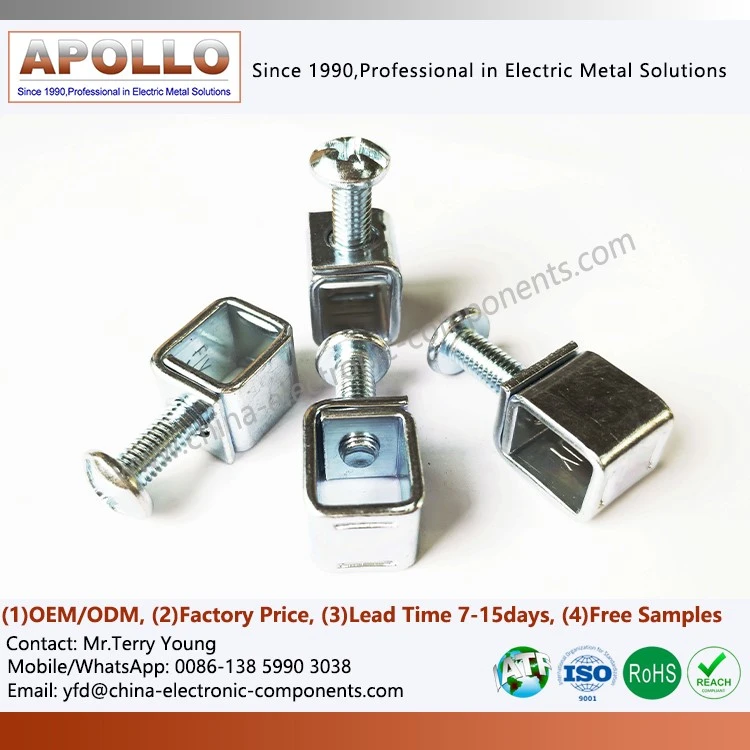
In terms of product structure, screw terminal blocks are a common form of electrical connection. They utilize screws to generate clamping force, ensuring stable electrical contact between conductors and conductive components. This type of structure is widely applicable, features a mature connection method, and allows for relatively convenient maintenance, making it suitable for a variety of low-voltage electrical equipment and control systems. For components intended to carry current over long periods, designers must consider not only the conductive cross-sectional area but also the flatness of contact surfaces, the distribution of tightening force, and the mechanical properties of the conductor materials.
In fuse assemblies and their associated connection systems, the structural design of screw clamps for fuse terminals is equally vital to the stability of current transmission. The clamping mechanism must provide sufficient contact pressure for specified wire gauges and operating conditions, while avoiding excessive force that could damage the conductors. For equipment requiring frequent inspection or fuse replacement, connection components must also offer ease of operation, consistent assembly, and long-term maintainability.
From a material perspective, copper and copper alloys are widely used for electrical connection components due to their excellent electrical conductivity and suitability for manufacturing processes. Common materials include commercially pure copper and various grades of copper alloys; the specific choice depends on an evaluation of factors such as electrical conductivity, strength, wear resistance, and operating temperature. For high-current connections, a proper balance must be struck between electrical performance and structural strength to prevent mechanical deformation from compromising long-term contact integrity.
Surface treatment is another critical aspect of enhancing connection reliability. Tin plating helps mitigate the effects of surface oxidation on copper and improves process compatibility at certain connection interfaces, while silver plating may be used for electrical components with specific requirements for contact performance and operating temperature. When selecting components, the type and thickness of the plating should be determined based on current ratings, ambient humidity, corrosive media, and mating materials-rather than judging performance solely by surface appearance.
As electrical equipment trends toward miniaturization and integration, the design of screw-terminal wire connectors increasingly emphasizes installation efficiency, wiring stability, and adaptability to various conductor types. When using stranded (flexible) wires, careful consideration must be given to the contact state after the conductor is clamped; where necessary, appropriate crimp-on terminals or specialized clamping structures should be employed to minimize risks such as stray strands, uneven contact, or conductor damage. For high-current applications, it is essential to verify the temperature rise at the connection point, mechanical stability, and continuous current-carrying capacity.
In power distribution systems, busbars serve as the primary conduits for current, and the quality of the connection between terminals and busbars directly impacts the performance of the entire electrical circuit. Copper busbars are typically joined to equipment terminals via bolting, overlapping, or dedicated connecting components. Contact surfaces must maintain an appropriate level of flatness and cleanliness, and suitable anti-oxidation measures should be applied based on the specific materials and surface treatments involved. In cases involving the connection of dissimilar metals-such as copper and aluminum-specialized transition joints are required to reduce the risk of electrochemical corrosion in humid environments.
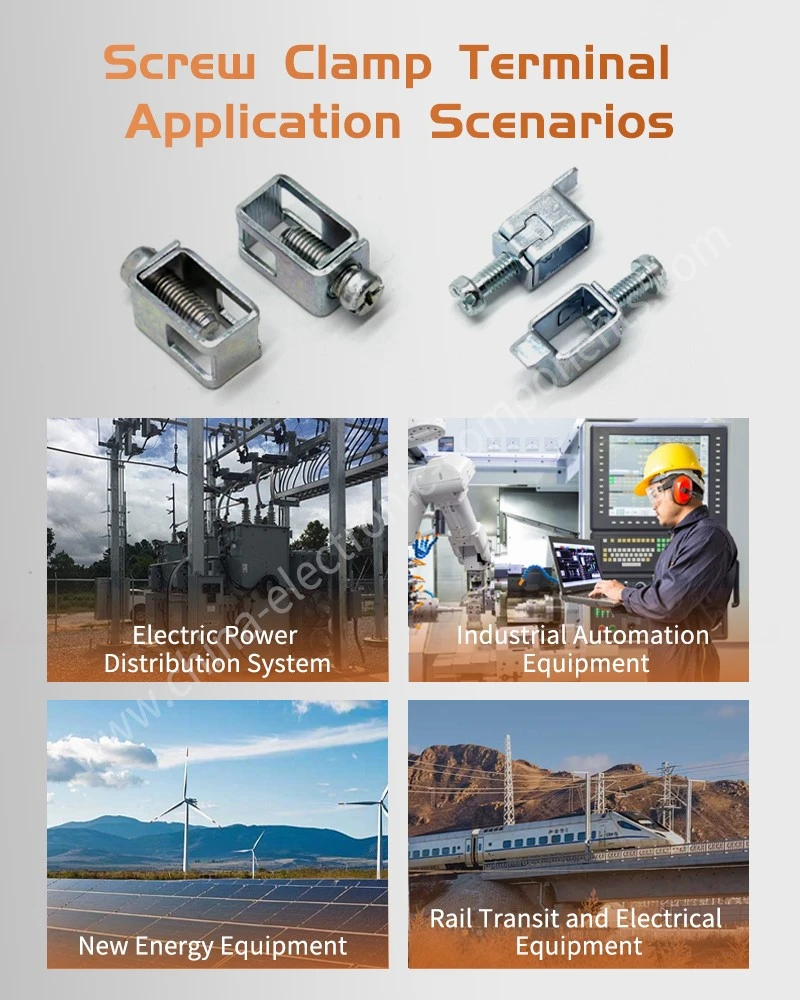
Across various application scenarios, screw-type terminal blocks must be selected based on factors including rated current, conductor cross-sectional area, available installation space, and the operating environment. For control circuits and general electrical wiring, design priorities typically include ease of wiring, insulation spacing, and the reliable securing of conductors. For main circuit connections in power distribution equipment, additional factors must be evaluated, such as short-time withstand current, temperature rise, and mechanical stability under fault current conditions.
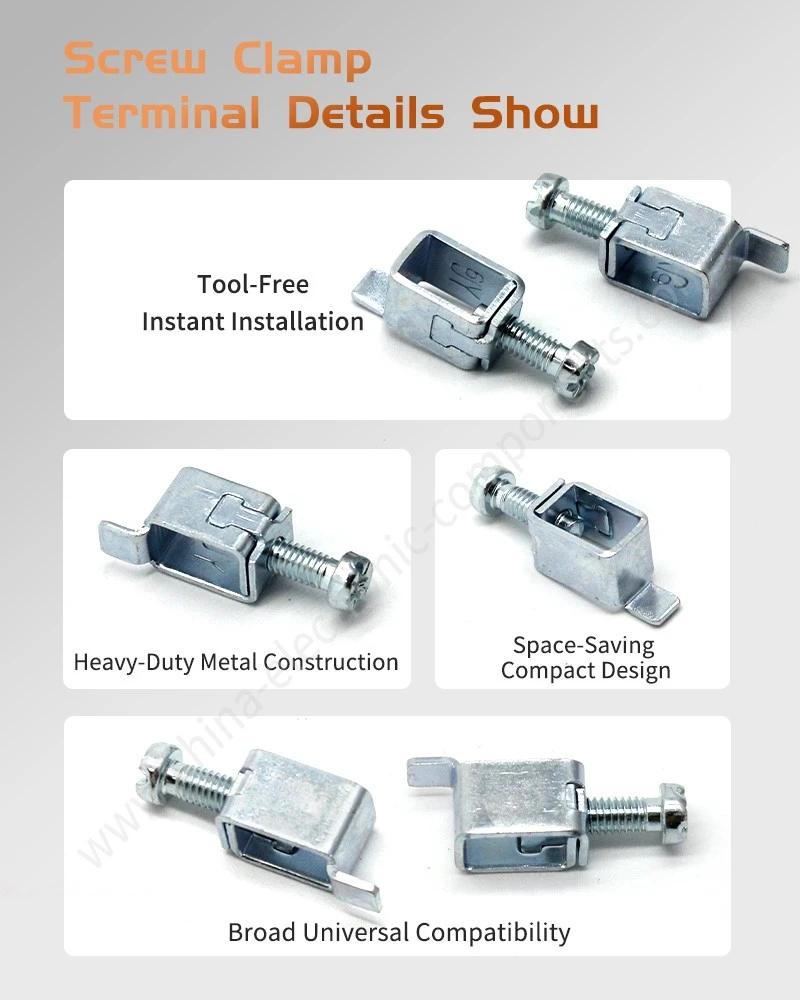
Beyond the connection structure, the fastening process is a critical factor influencing the service life of an electrical connection. Screw-based connections must be assembled using the specific tightening torque prescribed in the product's technical documentation. Insufficient torque may result in inadequate clamping force, while excessive torque can cause thread damage, terminal deformation, or damage to the conductor. Consequently, during mass production and field assembly, clear torque control requirements should be established, and appropriate process validation should be implemented to ensure that the connections meet design specifications.
For equipment with specific installation space and electrical requirements, M4 screw terminals may be suitable for fastening; however, their actual applicability depends on factors such as thread specifications, conductor size, rated current, and structural strength. When selecting fasteners, engineers must consider the dimensions of the contact surfaces, the effective thread engagement length, material strength, and the accessibility for assembly tools-rather than relying solely on the screw diameter to gauge connection capability.
Grounding systems impose distinct functional requirements on connection components. Ground terminal blocks are primarily used for connecting protective grounding conductors; they must ensure a continuous and reliable ground path while meeting specific standards for mechanical strength, electrical conductivity, and corrosion resistance. For electrical equipment involving personnel safety, the design, assembly, and verification of grounding connections must comply with applicable safety standards, with their effectiveness confirmed through prescribed testing procedures.
As electrical products increasingly move toward modularization and standardization, the design of terminal components now places greater emphasis on assembly consistency and the efficiency of future maintenance. In the case of fuse bases and their associated connection structures, fuse terminal blocks must simultaneously address requirements for conductor clamping, fuse installation, and electrical insulation. Such designs must be tailored to the specific fuse type, operating voltage, rated current, and anticipated fault conditions to ensure that the connection components function in harmony with the overall protection circuit. In the actual manufacturing process, terminals and connectors typically undergo operations such as stamping, machining, tapping, riveting, surface treatment, and component assembly.
For products with complex structures or high-volume requirements, the use of precision molds, automated feeding systems, and in-line inspection helps improve dimensional consistency while reducing the incidence of burrs, hole-position deviations, and assembly defects. Manufacturers must also implement rigorous process controls-covering critical dimensions, thread quality, surface plating, and connection performance-to ensure that mass-produced items consistently meet the requirements specified in engineering drawings and technical standards.
For connection components that must fulfill multiple electrical functions, the design of block terminals must comprehensively account for insulation structures, conductive paths, terminal spacing, and wiring orientation. During the product development phase, it is essential to define mounting methods, the range of compatible conductors, and environmental conditions; the design's suitability must then be validated through testing, including temperature-rise analysis, mechanical strength assessments, and other necessary electrical tests. In cases involving different voltage ratings or specialized operating environments, specific insulation and protection requirements must be verified based on the intended application.
In compact power distribution equipment, a "double-cage terminal with an M5 screw" may serve as a viable structural solution; its dual-clamping zone design must be evaluated in the context of conductor layout and actual wiring configurations. In engineering practice, it is critical to ensure that conductors on both sides receive the required clamping force and that the setup complies with product specifications when multiple conductors are connected-thereby preventing localized temperature rises or unstable contact resulting from improper connection methods.
For various types of electrical connection products, factors such as the material of the terminal screw, thread precision, head geometry, and surface protection all influence assembly quality. When procuring in bulk, specifications regarding thread dimensions, material grades, surface treatments, mechanical properties, and inspection requirements must be clearly defined; where necessary, sample testing should be conducted to confirm compatibility with existing equipment. For products with specific structural requirements-such as those used in electricity metering equipment-M10 screw-type terminals for electric meters must be evaluated in relation to mounting interfaces, mechanical fastening methods, and conductive paths to ensure that the product specifications align with the overall equipment design.
Looking at industry trends, terminal blocks and busbar connection systems are increasingly moving toward greater precision, modularity, and enhanced quality traceability. Manufacturers of electrical equipment are placing increasing emphasis on the stability of connection components during long-term operation, working to mitigate potential failure risks through material optimization, structural enhancements, and rigorous control of manufacturing processes. For engineering procurement, beyond verifying product dimensions and pricing, it is essential to evaluate a supplier's capabilities regarding material traceability, process control, testing equipment, batch-to-batch consistency, and delivery reliability.
When sourcing electrical terminals, screw connectors, and related conductive components, engineering teams should provide detailed specifications-including product drawings, conductor specifications, rated current, operating voltage, surface treatment requirements, and the intended operating environment-to enable suppliers to confirm specifications and assess manufacturing feasibility. For customized products, further discussions may be required concerning material selection, mold development, threading processes, surface treatments, and sample validation protocols. Defining technical parameters and acceptance criteria early in the process helps shorten the selection cycle, reduces risks during subsequent assembly, and establishes a stable quality foundation for mass production.
contact us

Send Inquiry