










The Silver Alloy Materials And Contact Resistance Control Technology
Oct 28, 2026
Leave a message
With the continuous advancement of intelligent power distribution, industrial automation, and the Internet of Things (IoT), smart circuit breakers now demand higher performance from electrical contacts-specifically regarding electrical conductivity, resistance to arc erosion, and long-term operational stability. As the core component responsible for making, carrying, and breaking electrical current, the contact system-including its material composition, contact geometry, and manufacturing process-directly influences the device's temperature rise, contact resistance, mechanical lifespan, and electrical reliability.
In the design of smart circuit breakers, silver and silver alloys are preferred materials for electrical contacts due to their excellent conductivity and versatility. Depending on the specific rated current, short-circuit breaking capacity, and operating environment, designers must comprehensively evaluate material composition, contact geometry, contact pressure, and joining techniques to develop a solution tailored to the intended application.
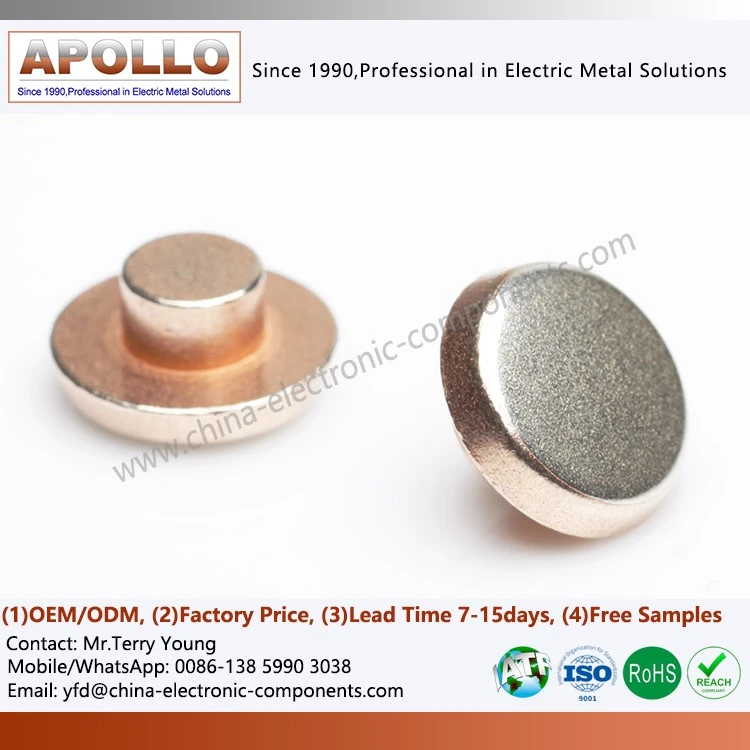
The Impact of Silver Alloy Material Selection on Electrical Contact Performance
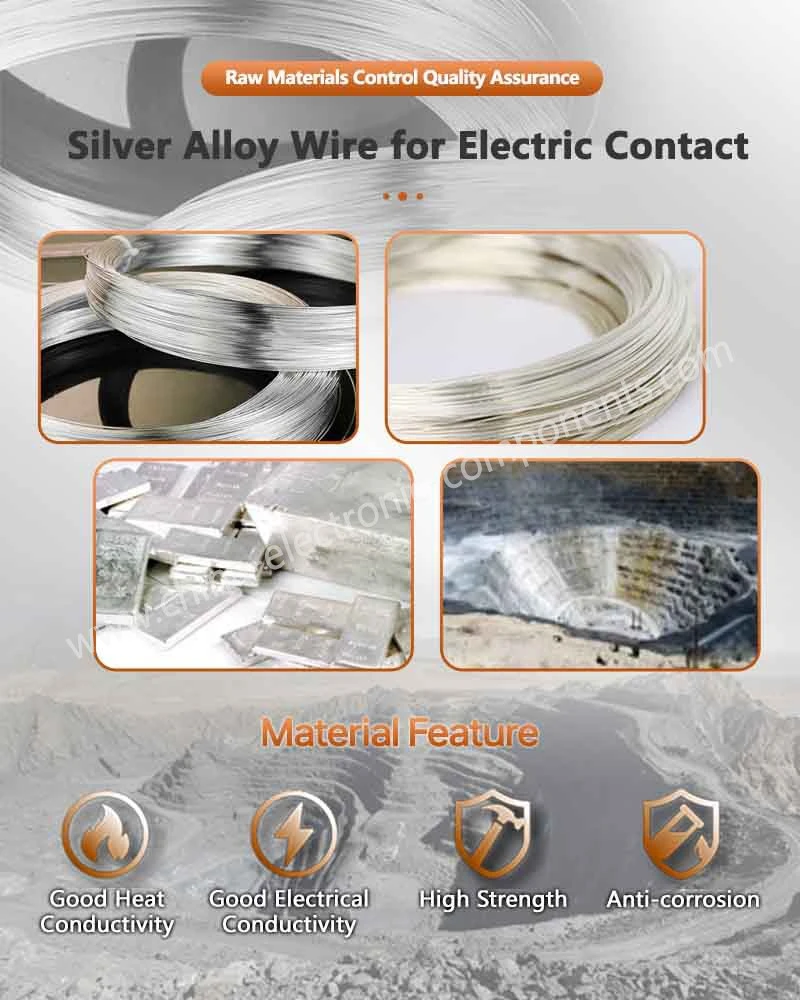
Selecting materials for silver alloy contacts requires balancing electrical conductivity, hardness, resistance to contact welding, and resistance to arc erosion. While silver offers high electrical and thermal conductivity, tungsten provides a high melting point and superior resistance to arc erosion. By adjusting the proportions of these components, silver-tungsten composites can be adapted to the operational requirements of various switching devices; however, their specific conductivity, hardness, and anti-welding characteristics must be verified for each unique material system.
In applications involving frequent making and breaking operations, electric arcs can generate localized high temperatures on the contact surfaces, leading to material melting, transfer, or erosion. Selecting an appropriate silver alloy system helps mitigate surface damage and ensures stable electrical contact over the long term. Material selection must also account for factors such as load type, breaking conditions, rated current, short-circuit current, operating frequency, and the expected electrical lifespan.
Regarding structural design, "bimetal silver contacts" refer to silver-based electrical contacts that utilize a composite structure of different metals. By strategically designing the conductive contact layer alongside a load-bearing substrate, it is possible to meet electrical conductivity requirements while maintaining mechanical strength and optimizing material utilization. The specific material combination should be determined based on product blueprints, performance specifications, and applicable standards.
Design of Composite Contact Structures and Optimization of Joining Processes
Composite electrical contacts typically consist of a functional contact layer and a supporting substrate; some designs may also incorporate an intermediate transition layer to meet requirements for electrical conductivity, mechanical fixation, and connection reliability. A contact layer made of silver or a silver alloy ensures stable electrical contact, while a copper-based substrate provides a conductive path. In certain configurations, a steel-based substrate may be used to provide the necessary mechanical support.
Because different metals vary in terms of thermal expansion, hardness, and wettability, the design of composite structures must prioritize the quality of the interfacial bond. Factors such as material thickness, the dimensions of the contact interface, the shape of the substrate, and the joining process all influence the performance of the final product. In mass production, it is also essential to maintain strict control over material thickness tolerances, the precision of the bonding location, and the overall dimensional consistency of the components.
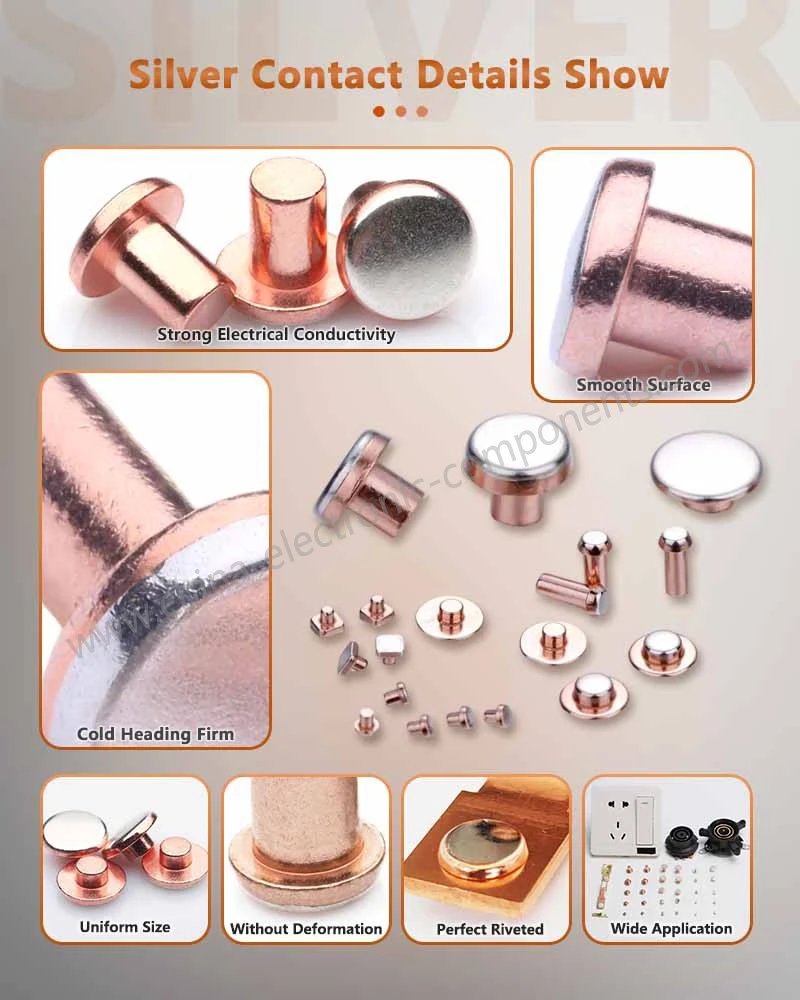
Bimetal contact rivets are a common structural configuration for electrical contacts, where the contact material is mechanically joined to a conductive substrate via riveting. Design considerations include the bond strength after riveting, the flatness of the contact surface, and stability under long-term vibration-ensuring that the connection does not loosen or develop interfacial anomalies that could lead to increased local electrical resistance.
For products utilizing a bimetal rivet structure, performance depends not only on the contact material itself but also on the degree of deformation during riveting, the applied riveting pressure, and the compatibility between the contact material and the substrate. Optimizing die design and riveting parameters can improve dimensional consistency and reduce the risk of connection defects during mass production.
contact us

Send Inquiry