










Why are high-reliability connectors inseparable from beryllium copper? A comprehensive analysis of the application value of beryllium copper in connector contacts.
Jun 04, 2026
Leave a message
With the rapid development of new energy vehicles, energy storage systems, 5G communications, data centers, industrial automation, and aerospace, connectors, as indispensable basic components in electrical systems, face increasingly stringent reliability requirements. One of the key factors determining connector performance is the material used for the contacts.
Among many high-performance copper alloys, beryllium copper, with its excellent comprehensive properties, is widely used in the manufacture of high-reliability connectors, precision terminals, elastic contacts, and various precision stamped parts, becoming a crucial basic material for modern electronics and high-end equipment manufacturing.
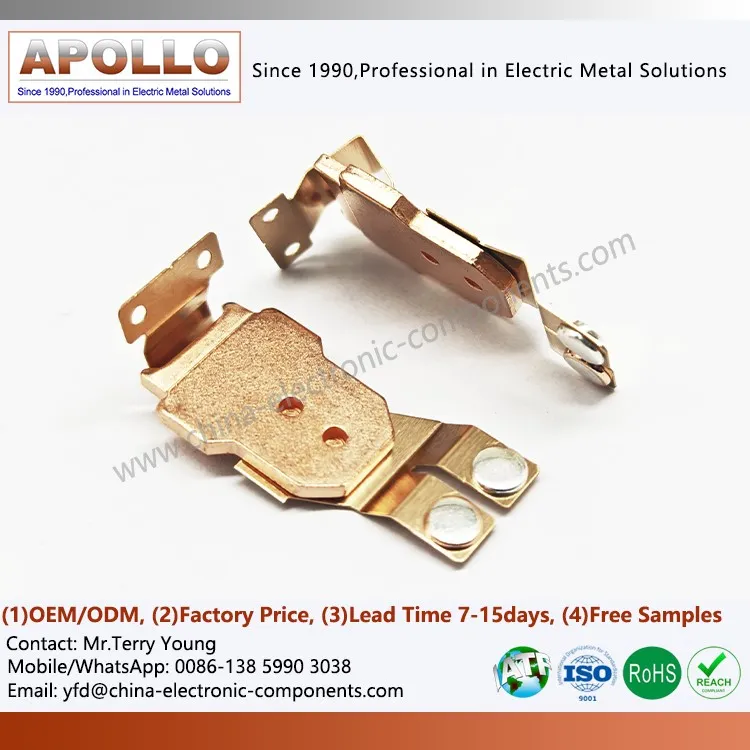
What is Beryllium Copper?
Beryllium copper is a high-performance copper alloy material with a copper matrix and a small amount of beryllium added. After solution treatment and aging strengthening, it achieves excellent mechanical and electrical properties.
Compared to ordinary copper, beryllium copper possesses high strength, high elasticity, high wear resistance, and good electrical and thermal conductivity. It maintains stable elastic recovery under long-term stress, thus being widely used in the manufacture of various elastic contact elements.
Currently, high-end connectors on the market widely utilize beryllium copper in their manufacturing processes, including contacts, springs, pins, sockets, and spring structures.
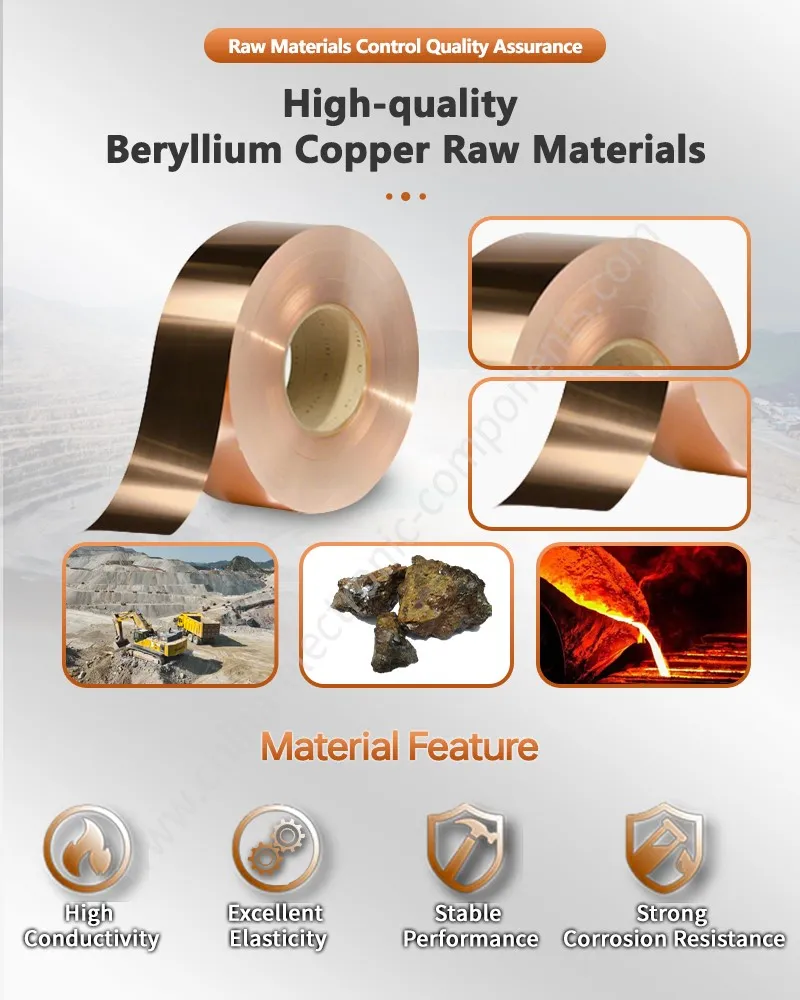
The Important Role of Beryllium Copper in the Connector Industry
The core task of a connector is to achieve stable transmission of current, signals, or data, and the contacts are the most critical conductive components within the connector.
In practical applications, connectors often need to withstand frequent mating and unmating, high temperatures, high humidity, vibration and shock, and complex environmental conditions. If the contact material's performance is insufficient, problems such as increased contact resistance, elasticity decay, and contact failure can easily occur.
Beryllium copper possesses high yield strength and fatigue resistance, maintaining stable contact pressure even under prolonged high stress, thus ensuring long-term reliable operation of the connector.
Therefore, beryllium copper has become a key material choice for critical contacts in industrial connectors, automotive connectors, and high-speed data connectors.
Main Performance Advantages of Beryllium Copper: High Strength and High Elasticity
After heat treatment, beryllium copper exhibits strength far exceeding that of ordinary brass and phosphor bronze, while maintaining excellent elastic recovery.
This characteristic makes it particularly suitable for manufacturing various flexible contacts, springs, and precision socket structures, and it is also a common material choice for producing Beryllium Copper Spring Contacts for Sheet Metal Parts.
Good Conductivity
Although beryllium copper is a strengthened copper alloy, it still retains high conductivity.
In high-current connectors, high-speed signal connectors, and new energy electrical systems, it can balance conductivity and mechanical strength requirements.
Excellent Fatigue Resistance
Connectors are subjected to alternating loads during long-term mating and unmating.
Beryllium copper has excellent fatigue life, meeting the requirements of high-frequency mating and unmating environments, and is therefore widely used in precision connection structures such as BeCu Copper Stamping Parts for Socket Accessories.
Excellent Corrosion Resistance
Beryllium copper maintains stable performance in humid environments, industrial environments, and some corrosive media, helping to extend the service life of connector products.
Good Machining and Forming Properties
Beryllium copper has good plasticity in the annealed state, suitable for various processing techniques such as stamping, bending, stretching, welding, and electroplating.
Therefore, it is widely used in the manufacture of Beryllium Copper Metal Stampings and various precision electronic components.
Typical Applications of Beryllium Copper in Connector Contacts
As connectors evolve towards miniaturization, high density, and intelligent manufacturing, traditional turning processes are gradually being replaced by high-speed precision stamping.
After continuous stamping, beryllium copper strips can be used to manufacture various complex contact structures, such as:
Elastic sockets
Crown spring contacts
Rotating spring contacts
Pin terminals
Signal contacts
Fixed claws
High-speed connector springs
These parts typically fall under the typical application scenarios of Beryllium Copper Stamping Parts.
On modern automated production lines, Beryllium Copper Strips for Stamping Parts have become one of the important raw materials for connector manufacturing.
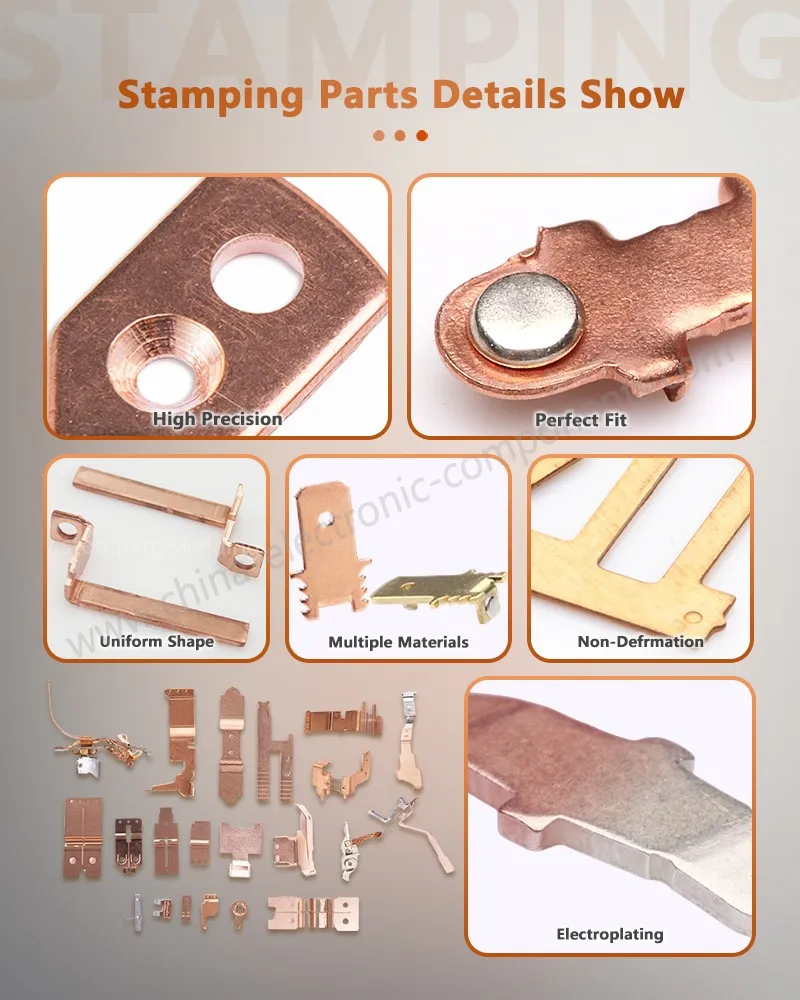
Development Trends of Beryllium Copper Stamping Parts
As electronic products continue to develop towards lightweighting and miniaturization, higher requirements are placed on the precision of stamped parts.
The industry is currently actively researching Beryllium Copper Stamping Techniques for Components, improving product dimensional accuracy and performance consistency by optimizing mold structure, stamping parameters, and heat treatment processes.
Meanwhile, demand for ultra-thin beryllium copper strip continues to grow.
In the fields of high-speed connectors, server connectors, and AI computing devices, Beryllium Copper Sheet Metal Stamping Parts for Electronics are widely used to meet the demands of high-speed signal transmission.
For precision terminal manufacturing, Terminal Copper Beryllium Stamping Parts are also evolving towards higher precision and reliability.
Challenges in Beryllium Copper Material Processing
Despite the excellent properties of beryllium copper, several technical challenges remain in actual production.
Firstly, there is the issue of material purity control.
Impurity elements can affect the microstructure of beryllium copper, leading to problems such as cracking, deformation, or reduced fatigue life during stamping.
Secondly, the production of ultra-thin strips is more difficult.
As connectors evolve towards higher density, the requirements for material thickness, flatness, and surface quality are becoming increasingly stringent.
Furthermore, the production process of Beryllium Sheet Stamping Terminal Parts requires strict control over surface roughness, oxide layer thickness, and stamping burr levels to ensure the quality of subsequent electroplating and assembly.
Smart Manufacturing Drives the Upgrading of the Beryllium Copper Industry
In recent years, digital manufacturing technologies have been increasingly applied to the production of beryllium copper materials and connector processing.
Through online inspection systems, machine vision technology, and data analysis platforms, end-to-end quality monitoring from raw materials to finished products can be achieved.
Utilizing digital process management can effectively improve the consistency and yield rate of Beryllium Copper Stamped Parts.
Simultaneously, intelligent production provides higher efficiency and more stable quality assurance for the mass production of Copper Beryllium Sheet Metal Stamping Parts.
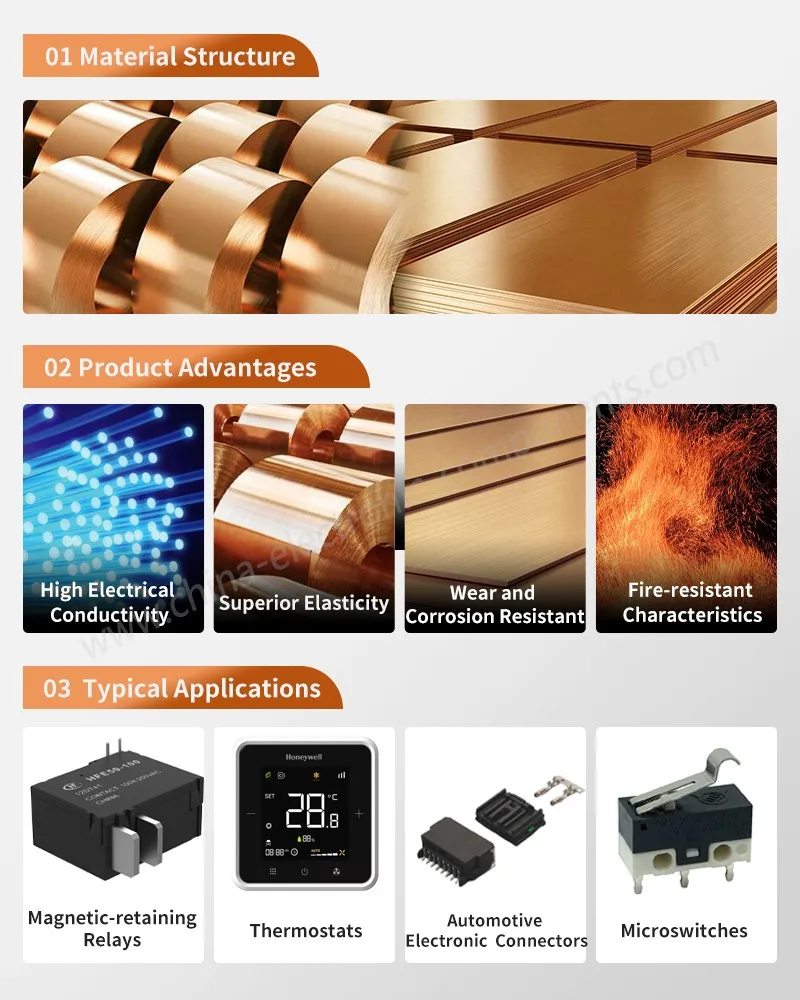
Future Development Directions of Beryllium Copper Materials
The high-reliability connector market will continue to grow, particularly in new energy vehicles, energy storage systems, data centers, aerospace, and industrial automation, where the demand for high-performance contacts will further expand.
The development direction of beryllium copper materials mainly focuses on the following aspects:
Improving the overall balance between material strength and conductivity;
Developing thinner and more precise strip products;
Optimizing the Manufacturing Process of Beryllium Copper Terminal Made by Stamping
Enhancing material consistency and reliability;
Promoting the development of green manufacturing and recycling technologies;
Achieving self-sufficiency and a stable supply of key materials for high-end connectors.
With the continuous advancement of precision stamping technology, Beryllium Copper Sheet Metal Stamping Parts will continue to play a vital role in electronic connection systems and become one of the irreplaceable core materials in the field of high-reliability connector manufacturing.
contact us
Send Inquiry