



What are the challenges involved in processing T2 oxygen-free copper strips into fuse contacts?
Jun 05, 2026
Leave a message
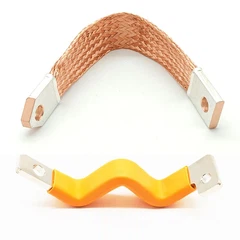
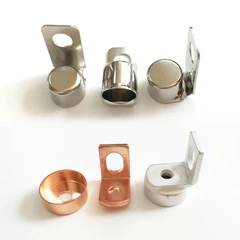
T2 oxygen-free copper strip is one of the most widely used high-conductivity copper materials in the industrial sector. With a copper content exceeding 99.9%, it offers excellent electrical conductivity, thermal conductivity, and workability, making it a staple in the manufacture of power equipment, electronic components, and fuses for new energy applications. Among various electrical connectors, critical conductive components-such as L-type terminals-frequently utilize T2 copper strip as the base material to ensure stable current transmission.

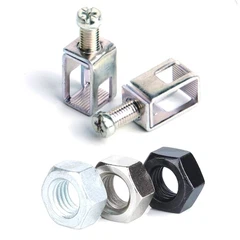
In terms of material properties, the primary advantage of T2 copper strip is its exceptionally high electrical conductivity-often exceeding 100% IACS-ranking second only to silver among industrial metals. Thanks to this combination of superior conductivity and cost-effectiveness, it is widely used in various conductive connection structures, such as securing lugs (fixing slots), providing reliable conductive paths for power systems.
High-purity copper demands strict control over impurities. Even trace amounts of elements like iron, silicon, or aluminum can significantly reduce electrical conductivity. Consequently, the manufacture of precision conductive components-such as copper securing lugs-requires rigorous raw material inspection and production management to ensure the copper's purity meets relevant technical standards.
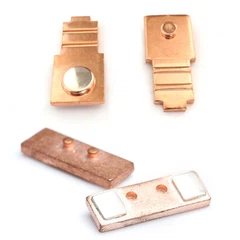
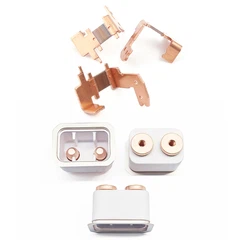
In new energy and power protection systems, fuses serve as critical overcurrent protection devices, placing stringent demands on the performance of conductive materials. As a core component of the fusing system, the fuse link contact is typically made from high-purity T2 copper to ensure minimal contact resistance and stable conductivity during normal operation.
While T2 copper strip offers excellent electrical conductivity, its mechanical properties present distinct characteristics. In its annealed state, T2 copper is relatively soft and exhibits good ductility and plasticity. While these traits facilitate complex forming processes, they also pose challenges regarding dimensional control and processing stability for high-precision stamped parts, such as copper end blade ferrules.

Many procurement professionals assume that softer materials are easier to process, but this is not necessarily the case. Due to the high ductility of T2 copper, issues such as deformation, wrinkling, and dimensional instability frequently arise during stamping, bending, and drawing operations. Consequently, when manufacturing precision electronic connectors-such as "End Tag Copper" components-optimizing mold design and process parameters is essential to ensure product consistency.
Work hardening (or strain hardening) is a common challenge when processing T2 copper. As the material undergoes repeated stamping, bending, or drawing, its hardness increases while its ductility declines. Excessive deformation without timely annealing can easily lead to cracking or even material failure. For high-reliability conductive components like copper electrical fuse contacts, strictly controlling the rate of cold-work deformation is critical.
In precision stamping, intermediate annealing effectively restores the copper's ductility, reduces internal stress, and improves subsequent processability. This is particularly important when producing complex copper sheet fuse parts; multiple annealing stages are often scheduled based on the degree of deformation to prevent material embrittlement and forming defects.
Beyond work hardening, T2 copper is susceptible to a risk often overlooked: hydrogen embrittlement, known in the industry as "hydrogen disease." During surface treatments such as pickling or electroplating, hydrogen atoms can diffuse into the copper, potentially causing delayed cracking over time. Strict control of pickling processes and the implementation of de-hydrogenation treatments are vital when manufacturing copper components for high-performance fuses.

With the rapid development of the new energy vehicle industry, market demand for high-voltage fuses continues to grow. As a core conductive component, the copper contact for a new energy fuse must not only possess excellent electrical conductivity but also withstand demanding operating conditions-such as high temperatures, high currents, and frequent electrical surges-making T2 pure copper a key material choice to meet these requirements.
If you are looking for solutions for Fuse End Blade Ferrules, please feel free to contact us. Our team offers professional manufacturing and customization support based on product drawings and application requirements.
contact us

Send Inquiry