










The core value and future development direction of welding technology in electronic packaging
Jun 04, 2026
Leave a message
As electronic products continue to evolve towards higher performance, higher reliability, miniaturization, and intelligence, welding technology has become an indispensable key manufacturing process in the electronic packaging field. Whether in new energy vehicles, high-end energy storage systems, industrial automation equipment, communication infrastructure, or consumer electronics, welding quality directly affects the product's conductivity, mechanical strength, heat dissipation efficiency, and lifespan.
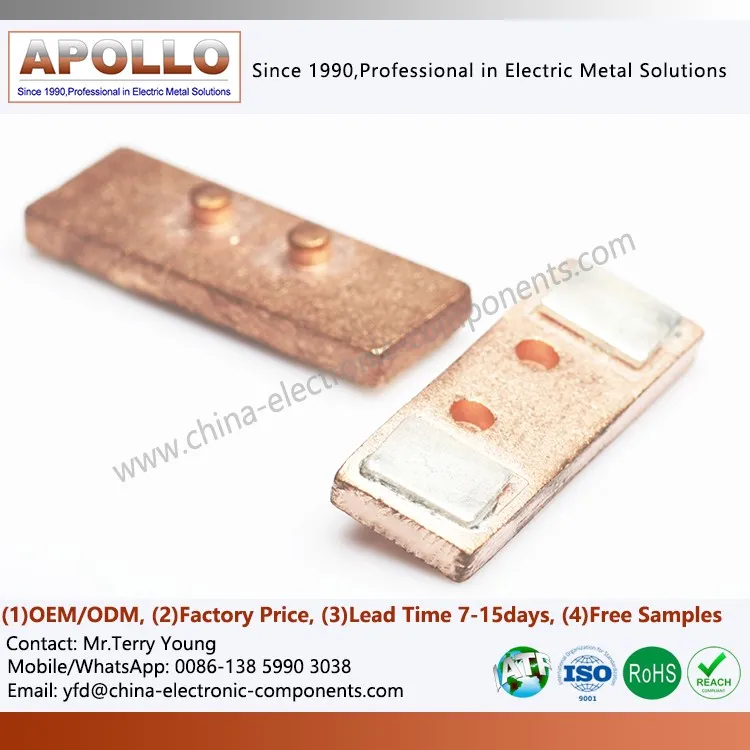
In modern electronic manufacturing, welding processes permeate the entire industry chain, from chip packaging to power device assembly, and from conductive connections to thermal management system construction. Specifically, in the manufacturing of silver contact components, copper busbar components, and conductive connectors, structural forms such as Silver Contact Brazed Assemblies, Electrical Contact Assemblies, and Brazed Electrical Contacts are widely used in power control and new energy equipment.
The Importance of Welding Technology in Electronic Packaging: Improving Electrical Connection Reliability
During the operation of electronic equipment, a large amount of current needs to be transmitted through welded connection points. Solder joints not only provide electrical conductivity but also serve as crucial mechanical fixing structures.
In circuit breakers, contactors, relays, and new energy power distribution systems, the use of high-quality brazed electrical contacts and brazed contacts effectively reduces contact resistance, improves conductivity, and enhances long-term operational stability.
For high-current applications, such as energy storage systems, charging piles, and industrial power distribution equipment, the reliability of the welded area often determines the overall lifespan of the device. Therefore, more and more manufacturers are adopting brazing silver contacts to copper bars technology to achieve a high-strength metallurgical bond between silver and copper materials, thereby improving conductivity and arc resistance.
Optimized Thermal Management
As the integration of power devices continues to increase, heat dissipation has become a crucial indicator in electronic packaging design.
The solder layer not only conducts electricity but also serves as an important heat conduction path. In IGBT modules, DC contactors, high-voltage relays, and energy storage PCS devices, high-quality soldering can significantly reduce interface thermal resistance and improve heat dissipation efficiency.
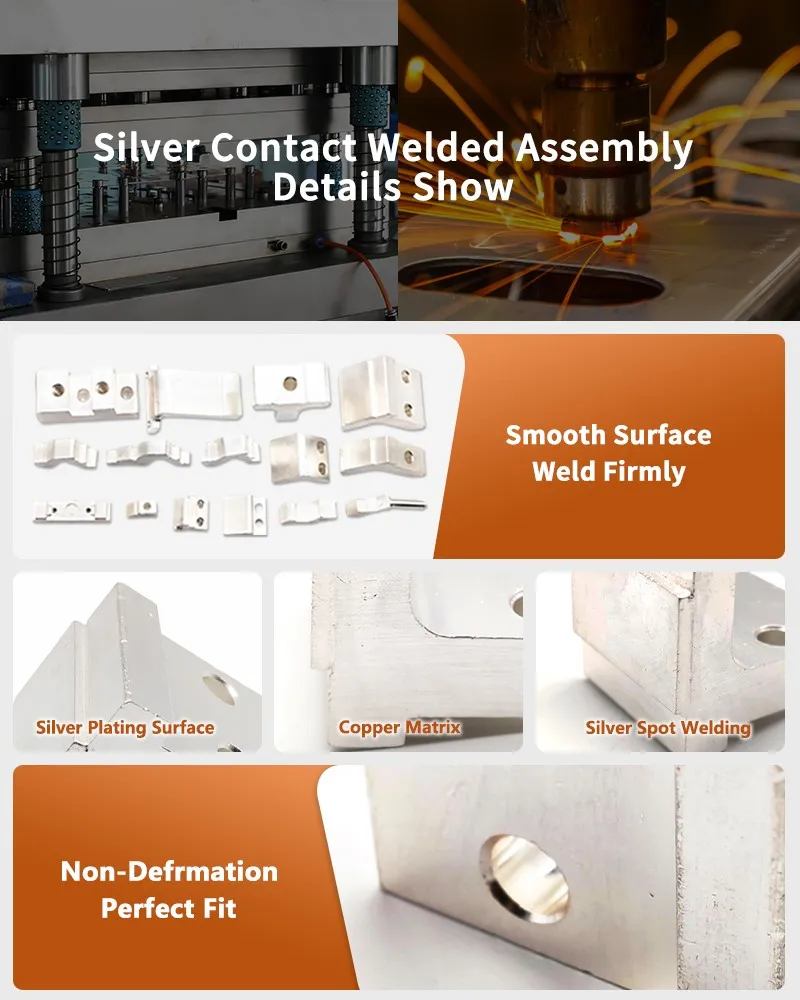
Using high-quality silver solder material for connections can form a uniform and stable solder layer structure, thereby reducing localized heating.
Compared to traditional connection methods, advanced silver soldering technology further enhances thermal conductivity and structural stability, providing more reliable operation for high-power devices.
Meeting the Needs of Miniaturization and High-Density Integration
Modern electronic products continue to evolve towards miniaturization, making traditional connection methods insufficient for high-density packaging requirements.
In miniature relays, smart sensors, and precision control modules, soldering technology needs to achieve micron-level processing precision. Especially in the manufacturing of silver contact components, contact welding technology enables stable connections within extremely small soldering areas, providing crucial support for product miniaturization.
Simultaneously, with the development of heterogeneous integration technology, the demand for connections between different materials is constantly increasing. By optimizing the contact joining brazing process, highly reliable connections between copper, silver, brass, and other conductive materials can be achieved, improving overall packaging performance.
Development Trends of Electronic Packaging Soldering Technology: Continuous Upgrading of Micro-soldering Technology
With the rapid development of advanced packaging technologies, soldering dimensions are evolving from the millimeter level to the micron level.
In the manufacturing of high-density electronic components, traditional soldering processes are gradually being replaced by precision soldering technologies. For example, the Resistive Welding Silver Contact process enables high-precision silver contact connections while ensuring excellent mechanical strength and conductivity in the welded area.
For AC contactors, relays, and power switchgear, AC Resistance Welding Silver Contact technology has become an important means of improving product consistency.
Furthermore, in automated production environments, Electric Resistance Spot Welding Silver Contact technology enables high-speed batch welding, significantly improving production efficiency and product stability.
The application of new conductive connection materials is increasing
High-performance electronic devices place higher demands on connection materials.
Traditional solders are gradually being upgraded towards higher conductivity, higher thermal conductivity, and higher reliability. Especially in the fields of new energy and power equipment, the use of Electrical Contact Resistance Brazing technology can effectively improve contact connection quality.
Simultaneously, combining the Silver and Copper Welding Button Contact structural design can fully leverage the conductivity advantages of silver and the mechanical properties of copper, achieving a balance between performance and cost.
In the future, nano-silver sintered materials, high-performance silver-based solders, and composite conductive materials will further drive the upgrading of electronic packaging technology.
Deep Integration of Automation and Intelligent Manufacturing
Automated welding has become a crucial development direction in the electronics manufacturing industry.
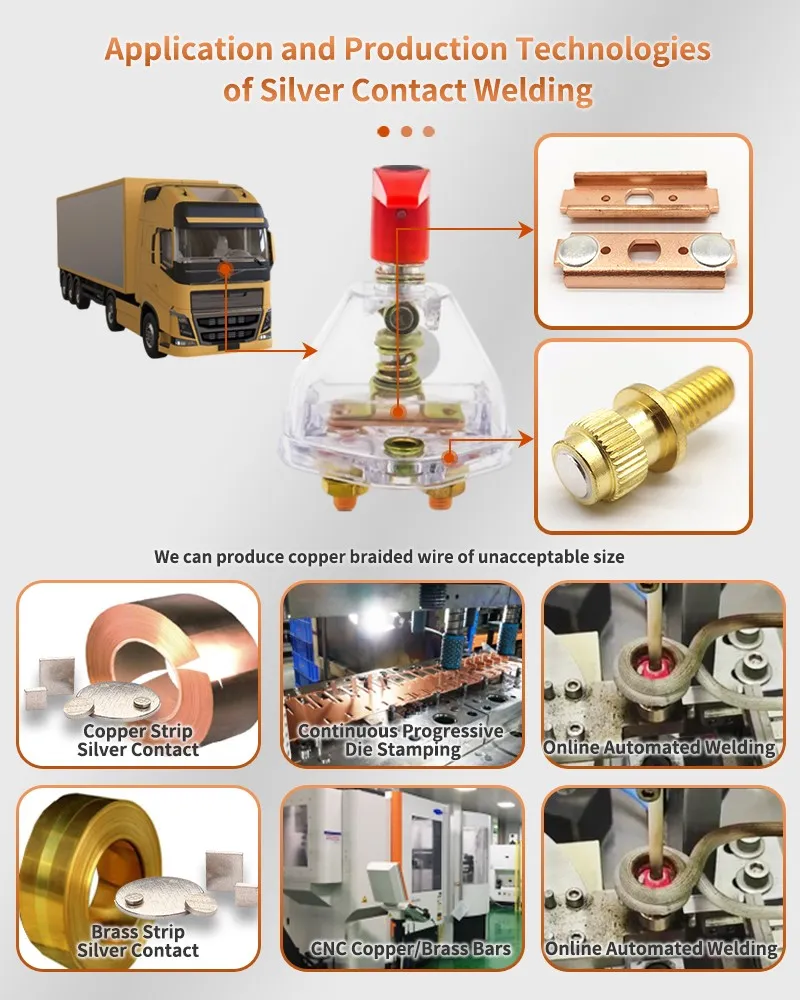
Modern production lines utilize vision positioning systems, robot control systems, and online inspection equipment to achieve real-time monitoring and automatic adjustment of the welding process.
For example, in the production of relay and contactor contact assemblies, the Welding Electrical Silver Contact Tip Assembly process leverages automated equipment to achieve high-precision positioning and welding, significantly improving product consistency.
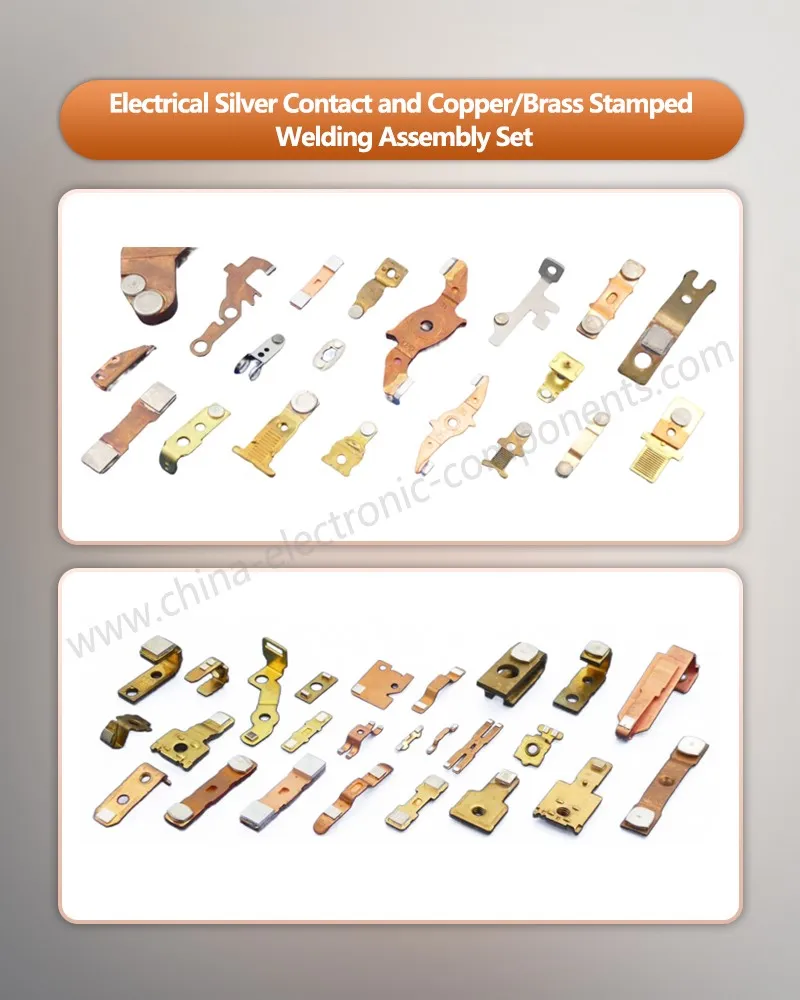
For high-volume manufacturing needs, Silver Contact Stamped Welding Assemblies are widely used in automated production systems, enabling continuous and large-scale production.
Through digital management platforms, companies can also track and optimize welding parameters in real time, further improving product quality and production efficiency.
Application of Welding Technology in Electrical Connection Components
Power Control Equipment
Circuit breakers, contactors, and relays, among other devices, need to withstand frequent switching and arcing over extended periods.
Therefore, contact assemblies manufactured using the Brazing Contacts for MCCB process effectively improve wear resistance and arc extinguishing capabilities, extending product lifespan.
Copper Busbar and Conductive Component Manufacturing
Copper busbars are widely used as conductive carriers in new energy systems and industrial power distribution equipment.
Through the Copper/Brass Stamping with Silver Contact Brazing technology, high-strength connections between silver contacts and copper-based materials can be achieved, improving conductivity and contact reliability.
Simultaneously, the Electrical Contact Brazed Stamping Components manufacturing process can meet the mass production needs of complex conductive components.
New Energy and Energy Storage Fields
New energy vehicles, energy storage systems, and charging infrastructure have extremely high requirements for electrical connection reliability.
Connection components manufactured using the Silver Contact Welded to Copper/Brass Stamps process can withstand higher current loads and frequent switching operations, maintaining stable operation under high voltage and high temperature environments.
With the rapid development of the new energy industry, high-performance welding technology will play an increasingly important role in high-voltage DC systems, energy storage switchgear, and intelligent power distribution systems.
Conclusion
Welding technology is not only a crucial fundamental process in electronic packaging, but also a core factor determining the performance, reliability, and lifespan of electronic products. With the rapid development of industries such as advanced packaging, new energy vehicles, energy storage systems, and industrial automation, welding technology is continuously upgrading towards higher precision, higher reliability, intelligent manufacturing, and green manufacturing.
In the future, from Silver Contact Brazed Assemblies to high-performance Electrical Contact Assemblies, from precision resistance welding to advanced brazing technology, various welding solutions will play an increasingly critical role in the electronics manufacturing supply chain, providing continuous support for efficient, safe, and reliable electrical connections.
contact us
Send Inquiry