










The Analysis of Lithium-ion Battery Manufacturing Process and Management System
Apr 05, 2026
Leave a message
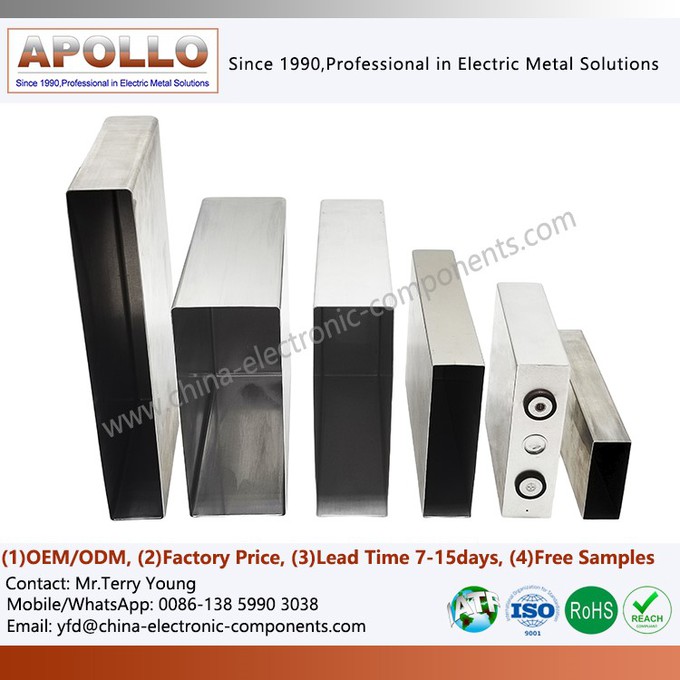
As a core component of the new energy industry, the manufacturing process of lithium-ion batteries is highly systematic and precise. From material formulation to cell packaging, each step directly affects the performance, safety, and consistency of the final product. In actual manufacturing, structural components such as Prismatic Cell Cases and Battery Aluminum Housings, as important load-bearing and protection units for the cell, also have a critical impact on overall reliability.
Core Lithium-ion Battery Manufacturing Process
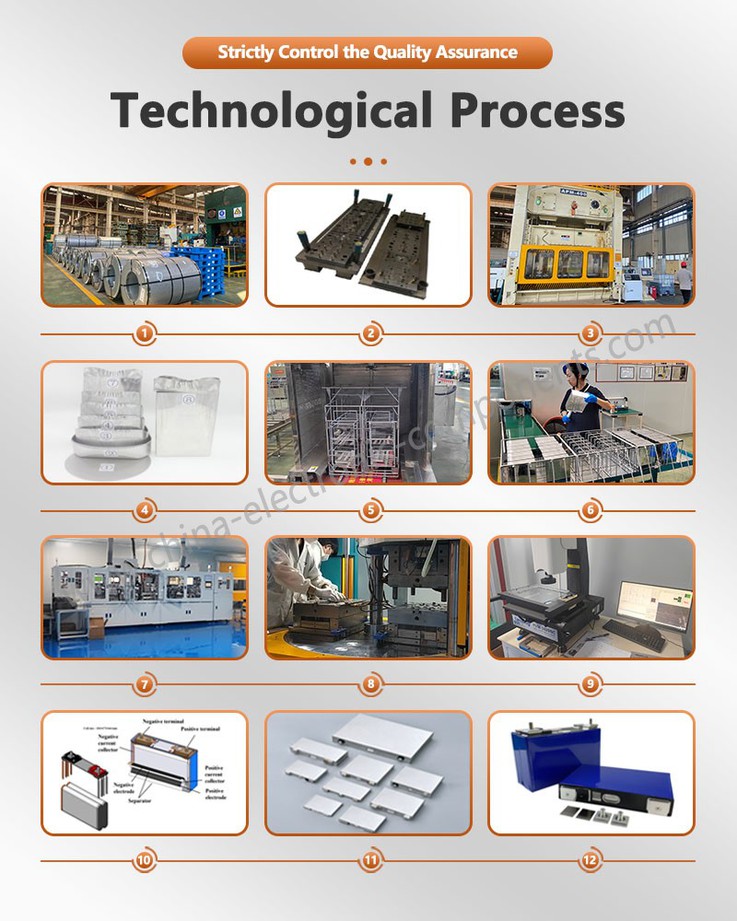
Lithium-ion battery production typically begins with electrode manufacturing, gradually completing the cell construction through multiple precise processes. First, in the positive electrode formulation stage, active materials, conductive agents, and binders are mixed in strict proportions, and a stable slurry system is formed by controlling the stirring process parameters. This process requires extremely high material dispersion uniformity, which is fundamental to ensuring electrical performance. Similar structural systems are ultimately matched and applied to packaging systems such as aluminum shells for lithium-ion battery cells to ensure stable overall electrochemical performance.
The negative electrode formulation process is similar to that of the positive electrode, but additional dispersants are needed to optimize the dispersion state of graphite or silicon-based materials. The stability of the slurry system directly affects the quality of subsequent coating processes. The process control capabilities at this stage determine the consistency level of the battery cell and are synergistically related to the assembly precision of subsequent processes, such as the lithium cell aluminum shell.
In the coating process, positive and negative electrode slurries are uniformly coated onto the surfaces of aluminum and copper foil current collectors, respectively, and the solvent is removed through a drying process. Control of coating thickness, areal density, and drying temperature directly determines electrode performance. Highly consistent electrodes provide a stable foundation for subsequent matching with the aluminum alloy prismatic battery case.
The wafer fabrication stage includes rolling and slitting processes. Compaction increases electrode density, and the electrodes are slit according to design dimensions. Subsequent processes include electrode drying, tab welding, and encapsulation to ensure stable conductive paths and insulation safety. The precision requirements at this stage directly affect the battery cell assembly quality and are closely related to the structural matching of the prismatic cell aluminum shell.
The winding or stacking process assembles the positive, negative, and separator electrodes into the core structure of the battery cell. This process requires strict control of tension and alignment to avoid internal short circuits or structural misalignment. The resulting cell structure will be encapsulated in a material such as an aluminum shell for prismatic lithium-ion batteries, achieving mechanical protection and sealing.
In the casing process, the cells are placed into a metal casing (steel or aluminum) and undergo pressure testing and cleaning. Aluminum shells, due to their lightweight and excellent heat dissipation performance, are widely used in power batteries and energy storage systems, such as the typical New Energy Vehicle Aluminum Battery Case structure.
Finally, battery manufacturing is completed through processes such as cell baking, electrolyte injection, encapsulation, and laser welding. The encapsulation structure, such as an aluminum shell for lithium iron phosphate cells, plays a crucial role at this stage, ensuring the battery has good sealing and long-term stability.
Key Challenges in Lithium Battery Production Management
Lithium battery manufacturing involves multiple processes, materials, and equipment collaboration, making its management highly complex. Firstly, quality control is essential throughout the entire production process, requiring strict control from raw materials to finished products. Since some processes still rely on manual inspection, defect identification can be delayed, affecting yield. Especially in the assembly of lithium cell battery aluminum shells, the requirements for dimensional accuracy and cleanliness are even more stringent.
Secondly, data recording and analysis capabilities have become a significant factor limiting manufacturing efficiency. The production process generates a large amount of process parameters and quality data. Relying on manual recording can easily lead to data lag and distortion, making effective traceability difficult. This is particularly critical for products with high consistency requirements (such as Pack Aluminum Housing applications).
Equipment parameter optimization is also a manufacturing challenge. Currently, some factories still rely on experience for machine adjustments, lacking standardized models, resulting in fluctuations in production efficiency and stability. For processes matching high-precision structural components such as Deep Drawn Aluminum Battery Housings, equipment stability is especially important.
Furthermore, insufficient production informatization also limits overall efficiency improvement. Although automated equipment is widespread, the problem of data silos still exists, affecting cross-process collaboration and decision-making efficiency. This problem is even more pronounced in complex product systems (such as Battery Pack With Aluminum Housing).
The Application Value of MES Systems in Lithium Battery Manufacturing
Manufacturing Execution Systems (MES) have become a core tool for improving lithium battery production management. The production planning management module enables collaborative management of orders, scheduling, and materials, ensuring the rational allocation of production resources.
This capability is particularly important in the production of multiple structural components (such as aluminum shells for Samsung SDI batteries).
Regarding production process monitoring, the MES system achieves real-time data acquisition through sensor and equipment interfaces, comprehensively monitoring process parameters, equipment status, and environmental conditions. This real-time capability is crucial for ensuring the consistency of high-standard products such as aluminum shells for Panasonic batteries.
The quality management module supports full-process quality inspection and traceability, identifying root causes of problems through data analysis and continuously optimizing process parameters. For high-reliability applications (such as power batteries and energy storage systems), this capability is a key support for achieving large-scale manufacturing.
The equipment management function improves equipment utilization and reduces failure rates through status monitoring and preventative maintenance. Simultaneously, combined with data analysis, it optimizes equipment parameters, thereby improving overall production efficiency.
Data acquisition and analysis, as the core of the MES system, provides decision support to management through multi-dimensional reports and visualization tools. By identifying and optimizing production bottlenecks, manufacturing levels and product competitiveness can be sustainably improved.

Conclusion
Lithium-ion battery production is a highly complex and precise systems engineering project, the core of which lies in the deep integration of process control and manufacturing management. From material formulation to structural packaging, every step requires meticulous control and relies on information systems to achieve full-process optimization. With the development of the new energy industry, the demand for high consistency and high reliability is constantly increasing, driving the continuous upgrading of the manufacturing system.
About Us
In the field of lithium-ion battery structural components, we focus on the research and development and manufacturing of high-precision aluminum shells and supporting solutions. Our products cover various types, including Prismatic Cell Cases, Battery Aluminum Housings, and Deep Drawn Aluminum Battery Housings, and are widely used in power batteries and energy storage systems. Leveraging our mature precision molding and processing capabilities, we can provide customers with structural component solutions adapted to different cell systems, helping to improve the safety, consistency, and lightweighting of battery systems.
contact us
Send Inquiry