










Metal Bushing Selection and Application Guide: Working Principles, Material Properties, and Maintenance Strategies
Jun 16, 2026
Leave a message
In mechanical drive and motion systems, a bushing-a single-piece cylindrical component-is widely installed between a moving shaft and its surrounding housing. Its primary function is to provide a smooth bearing surface for the shaft and to protect more expensive components from damage by undergoing gradual wear itself. This sacrificial design ensures that replacing a low-cost bushing is far more economical than replacing the entire main shaft. Unlike ball bearings, which rely on rolling contact to reduce friction, bushings support loads through direct sliding contact; they are typically made of materials that are softer or possess superior self-lubricating properties compared to the shaft, thereby ensuring that any wear occurs on the bushing rather than on the critical drive shaft.
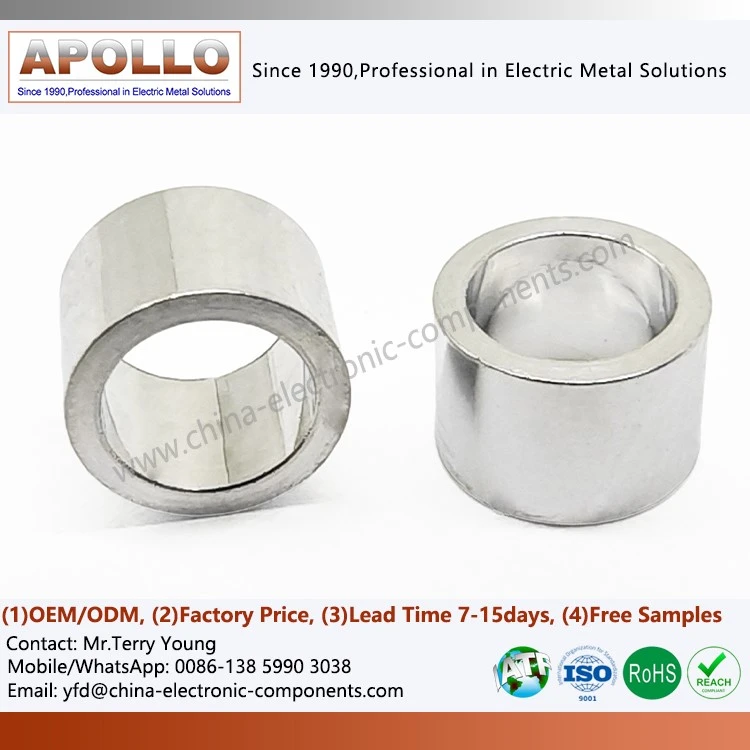
The working principle of a shaft sleeve involves it being press-fitted into a housing bore to remain stationary, while allowing a shaft to pass through its inner diameter to rotate, slide, or oscillate. In lubricated designs, an oil or grease film forms between the shaft and the sleeve, whereas self-lubricating designs handle lubrication independently. For instance, sintered bronze releases lubricant from its pores when heated, PTFE composites deposit a permanent transfer film onto the shaft, and graphite sleeves utilize their layered atomic structure-which shears easily-to reduce friction. Beyond friction reduction, shaft sleeves offer functions such as vibration damping and isolation, axial positioning, misalignment compensation, and electrical insulation, making them critical components for the smooth operation of mechanical systems.
In engineering practice, shaft sleeves are typically classified as sliding bearings or plain bearings to distinguish them from rolling-element bearings. Technically, shaft sleeves excel in load-bearing capacity, handling heavy and shock loads while generally operating more quietly. In contrast, while rolling bearings suit high-speed and high-precision applications, they almost invariably require external lubrication and lack shock resistance. For example, in large steam turbines and marine propulsion shafts, well-designed hydrodynamic radial sleeves can operate indefinitely given an adequate oil supply; this makes the pump shaft sleeve indispensable for heavy-duty operations.
Although shaft sleeves undergo gradual wear, issues are easily overlooked until the shaft or housing suffers consequential damage. Therefore, recognizing early signs of failure is crucial. Abnormal noises at joints or pivots, increased shaft clearance (play), heightened vibration, or unusual heat generation near the joint all indicate potential sleeve failure. Direct inspection of the surface may reveal visible scratches, pitting, or material spalling. For critical moving parts-such as front sleeve bearings-it is best not to wait for failure to occur; replacing them at scheduled maintenance intervals is always more cost-effective than dealing with unplanned downtime and collateral damage.
Selecting the appropriate bushing requires considering several key factors in a specific order. First is the type and direction of the load: standard sleeve bushings are suitable for radial loads, whereas axial loads require the addition of thrust washers or a flanged design; applications involving both load types require a comprehensive assessment. Next is the PV value (contact pressure multiplied by sliding velocity), a standard tribological criterion for evaluating sliding bearing performance. Each material has a rated maximum PV value; exceeding this limit causes the bushing to overheat and fail. For demanding applications, the operating PV value should not exceed half of the rated maximum-a thermal limit that must be strictly observed during selection.
Regarding material selection, performance requirements vary drastically depending on the application. Metal bushings, such as cast bronze, are suitable for heavy-load, low-speed operations, while self-lubricating sintered bronze is commonly used in motors and fans. Polymer-based materials-such as PTFE composites, nylon, and PEEK-excel in automotive hinges, aerospace applications, and high-temperature or clean-room environments. Filament-wound composite materials are the ideal choice for marine engineering or chemical processing machinery requiring exceptional wear and corrosion resistance. This diverse range of materials forms a vast array of metal and non-metal bushings, meeting needs across sectors ranging from food processing to heavy machinery.
Beyond these general types, bushings come in various specialized forms designed for specific structural roles. For instance, distance sleeves ensure precise spacing between components during support and positioning, while shaft sleeves in rotating systems also serve a sealing function, preventing the ingress of dust and moisture. Cylindrical bushings are widely adopted in precision instruments and light machinery due to their standardized dimensions and excellent performance. Regardless of the specific form, the primary objective remains optimizing mechanical performance and extending the equipment's service life.
contact us
Please feel free to contact us if you have any questions regarding sleeve bearing selection, material compatibility, or mechanical maintenance. We provide professional technical support and customized solutions to ensure the efficient and stable operation of your equipment.

Send Inquiry