










Functions and Core Roles of Cabinet Power Distribution
Jun 04, 2026
Leave a message
Within the complex ecosystem of power systems, server cabinet power distribution-serving as a critical infrastructure component-undertakes the core tasks of power distribution, control, and protection. Common types include fixed-panel, protective, drawer-type, and power-and-lighting distribution cabinets. The primary function of server cabinet power distribution is to distribute electrical energy safely and evenly to various load points, while also rapidly initiating power-off protection in the event of circuit anomalies such as short circuits, overloads, or leakage currents. As an enclosed cabinet housing an array of electrical components, it serves not only as a hub for power transmission but also as the first line of defense for safeguarding both electrical equipment and personnel.
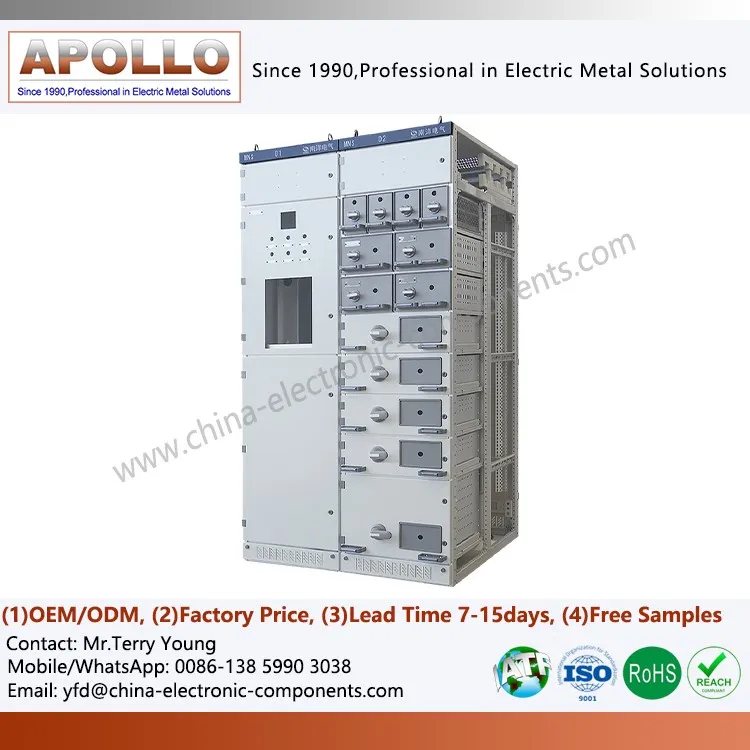
The primary functions of a cable distribution cabinet manifest in two key aspects: first, providing precise power distribution and control for electrical equipment; and second, offering reliable power-off protection in the event of circuit anomalies. By virtue of these robust capabilities, cable distribution cabinets are widely deployed in residential settings-such as apartment buildings, schools, and hospitals-as well as in industrial facilities, where they manage power and lighting systems within factories and workshops. Within a power supply network, power distribution equipment is typically categorized into a three-tier hierarchy: primary, secondary, and tertiary levels. At the primary level, the main power distribution cabinet-characterized by its complex internal structure and high output capacity-serves as the central power distribution hub; typically installed within a substation, it is responsible for distributing electrical energy to the secondary-level cable distribution cabinets. Its internal components include essential elements such as busbars, circuit breakers, and integrated relay protection devices.
Within the classification system for electrical enclosures, power distribution cabinets and motor control centers serve distinctly different operational roles. Power distribution cabinets are primarily utilized in locations characterized by fewer circuits and dispersed loads, whereas motor control centers are deployed in areas with numerous circuits and concentrated loads, receiving power from the primary distribution cabinet and distributing it to proximate loads. Driven by the advancements of modern industry and commerce, the design of various electric distribution cabinets is continuously evolving to meet the rigorous demands for power management, thermal management, and electromagnetic compatibility across diverse operational environments.
In low-voltage power distribution systems, lighting distribution cabinets and power distribution cabinets serve as common terminal-level devices. Characterized by their relatively smaller capacities and decentralized placement, these units are primarily responsible for controlling power distribution to the lowest-tier loads. For instance, within urban infrastructure, street distribution cabinets are tasked with supplying power to streetlights and public amenities; consequently, their enclosures must possess an exceptionally high degree of ingress protection to withstand exposure to wind, rain, and dust. Conversely, within industrial facilities, various types of electric distribution cabinets employ intelligent internal compartment partitioning to effectively mitigate the adverse effects of arc flash incidents and thermal rise on sensitive internal components.
In the realm of communication infrastructure, electrical distribution cabinets play an equally indispensable role. Data Distribution Cabinets are utilized to house network equipment, signal processing systems, and patch panels, thereby ensuring the unimpeded flow of communication networks. Furthermore, in outdoor or harsh environments, Outdoor Fiber Optic Cross-Connection Distribution Cabinets employ specialized sealing and anti-corrosion designs to safeguard internal precision fiber splicing trays and communication equipment against environmental degradation.
In specific industrial and commercial applications, the structural configuration of an electrical distribution cabinet dictates the ease and safety of its maintenance. For instance, Fused Distribution Cabinets are frequently deployed to protect low-capacity circuits or specific loops, leveraging the current-limiting characteristics of fuses to rapidly interrupt faults. Conversely, in settings with unique constraints regarding space or mounting locations, Exterior Distribution Cabinets or wall-mounted enclosures offer flexible spatial solutions, ensuring the orderly organization and regulatory compliance of electrical control systems.
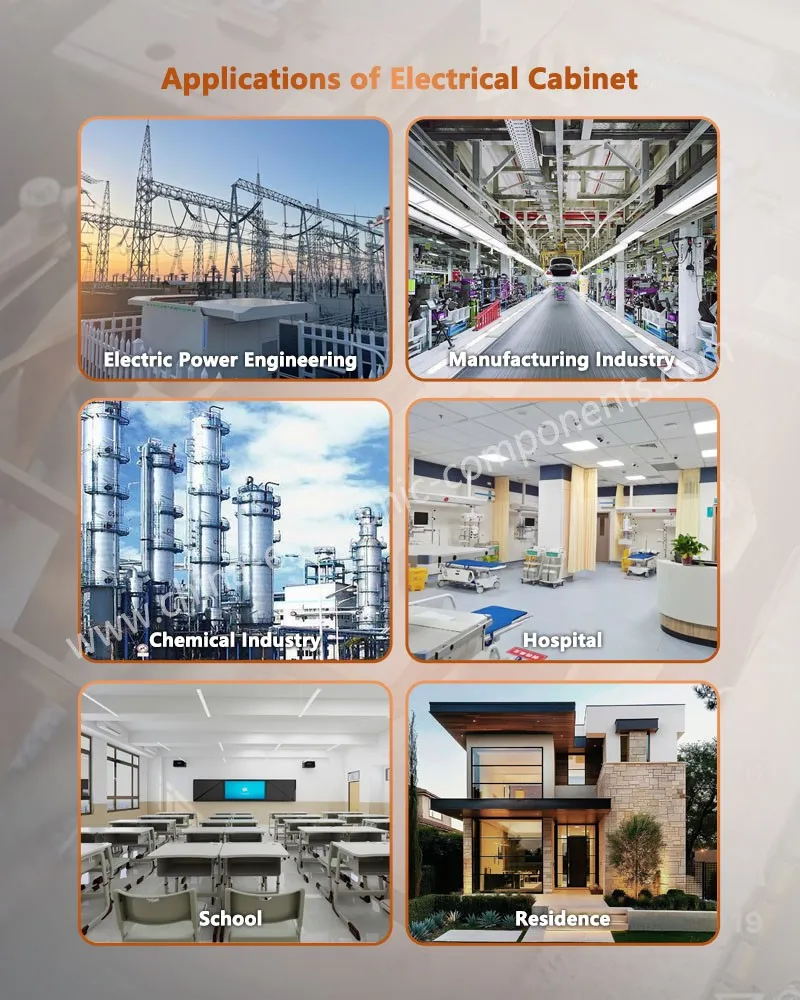
Regardless of the specific type of distribution cabinet, its enclosure serves as a "silent guardian," performing a critical role in physical protection. A standard electrical distribution cabinet must not only possess a robust structure capable of supporting heavy internal busbars and components but also incorporate scientifically engineered ventilation designs to facilitate thermal management, thereby preventing heat accumulation that could lead to the premature aging of equipment. Moreover, the cabinet enclosure can function as a Faraday cage, mitigating electromagnetic interference and ensuring the precise operation of automated control systems and measurement instrumentation.
If you are seeking professional solutions for custom electrical cabinets or technical support for distribution systems, we invite you to contact us at any time. We are committed to providing you with comprehensive, one-stop solutions-ranging from structural design to component selection-to ensure the safe and efficient operation of your electrical systems.
contact us

Send Inquiry