



Application and Technical Development Trends of Heat-Shrinkable Insulation Materials in Substation Busbar Protection
Aug 27, 2026
Leave a message
As power system capacities expand and smart grid construction advances, requirements for the insulation reliability, operational safety, and environmental adaptability of substation equipment are steadily rising. During long-term operation, substation busbars, connection points, and exposed conductive structures are susceptible to factors such as contamination, humidity, salt spray, condensation, and the intrusion of small animals; these factors increase the risk of insulation failure and equipment outages.
To enhance the operational stability of power equipment, heat-shrinkable insulation materials have emerged as a key technical solution for electrical protection in substations. By leveraging the heat-shrinkage properties of radiation-crosslinked polymer materials, a continuous and reliable insulation layer can be formed over busbars and connection points. This effectively improves the equipment's insulation level while meeting requirements for mechanical strength, electrical performance, and weather resistance in long-term operating environments.
Currently, heat-shrink insulation technology is widely used to protect conductive connections in medium- and low-voltage switchgear, high-voltage distribution systems, and new energy power equipment. For instance, in power busbar systems, the use of heat-shrinkable busbar tubing reduces the risk of exposed conductors being affected by the external environment, thereby enhancing the overall safety of the equipment.

Main Types and Structural Characteristics of Heat-Shrinkable Insulation Materials
Heat-shrinkable insulation materials used in substations primarily include heat-shrinkable busbar tubing, composite heat-shrinkable insulation tape, insulation shrouds, cable termination accessories, and creepage distance enhancement components.
Among these, heat-shrinkable busbar tubing is mainly used for the insulation protection of main and branch busbars. Upon heating and shrinking, the material conforms tightly to the surface of copper or aluminum busbars, forming a uniform insulation layer that minimizes air gaps and improves phase-to-phase insulation capability. In practical engineering applications, PVC-insulated copper busbar solutions enhance protection through an external insulation layer and are suitable for internal connection structures in power distribution cabinets, switchgear, and high-voltage electrical equipment.
Composite heat-shrinkable insulation tape typically consists of a heat-shrinkable layer and a specialized adhesive layer. During the heating process, the outer material shrinks while the internal adhesive softens, creating a sealed interface between the insulation layer and the conductor being protected. This approach not only provides electrical isolation but also enhances resistance to moisture, corrosion, and contamination, making it suitable for space-constrained or hard-to-retrofit legacy substations.
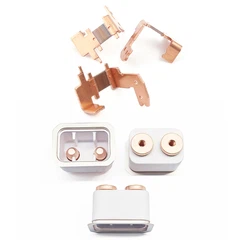
Furthermore, insulating covers are primarily applied to busbar connection points, switch contacts, and specialized electrical interfaces to prevent short-circuit accidents caused by the ingress of foreign objects. Similar protective concepts are increasingly being adopted for high-current connection components in new energy vehicles and energy storage systems; for instance, EV battery connectors rely on reliable insulation structures to enhance connection safety.

Key Technical Properties of Heat-Shrink Materials
High-quality heat-shrink insulation materials must simultaneously meet requirements for electrical performance, mechanical properties, and environmental adaptability.
First, heat-shrink materials do not significantly impair the normal heat dissipation of busbars. With proper design, the insulating layer maintains safe clearances while allowing the conductor's temperature rise to remain within normal limits, thereby preserving the busbar's rated current-carrying capacity. This is a key reason why heat-shrink insulation solutions are widely used in high-current power distribution systems.
Second, heat-shrink materials exhibit high dielectric strength and voltage withstand capabilities. During long-term operation, the insulation layer must withstand combined stresses arising from power-frequency voltage, transient surge voltages, and environmental fluctuations. Consequently, busbar insulating tubing requires stable insulation performance to minimize the risk of partial discharge and dielectric breakdown.
Regarding flame retardancy, power systems impose strict requirements on insulation materials. In the event of equipment failure within a substation, the material itself must not act as a source for fire propagation. Therefore, modern heat-shrink materials typically utilize flame-retardant polymer systems that are self-extinguishing upon removal of the ignition source, thereby enhancing the safety level of equipment operation.
Additionally, aging resistance is a critical factor influencing the service life of heat-shrink materials. Since substation equipment often operates continuously for many years, insulation materials must endure prolonged exposure to temperature fluctuations, electric field stress, and environmental degradation. Optimized radiation-crosslinked materials possess stable molecular structures, enabling them to maintain their mechanical and insulating properties over extended periods.
Key Value of Heat-Shrink Insulation Technology in Substations
In traditional substations, exposed busbars and electrical connection areas are vulnerable to the external environment. For instance, small animals entering the equipment could cause phase-to-phase short circuits; airborne dust and salt spray might form conductive pollution layers; and humid environments could degrade insulation performance.
Insulating the busbars effectively mitigates these risks. By employing heat-shrink busbar technology, previously exposed conductive parts are covered with insulating material, thereby enhancing the equipment's protection rating. Simultaneously, the insulation layer reduces the risk of maintenance personnel coming into contact with live components, improving safety during servicing.
In areas characterized by high pollution, high humidity, or coastal proximity, airborne salts and corrosive gases can easily erode the surfaces of metal conductors, compromising equipment reliability. A heat-shrink insulation layer creates a protective barrier that minimizes direct contact between the busbar and corrosive agents, thereby extending the equipment's service life.
For compact electrical equipment, insulation protection also facilitates structural design optimization. By enhancing the insulation level between busbars, internal clearances can be reduced while still meeting safety standards, thereby improving space utilization within the enclosure.
Expanding Applications of Heat-Shrink Insulation Materials in New Energy Power Systems
The rapid development of new energy vehicles, energy storage systems, and renewable energy power plants has created new demands for insulation protection in high-current connection systems.
In new energy vehicle battery systems, power battery connection structures must simultaneously meet requirements for high-current transmission, mechanical stability, and safety isolation. Connection components-such as battery terminal busbars-often require insulation sleeving to prevent safety risks arising from vibration, temperature rise, or environmental factors during operation.
Energy storage systems involve numerous high-voltage, high-current connection points between battery modules, power conversion equipment, and DC power distribution units. Utilizing heat-shrink busbar insulation sleeves enhances protection in connection areas and reduces the risk of accidental contact during maintenance.
Furthermore, as new energy equipment evolves toward higher power ratings and greater integration, insulation materials must offer not only basic protection but also heat resistance, flexibility, and long-term reliability. Consequently, solutions featuring insulated copper busbars with heat-shrink tubing are increasingly being adopted in the field of new energy electrical connections.

Key Factors in the Design of Heat-Shrink Insulation Systems
In practical engineering applications, a heat-shrink insulation solution involves more than simply adding an insulation layer; it requires a comprehensive design that accounts for voltage levels, operating environments, busbar dimensions, and heat dissipation requirements.
First, the material thickness must be selected appropriately. Insufficient thickness may fail to meet insulation requirements, while excessive thickness can hinder heat dissipation and encroach upon installation space. Therefore, the choice must be matched to the equipment's operating conditions.
Second, the quality of the installation process is critical. Factors such as temperature control during heat shrinking, the shrinkage ratio, and the degree of surface adhesion all influence the final protective performance. Issues such as air bubbles, wrinkles, or inadequate local adhesion during installation can create potential weak points in the insulation.
Furthermore, specific insulation structures should be selected based on the application scenario. For instance, some high-reliability power systems utilize customized busbar insulation tubing-designed specifically to match busbar shapes, voltage ratings, and installation spaces-to enhance overall compatibility.

Future Trends in Heat-Shrink Insulation Technology
As power equipment evolves toward higher reliability, greater density, and increased intelligence, heat-shrink insulation technology is also continuously advancing.
In the future, insulation materials will increasingly prioritize environmental friendliness, high-temperature resistance, and long-term stability. Novel polymer materials, composite insulation structures, and intelligent inspection technologies will further elevate the safety standards of electrical equipment.
Simultaneously, growth in the new energy sector will drive continuous innovation in insulated busbar technology. High-performance insulation structures will become vital components for ensuring the safe operation of systems in areas such as new energy vehicles, battery energy storage, and power electronic conversion equipment.
Technologies such as PVC busbar heat-shrink sleeves and PVC-insulated busbars can meet insulation needs across various voltage levels and installation environments, providing more reliable connection protection for modern electrical systems.
Overall, thanks to their excellent electrical properties, ease of installation, and long-term reliability, heat-shrink insulation materials have become a key protective technology for substations and new energy power systems. As grid equipment and new energy applications continue to evolve, heat-shrink insulation technology will play an increasingly important role in enhancing equipment safety, reducing operational risks, and optimizing electrical system designs.
contact us

Send Inquiry