










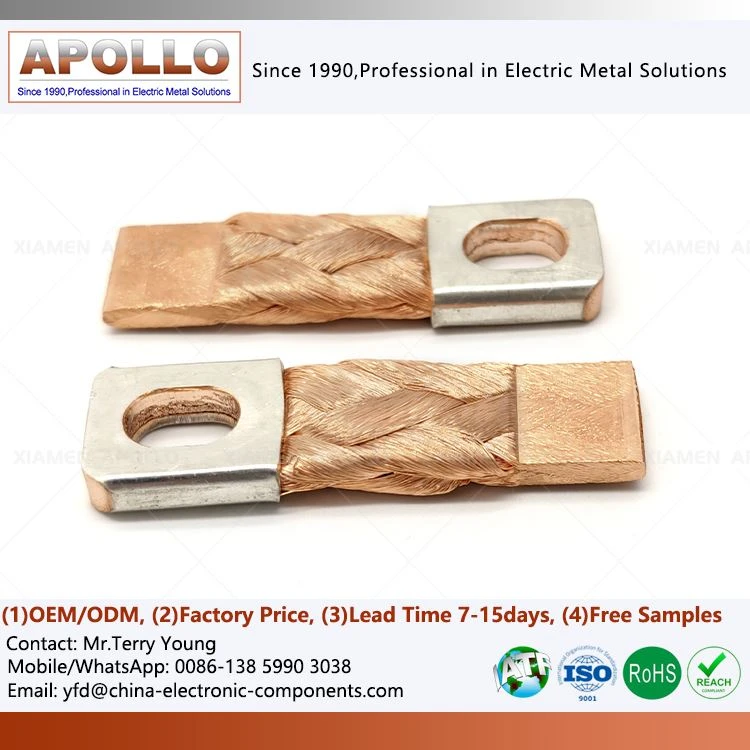
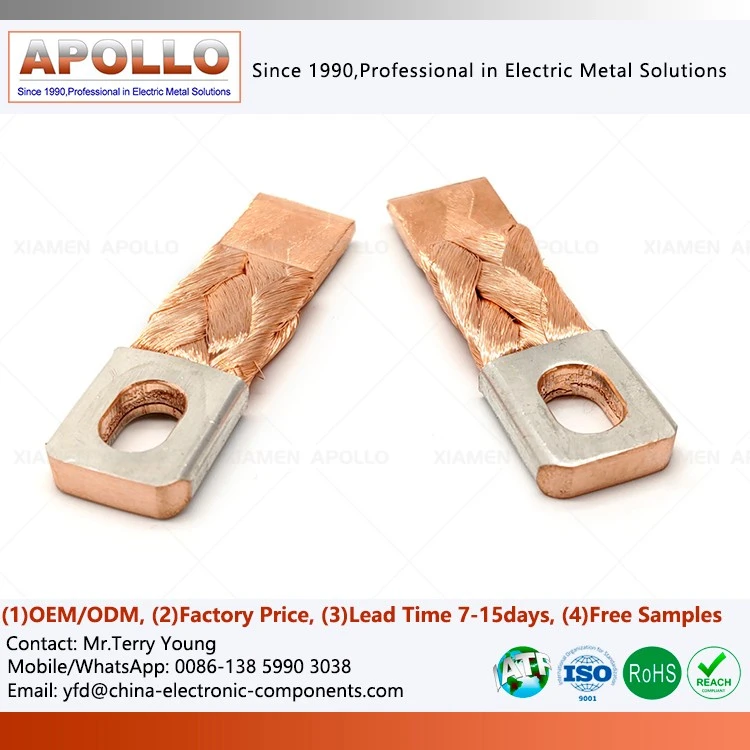
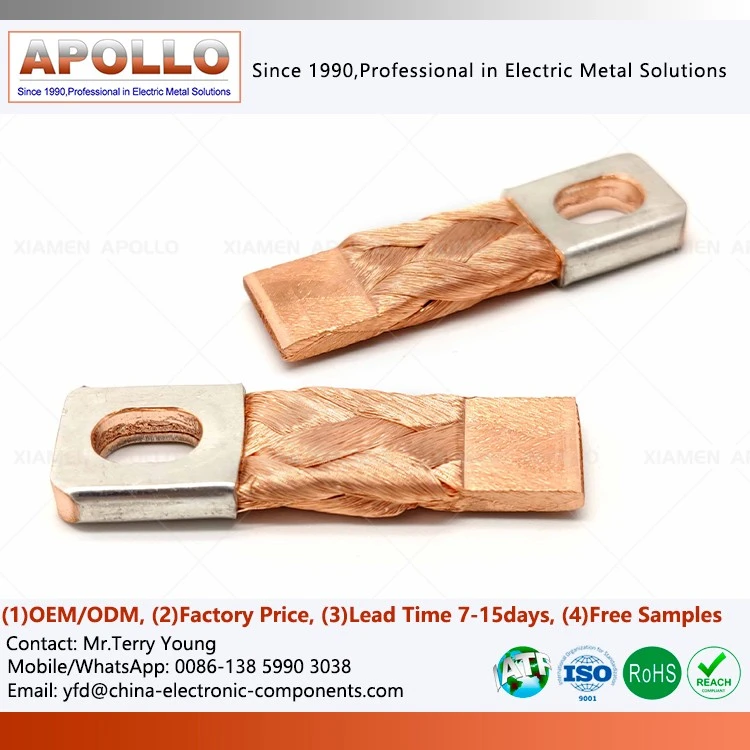
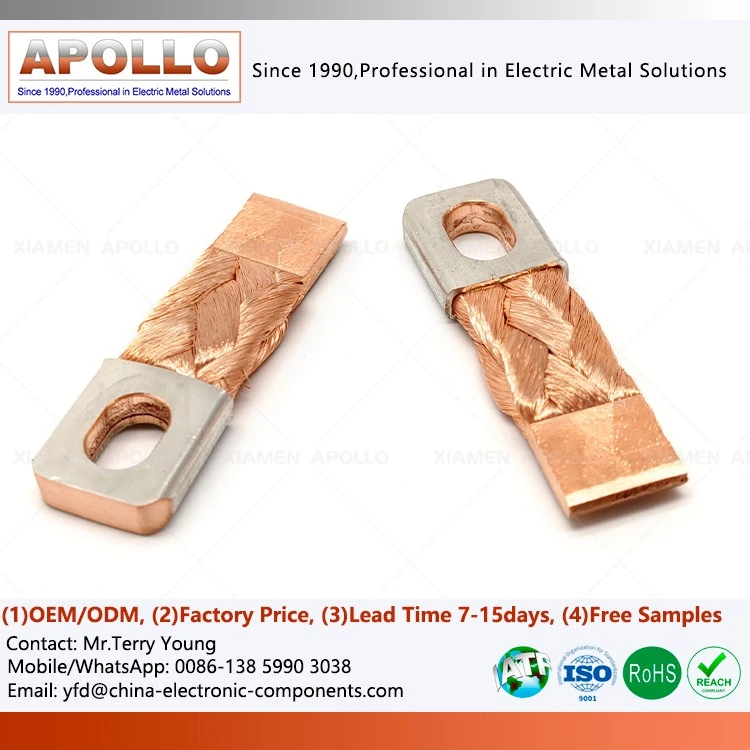
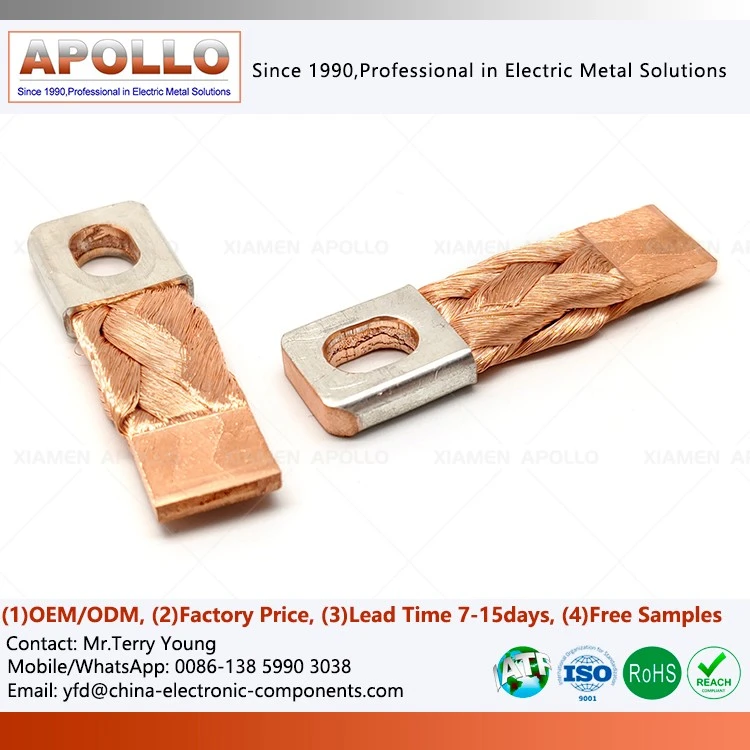
Copper Braided Flexible Busbar
What is a Copper Braided Flexible Busbar?
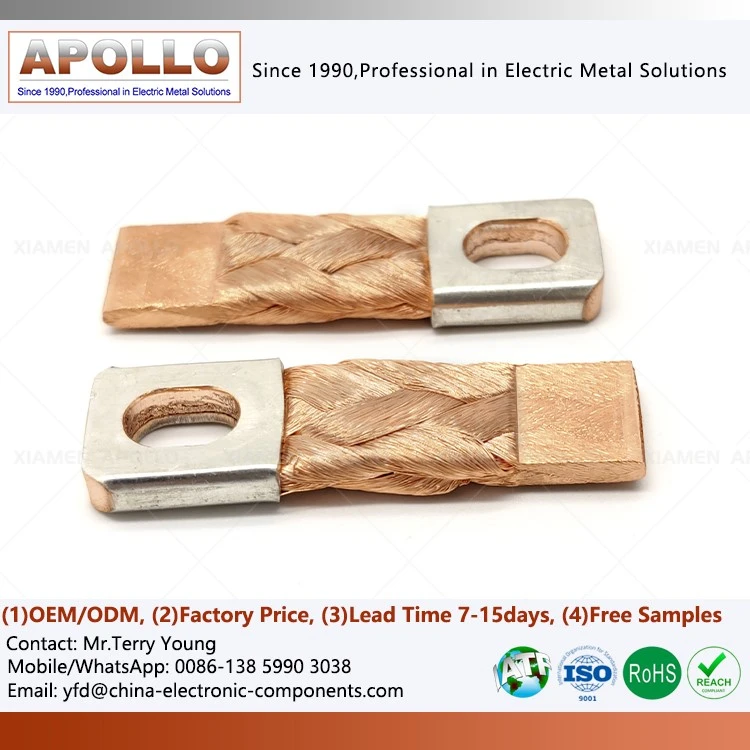
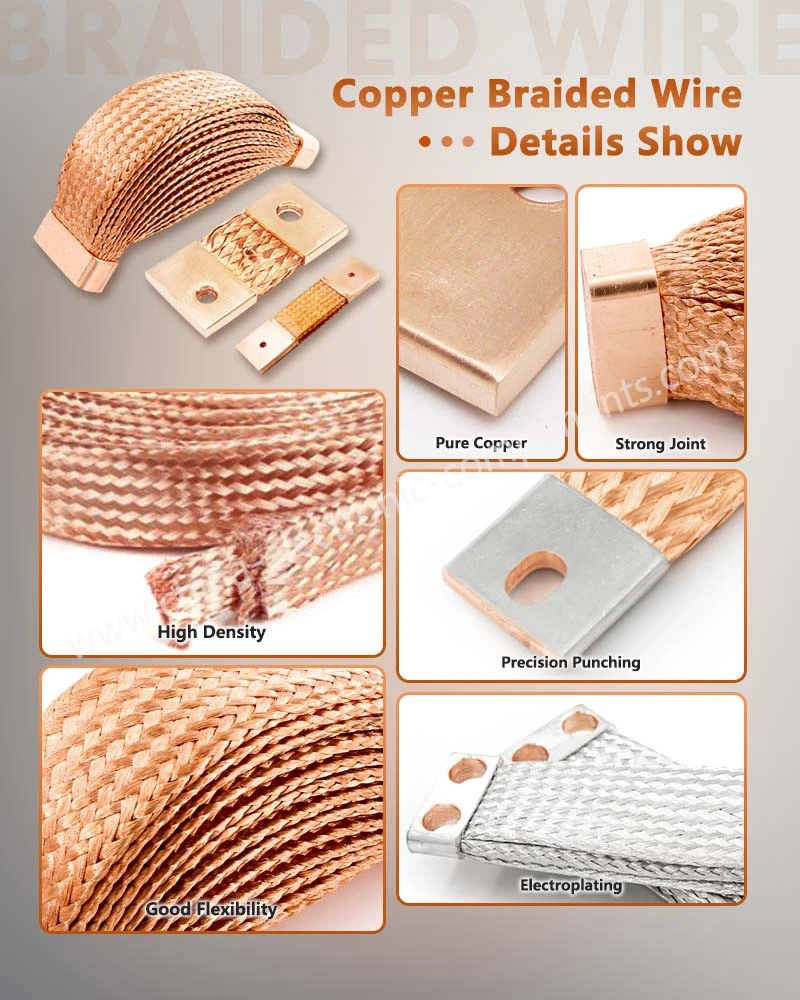
A flexible copper-braided busbar connector is, in essence, a conductive component designed to be bendable, compressible, and capable of accommodating dynamic displacement. Its main body consists of multiple fine copper strands woven together at a specific density and orientation. At both ends, these strands are joined to copper terminals-using techniques such as die-crimping, diffusion welding, or brazing-to create a robust electrical and mechanical connection. Compared to standard flexible cables or copper-foil connectors, the braided structure offers more uniform current distribution and superior fatigue resistance, all while maintaining high electrical conductivity. The braided section allows for free bending and twisting within a defined range, while the terminal ends are engineered for standardized connection to bolts, busbars, or equipment terminals. The product effectively combines rigidity with flexibility: the central section is highly pliable, while the terminal ends are rigid and reliable-a design that facilitates on-site assembly and ensures long-term durability against the mechanical stresses encountered during system operation.
Application Advantages: Why Flexible Connections Are Essential
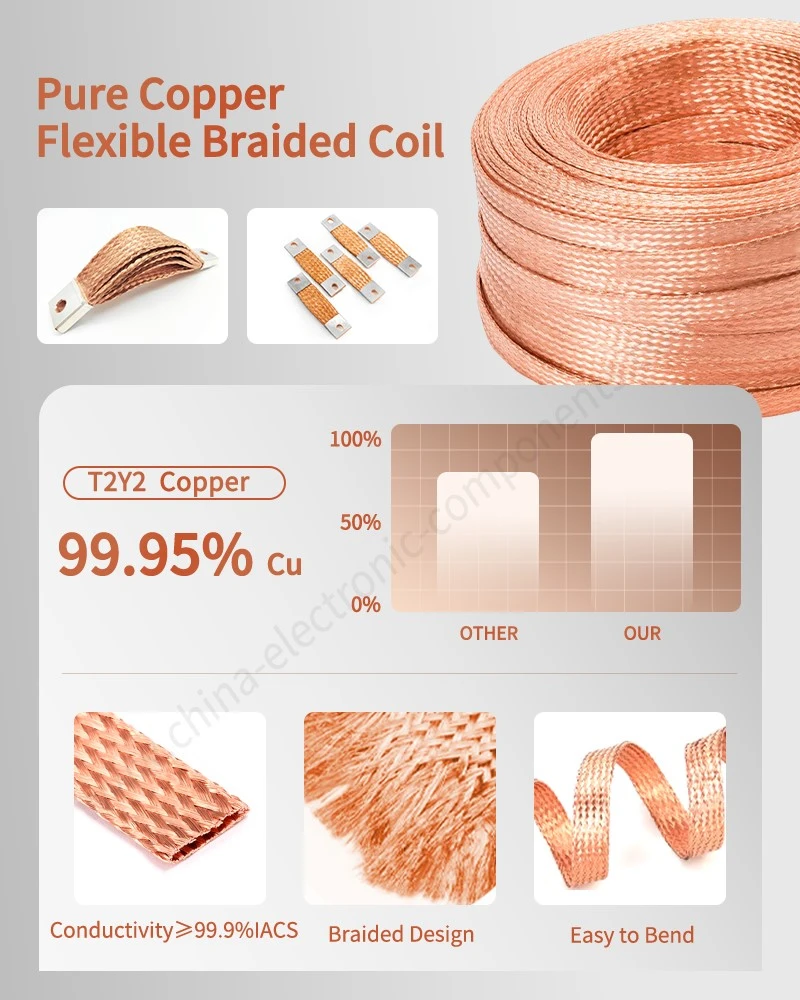
Connections from transformers to busbar trunking and low-voltage switchgear
Thermal expansion often occurs at different rates on either side; flexible connections act as expansion joints, preventing stress from being exerted on bushings.
01
Switchgear, circuit breakers, and draw-out units
Assembly tolerances and frequent operation of withdrawable modules require flexible segments to ensure that contact surfaces are not subjected to mechanical strain or misalignment.
02
Energy storage cabinets and battery clusters
Charging and discharging cycles cause periodic thermal deformation; connectors between clusters must maintain stable electrical resistance-preventing any increase-despite long-term, minute-scale movement.
03
Rectifiers, inverters, electrolysis systems, and industrial furnaces
These environments involve continuous high loads combined with elevated temperatures, making terminal temperature rise and the oxidation resistance of surface coatings the primary concerns.
04
Rail transit traction systems, electric drives, and heavy machinery
Subjected to multi-axis vibration and mechanical shock, these applications benefit from the multi-directional compliance of braided structures, which are better suited than unidirectional flexible components.
05
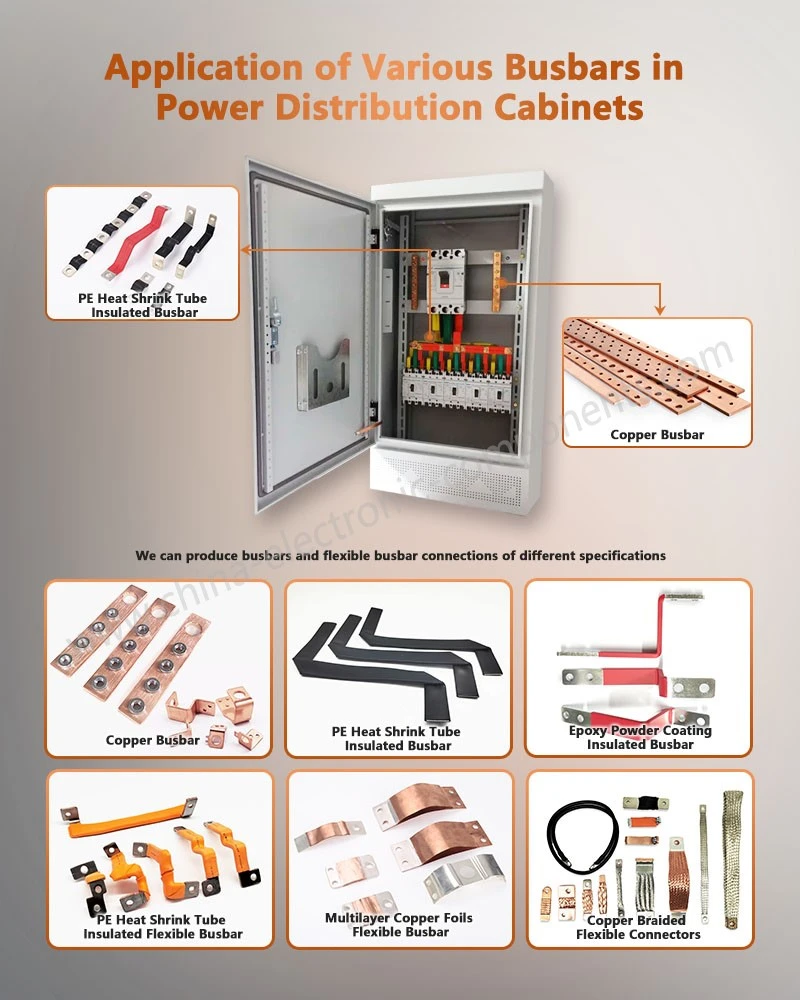
Material Advantages: Determining Lifespan at the Source
We exclusively use low-oxygen, oxygen-free copper wire as our conductor material. Compared with standard electrolytic copper, oxygen-free copper offers superior electrical conductivity and ductility; it resists work hardening and fatigue cracking during repeated bending-a critical factor in flexible connectors' service life.
Terminal materials are selected based on the specific operating environment: tin-plated brass terminals are used for dry, indoor settings, while tin-plated or nickel-plated pure copper (red copper) is recommended for high-humidity, coastal, or chemical-processing environments to inhibit electrochemical corrosion and oxidation at contact surfaces. All plating undergoes neutral salt spray testing to verify adhesion and protective performance, effectively preventing the failure chain of "plating delamination → exposed copper → accelerated oxidation."
For surface protection, we offer two solutions tailored to client requirements: tin-plated braided conductors (which balance electrical conductivity with oxidation resistance) or the addition of an insulating sheath (ideal for compact cabinet environments where protection against accidental contact is required).
Frequently Asked Questions
Q1: What are Copper Braided Flex Connectors used for?
-
Copper braided flexible busbars are primarily used for current transmission between various conductive components. They are ideal for electrical connections in environments subject to vibration, thermal expansion, installation misalignment, or space constraints.
Q2: What is the difference between a copper braided busbar and a solid copper busbar?
-
Solid copper busbars are designed for fixed, rigid connections, whereas copper braided flexible busbars-constructed from multiple interwoven copper strands-offer superior flexibility. This makes them better suited for applications that require accommodating displacement or mechanical vibration.
Q3: Can Braided Connectors be customized for high-current applications?
-
Yes. The conductor cross-sectional area, braiding structure, and terminal dimensions can be customized based on the client's operating current, allowable temperature rise, installation environment, and connection interface requirements. The actual current-carrying capacity should be verified against specific application conditions.
Q4: What surface treatments are available for copper braided busbars?
-
Options include bare copper, tinned copper, and other suitable surface treatments, depending on project requirements. The specific choice should take into account the operating environment, the materials being connected, and the client's technical specifications.
Q5: What information is required for copper braided busbar?
-
To evaluate the conductor structure, terminal configuration, and product dimensions, it is recommended to provide product drawings or samples, along with details regarding operating current, installation length, terminal hole specifications, operating environment, and temperature rise requirements.
Contact us
We specialize in copper-braided flexible connection solutions for power and energy storage systems-solutions known for structural reliability and a highly controllable manufacturing process. We possess comprehensive engineering capabilities, spanning from material selection and structural design to ensuring consistency across mass production. We invite technical teams to reach out and discuss specific application requirements so that we can refine the details of the proposed solution.
Hot Tags: Copper Braided Flexible Busbar, Copper Braided Busbar, Flexible Copper Busbar Connector, Copper Braid Flexible Connector, Braided Connectors, Braided Flexible Busbar, Braided Wire Flexible Copper, Copper Braided Flexible Connectors, Flat Copper Braided Wire, Insulated Flexible Copper Bars
You Might Also Like


Send Inquiry