










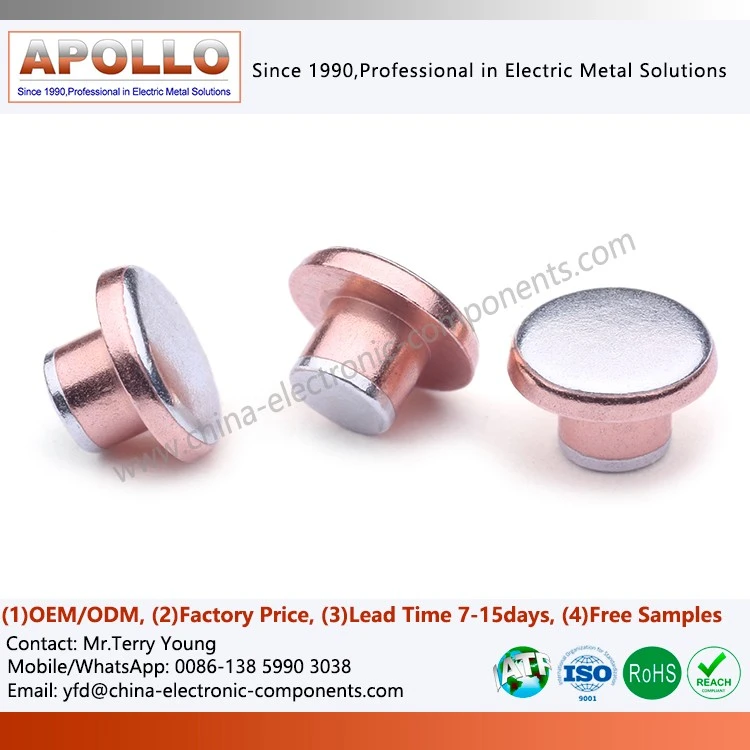
Tri-metal Contact Rivets
What are Tri-metal Contact Rivets?
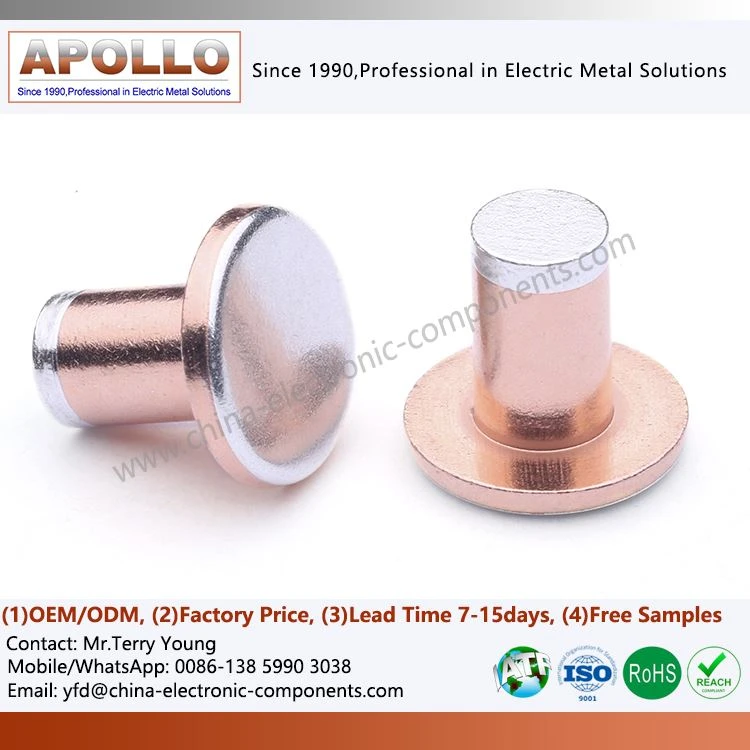
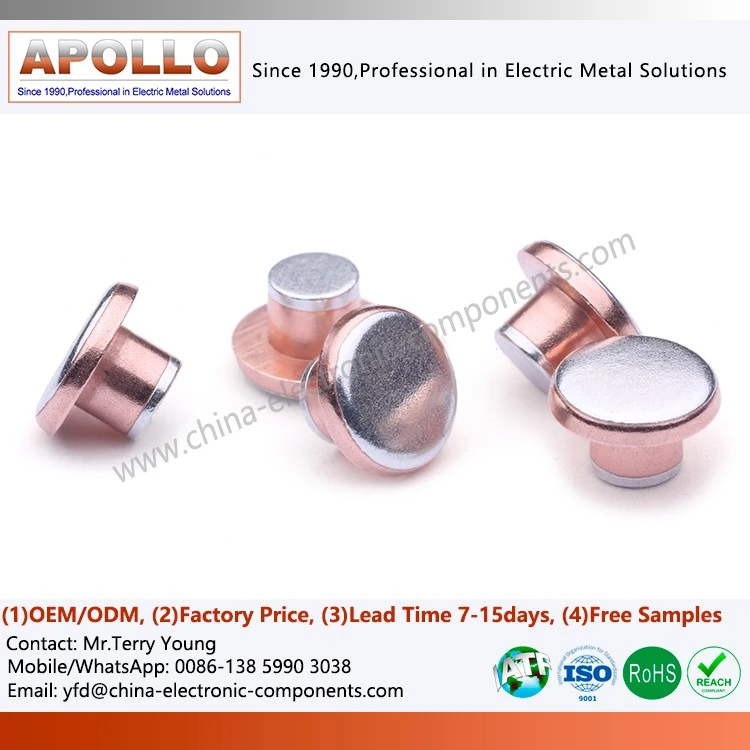
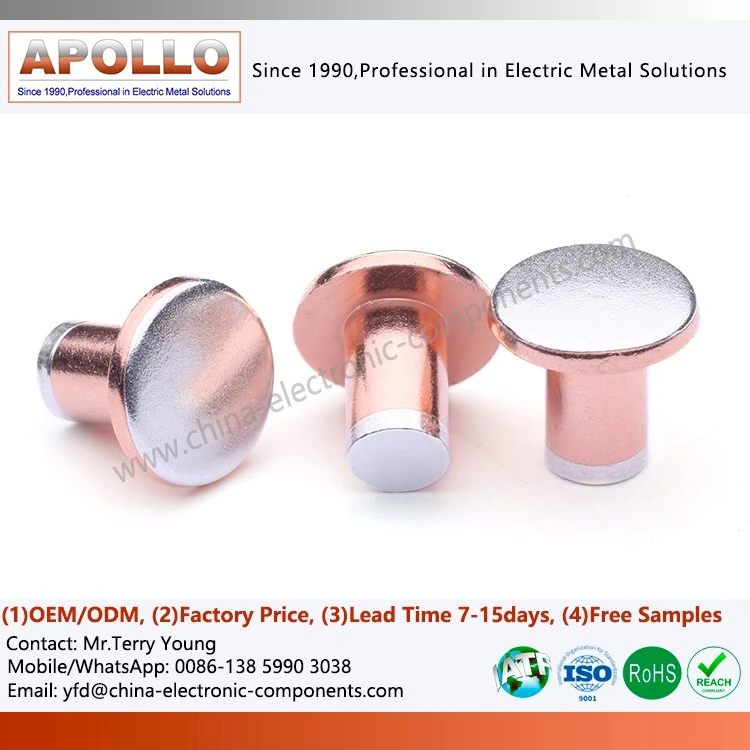
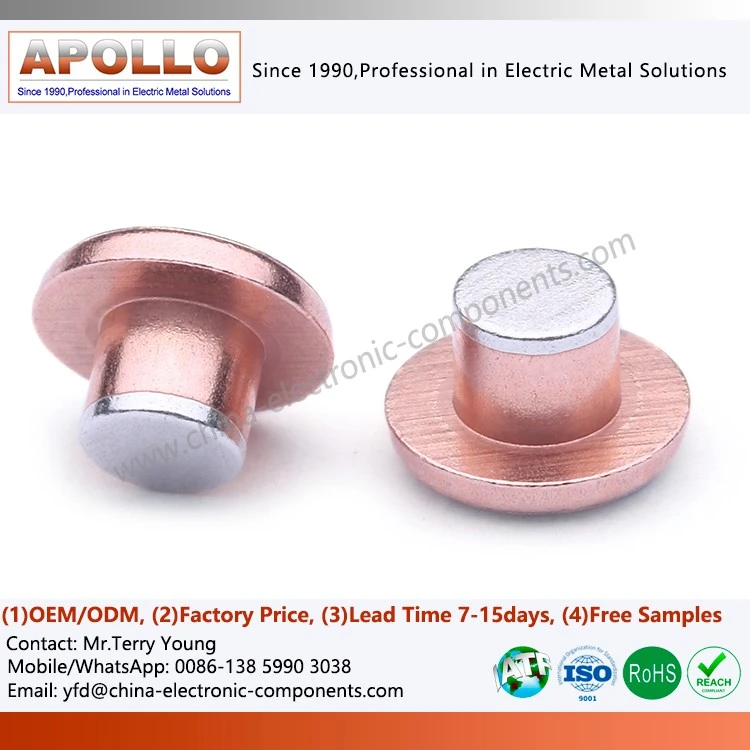
This Tri-metal Contact Rivets series consists of specially structured rivets manufactured via precision metallurgical processes, featuring a distinct "sandwich" microstructure: the head and shank are composed of high-performance silver-based alloys (such as AgSnO₂, AgCdO, or AgNi), while the intermediate layer consists of highly conductive pure copper (Cu).
Dual-functionality design: The head directly faces the electric arc, leveraging the silver alloy's superior resistance to welding and arc erosion; the shank connects to the contact spring, utilizing the silver plating's excellent weldability and oxidation resistance; and the intermediate copper layer serves as a low-impedance current path and a structural support framework.
Integrated metallurgical bonding: The three metal layers are not merely physically pressed together; instead, a robust metallurgical bond interface is formed through a high-temperature diffusion process. This eliminates macroscopic interfacial thermal resistance, ensuring stable current flow during millisecond-level switching operations.
Dynamic response optimization: Engineered to meet the specific requirements of relay "transfer" functions, the rivet's geometric center of gravity and moment of inertia have been optimized to ensure crisp, decisive movement during oscillation, free from sticking or contact bounce.
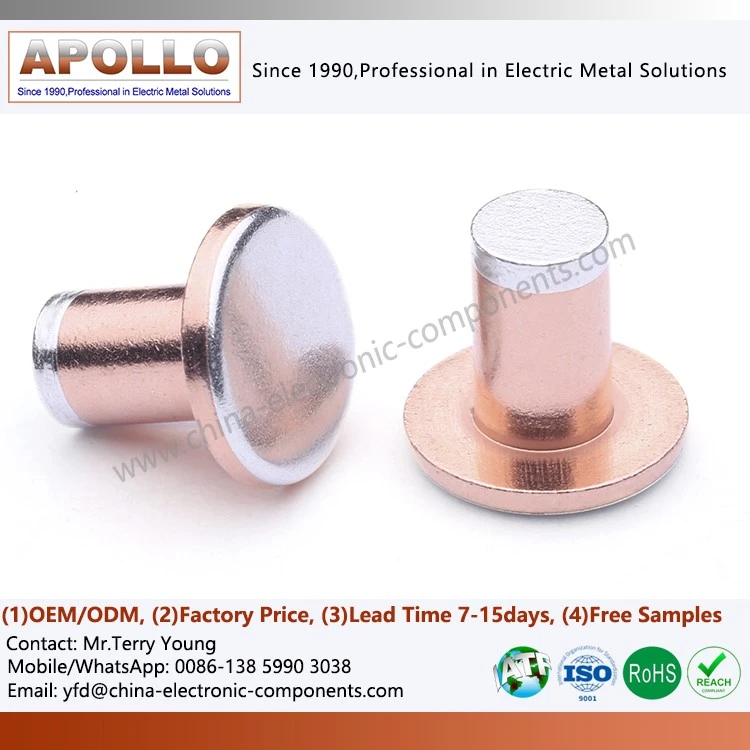
Trimetal Silver Contact Point for Switch Detail Showcase: Engineering-Grade Craftsmanship Reflected in the Details
Microscopic View of Head and Shank Ends
Under a metallographic microscope, the silver alloy layer at the head reveals a dense, non-porous structure. It forms a smooth, continuous metallurgical bond-free of oxide inclusions and uniform in thickness-with the central oxygen-free copper core.
Outer Surface Finish
The outer surface of the rivet shank undergoes precision drawing and polishing, resulting in extremely low roughness; this ensures smooth insertion into the contact spring hole without generating copper debris that could contaminate the relay's internal cavity.
Chamfering and Fillet Transitions
A perfect radius (R-angle) transition is employed where the curved head meets the cylindrical shank, eliminating stress concentrations and preventing the propagation of micro-cracks caused by high-temperature arcing or mechanical shock.

Key Application Scenarios and Industry Solutions for Trimetal Contact Rivets For Electronics
Industrial Control Relays
Control boards for automated production lines and PLC output module relays.
Automotive Electronics and Power Relays
Automotive starter and changeover relays; internal transfer switches for new energy vehicle chargers.
Smart Home and Power Metering
Circuit-breaking transfer switches for smart meters; high-load smart sockets and thermostats.
Aerospace and Power Protection Equipment
Precision signal transfer switches for circuits requiring bidirectional switching within strict size constraints.

Frequently Asked Questions
Does the performance of Trimetal Silver Composite Electrical Contacts for Relay drop significantly compared to solid silver contacts?
-
Provided the silver layer thickness and interfacial bonding are properly controlled, the critical contact surface remains composed of silver alloy; thus, electrical contact performance meets the switching requirements of most industrial relays while significantly reducing silver consumption.
How is it ensured that the silver layer does not detach or peel off during riveting or long-term operation?
-
A specialized composite process achieves a strong bond between the silver and copper interfaces. Additionally, deformation and stress are strictly controlled during forming, and factory inspections ensure the integrity of the silver layer.
For which relay applications are these products primarily suitable?
-
They are particularly well-suited for moving contact applications requiring bidirectional switching-such as industrial control changeover relays and switching control components-as the dual-sided silver layer design aligns perfectly with bidirectional contact requirements.
Is customization of silver layer thickness or alloy composition supported?
-
Yes; within the limits of our manufacturing capabilities, we can engineer adjustments to the silver layer thickness and alloy composition based on customer requirements regarding electrical life, contact resistance, and cost.
Why are there few domestic manufacturers capable of stably producing high-quality tri-metal composite contacts?
-
The core challenges lie in controlling the bond strength at the silver-copper interface and preserving the integrity of the silver layer during forming. The process window is narrow, and requirements are stringent, necessitating long-term technical expertise and robust process control capabilities.

contact us
If you are developing relays, contactors, or electrical control components, we can provide professional Triple Metal Composite Metal Electrical Contacts solutions tailored to your structural designs and performance requirements, leveraging our proven manufacturing processes and engineering support capabilities to help enhance your product reliability.

Hot Tags: Tri-metal Contact Rivets, Three Layer Composite Contact Rivets, Silver Copper Silver Contact Rivets, Relay Contact Rivets, Silver Alloy Contact Rivets, Industrial Relay Contacts, Composite Electrical Contacts, AgCdO Contact, Double Sides Contacts, rivet silver contact, Silver Cadmium Oxide Contact, Silver Contacts For Switch, Three Compound Contacts
You Might Also Like


Send Inquiry