










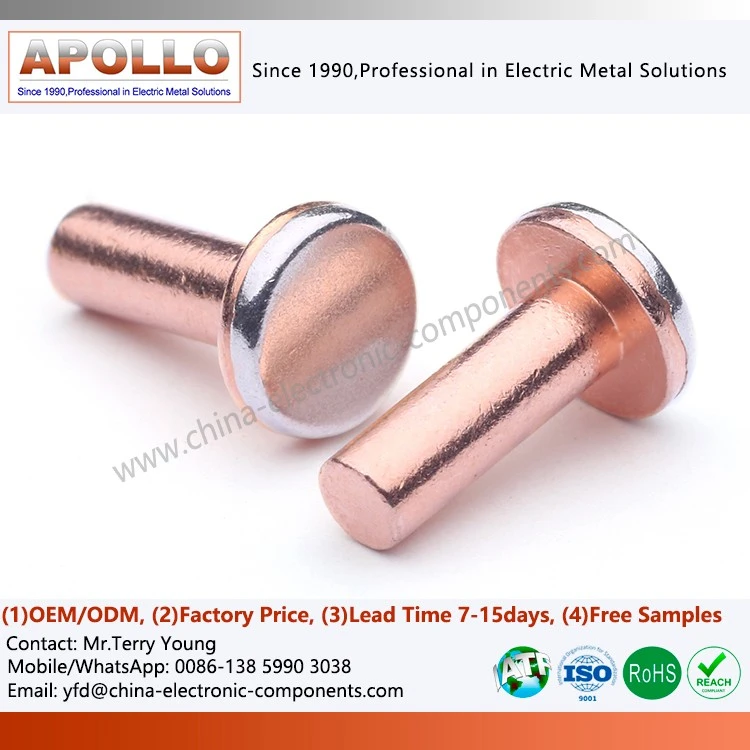
Customized Bimetallic Contacts
Products Description
Customized Bimetallic Contacts are electrical contact elements manufactured using a composite process of silver alloy and copper. These composite contacts combine the excellent conductivity and arc erosion resistance of silver alloy with the superior conductivity and thermal conductivity of copper, making them widely used in relays, contactors, circuit breakers, transfer switches, and high-voltage electrical systems in the new energy sector.
As a typical Customized Electrical Bi-Metal Contact, our R&D engineers focus not only on conductivity but, more importantly, on the reliability of the composite interface, the efficiency of silver layer utilization, long-term cycle life, and consistency in mass production. These factors directly impact overall reliability and maintenance costs.

Product Details and Features
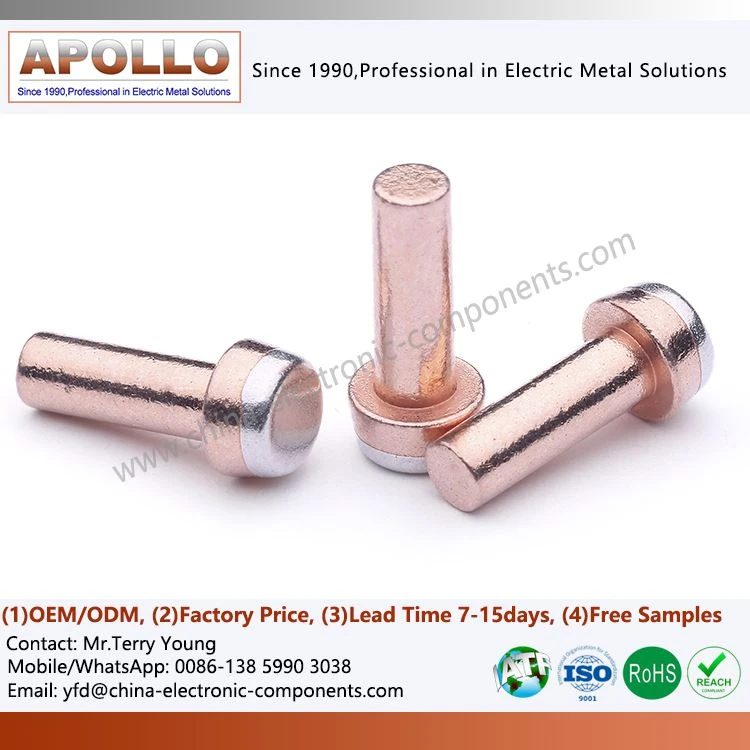
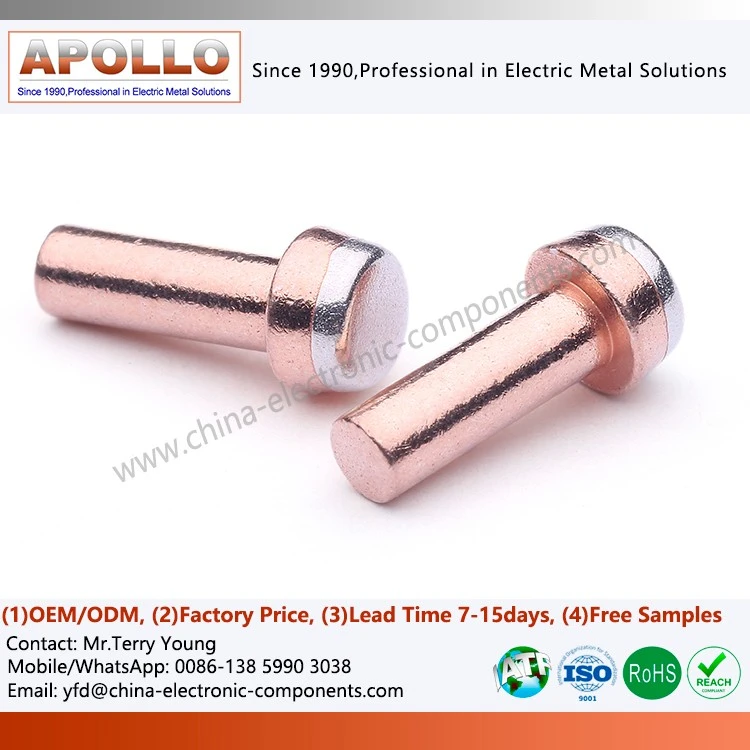
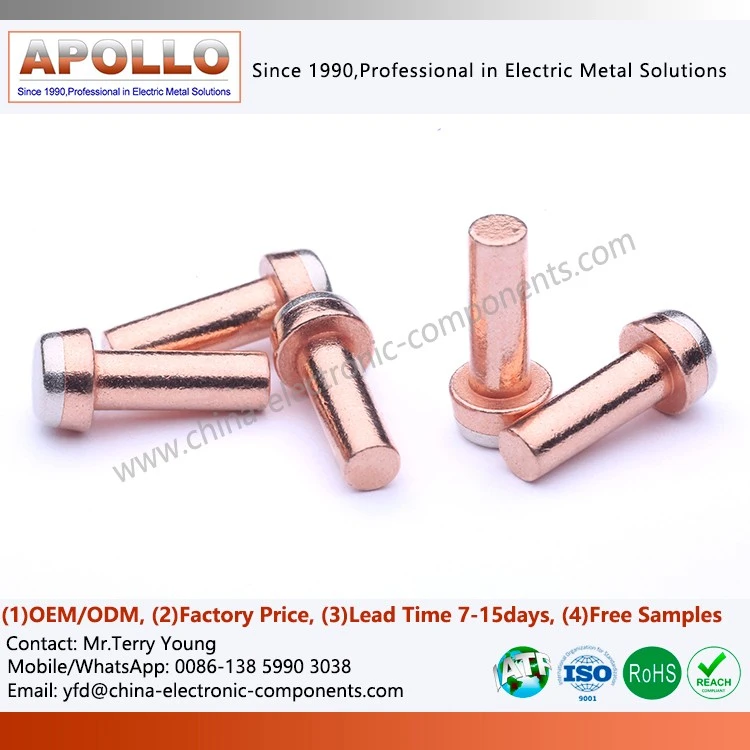
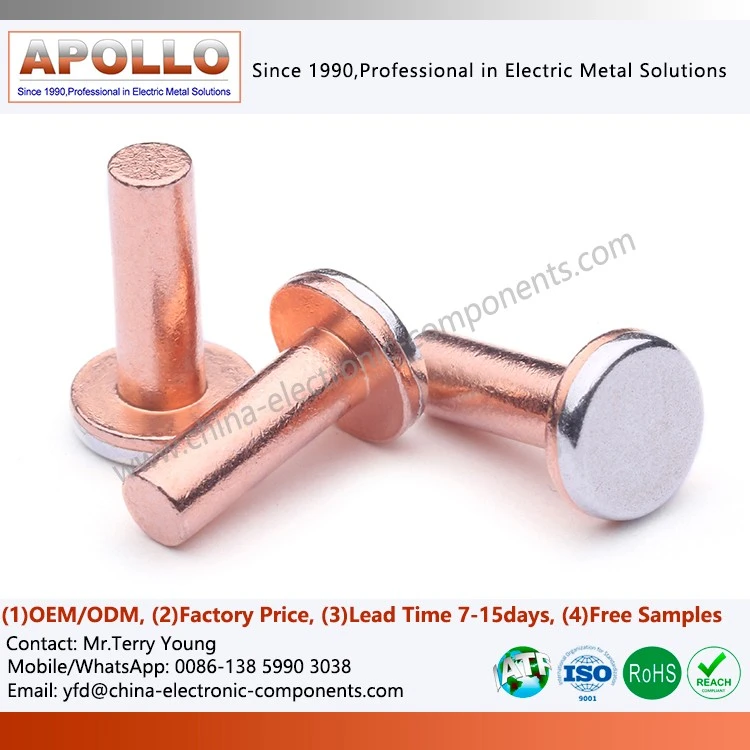
The contact electrical bi-metal contact rivets feature a uniform, copper-free silver alloy layer on the end face, eliminating defects such as thin silver layers and preventing rapid substrate breakdown during arc interruption.
The silver-copper composite interface is free of bubbles, delamination, and weak bonding, resulting in a continuous and dense metallographic interface that resists delamination and cracking under high current impact.
The surface of the bimetal silver electrical rivet is densely passivated, preventing oxidation during storage and assembly, and eliminating the need for additional deoxidation treatment before assembly.
The flange transition fillets of the customized electrical bi-metal contact are precisely formed, preventing scratches on the matching springs and base during riveting assembly and reducing assembly losses.

Manufacturing Advantages
High-speed cold heading capability
Multi-station cold heading equipment supports mass production of bimetal Ag/Cu silver contact rivets, with daily production capacity meeting the large-scale procurement needs of relay and switch manufacturers.
In-house mold manufacturing capability
Possesses independent design and manufacturing capabilities for bimetal silver rivet contacts for electric power, enabling rapid response to customer customization requests for non-standard sizes.
Online Inspection System
Automated inspection equipment is used for critical dimensions of Electrical Contact Points for Switches, ensuring batch-to-batch dimensional consistency meets drawing tolerance requirements.
Short Lead Time Response
Relying on stable composite wire inventory and flexible production scheduling, standard customized orders have a lead time of 7-15 days, with further reductions possible for urgent orders.

Frequently Asked Questions
How to select the appropriate silver alloy material for the Button Bimetal Rivet Electrical Contact based on the load type?
For resistive loads with current <50A, the AgNi series is recommended; for inductive/capacitive loads, high surge currents, or DC conditions, the AgSnO₂ series is recommended; for medium to high power AC contactors, AgCdO can be selected within regulatory limits. For specific selection, please provide load parameters for evaluation by the technical team.
How is the silver layer thickness of the Bimetal Electric Rivet Contact determined?
The silver layer thickness depends on the rated current, expected electrical life, and load characteristics. It is generally estimated based on the arc erosion rate to ensure that the silver layer is not completely consumed throughout the design life. Typically, 0.3–0.5 mm is sufficient for most medium-power applications.
How do silver price fluctuations affect the pricing of Bimetal Contact for Circuit Breaker?
We adopt a transparent pricing model of "raw material cost + processing fee". For bulk orders, we can sign long-term agreements or silver price linkage clauses to reduce price fluctuation risks.
Besides the Silver Alloy Bimetal Contact Point, can you produce other metal components for relays?
Our factory can independently develop and produce a complete set of metal components for relays. Components such as yokes, springs, terminals, and cores can be supplied simultaneously, enabling one-stop procurement from a single supplier.

contact us
For in-depth selection and verification of Customized Bimetallic Contacts materials for specific load conditions (such as inductive loads, capacitive loads, or DC ripple current), please contact our engineering team to obtain detailed material testing reports and reliability verification plans.

Hot Tags: customized bimetallic contacts, China customized bimetallic contacts manufacturers, suppliers, factory
You Might Also Like


Send Inquiry