










What Is The Manufacturing Process Of Silver Joint Contacts?
Apr 08, 2026
Leave a message
Silver Joint Contacts are alloy welding materials with silver as the core component. Due to their excellent electrical and thermal conductivity and welding strength, they are widely used in aerospace, electronics, medical devices, and jewelry manufacturing. The rigor of their manufacturing process directly determines the reliability of the welded joint.
The production of Composite Weld Contacts begins with raw material preparation. Its performance depends on precise alloy proportions. Common components include silver, copper, zinc, nickel, and tin. Previously, some formulations contained cadmium; however, with increasingly stringent environmental requirements, cadmium-free solder sheets have become the industry mainstream. The raw materials used in production are generally high-purity metals to avoid impurities such as sulfur and phosphorus affecting welding performance. Before use, the raw materials also require pretreatment, such as pickling, grinding, or ultrasonic cleaning, to remove oxide layers, oil, and rust, preventing the introduction of contaminants during subsequent smelting.
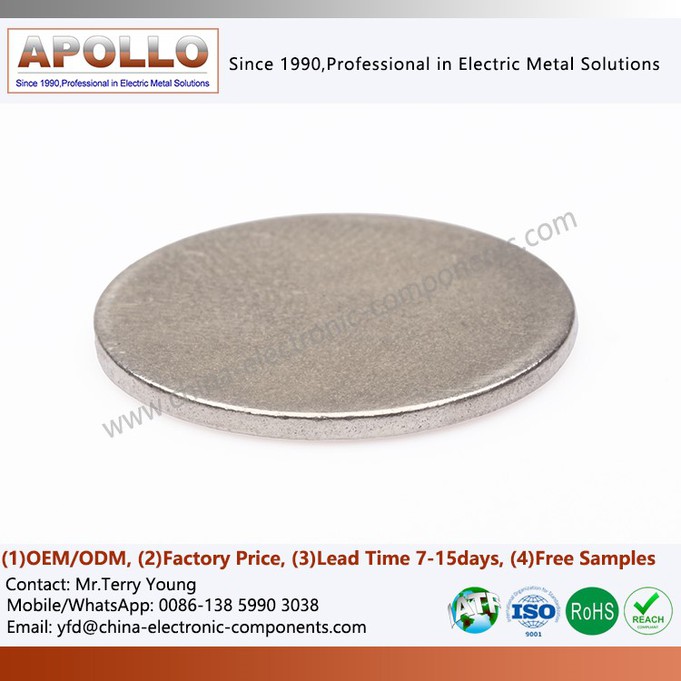
The alloy smelting process is a crucial step in fusing multiple metals into a homogeneous alloy. Especially for the base material of Silver Alloys and Components, the homogeneity of the composition directly determines the subsequent brazing performance. Production personnel precisely weigh raw materials according to the predetermined formula ratio, controlling batching errors, and then heat and melt them using a medium-frequency induction furnace. To prevent metal oxidation and the loss of low-boiling-point elements such as zinc, inert gas or flux is usually introduced during the melting process for protection. The melting temperature is adjusted according to the specific alloy composition. The molten metal needs to be held for a certain period of time and thoroughly stirred to avoid component segregation. After melting, the molten alloy is allowed to settle and remove impurities before being cast.
Casting is the process of converting the molten alloy into a workable billet. This stage directly affects the density and internal quality of the Weld with Contacts. In actual production, continuous casting or die casting is commonly used. Continuous casting is suitable for mass production of long bars or plates, while die casting is more suitable for small-batch customized products. During casting, the cooling rate needs to be properly controlled to prevent porosity, shrinkage cavities, or cracks inside the billet. After casting, the billet needs to be surface-polished to remove burrs and oxide scale.
The process then proceeds to the rolling stage, gradually rolling the cast billet into sheets of the target thickness. Production typically employs a multi-pass cold rolling method, carefully controlling the reduction rate in each pass to prevent the billet from cracking due to excessive deformation. During cold rolling, the metal undergoes work hardening, necessitating periodic annealing to restore the material's plasticity for continued rolling. The final few passes utilize high-precision rolling equipment to strictly control the finished product thickness tolerance, ensuring the dimensional accuracy of the Welded Silver Contact.
After rolling, slitting, and surface treatment are performed. Precision slitting equipment processes the sheets to conform to specifications while avoiding burrs and deformation at the edges. Subsequently, ultrasonic cleaning and pickling are used to remove surface oil and oxide layers, improving the wettability of the solder sheets during welding. After cleaning, hot air drying is performed to prevent corrosion of the Electrical Contact Sheets.
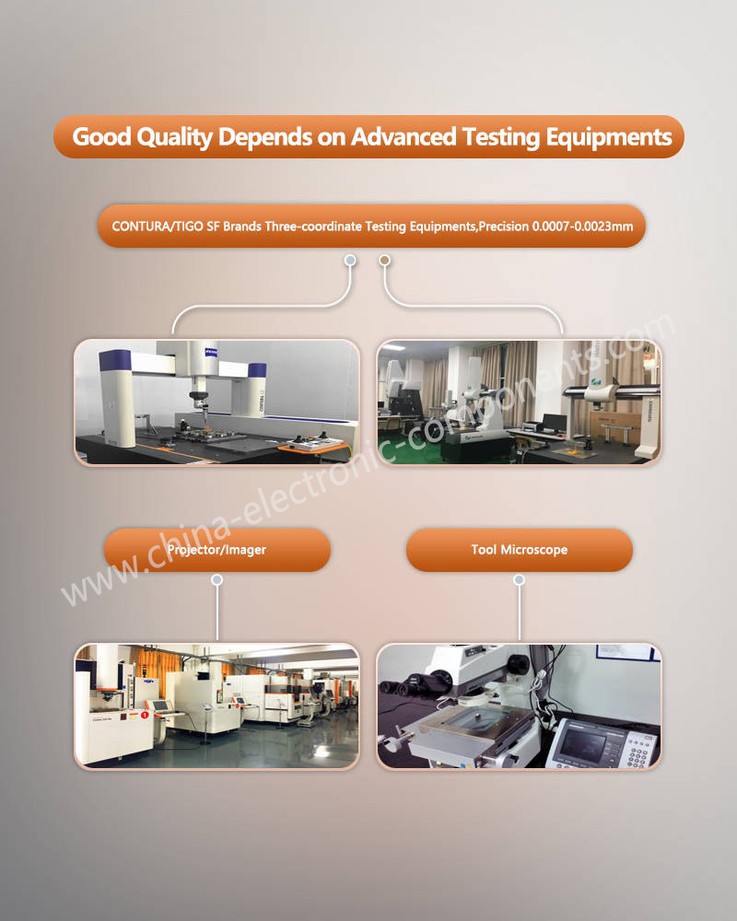
Finally, the finished product undergoes quality inspection. Qualified Radius Face Brazed Composite Rivet Contacts must pass multiple performance tests. Generally, specialized instruments are used to analyze whether the alloy composition meets the formula requirements, precision measuring tools are used to check dimensional tolerances, and visual inspection or microscopic examination is conducted to check for defects such as cracks, scratches, and impurities. Some products also undergo welding performance testing, simulating real-world usage scenarios to test weld fluidity, joint strength, and corrosion resistance, while also testing mechanical properties such as hardness and ductility to ensure the finished product meets usage requirements.
Overall, the production of Flat Face Brazed Composite Rivet Contacts is a precision manufacturing process with close coordination across multiple stages. From raw material selection to finished product testing, parameter control at each step affects the final product quality. With industry technological advancements, the production processes for cadmium-free, environmentally friendly welding sheets and ultra-thin welding sheets are continuously optimized to better meet the needs of high-end manufacturing sectors. Future production will also move towards green and intelligent directions, further improving product quality and production efficiency.
About us
Our Silver Joint Contacts products, built upon mature silver solder sheet production technology, strictly adhere to standards at each stage, possessing excellent conductivity, welding strength, and corrosion resistance. They are suitable for various fields such as aerospace and electronics, and can be customized to meet customer needs, perfectly matching various welding conditions.
Having been deeply involved in the research, development, and production of silver soldering products for many years, we ensure product quality with stringent processes. If you have any purchasing needs, specification inquiries, or customization questions regarding Welded Contacts products, please feel free to contact us at any time. We sincerely invite you to place an order and cooperate with us to build efficient and reliable soldering solutions.
Contact us
Send Inquiry