










The Market Size Of Busbars For New Energy Vehicles Continues To Grow, And The Demand For High-voltage Connection Systems Is Accelerating.
Mar 06, 2026
Leave a message
As the new energy vehicle industry enters a stage of large-scale development, the importance of core conductive components in high-voltage electrical systems is constantly increasing. The latest industry research data shows that the global market size for busbars used in new energy vehicles was approximately US$1.531 billion in 2025, and is projected to grow to US$3.125 billion by 2032, maintaining a CAGR of approximately 10.9% between 2026 and 2032. As a key conductor component in high-voltage electrical systems, the demand growth of busbars for electric vehicles is highly synchronised with the development of the new energy vehicle industry.

In the high-voltage systems of new energy vehicles, busbars play a crucial role in power transmission, distribution, and connection. Compared to wiring harnesses used in traditional vehicles, busbars can carry higher voltages and larger currents, and are therefore widely used in key components such as power batteries, motor control systems, electric drive systems, and charging modules. Especially in high-power electrical systems, EV busbars can effectively reduce resistance losses, improve overall system efficiency, and enhance the stability and safety of the entire vehicle's electrical system.
Data shows that in 2024, global sales of EV busbars reached approximately 507 million units, with an average value of about 500 RMB per vehicle. As a crucial component of the high-voltage connection system in new energy vehicles, the upstream of the busbar industry chain mainly involves the supply of conductive materials such as copper and aluminium, while the downstream includes vehicle manufacturing and power battery systems. With the accelerating trend of electrification, the role of the EV battery busbar in the vehicle's power management system is becoming increasingly critical.
In terms of regional market distribution, China dominates the new energy vehicle busbar market. In 2024, the Chinese market size was approximately US$910 million, accounting for 67.45% of the global market. It is projected that by 2031, the Chinese market size will further expand to US$1.668 billion. Although new energy vehicle development is rapid in other parts of the world, China still maintains a significant advantage in terms of industry chain support capabilities, manufacturing efficiency, and supply systems. In high-voltage power distribution systems, the Automotive Busbar has become an indispensable component of the electrical architecture of new energy vehicles.
Regionally, Europe and North America continue to maintain high demand for new energy vehicles, with Europe accounting for approximately 19.13% of the global market and North America approximately 7.39%. Meanwhile, India's new energy vehicle industry is accelerating its development, with market growth expected to increase significantly between 2025 and 2031. As the global electrification trend continues, the improvement of new energy vehicle manufacturing systems in various regions will further drive demand for Auto Bus Bars.
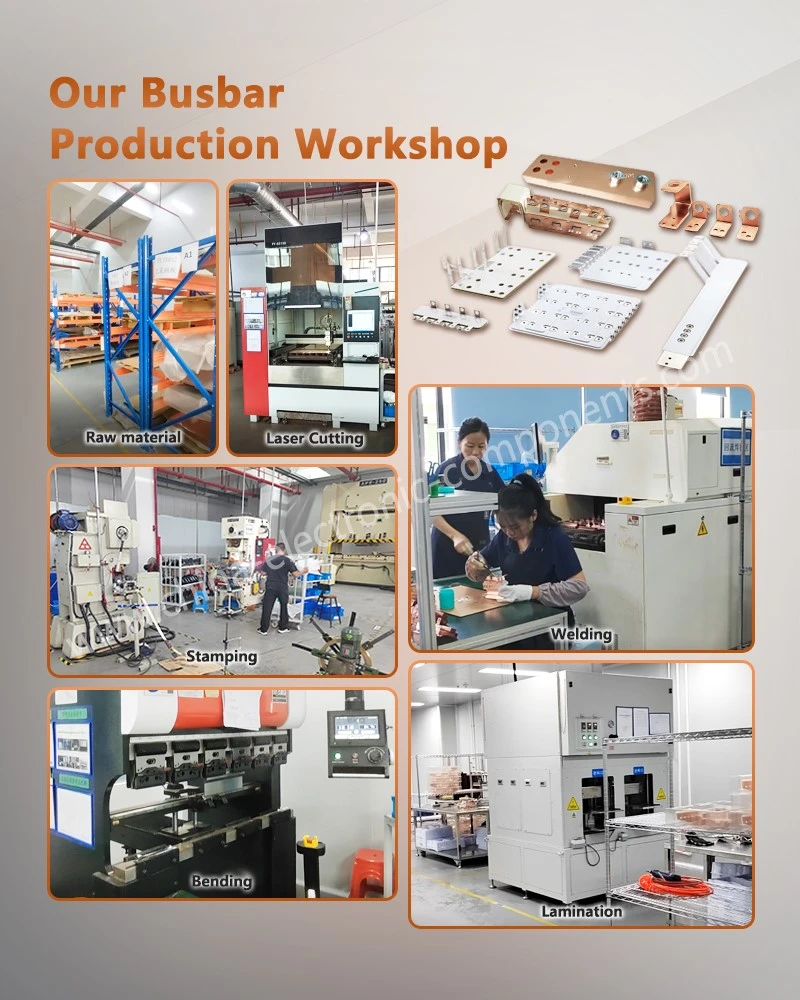
From a manufacturing perspective, the new energy vehicle bus bar industry has formed a clear regionalized production structure. In 2024, China accounted for approximately 70.73% of global production, while Europe accounted for approximately 17.59%. These two regions combined account for nearly 90% of global capacity. China possesses mature manufacturing capabilities in material processing, stamping and welding, and insulation structure manufacturing. It has also established a complete supply system in the field of high-voltage connection components, including key components such as Car Battery Bus Bars for battery systems and Automotive Power Connectors.
In terms of product type, copper busbars remain the mainstream choice in the current new energy vehicle market. Due to copper's excellent conductivity and stability, its market share remained absolutely dominant in 2024 and is projected to maintain approximately 84.05% by 2031.
Meanwhile, to meet the demands of lightweight vehicles, aluminum busbars are rapidly entering the market, with a projected compound annual growth rate of 20.49%. In various application structures, surface-treated Tin-plate Busbar Automotive and Tin Plated Copper Busbar for EVs are also widely used in high-reliability electrical connection scenarios.
From an application perspective, battery electric vehicles (BEVs) remain the largest source of demand for busbars in the new energy vehicle sector.
This sector held a 72.63% market share in 2024 and is expected to continue its steady growth in the coming years. As the power of electric drive systems continues to increase, high-voltage capacitor systems and energy storage modules are placing higher demands on busbar structures. For example, structures such as DC Capacitor Busbar, Capacitor Busbar, and busbar for Power Capacitor are gradually increasing in applications for power capacitor systems.
Furthermore, high-reliability busbar structures are also widely used in the electric drive control systems and capacitor modules of new energy vehicles.

For example, product structures such as busbar for Busbar Film Capacitor, Capacitor laminating bus bar, and New Energy Vehicle Film Capacitor BusBar can achieve higher current carrying capacity within a limited space, while reducing system electromagnetic interference and increasing power density.
As new energy vehicles develop towards higher power and higher efficiency, the insulation structure and heat dissipation capacity of busbars have become key design considerations. Insulation structure technologies, including Automotive BusBar PET Insulation and Busbar Insulation, can effectively improve the electrical safety performance of busbar systems and adapt to the complex operating environment of new energy vehicles.
Meanwhile, in the vehicle grounding system, structures such as the Automotive Ground Bus Bar and BusBar Car also play an important role in the overall vehicle electrical safety system.
Overall, against the backdrop of the rapid development of the new energy vehicle industry, the market demand for busbars, as an important conductive structure in high-voltage electrical systems, will continue to grow. As vehicle platforms develop towards higher voltage and higher power, high-performance busbar solutions will become an important component of the electrical architecture of new energy vehicles.
In the field of electrical connections in new energy vehicles, busbars not only undertake the function of power transmission but also directly affect system efficiency and reliability. In the future, with the increase in battery system power density and the upgrading of charging technology, high-performance busbar automotive structures will find wider application in electric drive systems, capacitor modules, and high-voltage power distribution systems.
contact us

Send Inquiry