










The Development Trends in The Fuse Industry: High-Voltage Requirements And New Energy Applications Drive Upgrades To Ceramic Insulating Structures
Oct 25, 2026
Leave a message
With the continued development of new energy vehicles (NEVs), photovoltaic (PV) power generation, energy storage systems, and industrial power distribution, power systems now demand higher standards for overcurrent protection and fault isolation. As a critical safety component within circuit protection systems, a fuse interrupts fault currents by melting its internal element when the current exceeds a specified range, thereby mitigating the risks of short circuits, overloads, and equipment damage. As application environments evolve toward higher voltages, larger currents, and more complex operating conditions, the structural design, insulation materials, arc-extinguishing capabilities, and precision manufacturing processes of fuses are undergoing continuous advancement.
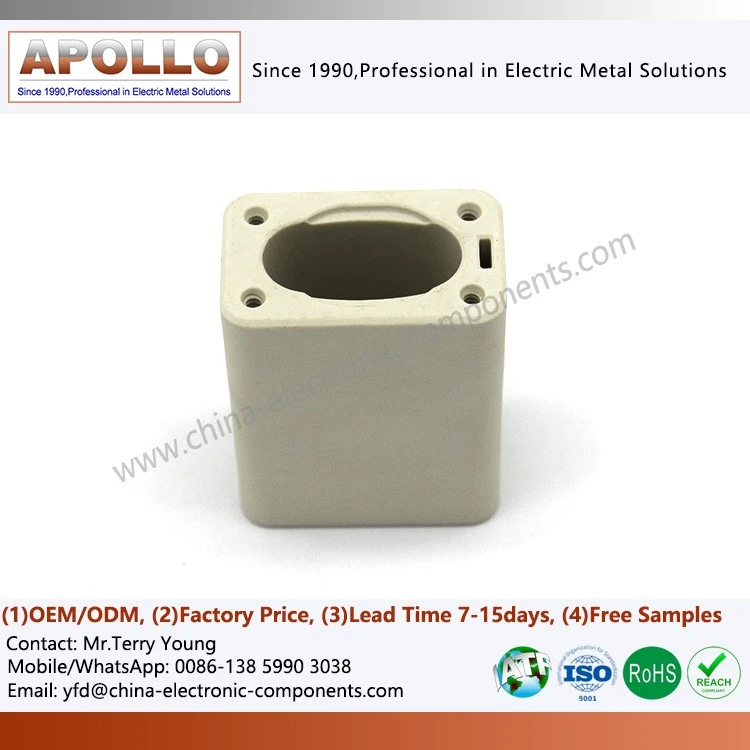
Within the overall structure of a fuse, the ceramic housing serves multiple functions: providing electrical insulation, offering mechanical support, and defining the space for arc extinction. The material properties and dimensional precision of this housing directly influence the product's safety and long-term operational stability. Particularly in high-voltage power equipment and NEV circuit protection, ceramic components-characterized by excellent heat resistance, insulation, and mechanical strength-have become an essential element in fuse manufacturing.
The Global Fuse Market Shifts Toward High Reliability and Specialization
The global fuse market spans a diverse range of sectors, including industrial power distribution, automotive electronics, PV power generation, energy storage systems, rail transit, and consumer electronics. Because different applications impose distinct requirements regarding rated voltage, rated current, breaking capacity, response speed, and environmental adaptability, industry competition is defined not only by product cost and production scale but also by capabilities in material R&D, structural design, testing and verification, and quality control.
In terms of application, while traditional low-voltage fuses are primarily used in industrial controls, household appliances, and general power distribution systems, the high-voltage circuits of NEVs, PV DC systems, and energy storage equipment demand superior DC breaking capacity, heat resistance, and long-term reliability. As the operating voltages of electrical equipment continue to rise, fuse manufacturers must refine the design of their fuse elements, arc-extinguishing systems, and insulating housings to accommodate varying electrical parameters and operating environments.
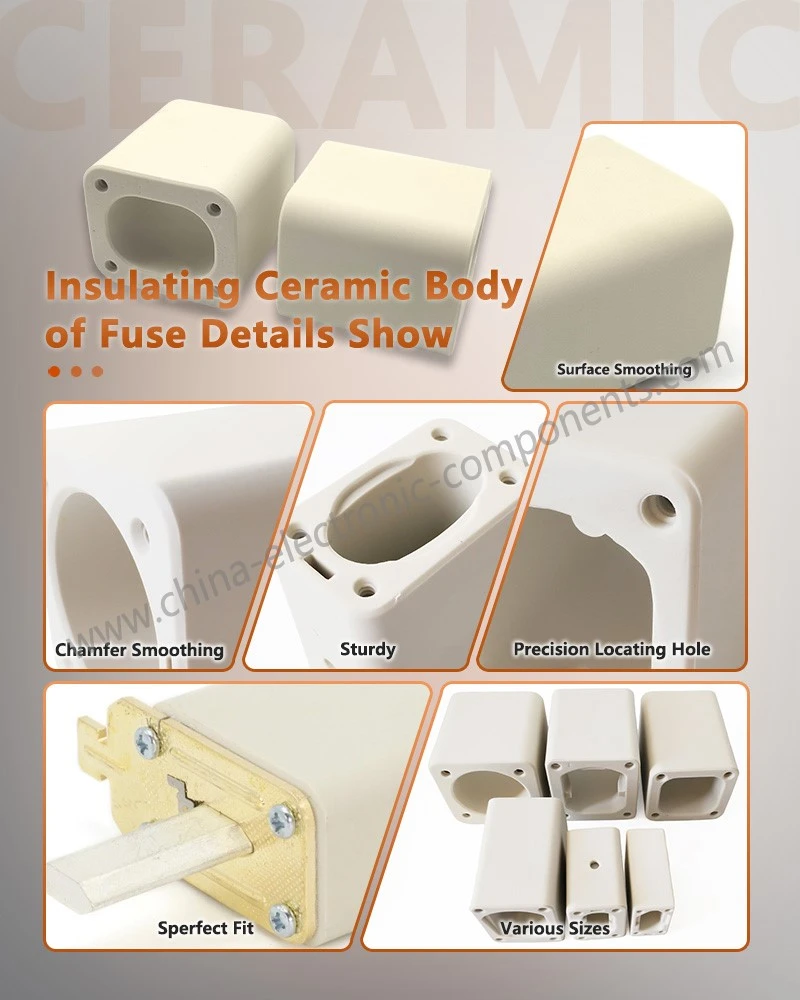
For ceramic insulating components, factors such as material formulation, the sintering process, dimensional tolerances, and surface quality are critical determinants of product performance. Ceramic structural components-exemplified by those used in fuses-must be designed based on a fuse's rated parameters, internal architecture, and mounting method. This ensures that the housing maintains stable insulation and mechanical performance under specified operating conditions.
New Energy Applications Drive Technological Upgrades in High-Voltage Fuses
The electrical architecture of new energy vehicles (NEVs) is shifting toward high-voltage platforms, while photovoltaic (PV) and energy storage systems are also evolving toward higher DC voltages. Although high-voltage applications meet the requirements for power transmission and integrated system design, they also increase the technical challenges associated with interrupting fault currents and extinguishing electric arcs.
Unlike AC circuits, DC lacks a periodic natural zero-crossing point. Consequently, DC fuses must rely on optimized element design, arc-extinguishing media, and specific internal structures to ensure reliable interruption. The ceramic housing must not only provide excellent electrical insulation but also withstand the heat, pressure, and mechanical stress generated during the fusing process, ensuring that structural failure does not compromise the device's protective function.
In the high-voltage circuits of NEVs, steatite ceramic is one option for the insulating material used in certain fuse designs. The suitability of any specific material must be evaluated based on factors such as operating temperature, electrical insulation requirements, mechanical loads, and manufacturing processes. For high-voltage fuses, material selection should not be based solely on the type of ceramic; it must also account for dielectric properties, thermal stability, dimensional consistency, and the results of actual interruption testing.
Energy storage systems often endure frequent charge-discharge cycles and complex environmental conditions over long periods, while PV DC systems must withstand outdoor temperature fluctuations, hot and humid environments, and the demands of long-term reliable operation. Such applications require fuses to maintain consistent protective capabilities under specified operating conditions, placing higher demands on the heat resistance, structural integrity, and batch-to-batch consistency of the insulating components.
Ceramic Material Properties Determine the Structural Reliability of Fuses
Characterized by high-temperature resistance, excellent electrical insulation, and superior dimensional stability, ceramic materials are widely used in electrical protection components and industrial electrical equipment. Depending on specific application requirements, ceramic structural components for fuses can be fabricated from various material systems, such as steatite or alumina ceramics. Different materials vary in terms of mechanical strength, thermal conductivity, dielectric properties, thermal expansion characteristics, and manufacturing costs; therefore, selection must be based on the specific requirements of the product.
Electrical steatite ceramic fuse bodies are suitable for electrical protection structures that have undergone material validation and meet design specifications. Steatite ceramics generally offer good electrical insulation and cost-effective processing, while alumina ceramics-depending on the specific grade-can provide varying levels of mechanical strength, heat resistance, and insulation performance. For high-voltage products operating under demanding conditions, engineers must select materials based on actual performance data.
Regarding quality control, factors such as raw material purity, composition ratios, forming pressure, sintering temperature, and the cooling process all influence the dimensions and performance of the final product. The emergence of cracks, pores, deformation, or localized defects during manufacturing can compromise the mechanical strength and electrical reliability of the ceramic housing. Consequently, the production of ceramic structural components requires a comprehensive quality control process, spanning from the inspection of raw materials to the testing of finished products.
For electrical protection components subject to high thermal loads, 95% alumina ceramic tubes can serve as a potential structural material. In practical applications, it is essential to verify heat resistance, dielectric strength, dimensional accuracy, and compatibility with metal end caps or other components based on specific design requirements-rather than relying solely on the alumina content to determine whether the product meets end-use specifications.

Continuous Optimization of Structural Design and Manufacturing Processes for Fuse Ceramic Tubes
Fuse ceramic tubes must typically meet precise requirements regarding inner diameter, outer diameter, length, wall thickness, and end-structure configuration. Since products differ in terms of internal element arrangement, filler media, metal end-cap connections, and mounting methods, the structural design of the ceramic tube must align with the electrical and mechanical parameters of the complete fuse assembly.
For high-voltage current-limiting fuses, the ceramic tube must provide a stable enclosure for the internal fuse element and arc-extinguishing medium, while maintaining structural integrity under specified fault conditions. The design of alumina ceramic sleeve tubes for high-voltage EV fuses should prioritize wall thickness uniformity, inner and outer diameter tolerances, end-face flatness, and thermal stress resistance to ensure suitability for subsequent assembly and performance verification.
The production process for ceramic structural components typically encompasses raw material preparation, forming, drying, sintering, precision machining, and quality inspection. For products with complex geometries or high precision requirements, it is essential to carefully manage forming shrinkage and sintering-induced deformation, while determining appropriate machining allowances based on the specific manufacturing process. In mass production, product variability should be minimized through dimensional sampling, visual inspections, and necessary performance testing.
Furthermore, the development of customized ceramic tubes generally requires an engineering assessment based on client-provided drawings, samples, or specific technical specifications. For products featuring non-standard dimensions, unique mounting interfaces, or specialized insulation requirements, confirming material grades, critical dimensions, tolerance ranges, and inspection methods in advance helps reduce the need for iterative prototype modifications and enhances the stability of subsequent mass production.
Industry Standards and Quality Verification: Elevating Market Access Requirements
As protective devices directly linked to the safety of electrical systems, fuses must be designed and manufactured in compliance with relevant product standards and certification requirements. Low-voltage fuses should adhere to the GB/T 13539 series or the IEC 60269 series, while high-voltage current-limiting fuses must comply with the standards applicable to their specific type and rated parameters. For products intended for export, it is also necessary to verify the certification requirements and testing protocols of the target markets.
As a critical component of a fuse, the ceramic housing's quality verification must be aligned with the safety design of the final product. Testing of the ceramic material alone cannot substitute for the comprehensive verification of the complete fuse-including its breaking capacity, temperature rise, and durability. For components used in high-voltage DC systems, it is particularly important to confirm the compatibility between the ceramic structure, the fuse element, and the arc-extinguishing system through full-assembly design and testing under specified conditions.
In terms of procurement and supplier management, key criteria for evaluating a supplier's capabilities include material batch traceability, production process control, the maintenance of dimensional inspection records, and the management of non-conforming products. For projects involving volume procurement, buyers should also evaluate a supplier's production stability, sample validation lead times, management of process changes, and capacity for consistent, ongoing delivery.
Future Trends in Ceramic Components for Fuses
Driven by the growing demand for high-voltage protection in new energy vehicles (NEVs), photovoltaic systems, and energy storage equipment, ceramic components for fuses are evolving toward optimized material performance, precision forming, standardized dimensions, and customized manufacturing.
On one hand, material R&D is increasingly focused on balancing insulation properties, mechanical strength, thermal stability, and manufacturing costs. The selection of ceramic systems and processing techniques for components-such as alumina ceramic fuse bodies-must be carefully aligned with the specific operating environment and design parameters of the end product.
On the other hand, manufacturers are placing greater emphasis on batch consistency and in-process inspection. By refining forming, sintering, and finishing processes, they can minimize dimensional deviations and surface defects, thereby enhancing efficiency during downstream assembly. For specialized specifications, close collaboration between engineering design and manufacturing processes is essential to shorten development cycles and mitigate risks during the prototyping phase.
Furthermore, as the application scenarios for new energy power systems continue to expand, the structural configurations of fuses are becoming increasingly diverse. Suppliers of ceramic housings must provide solutions-defined by clear technical parameters and verifiable quality standards-that account for the specific installation space, insulation requirements, and mechanical load demands of each product.
When sourcing ceramic insulating components, fuse manufacturers, electrical equipment firms, and new energy system integrators should clearly define key requirements in advance, including material grade, dimensions, critical tolerances, operating temperatures, insulation specifications, and the intended service environment. For custom specifications, providing product drawings, samples, or relevant technical documentation is necessary to facilitate manufacturability assessments and sample validation.
If you are currently developing power fuses, high-voltage protection devices for NEVs, or electrical protection components for energy storage systems, we invite you to share your drawings, material requirements, and projected procurement volumes for ceramic tubes or insulating housings. Our engineering team is available to discuss material selection, dimensional design, manufacturing processes, and the feasibility of mass production, ensuring a ceramic component solution that precisely meets your project's technical requirements.
contact us
Send Inquiry