










Structural Differences And Application Comparison Between Copper Braided Wire And Copper Stranded Wire in Flexible Copper Connectors
Jul 06, 2026
Leave a message
In electrical connection systems, flexible copper connectors serve as vital components for achieving flexible electrical conduction and vibration compensation between devices; they are widely used in high-voltage electrical equipment, vacuum apparatus, explosion-proof mining switches, and electrical equipment for the new energy and industrial sectors. Based on their structural configuration, these connectors generally fall into two categories-copper braided connectors and copper stranded connectors-which differ significantly in terms of conduction paths, flexibility, and application scenarios.
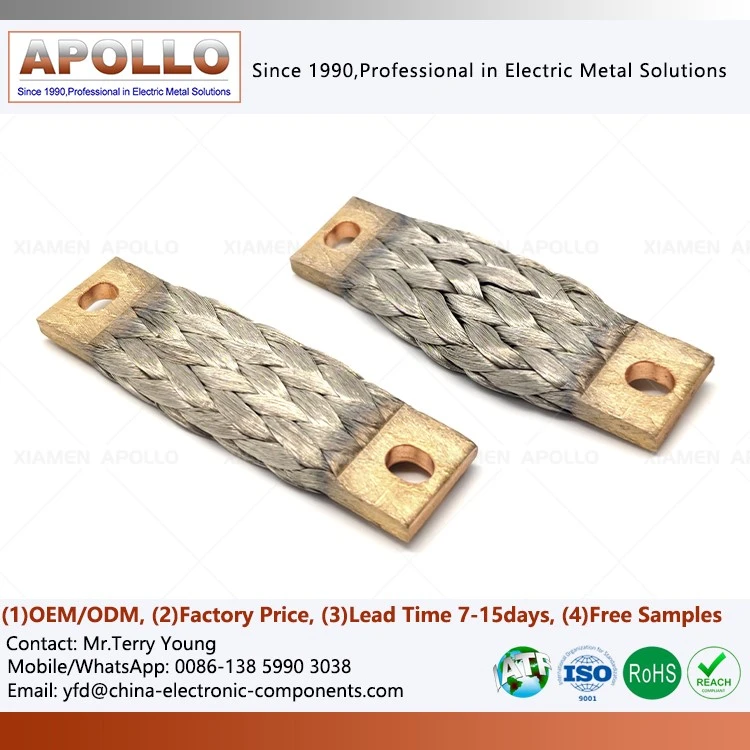
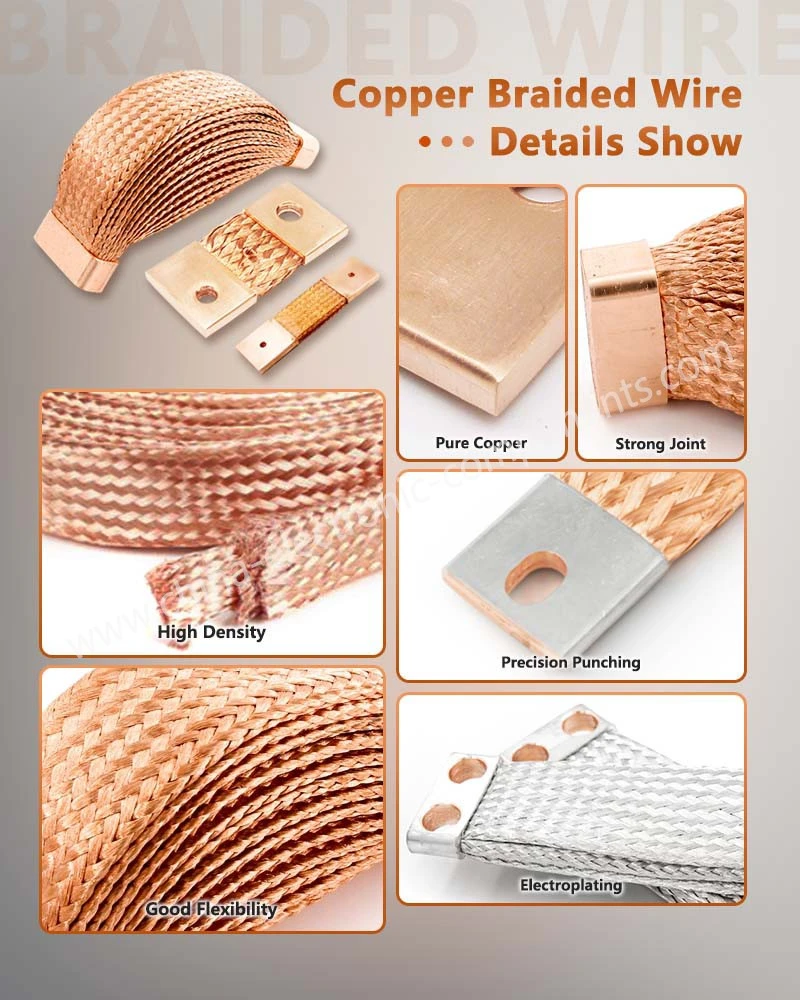
Copper braided connectors are typically formed by interlacing multiple fine copper strands using a braiding process; this results in a mesh-like structure that offers excellent flexibility and fatigue resistance. In practice, this type of structure is frequently employed in applications requiring high flexibility, operating within confined spaces, or necessitating compensation for frequent vibrations-such as in conductive transition sections within electrical assemblies. Their structural advantages ensure stable electrical conductivity under complex operating conditions, making them a common choice for flexible braided connector applications.
The raw materials for copper braided connectors usually consist of high-purity soft copper strands or tinned soft copper strands. These are braided into conductive strips of varying thicknesses and densities to accommodate different current rating requirements. In engineering practice, this structure is also commonly utilized in the custom design of flexible braided connectors to meet specific connection needs between equipment terminals.
In contrast, copper stranded connectors are formed by twisting multiple copper strands together in a uniform direction, creating a bundle-like assembly that is more compact and offers a more direct conduction path. Due to their structural stability and low internal resistance, they are widely used in power transmission and distribution systems, particularly in connections requiring high current-carrying capacity, such as those found in transformers, electric furnaces, and high-current equipment systems.
In applications involving low-to-medium voltage flexible connectors, copper stranded connectors are frequently used for medium-current flexible conductive connections thanks to their superior mechanical strength and conductivity stability. During manufacturing, the material typically undergoes an annealing process to enhance ductility and fracture resistance, enabling the connector to adapt to complex installation environments.
Regarding electrical performance, copper stranded connectors generally exhibit slightly lower DC resistance than braided structures, offering a distinct advantage in high-current transmission scenarios. Due to their greater number of contact points and more distributed structure, braided copper wires exhibit superior fatigue resistance in high-frequency vibration environments. This distinction dictates their respective roles in product categories such as flexible braided copper busbars and standard braided copper wires.
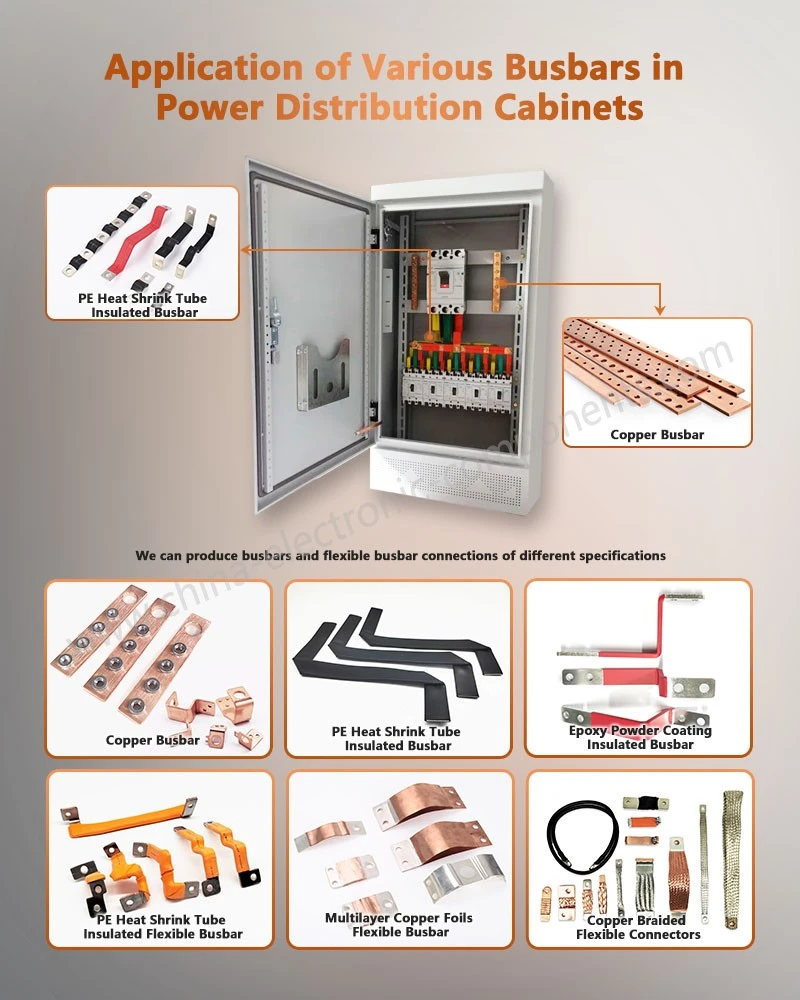
In flexible busbar and grounding systems, braided copper wire is frequently utilized as a flexible busbar component to facilitate conductive connections between equipment while providing vibration isolation. Furthermore, in applications requiring insulation, these components may be processed with heat-shrink PVC sleeves to enhance safety and environmental resilience.
Stranded copper wire, conversely, is more commonly employed in compact conductive systems-such as flexible connectors or internal main circuit connections. It serves as an alternative to flexible braided copper busbars, offering distinct advantages in space-constrained environments that demand high current-carrying capacity.
In industrial electrical systems, both structural types can be adapted into customized braided flexible busbar solutions to meet specific voltage ratings and installation requirements. Additionally, tinned copper braid structures are widely used in grounding applications to improve corrosion resistance and ensure long-term stability.
Flexible copper connectors find broad application across power equipment, electronics, rail transit, and new energy systems. Selecting the appropriate flexible connector requires a comprehensive evaluation of factors such as current density, installation space, mechanical vibration, and environmental corrosion to ensure the system's long-term, stable operation.
Moreover, flexible busbar products-including various forms of braided copper busbars-have become integral to modern electrical connections, seeing increasingly widespread use in high-density power distribution systems. High-end applications may also utilize flexible insulated copper busbars, incorporating an insulation layer to enhance safety standards.
In summary, braided copper wire and stranded copper wire offer distinct structural and functional advantages: the former emphasizes flexibility and vibration resistance, while the latter prioritizes electrical conductivity and mechanical strength. Selecting the right component based on specific engineering requirements is crucial for ensuring the stable operation of electrical systems.
contact us
Send Inquiry