










Stamping And Riveting Repair Technology: Enhancing Quality And Efficiency in Manufacturing
Jun 03, 2026
Leave a message
In the mass production of precision terminals in the manufacturing industry, sheet metal deformation, tooling errors, and process control deviations often lead to riveting defects. The Precision Stamped Riveted Contact Assemblies are highly susceptible to defects such as loose rivets, misaligned rivets, and surface cracking after mass stamping. Traditional, crude rework methods have long hampered the efficiency of good product control for precision conductive components. With the downstream new energy power control and low-voltage electrical appliance industries upgrading their products to greater precision, the shortcomings of outdated hammering and welding repair methods are becoming increasingly apparent. The industry is gradually accelerating the implementation and popularization of standardized riveting repair processes, relying on process improvements to reduce terminal production scrap and losses.
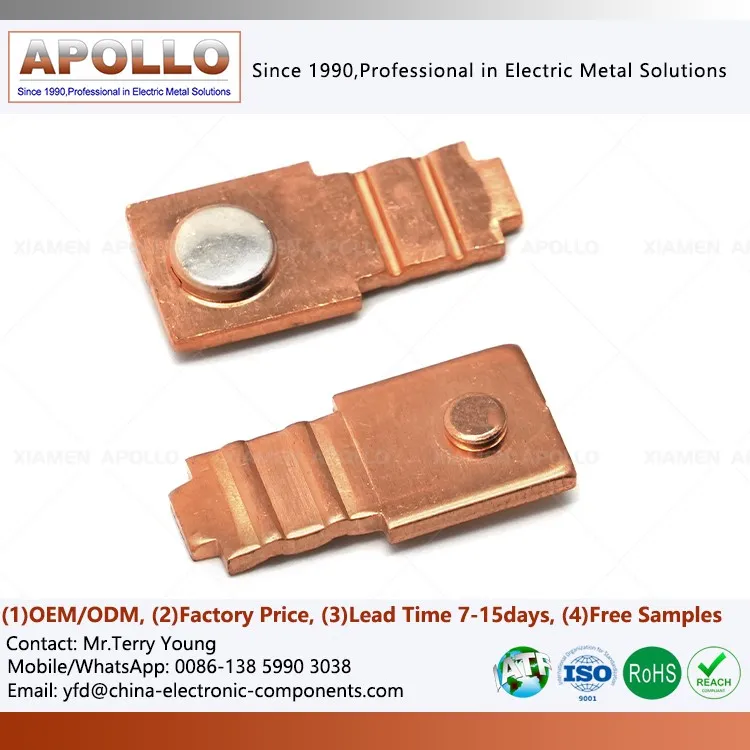
The widespread adoption of lightweight dissimilar metal sheets further amplifies the difficulty of terminal riveting production. Copper, aluminum, and steel composite substrates are now the mainstream production solution. Conventional hot welding repairs easily cause thermal deformation of the substrate and oxidation damage to the conductive surface. Silver Contact Riveted Copper Assemblies have stringent standards for contact surface flatness and conductivity stability. Material changes caused by heat treatment directly alter the terminal's conductivity parameters, making it difficult to meet the factory testing specifications for electrical components. Many component processing plants have historically been limited by inadequate rework processes, resulting in the direct scrapping of defective terminals. This has led to persistently high raw material losses and production costs, forcing the entire industry to explore feasible cold-processing non-destructive rework methods.
The standardized cold disassembly and rework process centers on seamless disassembly and in-situ repair. The entire process is divided into four main steps: removal of old rivets, board surface leveling, in-situ precision punching, and secondary precise riveting. Following standardized procedures, the original structural dimensions of the substrate are fully preserved. The mechanical strength and conductivity of the reworked Electrical Contact Rivet Assemblies are comparable to those of brand-new products. Specialized hydraulic tooling precisely breaks the rivet head and ejects the rivet shank, avoiding perforation and warping deformation of the board material caused by forceful disassembly. A miniature flat die then levels the uneven board surface, and a punch is pre-drilled according to the original specifications to create standard holes. Finally, rivets of the same specifications are used to complete the re-riveting. The entire process involves no high-temperature processing, maximizing the preservation of the physical and chemical properties of the terminal substrate.
Compared to traditional rework methods, the new process achieves comprehensive optimization in terms of time, yield, and applicable materials. Manual knocking out individual parts for rework is time-consuming and has a low yield rate. Electric welding for hole repair is limited by high temperatures and cannot be used for processing dissimilar metal terminals. Standardized non-destructive rework significantly reduces the time required for individual parts, achieving a yield rate exceeding 90%, and is suitable for the rectification needs of various composite material terminal products. After introducing an online rework station into the Electrical Silver Contact Rivets Copper Contacts Assembly mass production line, defective semi-finished products no longer need to be processed offline; online rectification reduces material backlog, resulting in significant lean production implementation.
This rework process has now been widely adopted in the manufacturing of various precision electrical components. New energy power control wiring terminals, conductive terminals inside distribution cabinets, and home appliance control module terminals are all relying on the new process to optimize quality control. The production of automotive low-voltage connectors is also gradually replacing the old rework methods. As a critical connector in electrical circuits, the consistency of the In-Die Riveted Moving Contact Assembly directly impacts the operational stability of the entire device. Process iterations are driving the component manufacturing industry to reduce scrap costs, and small and medium-sized terminal processing plants can save significant raw material waste costs annually by leveraging new processes.
Based on the trend of lightweight development in manufacturing, the market demand for various composite material terminals continues to rise. The production cost losses caused by riveting defects will continue to be a focus for manufacturers. Non-destructive riveting repair processes, with their high adaptability and economic efficiency, are gradually becoming an essential process for precision terminals. The Silver Alloy Contact Riveting Parts related industry chain will continue to optimize repair standards with the iteration of new materials and equipment, further promoting the steady improvement of the overall technological level of the electrical connector industry.
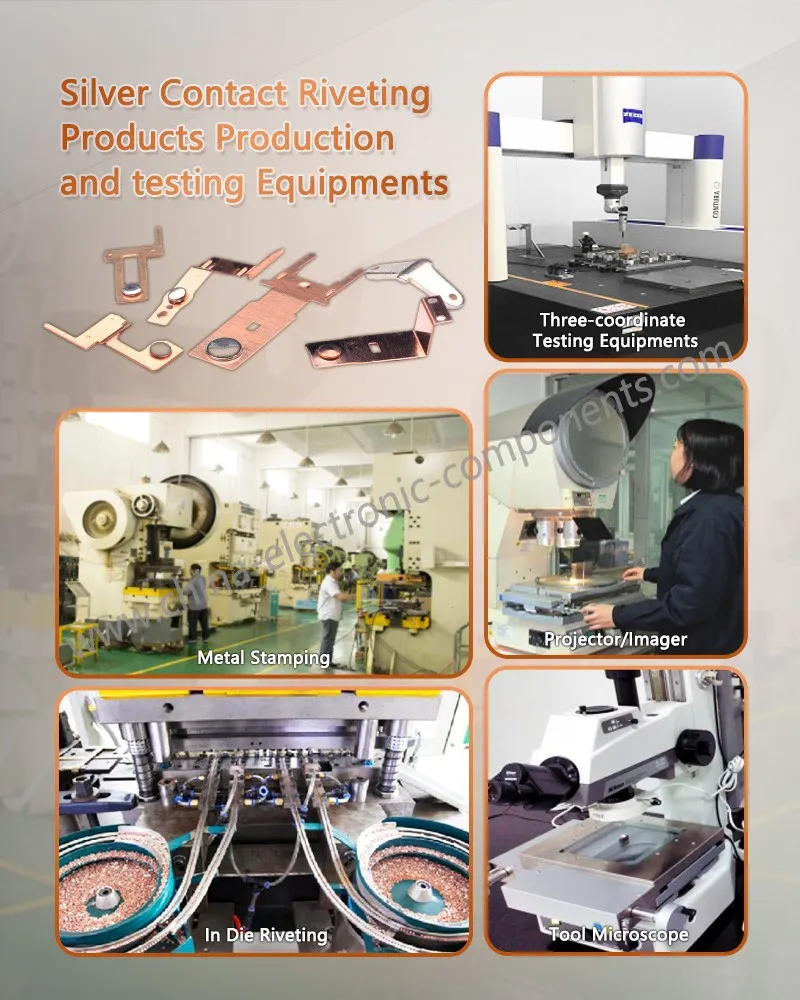
Based on mature riveting manufacturing and process quality control experience, our factory's self-developed and mass-produced Precision Stamped Riveted Contact Assemblies are manufactured strictly in accordance with non-destructive riveting process standards. The entire process rigorously controls riveting accuracy and conductivity, adapting to multi-material composite processing needs and suitable for assembly in various electrical control, home appliances, and automotive equipment, reducing end-repair losses from the source. New and existing customers are welcome to inquire about product selection and bulk orders.
contact us
Send Inquiry