










High-Frequency Induction Technology Enables Precision Production Of Contact Tip Welding
Jun 03, 2026
Leave a message
With the continuous upgrading of the electrical components and automotive parts manufacturing industries, the iteration of contact welding processes has become a key focus. High-frequency induction brazing, relying on its unique heating principle, is gradually becoming the mainstream process solution supporting the industrialization of Contact Tip Welding. This process uses a filler metal with a melting point lower than the base material. Through high-frequency electromagnetic induction, the melted filler metal fills the gaps in the workpiece to complete the joint, fundamentally adapting to the dissimilar material connection needs of copper, silver, and multi-alloy contacts.
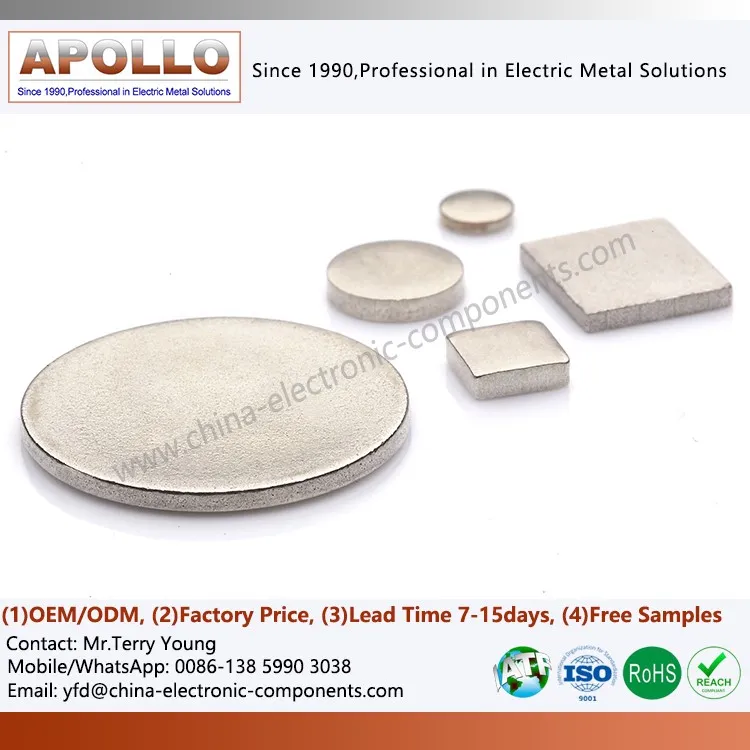
Compared to traditional flame brazing, high-frequency technology boasts extremely rapid heating and cooling characteristics, enabling contact welding operations to be completed in a short cycle. This significantly reduces the heating range of the base material, effectively optimizing the stability of Silver Contact Welding products and avoiding electrical faults caused by high-temperature deformation and material degradation. The narrow heat-affected zone also meets the precision machining standards of miniature contacts inside air switches and circuit breakers, aligning with the current trend of miniaturization in precision electrical components.
Leveraging the adjustable power parameters, operators can flexibly adjust equipment output power and heating time, precisely controlling welding temperature and time, thus eliminating quality fluctuations caused by manual temperature control in Welded Contacts. Standardized parameter control effectively unifies the weld strength and conductivity of alloy terminal contacts within the same batch, reducing production defects such as incomplete welds and leaks, and adapting to large-scale standardized industrial manufacturing scenarios.
With the widespread adoption of automated manufacturing, semi-automatic and fully automated high-frequency brazing solutions have been implemented, relying on mechanical positioning and programmed temperature control to achieve continuous production, further simplifying the on-site operation process for Brazed Contact on Terminal. Automated production lines reduce the frequency of manual intervention, compressing labor costs and stabilizing production cycles. Currently, they have been implemented on a large scale in low-voltage electrical appliances and automotive electronic control component production lines.
From a practical application perspective, the internal contacts of air switches and circuit breakers are the most typical application targets for this process. By fine-tuning the coil layout and heating parameters at the production end, a uniform temperature distribution of the contact weld can be achieved, ensuring the weld density of the Welding Button Contact. With the expansion of production capacity in new energy and power distribution equipment, this technology is gradually extending to the processing of more new contact products, such as automotive relays and industrial control terminals.
Beyond process implementation, standardized full-process control is crucial to ensuring welding stability. The industry has established a standard system covering four dimensions: equipment selection, personnel management, equipment maintenance, and on-site protection, comprehensively safeguarding safe production in Electrical Contact Kits. Companies select suitable machine models based on contact materials and dimensions, ensure operators are certified, conduct regular equipment inspections and maintenance, and use appropriate insulation and heat-resistant protective equipment to prevent equipment failures and workplace injuries from the outset.
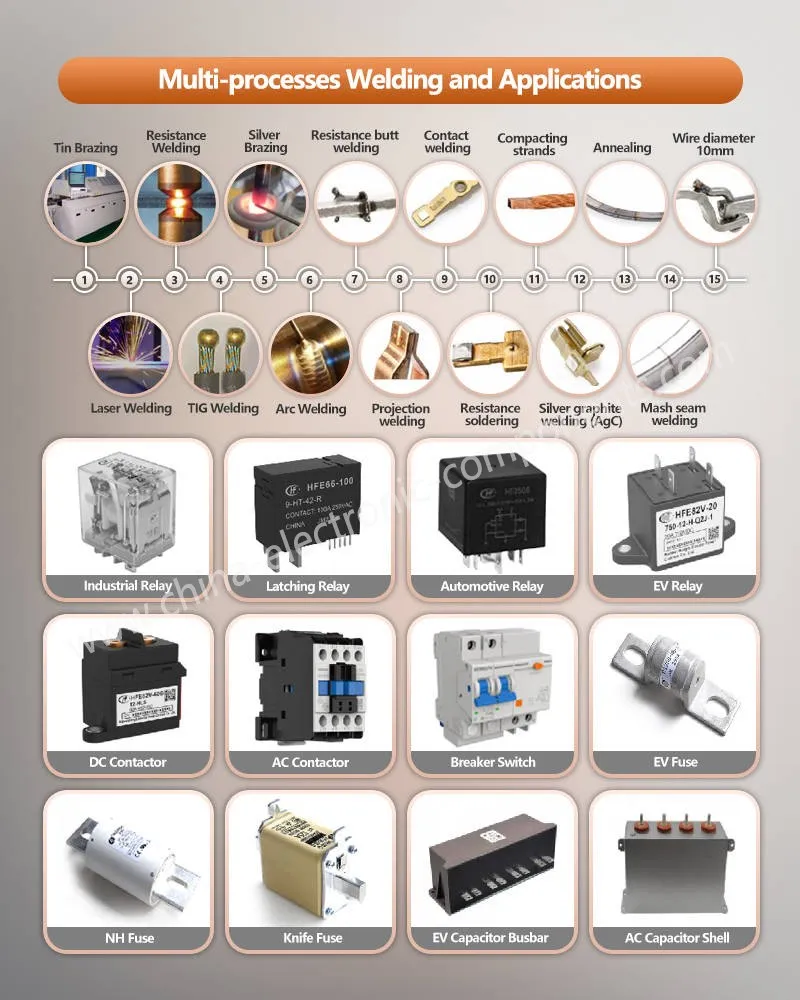
Based on industry development trends, driven by the demand from new energy vehicles and new power distribution equipment, the alloy contact market is steadily expanding. High-frequency induction brazing, with its advantages in precision, efficiency, and adaptability, continues to broaden the application boundaries of Silver Tin Oxide Contact. With continuous optimization of brazing filler metal formulations and intelligent temperature control technology, this technology will iterate towards higher precision and lower energy consumption, continuously leading the technological upgrade of the precision contact welding industry.
Based on the above-mentioned process application requirements, our self-developed Contact Tip Welding equipment, optimized and iterated through process iteration, perfectly meets the processing needs of various copper-silver and alloy contacts. It balances temperature control accuracy with automation adaptability, and is suitable for mass production of multiple types of contacts for circuit breakers and automotive electrical components. Customized models can be made according to workpiece specifications, solving various pain points in precision contact welding. With mature equipment technology, we welcome customers with welding procurement needs to consult, discuss, and place sample orders.
contact us
Send Inquiry