










Looking Ahead To 2026: The Busbar Industry Enters A New Stage Of High Efficiency, Customization, And Global Collaborative Development
Apr 28, 2026
Leave a message
With the accelerated pace of global energy structure adjustment and electrification upgrades, the busbar industry is ushering in a new growth cycle. As a key conductor component in high-current transmission and power distribution systems, busbars, with their high current-carrying capacity, compact structure, low loss, and excellent heat dissipation performance, are gradually replacing traditional wiring harness solutions and are widely used in new energy vehicles, energy storage systems, industrial automation, rail transportation, data centers, and communication infrastructure.
Entering 2026, market demand continues to expand, technological upgrades are accelerating, and the industry's competitive logic is shifting from competition based solely on manufacturing capabilities to comprehensive competition based on R&D efficiency, delivery stability, and global service capabilities.
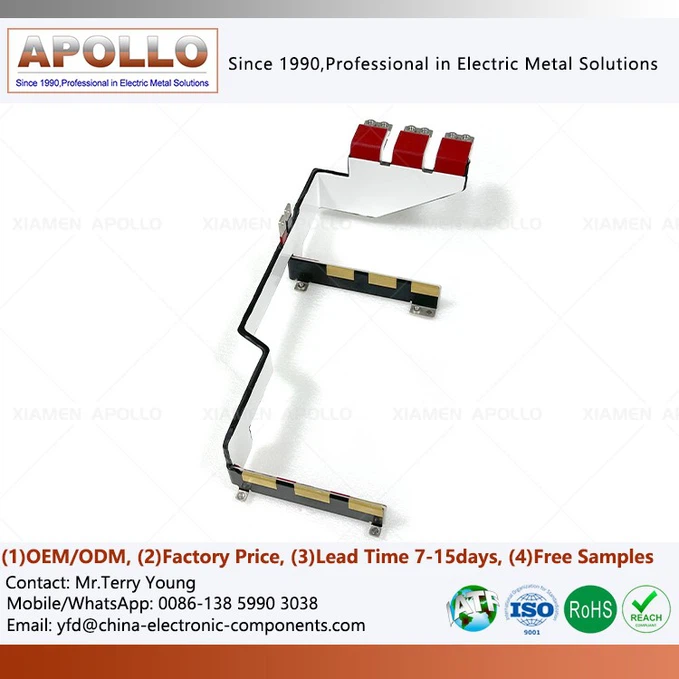
Continued expansion of new energy demand propels the high-voltage busbar market into a fast track
New energy vehicles and energy storage remain the core drivers of current industry growth. With the upgrading of vehicle high-voltage platforms, the widespread adoption of high-power fast charging, and the expansion of energy storage installations, high-voltage connection systems are placing higher demands on busbars, including lower temperature rise, stronger insulation, higher safety, and smaller installation space.
In automotive electric drive systems, BMS systems, and inverter scenarios, laminated busbars for electric cars are becoming the mainstream solution, effectively reducing stray inductance and improving system stability. Meanwhile, the demand for High Voltage Explosion-Proof Inverter Busbars and Laminated Busbars for Three-Level Inverters, suitable for high-voltage inverter platforms, is significantly increasing in next-generation electronic control architectures.
The energy storage sector is also experiencing rapid growth, with strong demand for PCS systems, inverter systems, and battery cluster connections, driving the continued expansion of the application of partially laminated busbars and three-layer laminated busbars in high-power equipment.
High-frequency and low-inductive-resistance designs are becoming key areas for technological upgrades
With the accelerated adoption of power devices such as SiC and IGBTs, system switching frequencies are continuously increasing, and the electromagnetic compatibility performance of busbars is receiving widespread attention. Low-inductance, low-impedance, and highly consistent laminated structure products are rapidly replacing traditional copper busbar connection methods.
Currently, laminated low-inductive busbars have become an important choice for high-frequency inverter equipment, especially in servo drives, motor controllers, and new energy inverter modules. For the power module market, the demand for customized Laminated Busbars for IGBTs and IGBT Laminated Busbars continues to grow to meet the requirements of different module sizes, thermal management paths, and installation structures.
Furthermore, in high-power electronic devices, the deployment rate of laminated busbars in high-power converters continues to increase, becoming an important component for improving efficiency and reducing system losses.
Data centers and communication equipment are driving new growth markets. The rapid development of AI computing, cloud computing, and edge computing is driving upgrades to servers, power backplanes, and high-speed power supply systems. Traditional cables are struggling to meet the demands of high-current, high-density scenarios, making structured busbar power supply solutions increasingly popular.
For computing equipment, the demand for Laminated Bus Bars for Supercomputer Circuit Boards or Backplanes continues to rise, enabling highly stable power supply connections. At the same time, Laminated Bus Bars for Distributing Power Backplanes are also rapidly penetrating large rack systems.
In the communications sector, the continued construction of 5G base stations, switching equipment, and network core infrastructure is driving steady growth in market demand for Laminated Bus Bars for Cellular Base Station Power Distribution, Laminated Bus Bars for Router Backplane Distribution, and Laminated Bus Bars for Telecom Power Distribution.
The industrial automation and rail transit markets maintain stable growth. Under the backdrop of Industry 4.0 upgrades, frequency converters, servo systems, robot control cabinets, and UPS power systems continue to drive industry demand. The configuration ratio of Laminated Bus Bars for Variable Frequency Drives, Motor Controller Bus Bars, and (Uninterruptible Power Supply) System Bus Bars in automated production lines for industrial drive systems continues to increase.
The rail transit sector also maintains steady development. Upgrades in urban rail transit, electric locomotives, and power supply modules are driving increased demand for Subway Laminated Bus Bars and Composite Bus Bars for Train Power Supply Four-quadrant Power Modules, with products placing greater emphasis on vibration resistance, flame retardancy, and long-term reliable operation.
Customized, multi-material composite structures are becoming a new industry trend. Faced with the demands for complex equipment structures and compact designs, standard components can no longer fully meet the needs of the end market. More and more projects are shifting towards customized, collaborative development models based on provided drawings. Companies with rapid prototyping, mold development, and stable mass production capabilities will gain more market opportunities.
For example, BusBars with PET Insulating Paper for specific insulation requirements and Laminated BusBar Coppers without Tin Plated for special conductive applications are increasingly being used to meet differentiated project needs.
Meanwhile, Multi-Layer Composite Structure Connection Bars, with their advantages of lightweight design and structural integration, are becoming an important development direction for future high-end equipment connection systems.

Intensified global competition makes supply chain collaboration a core barrier to entry
Future industry competition will no longer be limited to price but will revolve around delivery speed, quality consistency, engineering collaboration, and global service. Especially in the fields of new energy vehicles, energy storage, and power electronics, customers are placing greater emphasis on suppliers' project development responsiveness and cross-regional supply stability.
From raw material management, stamping, insulation lamination, welding assembly, to end-product testing, a complete manufacturing chain will become a crucial foundation for corporate competitiveness. Companies capable of early involvement in R&D, rapid sample delivery, and large-scale production transition will occupy a more advantageous position in the future market.
Industry Outlook
Overall, the busbar industry is expected to maintain its growth momentum in 2026, moving towards higher voltage, lower inductance, integration, lightweighting, and globalization. High-quality demand will continue to emerge from sectors such as new energy vehicles, energy storage systems, data centers, communication equipment, and rail transportation.
The future market will increasingly favor manufacturers with strong technological foundations, customization capabilities, and stable delivery systems. The busbar industry will also gradually evolve from a traditional component supplier to a key supporting link in the new energy and high-end equipment industry chain.
contact us

Send Inquiry