










Development Of China's Power Fuse Industry: Policy Support, Broad Prospects
Apr 23, 2026
Leave a message
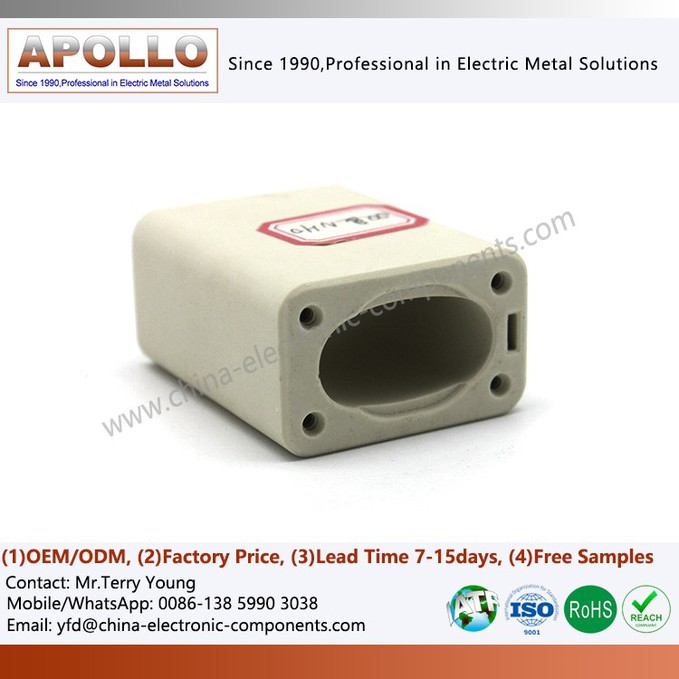
As a core component in circuit protection, the electric fuse plays an irreplaceable role in the safe operation of power systems. It primarily protects against overcurrent by melting the fusible element through its own heat, preventing equipment damage, fires, and other safety hazards. Based on power intensity and application scenarios, fuses can be divided into electronic fuses and electric fuses. Electric fuses focus on protecting high-energy circuits and are widely used in various industrial scenarios. The Fuse Ceramic, as a core component, provides the fundamental support for realizing this protective function.
The application boundaries between electric fuses and electronic fuses are clear, with key differences manifested in four aspects. In terms of application scenarios, high-power, high-energy transmission circuits in power generation, distribution, and electrical equipment require protection using electrical fuses, while electronic circuits are suitable for electronic fuses. In industry applications, electrical fuses are the primary choice for power generation and distribution, with electronic fuses used only in small quantities. In the field of electrical equipment, high-power equipment relies on electrical fuses, while low-power equipment and electronic products mainly use electronic fuses. In the automotive field, high-voltage circuits in new energy vehicles use electrical fuses, while low-voltage circuits and low-voltage circuits in traditional fuel vehicles use electronic fuses, which can also be called automotive fuses. The improved compatibility of Ceramic HRC Fuse Body further optimizes the performance of electrical fuses.
In recent years, the national and local governments have introduced numerous policies to create a favorable environment for the development of the power fuse industry. As a key guarantee for the safety of power systems, circuit protection components have received significant policy support. These policies focus on the independent research and development of high-end components and the improvement of the industrial chain and supply chain, promoting the innovative application of power fuses in power equipment, new energy, and industrial control. In March 2024, 18 departments, including the State Administration for Market Regulation, jointly issued a relevant action plan to strengthen the development of basic electronic processing standards. In September 2025, Hunan Province introduced special measures to support the development of the high-end electronic component industry, indirectly providing policy support for the power fuse industry and promoting the technological upgrading of related supporting materials such as Electrotechnical Ceramics.
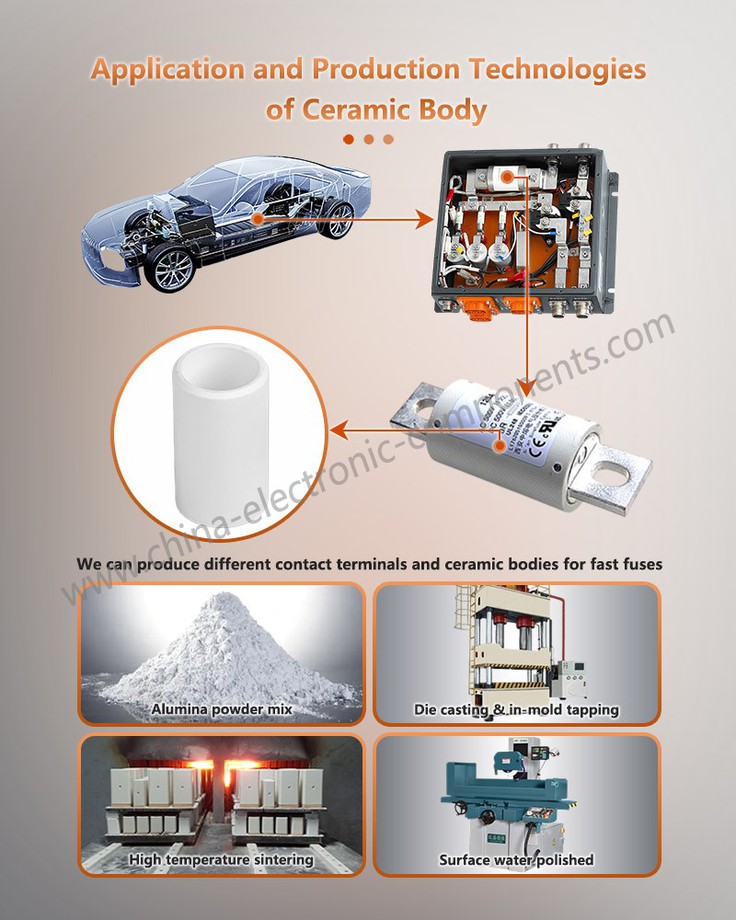
The power fuse industry has a clear industrial chain, divided into three major segments: upstream raw materials, midstream manufacturing, and downstream applications. Upstream raw materials include fusible materials, insulating materials, arc-extinguishing materials, and other auxiliary components. Among these, ceramics and composite resins are core raw materials for insulation. Fuse Ceramic Tubes, as a crucial insulating component, directly affect the performance of power fuses. The midstream stage involves manufacturing, focusing on product research and development, molding, and testing to ensure product quality stability. Downstream applications are widespread, covering traditional power generation, transmission and distribution, metallurgy, mining, communications, new energy wind and solar power generation, energy storage, new energy vehicles, rail transportation, and shipbuilding, among other industrial sectors. New energy vehicles represent the most promising application area.
The rapid development of the new energy vehicle industry has injected strong momentum into the power fuse industry. With the accelerated transformation towards electrification, intelligence, and greening of automobiles, my country's production and sales of new energy vehicles have continued to climb, both exceeding 10 million units in 2024, and maintaining a year-on-year growth rate of over 30% from January to October 2025. New energy vehicles face complex operating conditions and frequent current fluctuations, placing higher demands on the withstand capability and adaptability of electric fuses. This has also driven the growth in demand for specialized components such as Steatite Ceramic for EV Fuse, which will continue to expand the industry market and upgrade technology in the future.
Currently, China's electric fuse industry has formed a relatively complete industrial chain and a mature market system. The industry has numerous companies and a diverse product portfolio, capable of meeting the differentiated needs of various scenarios. Benefiting from the development of related industries such as new energy, rail transit, and digital technology, the fuse market demand has grown rapidly. From 2019 to 2024, the market size of China's fuse industry increased from 1.5 billion yuan to 3.5 billion yuan, with a compound annual growth rate of 18.47%. Among them, electric fuses performed particularly well, with the market size growing from 600 million yuan in 2019 to 1.68 billion yuan in 2024, a compound annual growth rate of 22.87%, and is expected to reach 1.91 billion yuan in 2025. Furthermore, the technological optimization of Fusing Electronic Ceramic has further improved the breaking reliability and service life of electric fuses.
In the future, China's power fuse industry will develop in three major directions: intelligentization, high performance, and greening. In terms of intelligentization, the integration of sensors and microprocessors will enable functions such as fault prediction and status monitoring, achieving a leap from "passive protection" to "active early warning." Regarding high performance, the industry will promote new arc-extinguishing materials and high-thermal-conductivity ceramic matrices, optimize product structure, improve breaking capacity and durability, and adapt to complex high-voltage, high-current operating conditions. High-end products such as the Alumina Ceramic Sleeve Tube for High Voltage EV Fuse will see broader application opportunities. In terms of greening, the industry will promote lead-free and low-energy-consumption manufacturing processes and adopt recyclable materials to achieve coordinated development of environmental protection and safety.
With increased policy support, continued release of downstream demand, and continuous technological iteration, China's power fuse industry has broad development prospects and will play a more important role in areas such as power system security and the upgrading of the new energy industry. It will also drive the continuous progress of the Ceramic Body for Fast Fuses industry.
If you would like to learn more about the technical details of the power fuse industry, the matching Fuse Link Ceramic Body adapter solution, or have related procurement or technical consulting needs, please feel free to contact us for professional and comprehensive support and solutions.
contact us
Send Inquiry