



Comparison Of High-Energy Beam Welding Processes: Observations On The Development Of Precision Manufacturing Technology For Electron Beam Welding Shunt Resistor
Jul 08, 2026
Leave a message
Electron beam welding and laser welding both belong to high-energy-density beam processing technologies. Their energy densities are far higher than those of traditional arc welding and resistance welding. Their processing principles are similar, both relying on instantaneous high-temperature melting of the base material to form a weld. In the field of precision component manufacturing for new energy electronic control systems, the welding accuracy of dissimilar metals directly determines sampling stability. Electron Beam Welding Shunt Resistor, produced using vacuum high-energy fusion technology, has become the mainstream solution for high-precision current detection components.

Electron beam welding relies on a vacuum chamber environment, where a high-speed focused electron beam impacts the workpiece, rapidly converting kinetic energy into heat to form a small-hole molten pool. Laser welding, on the other hand, relies on stimulated emission beam focusing to generate high temperatures; deep penetration welding also exhibits a keyhole effect. Both processes offer advantages such as high welding speed, narrow heat-affected zone, minimal workpiece deformation, and strong automation adaptability. In the dissimilar metal welding of manganese-copper alloy and copper terminals for shunt resistors, the Electron Beam Welding Manganin Shunt can maximize the oxidation-free welding advantages provided by the vacuum environment.
From a core performance perspective, electron beam welding boasts an energy conversion efficiency of 80%-90%, a significant advantage in weld depth-to-width ratio, and high beam current control precision, making it suitable for highly reflective and difficult-to-weld metals such as copper and silver. Laser welding eliminates the need for a vacuum chamber, allowing for online integration into automated production lines and shorter single-piece processing cycles. However, laser energy conversion efficiency is relatively low, high-power equipment is expensive, and stable fusion of thick-layer dissimilar metals is difficult to achieve. In comparison, the Shunt Resistor Of Electricity Meter is better suited for long-term, high-precision sampling conditions.
Electron beam welding suffers from objective drawbacks such as time-consuming vacuum pumping, workpiece size limitations imposed by the chamber, the need for demagnetization and anti-deviation treatment, and the requirement for radiation protection. Laser welding eliminates the need for demagnetization and radiation protection pressure, allowing for continuous production in atmospheric environments with a protective gas, making it more suitable for mass production of thin-plate automotive parts. However, for manganese-copper and copper composite shunt resistor structures, a vacuum-sealed environment avoids weld oxidation defects, resulting in lower interfacial contact resistance for the Manganese Copper Resistance Shunt.
From an economic perspective, the greater the penetration depth of high-power electron beam equipment, the more significant its overall processing cost advantage. For weld depths exceeding 50mm, the cost is lower than that of traditional submerged arc welding. Small and medium-power models have mature and well-developed domestic supporting systems, offering outstanding cost-effectiveness. While laser equipment offers convenient production line integration, high-power models have high procurement barriers, and consumables continuously increase processing costs. For applications requiring long-term stable sampling accuracy, such as energy storage and automotive electronic control, the Maganin Shunt for Electronics Meter offers more controllable overall lifecycle costs.
Electron beam welding is unaffected by the reflective properties of metals, enabling stable metallurgical bonding of dissimilar metals such as copper, manganese, copper, and aluminum. The welds are dense and free of porosity and delamination, perfectly matching the requirements of three-segment composite structures with shunt resistors. Laser welding is more suitable for thin plate workpieces within 10mm, primarily used in automotive body and gear processing. However, it struggles to address welding defects in high-reflectivity alloys. In precision current sampling scenarios, the performance stability of the Manganin Shunt for Single-phase is irreplaceable.

Domestic high-energy beam welding technology continues to iterate, and low-to-medium power electron beam welding production lines have achieved mature mass production, capable of stably completing continuous precision welding of bimetallic strips. Laser welding research and development focuses on plasma suppression and composite heat sources. The increasing demands for current detection accuracy in new energy storage and automotive BMS lead to the gradual popularization of vacuum electron beam welding technology, making Maganin Shunt Resistor Shunts a standardized component in electrical control equipment.
Both high-energy beam welding technologies have their advantages and disadvantages and are not completely interchangeable. Selection must be based on the workpiece material, thickness, and production scale. For precision components with minute resistance values and low temperature drift, such as shunt resistors, vacuum electron beam welding can achieve atomic-level metallurgical bonding, eliminating interface resistance and temperature drift errors. With the expansion of the new energy industry, the market demand for Maganin Copper Shunt for Electronics Energy Meter will continue to grow steadily.
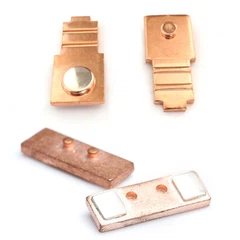
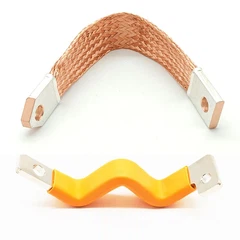
We manufacture our Electron Beam Welding Shunt Resistor using a fully automated vacuum electron beam welding production line. We select high-purity manganese-copper alloy resistors, and the copper terminals can be tin-plated or nickel-plated for corrosion protection upon request. The weld seams are dense and free of oxide interlayers, resulting in extremely low contact resistance and resistance to high and low temperature cycling. It is suitable for automotive and energy storage BMS four-wire sampling and supports customization of resistance values and dimensions. We welcome inquiries from new energy power control and energy storage equipment manufacturers for sample testing and bulk purchase cooperation.
contact us

Send Inquiry