



Comparison Of Aluminum Nitride Copper Clad Substrate Metallization Processes For IGBT Modules
Apr 07, 2026
Leave a message
In modern power electronics technology, IGBT modules, as core power devices, rely heavily on packaging materials and structural design for performance and reliability. Among these, the copper-clad ceramic substrate, serving as a crucial heat dissipation and electrical connection carrier, directly impacts the module's stability under high voltage, high current, and complex thermal cycling environments through its metallization process. Therefore, a systematic analysis of the metallization technology and reliability of aluminum nitride (AlN) ceramic substrates is of significant engineering importance for improving the overall performance of power devices.
From a material selection perspective, common types of ceramic substrates include Al₂O₃, AlN, Si₃N₄, and SiC. While Al₂O₃ is low-cost and has mature processing technology, its limited thermal conductivity makes it difficult to meet high power density requirements. Si₃N₄ exhibits excellent mechanical properties, but its application is limited by manufacturing technology and cost. Although SiC possesses high thermal conductivity, its dielectric properties and processing difficulty restrict its large-scale application. In contrast, AlN ceramics have gradually become the mainstream choice due to their high thermal conductivity, excellent insulation properties, and good thermal expansion matching with semiconductor materials, and their application value in metallized ceramic systems continues to increase.
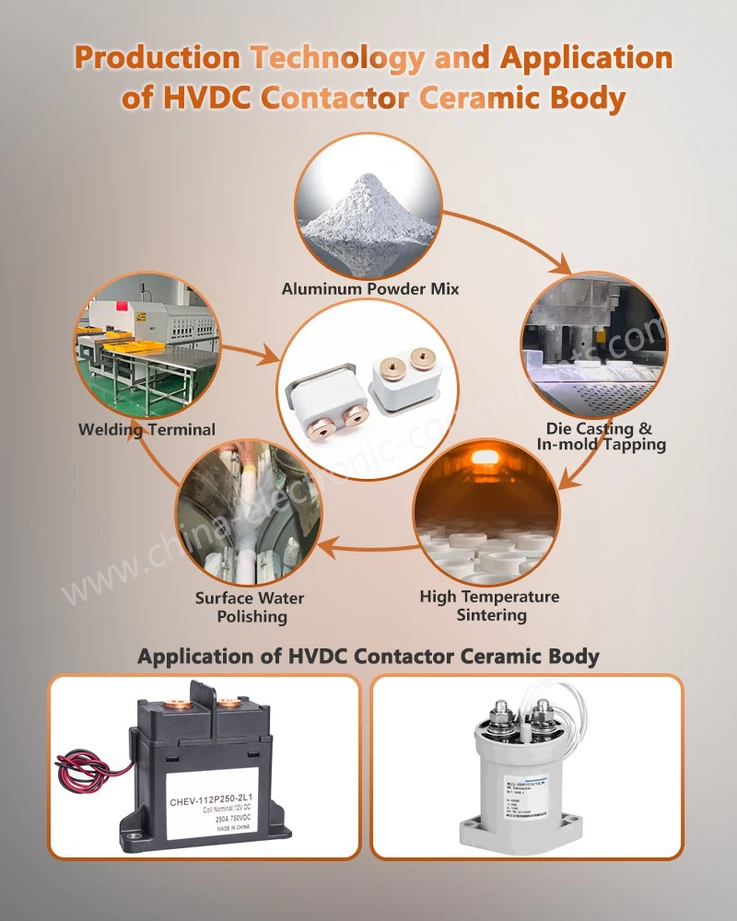
Firstly, analyzing the interfacial bonding mechanism, the TFC process relies on the softening of the glass phase to achieve mechanical interlocking and wetting bonding through screen-printed copper paste and high-temperature sintering; the DPC process relies primarily on physical adhesion through sputtering a Ti/Cu thin layer and electroplating for thickening; the DBC process achieves metallurgical bonding by reacting Cu₂O and Al₂O₃ at high temperatures to form a eutectic structure; while the AMB process significantly enhances bonding strength by forming a TiN and other reactive layers at the interface using Ti-containing active solder. This difference in the metallization ceramic mechanism is the fundamental reason for the performance differentiation of different processes.
In terms of peel strength, the AMB process performs best, with an interfacial bonding strength reaching 25 MPa, significantly higher than the DBC, TFC, and DPC processes. This indicates that in ceramic-to-metal bonding systems, introducing active elements to promote interfacial reactions is an important path to improve bonding performance. In contrast, the DPC process, lacking an effective metallurgical bonding layer, has relatively low adhesion, limiting its application in high-stress environments.
Further analysis from a thermal cycling reliability perspective revealed significant differences among various substrates under thermal shock conditions ranging from -55℃ to 150℃. DPC substrates experienced interface delamination at relatively low cycle counts, while TFC and DBC substrates showed varying degrees of strength degradation and microcracks after moderate cycle counts. In contrast, the AMB substrate maintained stable performance after 1500 cycles, primarily attributed to its flexible transition layer at the interface, effectively mitigating stress concentration caused by thermal expansion mismatch. This characteristic is of significant reference value for the design of high-strength metallized ceramic components.
Power cycling tests further amplified the performance differences between different processes. Under cycling conditions up to 1200A/3.3kV, the AMB substrate could operate stably for over 70,000 cycles, maintaining a reliable relative thermal resistance. The DBC substrate began to degrade after approximately 40,000 cycles, while TFC and DPC substrates failed at an even earlier stage. This indicates that in applications of Metallized Ceramic Housing for Power Semiconductors, interface structure stability and thermal stress buffering capability are key factors determining lifespan.
From an engineering application perspective, the metallization of AlN substrates not only affects electrical performance but also directly relates to the long-term reliability of the packaging structure. Especially in fields such as new energy vehicles, rail transportation, and smart grids, the demand for Precision Metallized Ceramics and Metallized Ceramics for Electrical Components continues to grow, placing higher demands on process consistency and reliability.

Furthermore, while Precision Metallized Alumina Ceramic Components and Alumina Metallized Ceramics still hold a certain market share in high-precision applications, the overall performance advantages of AlN substrates are more pronounced in high-power scenarios. Combined with precision machining technology for Alumina ceramic parts, complex structural designs and high-precision packaging requirements can be met, further expanding the application boundaries of ceramic metallization materials.
Overall, different metallization processes for alumina or aluminum nitride ceramics exhibit significant differences in interface structure, bonding strength, and thermal cycling performance. Among them, the AMB process, with its excellent metallurgical bonding mechanism and stress buffering capabilities, demonstrates a clear advantage in high-reliability applications. In the future, as power devices evolve towards higher current densities and more demanding operating conditions, the optimization of metallized ceramics and related processes will remain an important research direction
contact us
If you are evaluating Alumina Metallized Ceramics for Bonding solutions or seeking support for high-reliability packaging materials, please contact us. We will provide you with professional technical advice and application solutions.

Send Inquiry