



New Trends in the Brass Stamping Industry: Brass Stamped Components Lead the Upgrade of Electrical Equipment
Nov 30, 2025
Leave a message
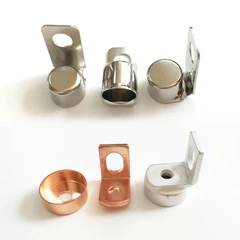
In modern manufacturing, brass stamped components, as key basic parts, are ushering in unprecedented development opportunities. As electrical equipment develops towards higher reliability, miniaturisation, and intelligence, brass metal stamping technology continues to break through and innovate, injecting new vitality into the industry.
Brass, as a copper-zinc alloy, possesses excellent electrical conductivity, corrosion resistance, and processing performance, making it an ideal material for manufacturing high-quality stamped parts. According to the latest industry data, the Chinese brass stamping parts market size is expected to exceed 150 billion yuan by 2025, with an average annual growth rate of 8.5%. Among them, the adoption rate of Precision Brass Stamping technology has exceeded 45%, significantly improving product quality and production efficiency.

Brass Material Properties and Stamping Process
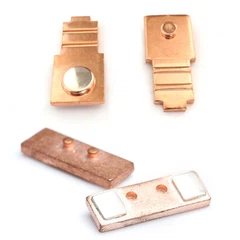
The plastic deformation capacity of brass is closely related to its zinc content; a zinc content range of 10-45% can meet different stamping requirements. In stamping processes, Cold Stamping Brass for Switch technology effectively avoids material cracking and deformation by precisely controlling material temperature and pressure. Especially for high-precision electrical components, such as wall switch brass contacts, this process ensures dimensional tolerances are controlled within ±0.01mm, meeting the stringent requirements of modern electrical equipment.
With the deepening development of Industry 4.0, Brass Sheet Metal Stamping technology is moving towards automation and intelligence. The application of multi-station progressive dies increases production efficiency by 30%, while reducing manual intervention and improving product quality consistency. In automotive electronics, smart home, and other fields, Brass Sheet Stamping Parts have become indispensable components.

Application Innovation in the Electrical Field
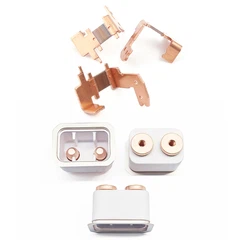
In the field of electrical equipment, the application of brass stamping parts is particularly widespread. Electrical Brass Switch Socket Parts are core components of modern electrical systems, and their performance directly affects the safety and reliability of equipment. With the popularisation of smart homes, the demand for power strip brass contacts and extension socket brass contacts is surging, and the market size is expected to reach 30 billion yuan by 2025.
For high-end electrical equipment, Silver Plated Brass Terminals are becoming a market favourite. By plating silver onto the brass surface, not only is conductivity improved, but oxidation resistance is also enhanced, extending product lifespan. This technology is particularly suitable for high-frequency, high-current electrical applications, such as 5G base stations and new energy vehicle charging equipment.
Custom Brass Stamping services are gaining popularity among businesses. Companies can customise Brass Stamped Components to meet specific needs, ensuring a perfect fit to the equipment structure. Especially in emerging products such as smart sockets and smart switches, customised brass Stamping Contact Parts for Wall Socket Plugs are key to enhancing product competitiveness.

Market Trends and Technological Breakthroughs
In 2025, with the deepening of the national "dual-carbon" goals, the brass stamping industry also ushered in a green transformation. In the production process of Electrical Brass Press Parts for Switch Sockets, the use of water-based lubricants and intelligent control systems has reduced energy consumption by 25% and increased waste recycling rates to over 90%.
At the technological level, precision stamping technology continues to make breakthroughs. By using AI algorithms to predict thickness variations between rolling passes, the precision of Brass Sheet Metal Stamping has been improved to ±0.006mm, providing a more reliable contact solution for microelectronic devices. Significant breakthroughs have also been achieved in the manufacturing process of Rotary Switch Brass Terminals. Multi-point edge pressing technology has significantly improved the stamping quality of aluminium alloys, reducing wrinkling and cracking.
Future Outlook
Looking ahead, with the rapid development of new energy, 5G communications, and smart grids, the brass stamping industry will see even greater growth potential. The 2025 "Comprehensive Utilisation of Resources Catalogue" lists brass recycling as a key supported project, allowing companies to enjoy a 15% income tax reduction, which will further promote the industry's development towards high quality and high efficiency.
Meanwhile, with the popularisation of nano-coating and digital twin technologies, the precision of Precision Brass Stamping will be improved to ±0.002mm, providing a more reliable contact solution for high-end electronic devices. Brass Metal Stamping products will play an increasingly important role in smart homes, electric vehicles, and industrial automation.
With continuous technological advancements and expanding application areas, the brass stamping industry is entering a golden age of development. Whether in basic electrical equipment or high-end intelligent products, brass stamped components will continue to play a crucial role, providing a solid guarantee for the reliable operation of electrical equipment. In the future, with the deep integration of materials science and manufacturing technology, brass stamping components will play an even more important role in the electrical industry, driving the entire industry to a higher level of development.
contact us

Send Inquiry