



Analysis of Composite Busbar Insulated Connection Technology: Structural Advantages, Design Principles, and Applications in High-Reliability Power Systems
Jul 10, 2026
Leave a message
As new energy, power electronics, HVDC systems, and industrial automation equipment evolve toward higher voltages, currents, and power densities, electrical connection structures face increasingly stringent requirements regarding safety, reliability, and space utilization. Traditional connection methods-such as bare copper busbars and cables-increasingly reveal limitations under complex operating conditions, including demanding insulation clearance requirements, complex routing, significant parasitic parameters, and high maintenance costs.
As a highly integrated power connection component, the laminated busbar combines power transmission, insulation protection, and structural optimization through a multi-layer composite design of conductive and insulating layers. Capable of handling high-current transmission while effectively reducing electrical clearances and connection points, it enhances system operational stability. Consequently, laminated busbars are widely used in sectors such as new energy vehicles, energy storage systems, power electronics, rail transit, and industrial power supplies.

Structural Composition and Insulation Principles of Laminated Busbars
Laminated busbars are typically manufactured through precision machining and lamination processes, utilizing multiple layers of conductive material, insulating media, and protective layers. Their basic structure comprises conductive layers, insulating layers, and an external protective structure.
Conductive layers generally utilize highly conductive copper or aluminum; optimized cross-sectional designs enable low resistance and high-current transmission capabilities. Copper is the preferred choice for high-performance busbar systems due to its excellent electrical conductivity, good processability, and high thermal stability.
In high-reliability power electronics applications-such as laminated busbars for motor drives-conductors must not only handle continuous current transmission but also withstand transient current fluctuations associated with high-frequency switching. This necessitates stricter standards regarding material purity, thickness control, and machining precision.
The insulating layer is critical for ensuring safe connections within the laminated busbar. Common materials include polyimide (PI) film, epoxy resin (EP), PET film, and other high-temperature resistant insulating materials. These materials are bonded to the conductive layers via hot pressing, adhesive bonding, or lamination processes, ensuring reliable isolation between different electrical potentials.
Different insulating materials offer distinct performance characteristics:
Polyimide film features a high temperature rating and excellent dielectric properties, making it suitable for high-temperature, high-frequency, and high-voltage environments;
Epoxy resin offers good mechanical strength, chemical corrosion resistance, and dimensional stability, making it suitable for industrial equipment and high-vibration environments;
PET material provides good insulation performance and cost-effectiveness, making it suitable for low-to-medium voltage electrical connection applications.
By combining conductive materials with insulating media, composite busbars enable high-density electrical connections within limited spaces while reducing the risk of phase-to-phase short circuits and electrical leakage.

Technical Advantages of Composite Busbars in Enhancing Insulation Safety
Compared to traditional bare busbars and cable connections, composite busbars offer significant advantages in terms of insulation reliability, space utilization, electrical performance, and mechanical stability.
1. Solid Insulation Structure Enhances Electrical Safety
Traditional bare busbars rely primarily on air gaps for insulation; their insulating capability is susceptible to environmental factors such as humidity, dust contamination, salt spray corrosion, and internal temperature fluctuations.
Composite busbars encapsulate conductors with solid insulating materials, reducing reliance on air clearance distances. This allows for more compact electrical spacing and enhances resistance to environmental interference. In high-voltage applications-such as laminated busbars for high-current inverter systems-a stable insulation structure effectively mitigates the risks of arcing, dielectric breakdown, and phase-to-phase short circuits.
Furthermore, the insulation layer can be custom-designed based on the system's voltage rating; adjusting the material type and thickness ensures safety margins meet the requirements of various voltage environments.
2. Optimized Spatial Layout and Increased Power Density
Modern power electronics equipment increasingly emphasizes miniaturization and high integration. Traditional cable connections require significant space for bending and involve multi-directional routing, often leading to wasted internal space.
Composite busbars feature a planar structural design that can be customized to fit the equipment's internal layout, resulting in shorter, more orderly connection paths. In high-power equipment-such as laminated busbars for IGBT-based motor drives-this compact structure reduces connection distances between power modules, capacitors, and control units, thereby improving system integration efficiency.
Additionally, the planar conductor structure offers a larger surface area for heat dissipation, helping to lower operating temperature rises and enhance long-term operational stability.
3. Reducing parasitic parameters to enhance electrical performance
In high-speed switching power electronics systems, parasitic inductance generated by interconnection structures can impair device switching performance and lead to voltage spikes, electromagnetic interference (EMI), and additional power losses.
Laminated busbars utilize a tightly stacked arrangement of positive and negative conductors; this configuration causes the magnetic fields generated by conductors carrying opposing currents to cancel each other out, thereby reducing loop inductance.
This characteristic makes them particularly suitable for high-frequency, high-power applications-such as laminated busbars for IGBT-based motor drives-effectively optimizing DC-side connectivity and enhancing the operational reliability of power modules.
4. Minimizing connection points to improve system reliability
Traditional cabling solutions often require numerous terminals, bolts, and intermediate connectors; a higher number of connection points increases the risks of contact resistance, loosening, and overheating.
Laminated busbars integrate multiple connection functions into a single structural component, reducing intermediate connection stages and creating a more direct electrical path. For equipment requiring long-term stable operation-such as busbars for power electronics-this integrated design simplifies maintenance and boosts system reliability.
Applications of laminated busbars across various sectors
With the growth of the new energy and high-end manufacturing industries, laminated busbars have become vital interconnection components in many high-reliability electrical systems.
1. Powertrain systems for new energy vehicles (NEVs)
Battery systems, motor controllers, and power conversion modules in NEVs all require high-current, highly reliable electrical connections.
Within the powertrain, laminated busbars can handle current transmission at levels of hundreds of amperes or higher, while providing insulation to prevent short circuits between components at different electrical potentials.
In NEV drive systems, laminated busbars for IGBT-based motor drives are used to interconnect power modules, capacitor assemblies, and inverters, thereby enhancing the integration and stability of the powertrain.
2. Energy storage systems and renewable energy generation equipment
Energy storage battery cabinets, photovoltaic (PV) inverters, and wind power converters typically operate under high loads for extended periods, placing stringent demands on the reliability of interconnection components.
Laminated busbars withstand complex temperature fluctuations and long-term current surges while reducing the space requirements associated with traditional cabling. In renewable energy applications, high-conductivity solutions-such as copper busbars for alternative energy systems-effectively meet the needs of high-power energy transmission.
3. Industrial Power Supplies and Power Electronics Equipment
Industrial inverters, UPS systems, power conversion equipment, and automation control systems make extensive use of high-frequency switching devices, placing higher demands on interconnection structures.
For instance, laminated busbars used in high-frequency welding power IGBTs must simultaneously meet requirements for rapid current fluctuations and stable insulation.
Furthermore, in high-current control equipment, laminated busbars for high-current circuit board IGBTs help optimize connection paths between power modules, thereby enhancing operational efficiency.
4. Rail Transit and Specialized Equipment
Rail transit traction systems, electric locomotives, and aerospace power systems demand high levels of reliability and safety.
In electric locomotive systems, busbars must withstand prolonged vibration, current surges, and complex environmental fluctuations; consequently, the interconnection structure requires excellent mechanical strength and insulation stability.
For specialized applications-such as laminated busbars for spacecraft power inverters-material selection and structural design must simultaneously satisfy requirements for lightweight construction, high reliability, and rigorous environmental adaptability.

Manufacturing Processes and Quality Control Requirements for Laminated Busbars
The manufacturing process for laminated busbars involves multiple stages, including material processing, insulation lamination, precision stamping, lamination molding, and electrical testing.
First, conductor materials undergo processes such as cutting, stamping, and bending to meet the structural requirements of various equipment. For complex electrical systems, busbars customized for electrical protection solutions are designed based on equipment interfaces, current ratings, and installation space constraints.
Second, the insulation lamination process determines the product's long-term reliability. Temperature, pressure, and duration must be strictly controlled during lamination to prevent air bubbles, delamination, or insulation defects.
Additionally, products undergo withstand voltage testing, insulation resistance testing, dimensional inspection, and temperature rise testing to ensure they meet actual operating conditions.
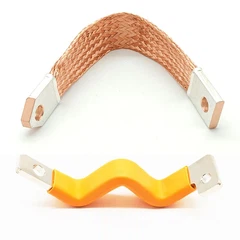
In certain industrial applications, varnished insulated busbars (VIB) utilize special insulation coatings to enhance conductor protection, making them suitable for environments with space constraints or specific insulation requirements.

Future Development Trends for Laminated Busbars
Driven by advancements in new energy, electric transportation, and intelligent manufacturing, laminated busbars will continue to evolve toward higher voltages, higher currents, greater integration, and intelligent manufacturing capabilities. Future product designs will focus increasingly on the following areas:
First, enhancing insulation material performance. As system voltages rise, the adoption of new materials offering high-temperature resistance and high dielectric strength will expand, thereby increasing product safety margins.
Second, optimizing low-inductance designs. With the growing use of high-speed power devices such as SiC and IGBTs, minimizing parasitic parameters will become a key priority in composite busbar design.
Third, achieving lightweight and modular designs. Sectors such as new energy vehicles, rail transit, and aerospace equipment demand stricter weight control; consequently, aluminum-based materials, composites, and optimized structural designs will see wider application.
Fourth, strengthening customization capabilities. Requirements regarding current capacity, mounting methods, and insulation levels vary significantly across different types of equipment; therefore, busbar solutions for electrical power distribution will place greater emphasis on providing structurally optimized designs tailored to specific application scenarios.
Conclusion
By integrating conductive and insulating layers into a single unit, composite busbars achieve an optimal balance of efficient conduction, safe isolation, and structural optimization. Compared to traditional cable or bare busbar solutions, they offer distinct advantages in terms of space utilization, electrical performance, mechanical reliability, and long-term maintenance.
Driven by the continued growth of new energy vehicles, energy storage systems, power electronics, and rail transit, composite busbars will play an increasingly vital role in future high-power, high-reliability electrical connection systems, serving as a key foundational component that enables the evolution of power conversion equipment toward greater efficiency, safety, and integration.
contact us

Send Inquiry