



A Complete Guide to Copper Braid for Electrical Contact: From Basic Characteristics to Practical Tips
Apr 15, 2026
Leave a message
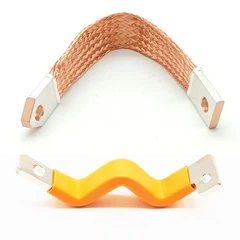
Copper braided wire, a core component in electrical connections and current transmission, is a flat, strip-shaped structure formed by the cross-weaving of 0.05-0.20mm ultra-fine copper wires. It possesses excellent flexibility, conductivity, and heat dissipation, making it an ideal connection material for high-frequency electrical equipment. However, its unique braided structure and the physical properties of copper itself make its welding significantly more difficult than that of ordinary copper, frequently resulting in problems such as incomplete soldering, porosity, and burn-off.
The inherent characteristics of copper braid are the core factor determining its welding difficulty. From a physical performance perspective, it exhibits outstanding flexibility and excellent heat dissipation, but its tensile strength is far lower than that of copper stranded wire. During welding, it is prone to deformation and strand breakage due to improper pressure and heat control. In terms of conductivity, its resistivity is ≤0.022Ω・mm²/m, and tin-plated type is ≤0.0234. Its high-frequency conductivity is superior to that of copper stranded wire of the same cross-sectional area, and it is widely used in high-frequency applications such as Copper Braid for Electrical Contact.

The industry commonly faces four major pain points when welding latching relay copper braids: First, copper has a high thermal conductivity of 401 W/(m·K), causing rapid heat loss during welding, making it difficult to form a stable weld nugget and easily leading to incomplete welds. Second, the hollow braided structure results in uneven heat and current distribution, easily causing localized overheating and underheating, leading to defects such as porosity and insufficient penetration. Third, an oxide film easily forms on the copper surface at room temperature, hindering current conduction and affecting the conductivity and weld strength of the joint. Fourth, when connecting with copper plates or copper busbars, the significant differences in thickness and heat capacity make it difficult to control thermal balance, easily resulting in problems such as one side burning through while the other side fails to fuse.
To address these pain points, resistance welding is the core welding method adapted to flexible copper connectors. Different processes correspond to different application scenarios, and accurate selection is key to successful welding. Spot welding is suitable for small-area, single-point fixing scenarios. It is simple to operate, highly efficient, and compatible with automated production lines. Care must be taken to control electrode pressure to avoid damaging the braided structure. Seam welding is suitable for scenarios requiring continuous sealing of the weld seam. Intermittent seam welding can create a continuous weld seam, balancing connection strength and conductivity while preventing overheating and burn-out. Resistance brazing is the preferred method for connecting precision electronic equipment. It uses silver-copper or copper-based brazing filler metals for heating and welding, resulting in low temperatures and minimal deformation, making it suitable for delicate and fragile Pure Copper Braids. Capacitor welding completes welding at millisecond speeds, producing uniform weld joints and a minimal heat-affected zone. It effectively solves the problem of rapid heat conduction and overheating in Bar Copper Braids, making it suitable for high-requirement scenarios.
Precise setting of welding parameters is key to reducing defect rates. The current and time need to be adjusted according to the cross-sectional size: 500-2000A is recommended for small cross-sections, and 5000-8000A for large cross-sections. Welding time should be controlled within 1-3 seconds, using a strict specification of short time, high current to reduce weld nugget size and indentation. Electrode pressure should be controlled between 200-500N, requiring real-time monitoring with a pressure sensor. Excessive pressure can flatten the braided structure, while insufficient pressure will lead to poor contact and surface burns. Chromium-zirconium copper electrodes are preferred, balancing conductivity and wear resistance. Welding temperature should be controlled between 1100-1200℃, using water-cooled electrodes to reduce cracking caused by thermal stress.
Equipment selection directly affects welding efficiency and stability. For Copper Braid for Latching Relay welding, a medium-frequency inverter DC welding machine is preferred. Its current control accuracy is ±2%, and it is equipped with temperature control (±5℃), continuously adjustable pressure (0.1-1.0MPa), and adjustable welding time (0.1-5s) to effectively ensure welding consistency. The electrodes should be equipped with a built-in circulating water cooling system to extend their service life and avoid damage due to high temperature.

Equipment selection directly impacts welding efficiency and stability. For Round Copper Braid welding, a medium-frequency inverter DC welding machine is preferred, offering current control accuracy of ±2%. Combined with temperature control (±5℃), continuously adjustable pressure (0.1-1.0MPa), and adjustable welding time (0.1-5s), it effectively ensures weld consistency. Electrodes should be equipped with a built-in circulating water cooling system to extend service life and prevent damage from high temperatures.
In summary, the core of Copper Braid for Current Transfer welding lies in matching material properties, precisely controlling heat, optimizing process parameters, and selecting appropriate equipment. Mastering these practical points can effectively solve common problems such as incomplete soldering, porosity, and burn-off, improving the conductivity and strength of the welded joint, and ensuring the operational stability of components such as Flexible Copper Connectors. Whether in general electrical applications or high-frequency precision applications, the scientific application of welding technology is essential to fully leverage the performance advantages of Copper Braid for Electrical Contact.
If you would like to learn about Copper Braid for Relay Applications welding process optimization, parameter setting techniques, or have other related needs, please contact us for professional technical support.
contact us

Send Inquiry