



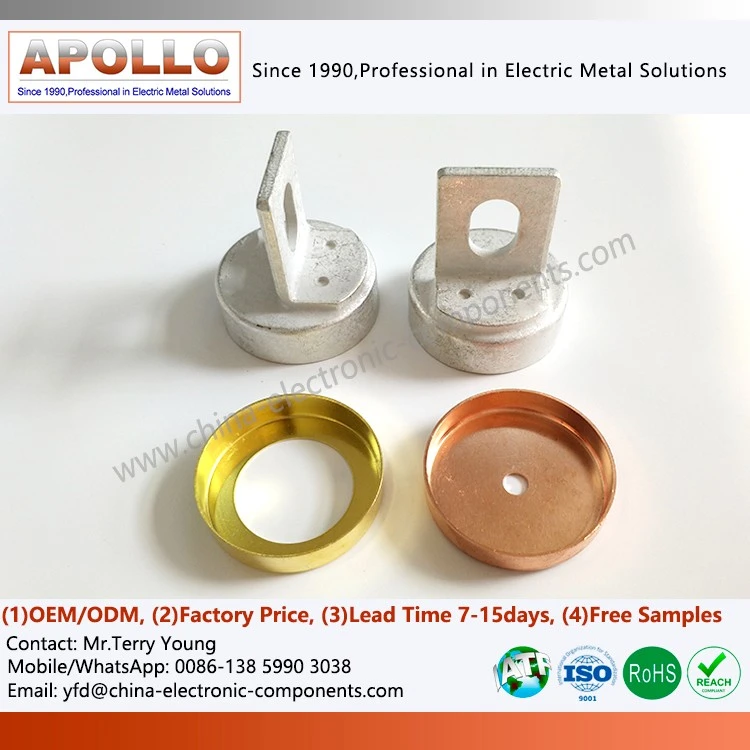
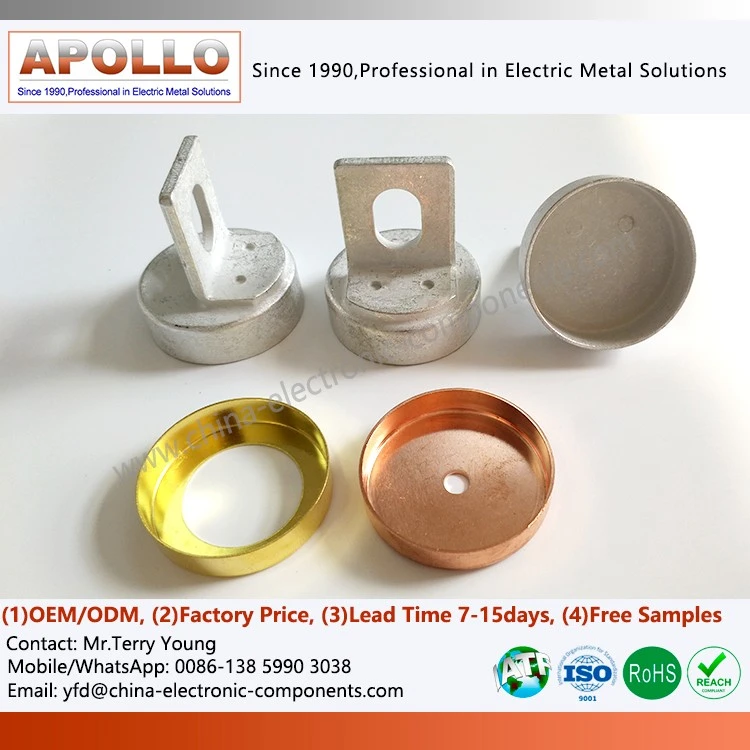
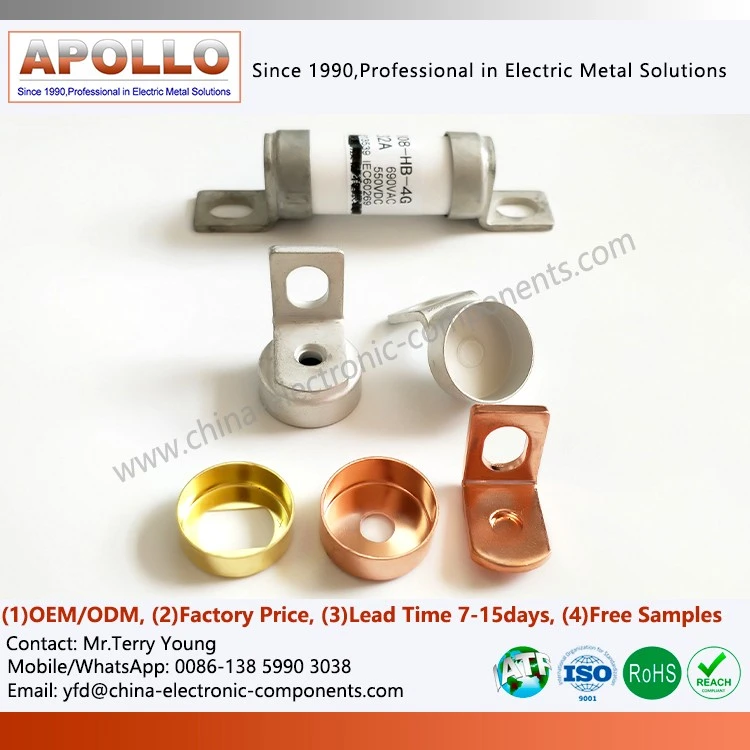
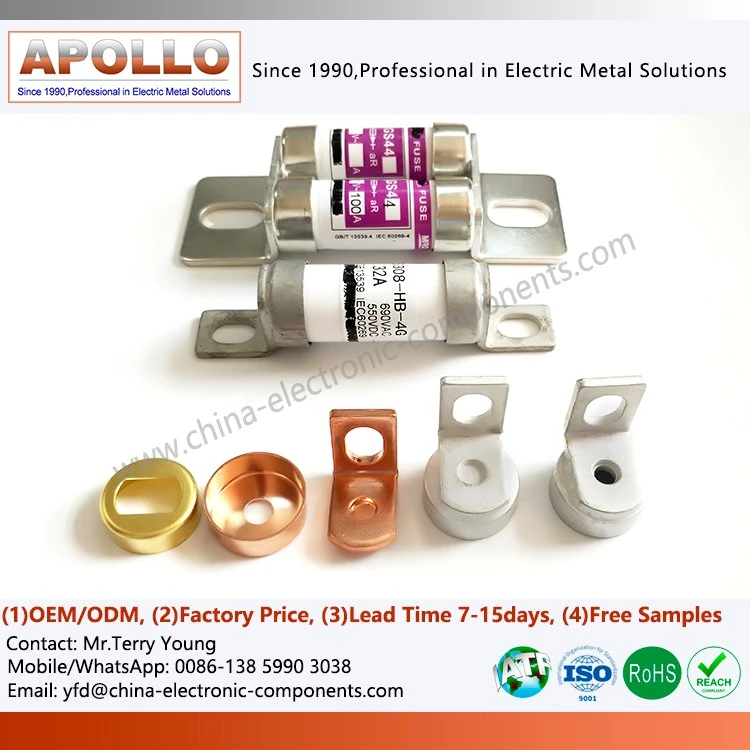
Copper Cap Contact For Electric Car Fuse
what is Copper Cap Contact for Electric Car Fuse?
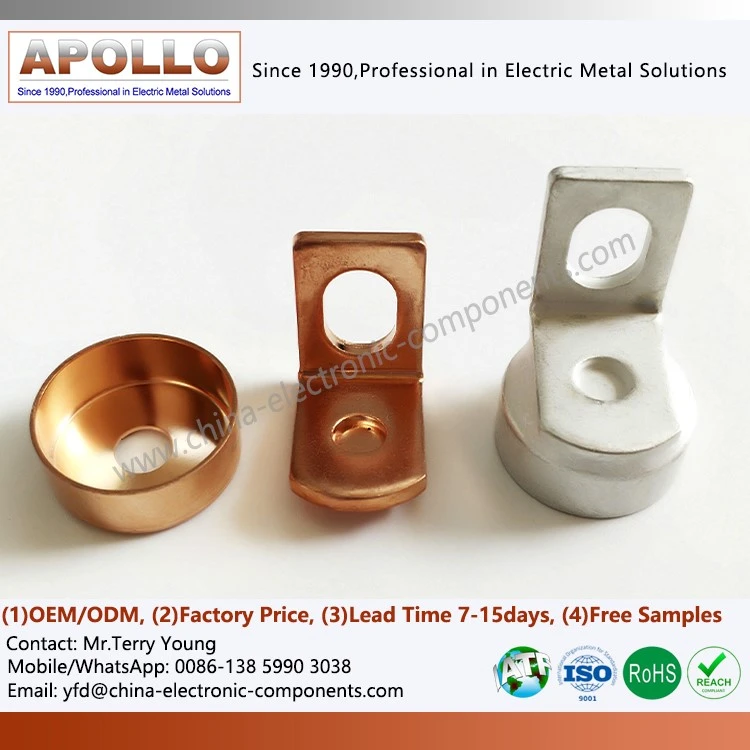
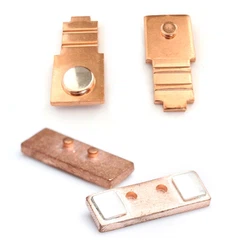
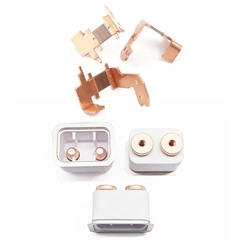
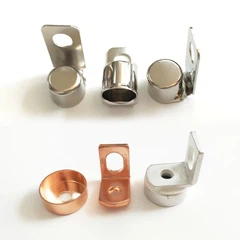
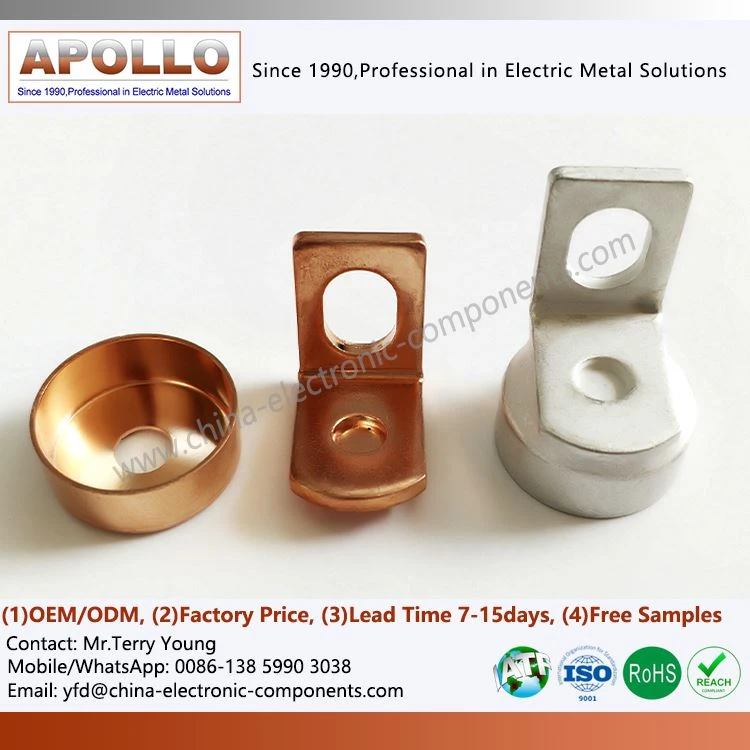
Copper cap assemblies for new energy vehicle (NEV) fuses are high-precision, high-reliability electromechanical components. Their primary function is to maintain low contact resistance, high mechanical structural integrity, and excellent resistance to electrical arcing-even under demanding operating conditions characterized by high voltage, high current, and extreme temperature fluctuations.
Bimetallic Composite Design: This design ingeniously combines the high electrical and thermal conductivity of pure copper with the superior machinability and resistance to stress relaxation offered by brass.
Metallurgical Interfacial Bonding: Utilizing high-energy-density welding processes, the inner and outer caps are fused into a seamless, dense structure. This prevents fretting wear and the rise in electrical resistance caused by oxidation during long-term operation.
Automotive-Grade Environmental Durability: These components are engineered to withstand the rigorous temperature, humidity, vibration, and shock conditions found within vehicle chassis, battery packs, and high-voltage power distribution units (PDUs).
Structural and Design Advantages for Outer End Cap and Contact Welded Assembly Set: Engineering Details Derived from Failure Mode Analysis
Dual-Cap Nested Composite Structure
The outer and inner caps are coaxially nested and welded into a single, integrated component. This creates a continuous current path, eliminating the cumulative tolerances and additional contact resistance typically associated with multi-part assemblies.
01
Weld Interface Isolated from Current-Carrying Zones
The weld seams are strategically positioned away from the primary current-carrying contact surfaces. This prevents solder or oxide layers from interfering with contact resistance and ensures a more uniform temperature rise distribution.
02
Chamfered Lead-in for Crimp/Insertion
The end of the inner cap-where the fuse element is inserted-features a transition chamfer that facilitates smooth entry. This ensures even force distribution during the crimping or insertion process, reducing the risk of damage to the fuse element.
03
Geometric Optimization of Mating Surfaces
The interface between the outer cap and the fuse holder is precisely controlled in terms of thickness, corner radii, and surface roughness. This balances insertion and extraction forces while maintaining reliable retention even after repeated mating cycles.
04
Tolerance Chain Management
Strict control over coaxiality and height tolerances is maintained throughout the entire process-from cap forming to weld positioning-ensuring high first-pass yields for customers' automated downstream assembly lines.
05
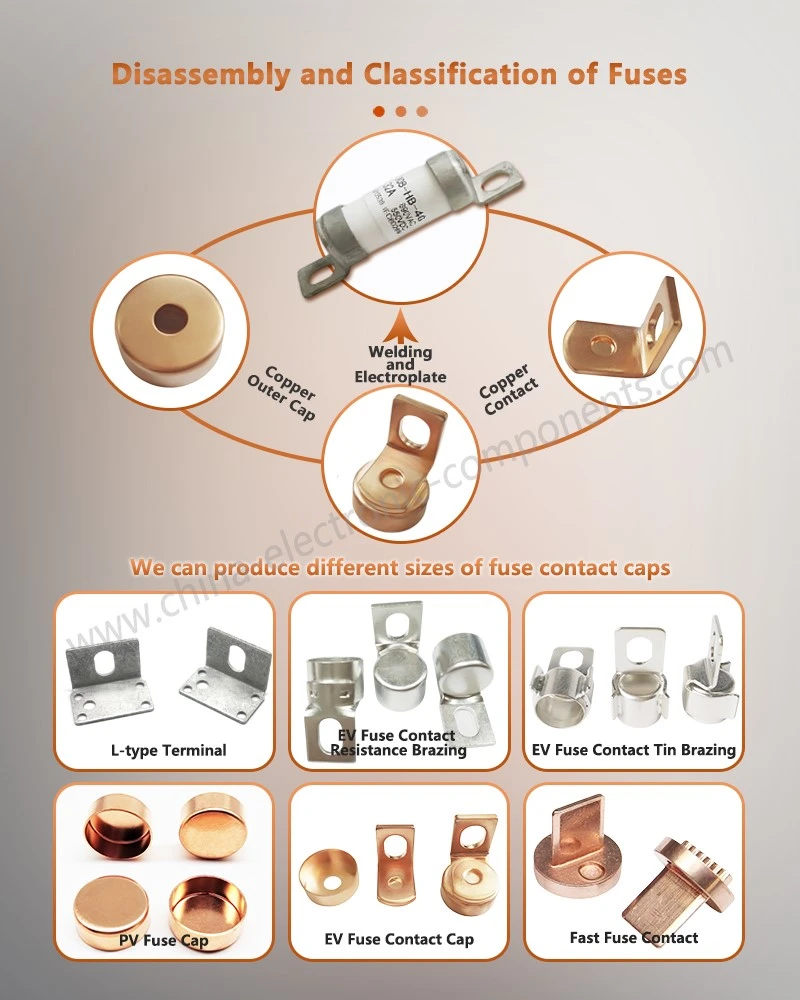
Manufacturing Advantages for Outer End Cap and Terminal Welded Components
In-house Mold and Process Capabilities
An internal, closed-loop system-spanning drawing reviews, mold design, and process fine-tuning-shortens development cycles and enables rapid assessment of the impact of any design changes.
Front-loaded Engineering
Process validation and first-article inspection are conducted prior to mass production, ensuring that potential issues are resolved during the sampling phase rather than on the customer's production line.
Process Stability Management
Control points and sampling protocols are established for critical operations, focusing on managing process variability rather than relying solely on final-stage inspection or sorting.
Batch Traceability System
Records for materials, processes, and inspections are archived by batch, allowing for rapid backtracking and comprehensive, closed-loop resolution in the event of any anomalies.
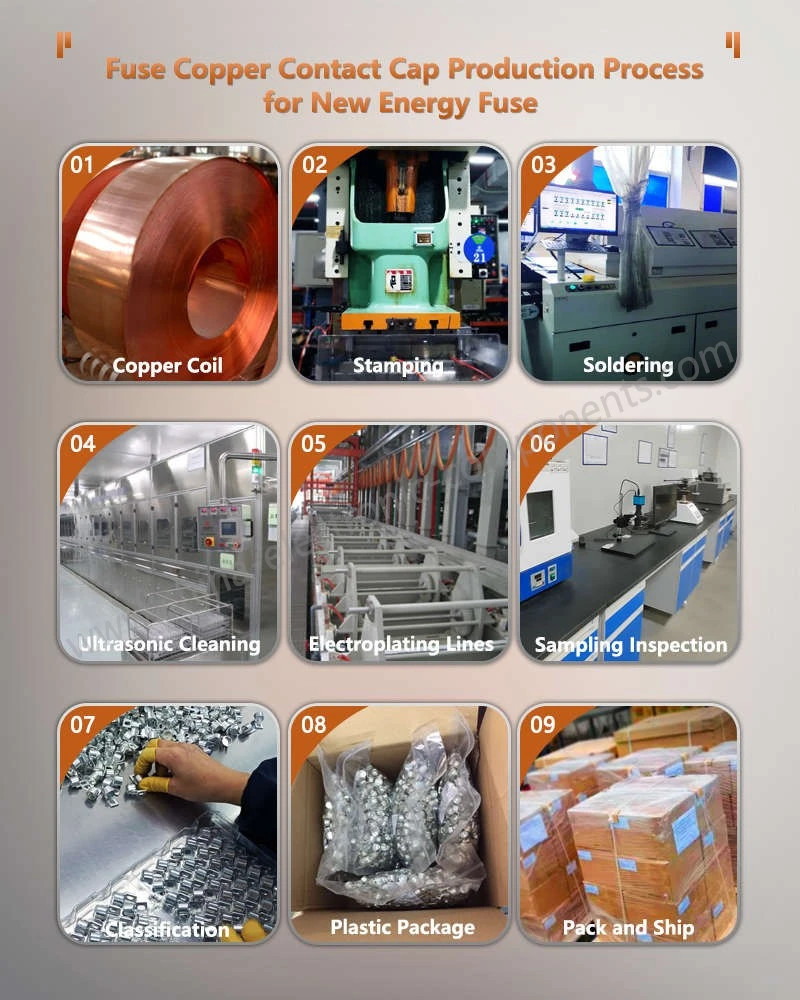
Frequently Asked Questions for Outer Cap and Terminal Welding Components
Q1: Is the welded interface between the copper (red copper) outer cap and the brass inner cap prone to developing cracks or experiencing an increase in electrical resistance after long-term operation?
-
A: The primary objective of the welding process is to create a continuous, dense metallurgical bond. By controlling heat input and shielding conditions-complemented by rigorous in-process inspections-the interface exhibits excellent resistance to thermal cycling and vibration-induced fatigue under normal operating conditions. In practical applications, it is recommended to verify performance based on specific current waveforms and installation conditions.
Q2: Is this contact blade cap assembly compatible with fuses from different brands or with varying structural designs?
-
A: The geometric dimensions and mating features of the assembly must align with the target fuse. While a standardized platform can accommodate common configurations, specific requirements-such as unique blade thicknesses, mounting methods, or current ratings-should be provided to ensure proper compatibility.
Q3: How is the balance between contact resistance and corrosion resistance managed through surface treatment?
-
A: Surface treatments are applied with the priority of minimizing any increase in contact resistance while providing essential protection against oxidation. The specific treatment method can be tailored to the client's system requirements and environmental conditions, ensuring that the treatment does not compromise electrical conductivity.
Q4: What key metrics should be prioritized during engineering validation?
-
A: It is recommended to focus on initial contact resistance, temperature rise, resistance stability following vibration, interface integrity after thermal cycling, and overall performance-including interruption capability and temperature rise-when integrated with the fuse body. Dimensional consistency and welding quality of the components themselves serve as the fundamental requirements.
Q5: Are small-batch prototyping and consistent quality control for subsequent mass production supported?
-
A: Yes; we support the transition from initial samples to small-batch production and, ultimately, full-scale mass production. Process parameters and inspection standards are established and locked in during the sampling phase, ensuring consistency between the samples and subsequent production batches to meet the requirements for engineering validation and mass-production ramp-up.
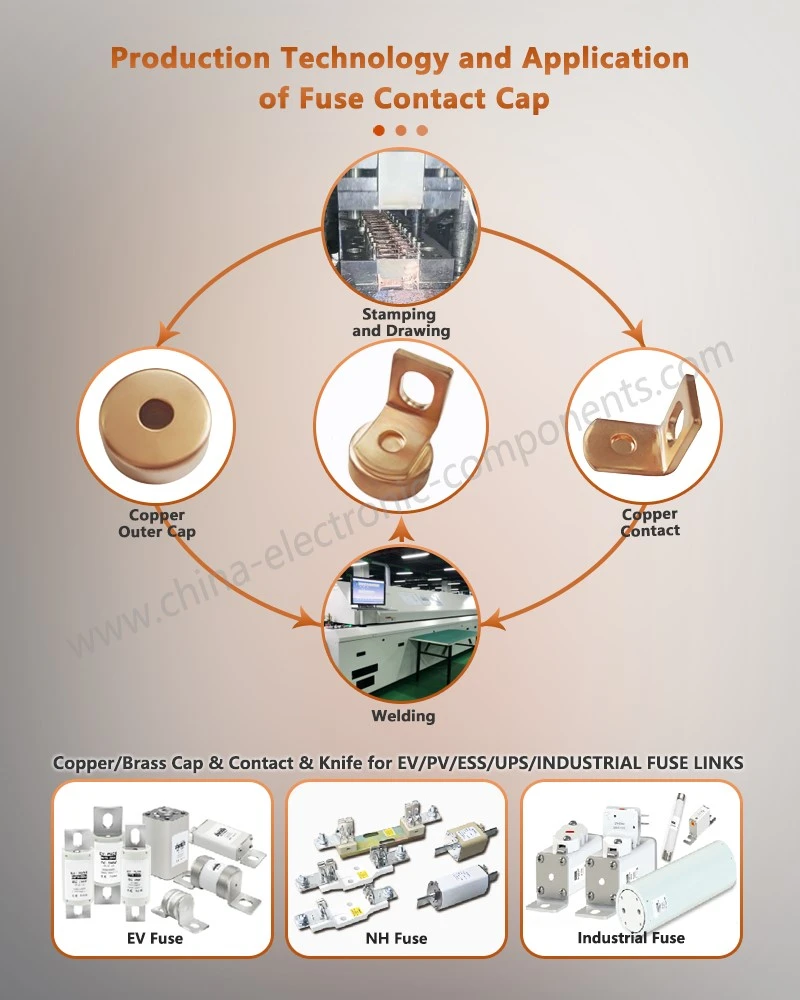
contact us
Leveraging our core engineering strengths-material compatibility, welding reliability, and batch-to-batch consistency-we provide verifiable contact cap solutions for high-voltage fuse systems in new energy vehicles. For further technical documentation, sample evaluation, or discussions regarding custom design requirements, please connect directly with our engineering team via the inquiry Outer Cap and Terminal Welded Components.
Hot Tags: Copper Cap Contact for Electric Car Fuse, EV Fuse Contact Cap, Copper Fuse Cap Contact, Automotive Fuse Contact Assembly, Copper Cap Contact For Electric Cars, End Cap and Contact, EV Fuse Copper Contact, Fuse Cap Contact Soldering, Fuse Cap Contact Tin Welding, Outer Cap and Contact
You Might Also Like


Send Inquiry