











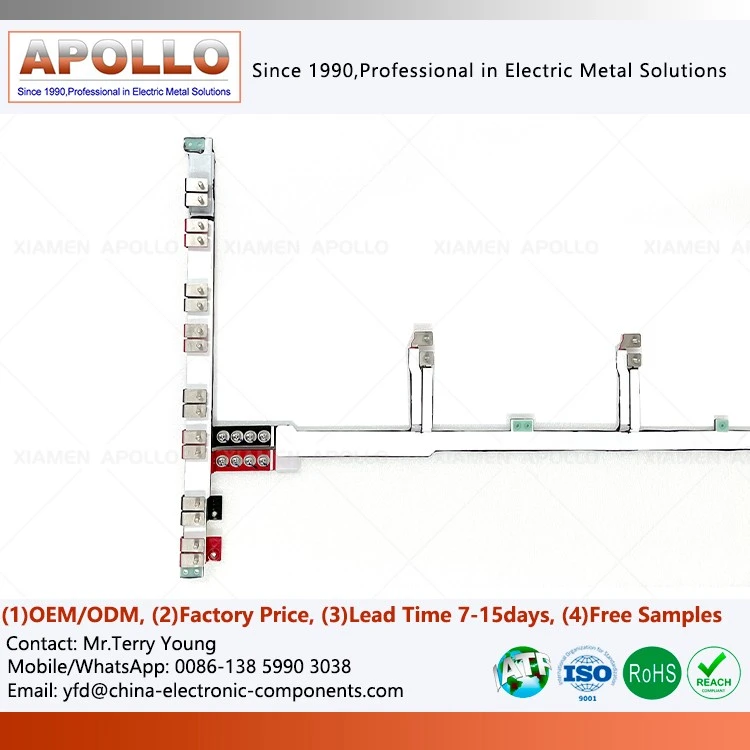
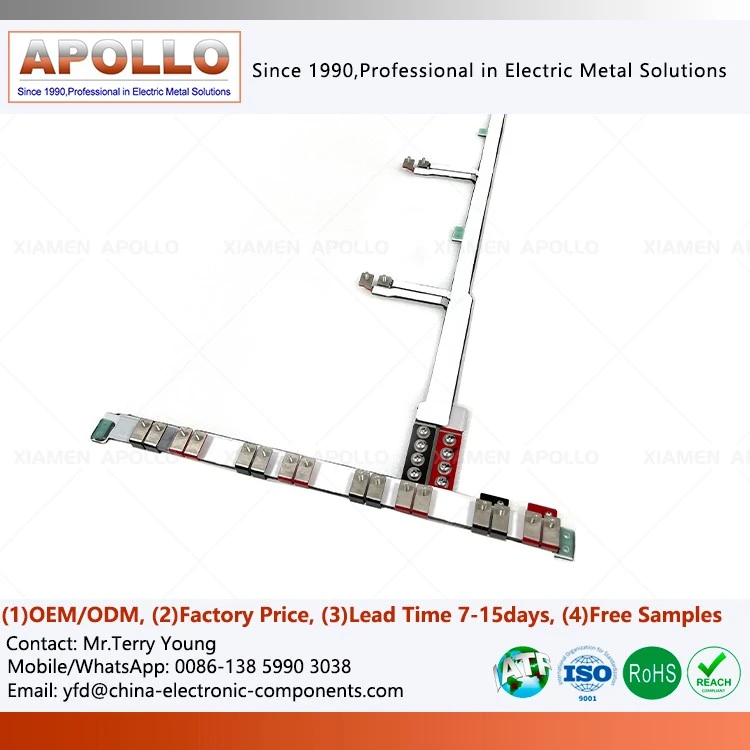
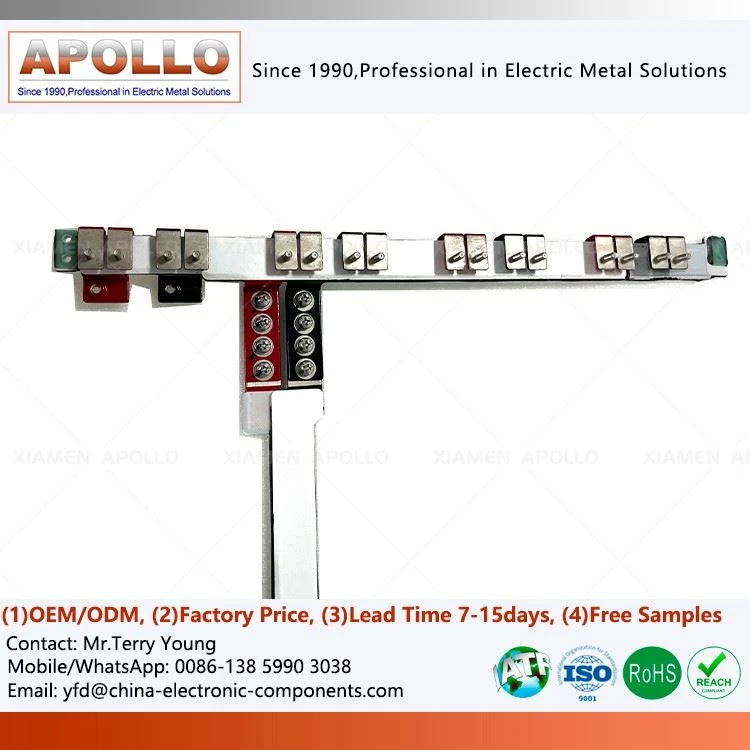

DC And AC Laminated Bus Bar For Fork Lift Truck
What is a DC and AC Laminated Bus Bar for Fork Lift Truck

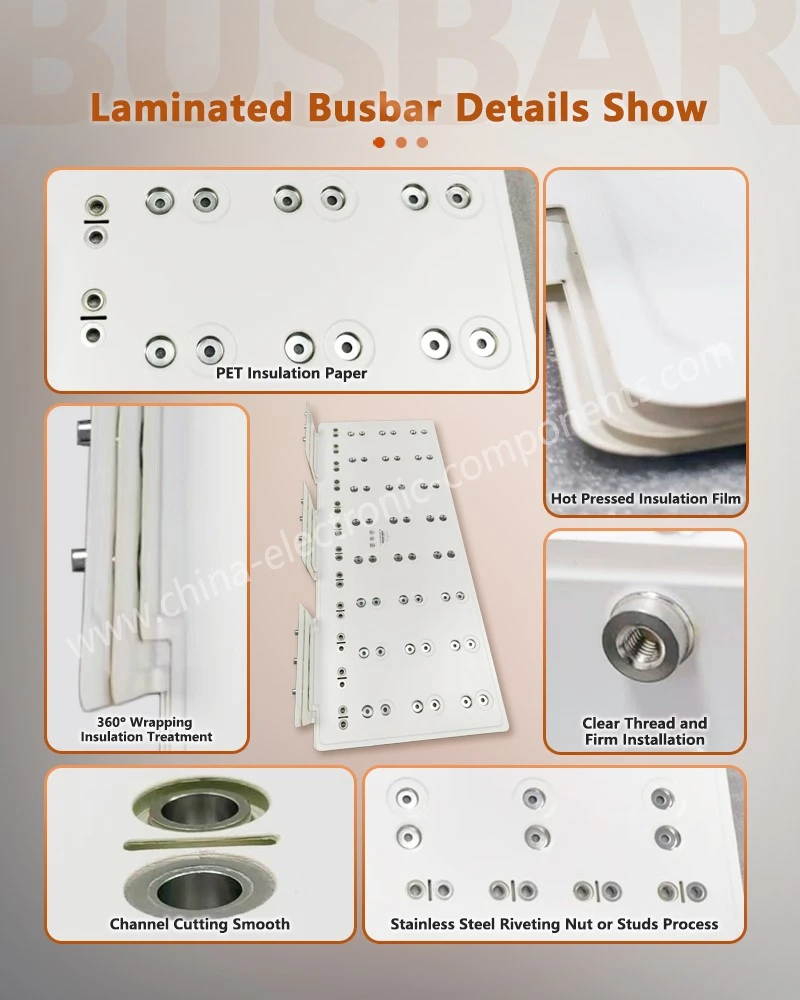
DC and AC Laminated Bus Bar for Fork Lift Trucks-also known as composite busbars-are electrical interconnection components constructed by alternately stacking layers of conductive copper and high-grade insulating materials.
For forklift applications, our products are defined as "mobile, high-power power distribution hubs." Unlike traditional stationary UPS applications, forklift operations present unique challenges:
Dynamic load characteristics: Frequent starting, acceleration, and braking cause extreme instantaneous current fluctuations, requiring the busbar to possess exceptional resistance to electrical and mechanical stress.
Space constraints: The extremely limited space within the forklift chassis and controller compartment demands a busbar design capable of complex 3D shaping.
Harsh environment resilience: The components must withstand long-term exposure to mechanical vibrations from rough terrain and thermal stress caused by temperature fluctuations.
Our laminated busbars for forklifts are specialized electrical interconnects developed specifically to address these conditions; they are designed to replace cluttered, bulky wiring harnesses and provide stable, "chip-level" quality electrical connections for forklifts.
Key Functions
DC Main Power Distribution
Stably delivers high-current DC power from the traction battery (24V/48V/80V/96V, etc.) to the motor controller/inverter; capable of handling continuous currents of several hundred amperes to meet peak power demands such as heavy-load hill climbing and rapid acceleration.
AC Variable-Frequency Output
Distributes variable-frequency, variable-voltage three-phase AC power (from the inverter) to the AC traction motor, steering motor, and hydraulic pump motor, ensuring a high-quality power supply-characterized by low harmonics and low noise-for each actuator.
Auxiliary Power Busbar
Provides a centralized connection point for auxiliary equipment-such as DC-DC converters, on-board chargers, lighting systems, CAN bus gateways, and telematics modules-via a dedicated low-voltage DC layer or additional copper busbars within the assembly, thereby simplifying the vehicle's low-voltage power distribution architecture.

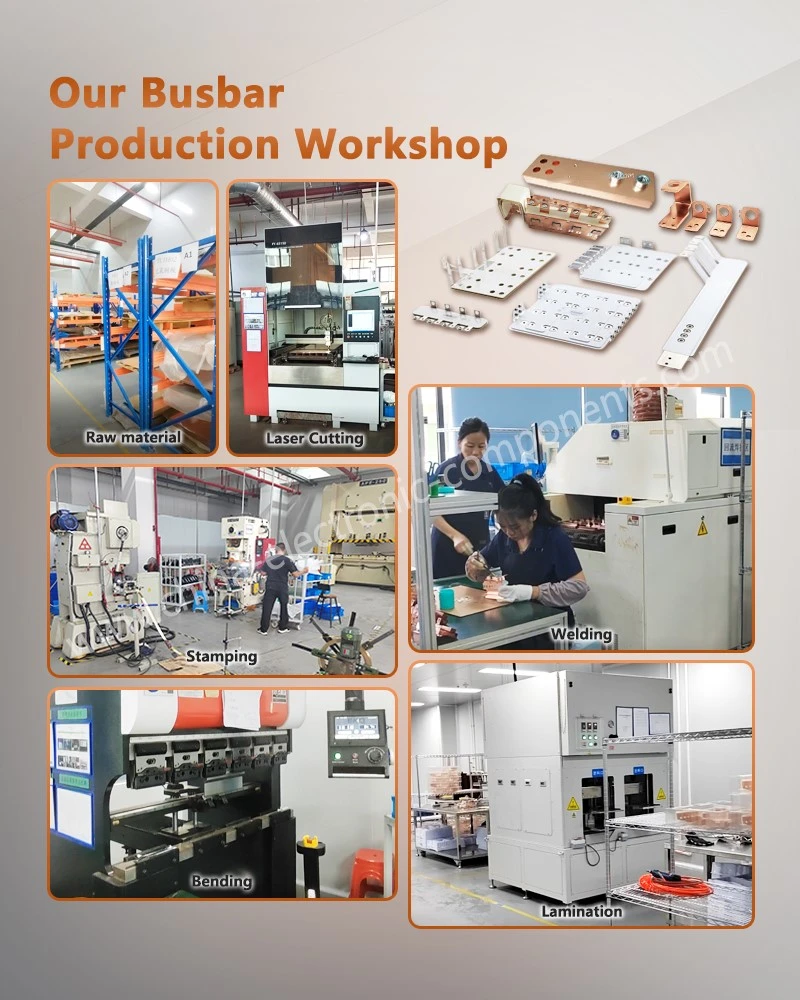
Manufacturing Process and Quality Control
| Conductor Forming | High-purity copper sheets undergo CNC blanking and precision bending. Terminal areas are processed via embossing, copper pillar riveting, or welding-depending on the connection method-to ensure contact surface flatness and conductivity. |
| Insulation Layer Preparation | Insulating films are cut via laser or CNC die-cutting to precise profiles. Thickness uniformity is strictly controlled within micron-level tolerances to ensure consistent inter-layer dielectric performance. |
| Lamination and Hot-Pressing | Layers are stacked in the precise sequence of "insulation film – copper conductor – insulation film," placed into a specialized mold, and cured under constant temperature and pressure. The primary objective of this step is to achieve a seamless bond between layers-free of air bubbles or gaps-which is critical for ensuring low partial discharge and high peel strength. |
| Surface Treatment | Depending on application requirements, Multi-Layer Composite Structure Connection Bar contact surfaces may undergo tin, nickel, or silver plating to enhance oxidation resistance, reduce contact resistance, and improve solderability. |
| Comprehensive Inspection and Testing | Each finished unit undergoes withstand voltage testing (Hi-Pot), insulation resistance measurement, dimensional accuracy checks, and visual inspection to ensure that every Laminated Bus Bar for Distributing Power Backplane leaving the factory meets all design specifications. |
FAQ
Q1: What is the difference between a laminated busbar and a traditional cable connection?
-
A: Laminated busbars provide a more compact and structured electrical connection compared with traditional cables. They reduce wiring complexity, improve space utilization, and offer better electrical performance for high-power systems.
Q2: Can laminated bus bars be customized according to forklift battery systems?
-
A: Yes. Apollo provides customized laminated busbar solutions based on customer requirements, including dimensions, terminal design, insulation structure, conductor layers, and installation methods.
Q3: Are Laminated Busbars for complex Busbar Installations suitable for UPS and energy storage applications?
-
A: Yes. Laminated busbars are widely used in UPS, energy storage systems, inverters, and power electronics equipment due to their compact structure and reliable electrical connection performance.
Q4: What materials are commonly used for laminated busbars?
-
A: Copper conductors are commonly selected because of their excellent conductivity and thermal performance. Insulation materials such as PET, PI, and epoxy coating can be selected according to operating conditions.
Q5: Does Apollo support prototype development and mass production?
-
A: Yes. Apollo provides engineering support from design review, prototype production, process optimization, to high-volume manufacturing.
contact us
If you are developing projects for forklift powertrains, UPS systems, or energy storage equipment, Apollo can provide specialized laminated busbar engineering solutions tailored to your structural design, electrical parameters, and application environment, helping you achieve reliable connections and efficient mass production.
Hot Tags: DC laminated bus bar, AC laminated busbar, Forklift truck busbar, Laminated bus bar for UPS, Custom laminated busbar manufacturer, Copper laminated busbar, Power electronics busbar, Battery system busbar, Industrial laminated busbar, Inverter Busbar, Laminated Busbar Power Solutions, Laminated Copper Bar, Multilayer Busbar, Power Distribution Unit BusBar, Web Server BusBar
You Might Also Like


Send Inquiry