











Laminated Busbar Design
Products Description
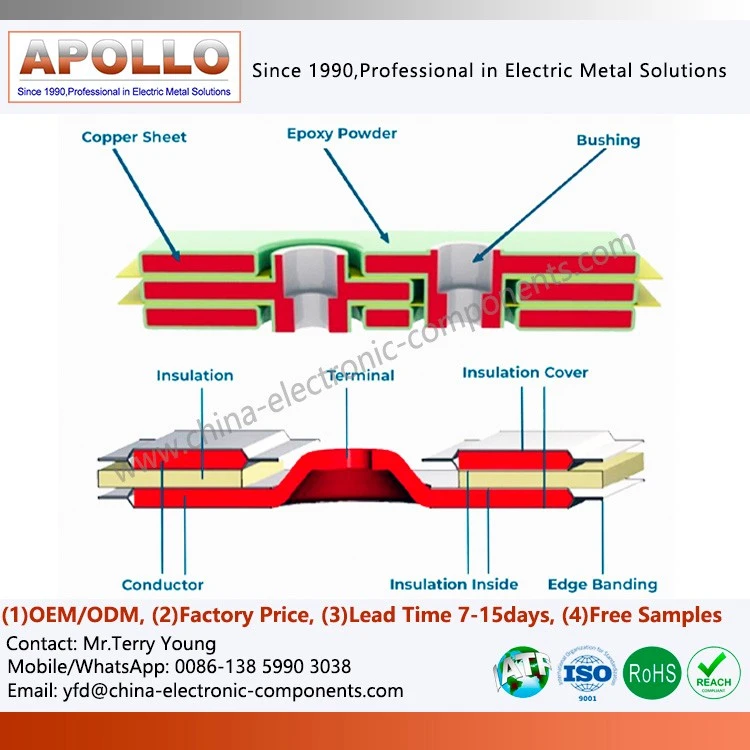
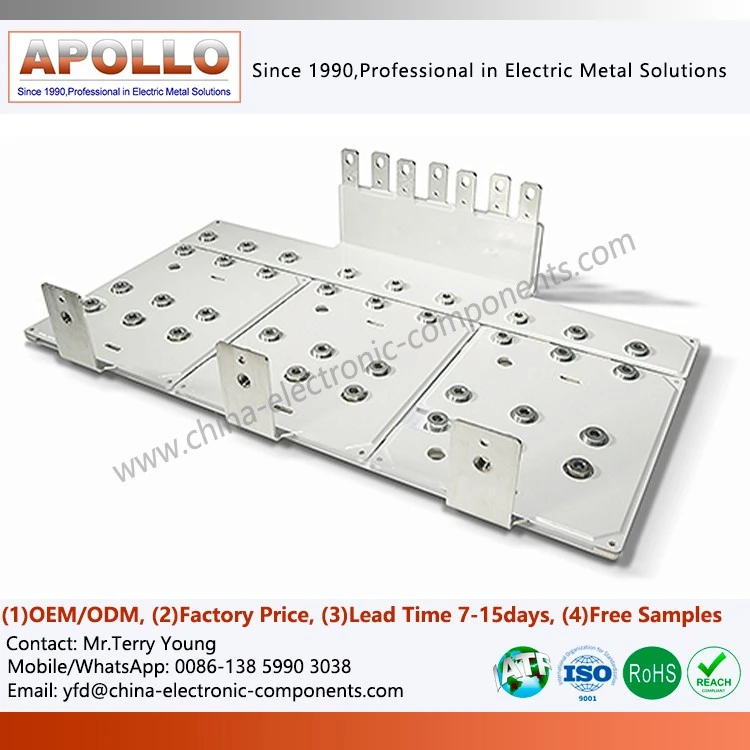
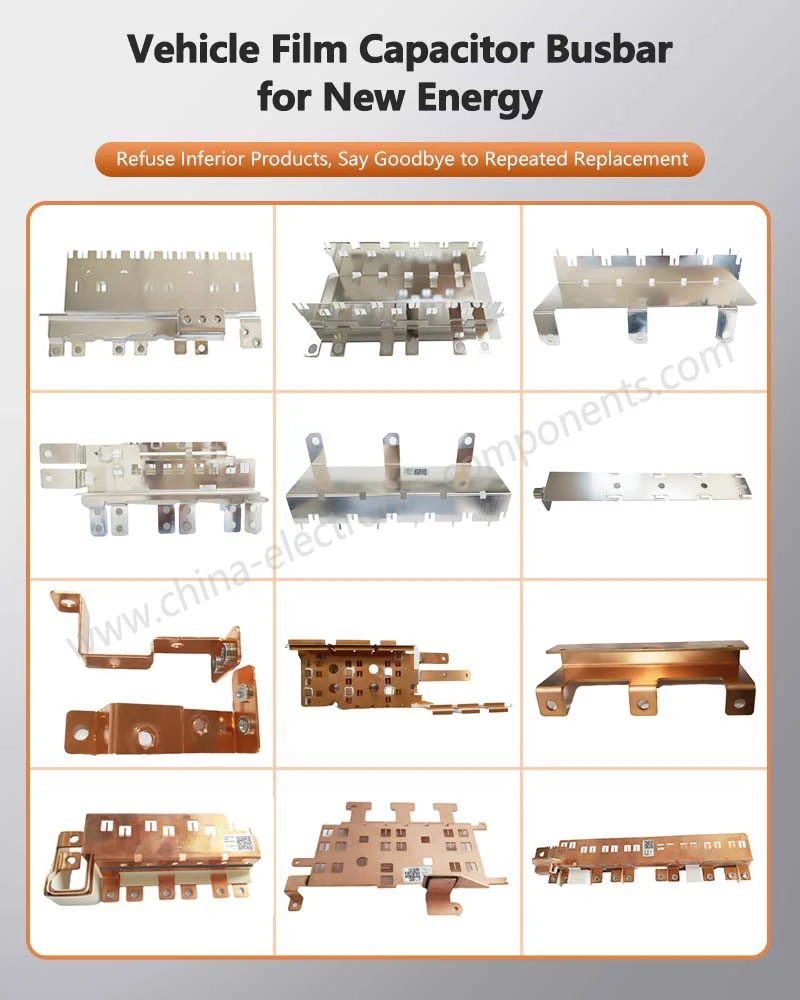
A Laminated Busbar Design refers to the engineered solution in which multiple layers of conductive metal (typically copper or aluminum) and ultra-thin dielectric insulation films are alternately laminated into a rigid, one-piece power distribution component. Compared to traditional cable bundles, welded bars or bolted bus systems, offers a more compact profile, lower electrical resistance and inductance, and enhanced reliability.
This Laminated Busbar Power Solutions is especially suited for high-current, high-power distribution systems in modern applications such as power electronics, rail traction, renewable energy conversion, and energy storage - where system density, efficiency and reliability are critical.
Key Features
| Low electrical resistance & inductance | The PDU BusBar structure shortens current paths, reduces loop area and thus diminishes stray inductance and impedances. |
| High current-carrying capacity | Wider, flatter conductor cross-sections assembled in layered fashion enable large currents within compact footprints. |
| Superior thermal management | The flat laminar architecture promotes effective heat dissipation, lowering hotspots and thermal impedance. |
| High space-efficiency | Compared to cable looms or bulky busbars, a Power Distribution Unit BusBar offers thinner profiles, reduced length and more efficient use of enclosure space. |
| Reduced assembly- and wiring-error risk | The one-piece busbar replaces multiple connectors, bolts, welded joints or cable harnesses, simplifying installation and enhancing reliability. |
| Improved electromagnetic compatibility (EMC) | With optimized layering and loop suppression, the Motor Controller BusBar delivers lower EMI/EMC noise and better performance in high-speed switching environments. |

Design Advantages
Highly Customizable
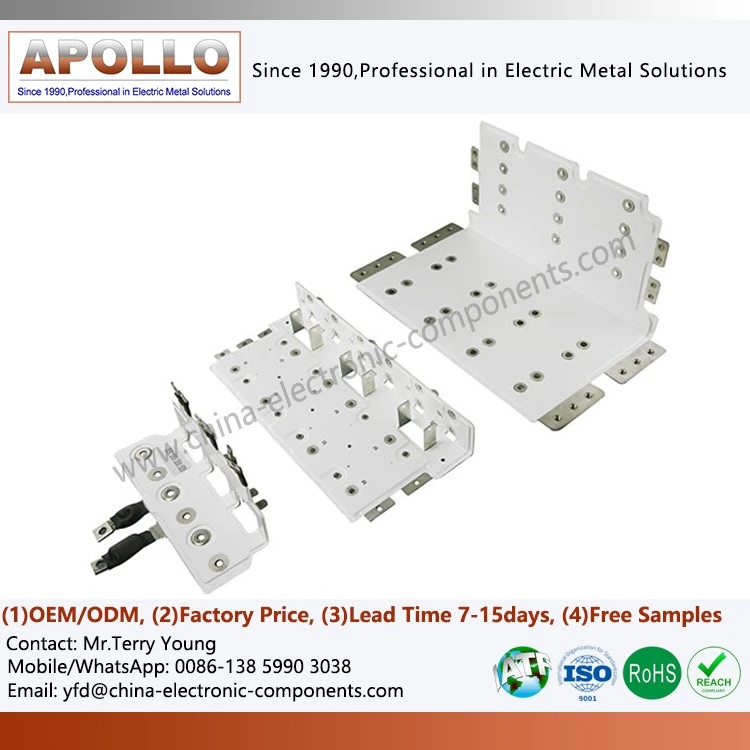
We tailor the Laminated Busbar Power Solutions from small-module footprints (a few millimetres) up to multi-metre lengths and dozens of layers - accommodating bends, offsets, layering, connectors and bespoke geometry per project requirements.
01
Electrical Performance Optimization
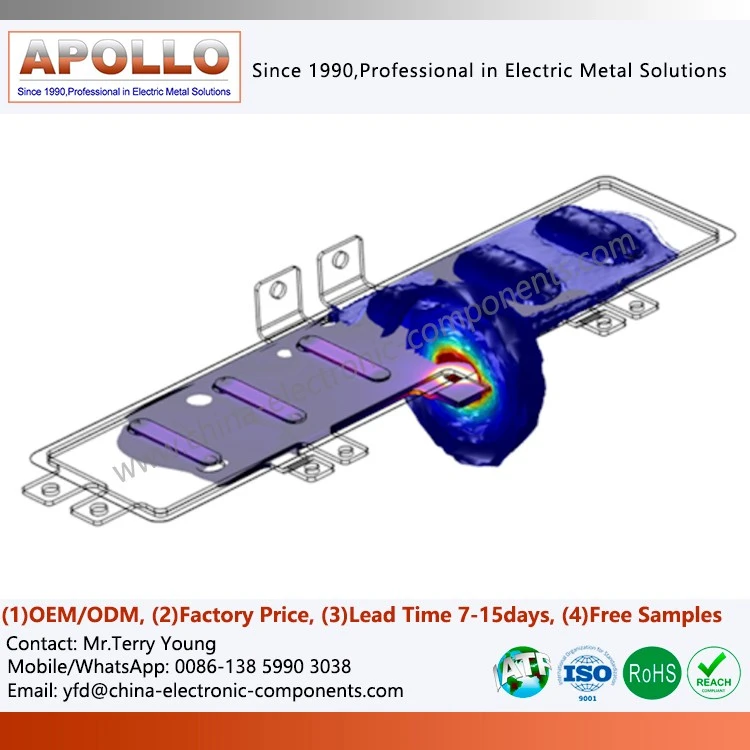
By engineering conductor cross-sections, layer count, insulation spacing and bus routing, achieves low electrical resistance, low inductance, and minimized power loss.
02
Mechanical & Thermal Consideration
Our design process for the Power Distribution Unit BusBar includes analysis of thermal expansion, vibration fatigue, connector stability and cooling paths - ensuring long service life under real-world stressors.
03
System Integration Friendly
We design the PDU BusBar with pre-drilled mounting holes, connection tabs, weld/pin interfaces, and in some cases embedded components (e.g., capacitors, sensors) to streamline system assembly and reduce wiring complexity.
04
Application Benefits
In fields such as e-mobility, energy storage, power inverters, rail traction, telecom back-planes and renewable energy systems, enables higher power density, reduced footprint, less wiring and improved reliability.
For high-speed switching systems (IGBT, SiC) the Motor Controller BusBar's low stray inductance is critical - suppressing transient overshoot and improving switching performance and lifetime.
In space-constrained or vibration-prone environments (rail systems, aerospace, industrial drives), replaces messy wiring harnesses or bulky blocks, reducing assembly errors, saving installation time and improving maintainability.
In renewable energy (solar inverters, wind power converters), where high voltage, high current and reliability are paramount, our Laminated Busbar Design offers a robust solution validated for demanding conditions.

Contact us

Hot Tags: laminated busbar design, China laminated busbar design manufacturers, suppliers, factory, Laminated Inverter Busbars, Laminated Bus Bar for Industrial, Multilayer Busbar, IGBT Busbar, Motor Drive Laminated Bus Bar for Power Electronics, Layered Busbar
You Might Also Like


Send Inquiry