










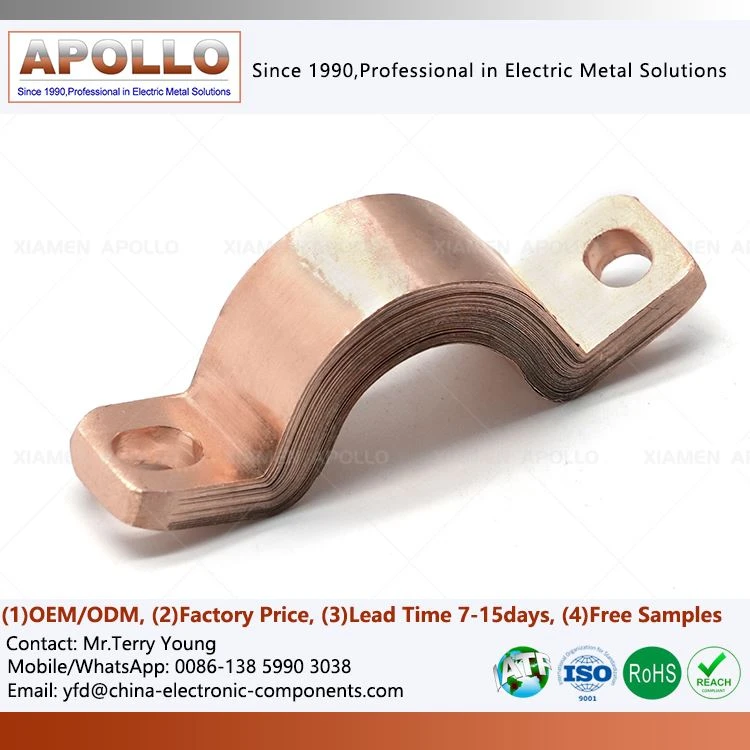
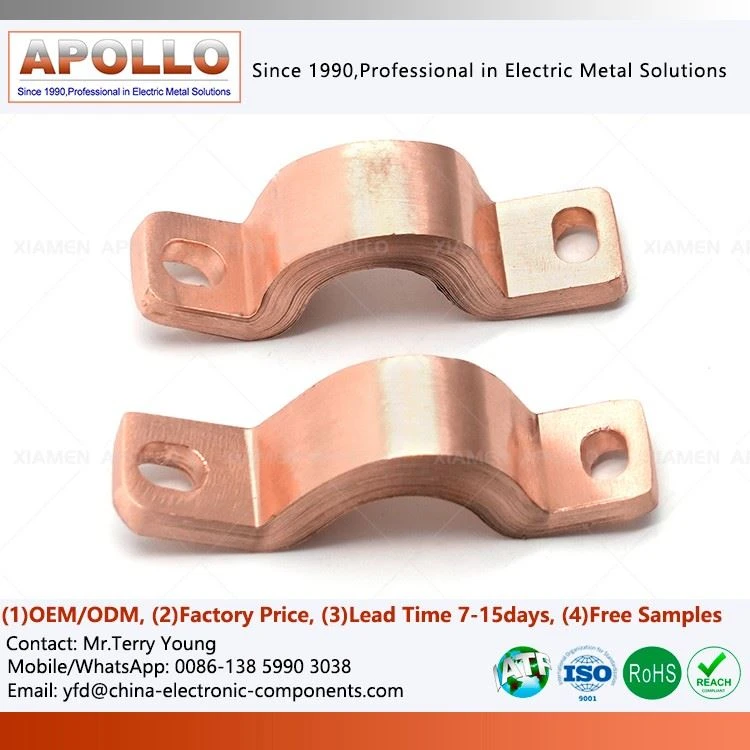
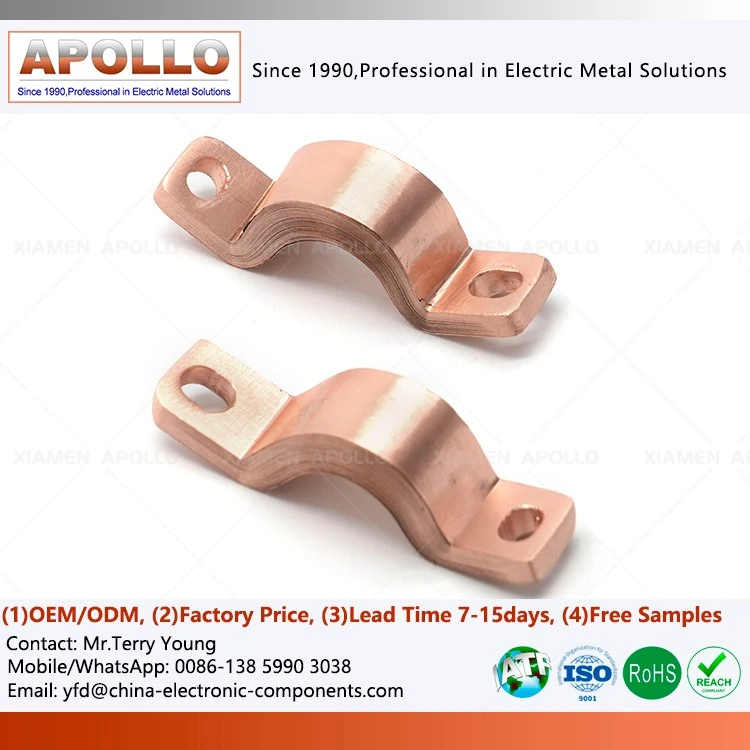
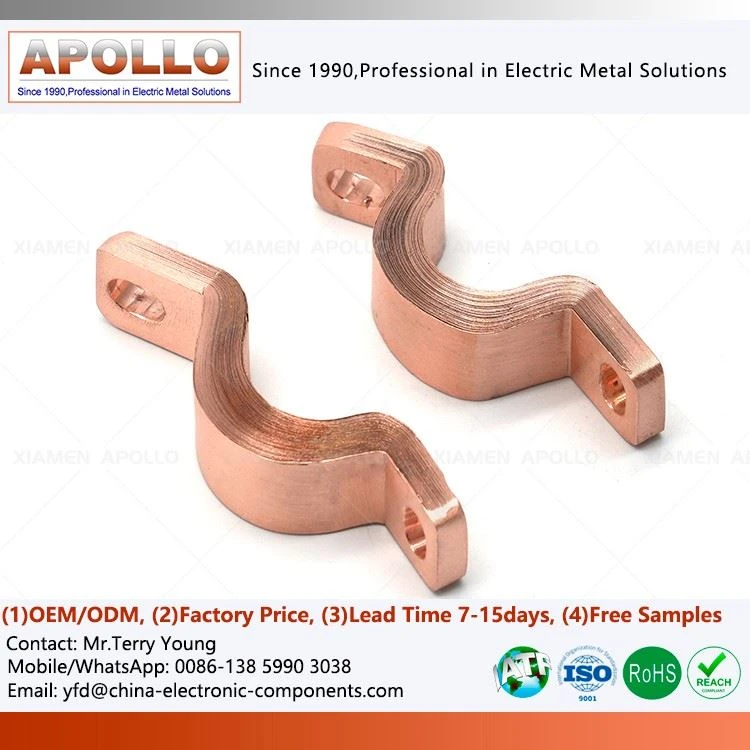
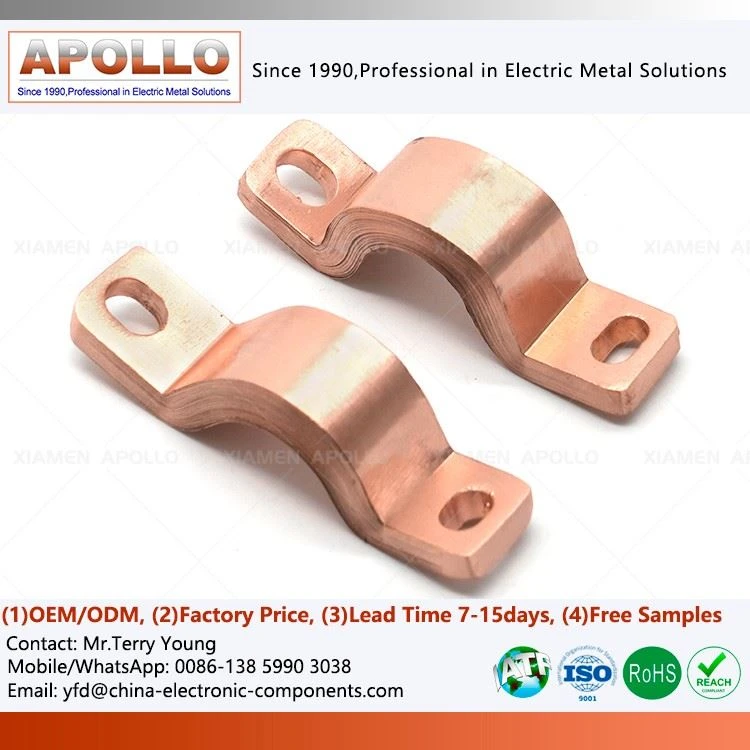
Flexible Copper Foil Busbar With Laminated Copper Shunt
Products Description

In applications requiring high current and high reliability, traditional connection methods are often susceptible to spatial constraints, vibration, shock, and thermal cycling. Flexible Copper Foil Busbar with Laminated Copper Shunt utilizes a specialized structural design to deliver multiple benefits:
1. Efficient Current Transmission
By employing high-purity copper foil as the primary conductor material, these busbars minimize resistive losses and enhance power transmission efficiency, meeting the demands of continuous operation in high-current equipment.
2. Mechanical Stress Absorption
The multi-layer copper foil structure offers excellent flexibility, allowing for bending and adjustment to fit the installation space; this effectively mitigates connection fatigue caused by equipment vibration and thermal expansion or contraction.
3. Optimized Spatial Layout
Compared to traditional rigid copper busbars, flexible copper foil busbars adapt to complex installation environments and enable compact routing, helping engineers maximize space utilization within the equipment.
Reliable Conversion: Application Advantages
Skin Effect Optimization
During AC and high-frequency pulsed current transmission, the total surface area of multi-layer thin copper foils far exceeds that of solid copper busbars with an equivalent cross-sectional area; this effectively mitigates the increased resistance and heat generation caused by the high-frequency skin effect.
High-Density Routing in Compact Spaces
Copper Foil Flexible Busbar for Motor Battery Accessories allows for small-radius bending and complex twisting, significantly improving space utilization within extremely tight environments-such as new energy vehicle battery packs or high-density switchgear cabinets.
Long Service Life and Low Maintenance Costs
By eliminating mechanical stress fatigue, the failure rate of the entire power connection system is reduced by over 80%, substantially extending the operation and maintenance intervals for large-scale equipment.

Detail Showcase: Visible Engineering Quality
Terminal Machining Precision
The welding ends allow for secondary processing-such as drilling, punching, and milling-with hole position tolerances strictly controlled to meet engineering drawing specifications. Copper Foil Laminated Flexible Bus Bars. Flatness is ensured through a copper-plate pressure welding process.
Lamination Uniformity
The stacked copper foil layers achieve molecular-level fusion in the welding zone; there are no visible gaps between layers, and the cross-sectional microstructure is uniform and dense.
Insulation Coating Quality
The insulation layer-whether heat-shrink tubing or PVC dip coating-adheres tightly to the copper foil surface without air bubbles or wrinkles, and its dielectric strength meets UL94 V-0 standards.
Surface Treatment Consistency
Tin, silver, or nickel plating layers feature uniform thickness and strong adhesion, capable of withstanding a 240-hour neutral salt spray test.

Manufacturing Advantages and Production Processes: Precision Manufacturing Ensures Consistency and Traceability
| Precision Stamping and Burr-Free Forming | High-precision CNC die-stamping technology is employed to cut shunts and flexible copper foils. By optimizing die clearance and cutting-edge geometry, we achieve burr-free edge forming. This process not only prevents scratching of the insulation layer during assembly but also eliminates the risk of electric field distortion caused by corona discharge (tip discharge). |
| High-Temperature, High-Pressure Lamination and Curing | The lamination process takes place in automated presses, maintaining constant temperature and pressure. Through precise control of temperature gradients and pressure profiles, the polymer adhesive penetrates uniformly into the microscopic pores of the Copper Flexible Bus Bars Bending surface, creating a void-free, molecular-level bond. |
| Fully Automated Insulation Coating and End-Sealing | To prevent the ingress of moisture and conductive dust into the laminated structure, a dual-sealing process-utilizing specialized epoxy potting or heat-shrink tubing-is applied to the Laminated Connector for Electrical Equipment ends. Automated extrusion equipment is used for insulation coating, ensuring uniform thickness without eccentricity or air bubbles. |

contact us
If you are developing projects involving new energy vehicles, battery energy storage, or high-power electrical systems, we provide professional engineering solutions and manufacturing support for Laminated Copper Busbar for Inverters-tailored to your structural designs, current requirements, and application environments-to help you achieve reliable connections and efficient mass production.

Hot Tags: flexible copper foil busbar with laminated copper shunt, China flexible copper foil busbar with laminated copper shunt manufacturers, suppliers, factory, Copper Flexible BusBar, Copper Flexible BusBars For Lithium Battery, Copper Foil Flexible Storage Energy Battery Busbar, Flexible Copper Shunts, Multilayer Bus Bar, Multilayer Copper Foils Flexible BusBars
You Might Also Like


Send Inquiry