











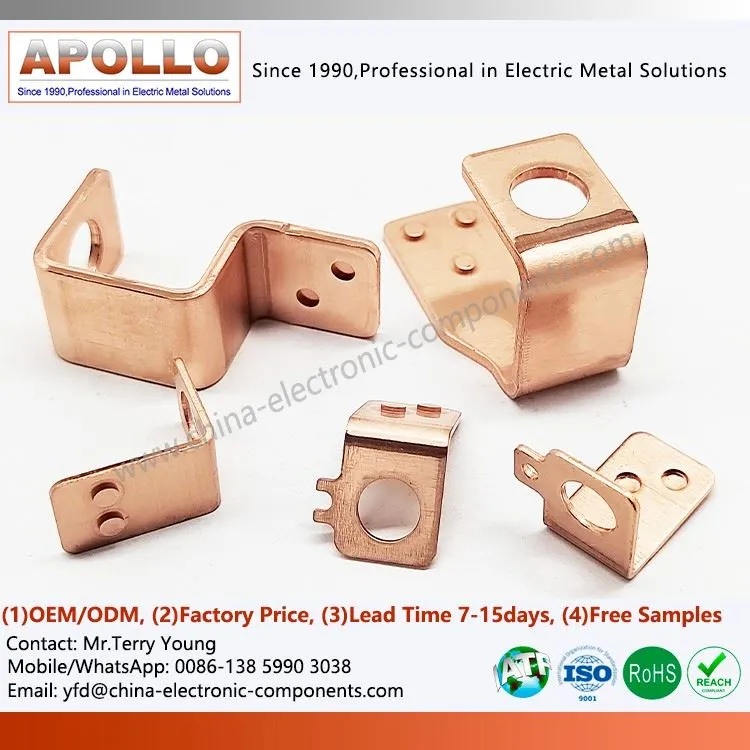

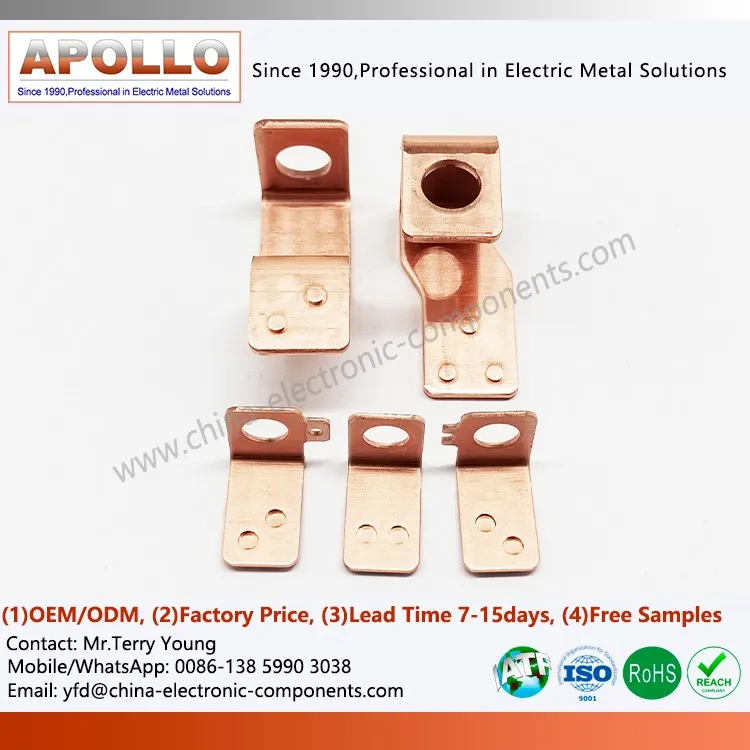
Battery Bus Bar Connector
Products Description
A Battery Bus Bar Connector is a rigid conductor connector made of highly conductive copper, primarily used for high-current connections between battery modules, battery packs, power equipment, and industrial systems.
Essentially, it is a low-impedance, high-current-carrying-capacity conductive bridge.
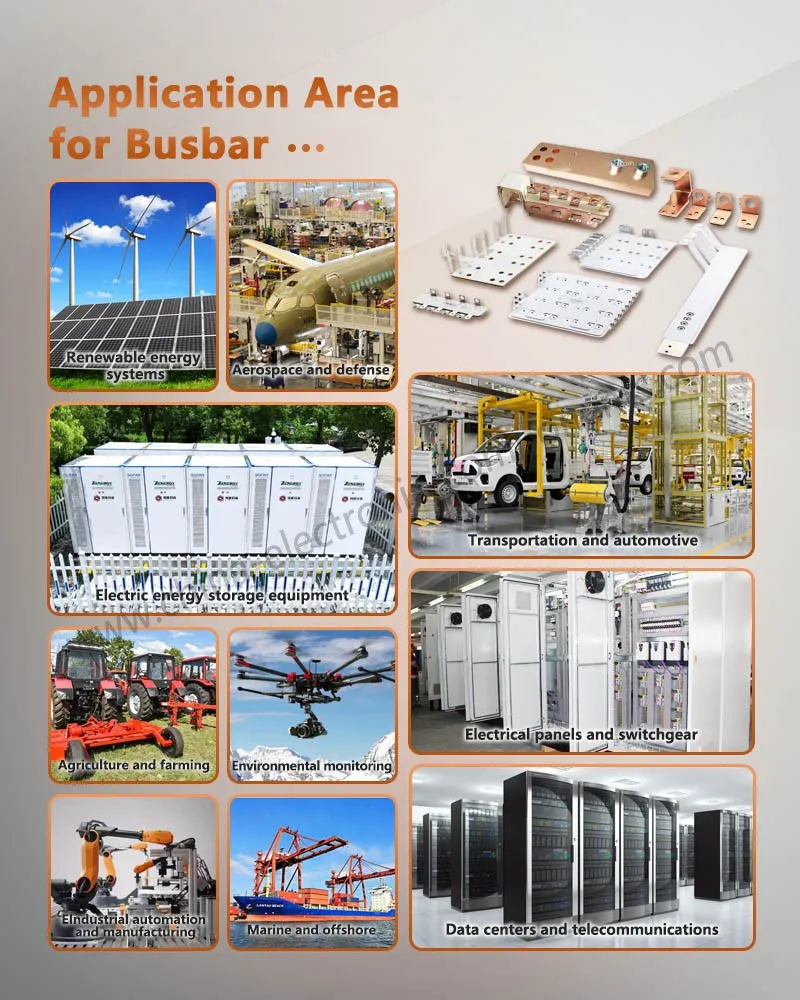
Manufactured through processes such as stamping, bending, welding, machining, and surface treatment, it is widely used in:
Lithium-ion battery pack systems
Energy Storage Systems (ESS)
Photovoltaic inverters
UPS uninterruptible power supplies
Data center servers
Power distribution cabinets
New energy vehicle battery systems
Industrial automation equipment
Power conversion equipment
As the new energy industry develops towards higher voltage and higher power, copper bus bar connectors have gradually replaced traditional cable connections, becoming an important component of modern power connection systems.
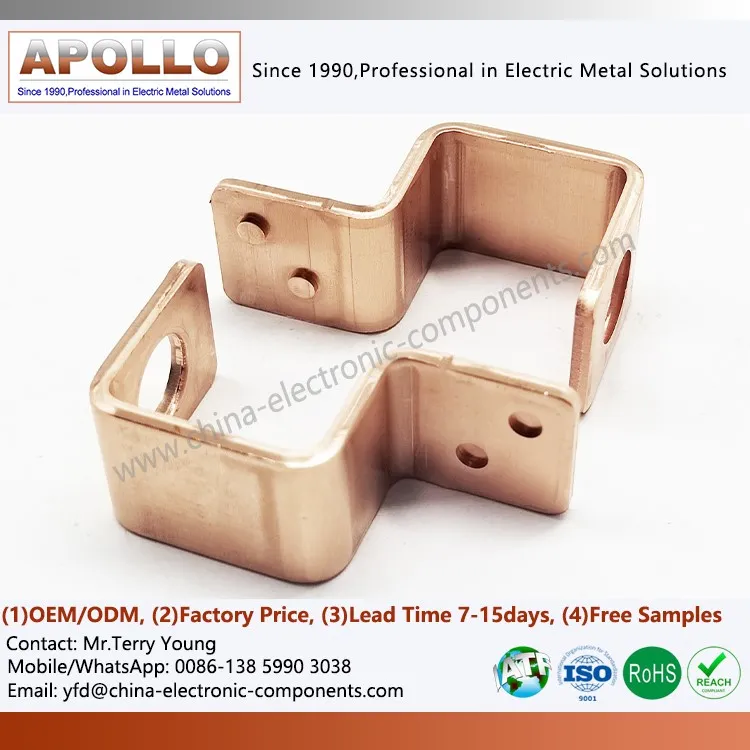
Production Process and Manufacturing Advantages
Raw Material Selection and Leveling: Imported copper plates are automatically leveled and aligned to ensure high flatness and no internal stress.
CNC Precision Machining: High-precision laser cutting or CNC punching is used to complete the shaping and mounting hole machining, ensuring high dimensional accuracy and good consistency.
Surface Treatment: Fully automated electroplating production lines ensure strictly controlled nickel or zinc plating process parameters, resulting in strong adhesion and uniform thickness.
Deburring and Surface Finishing: Vibration deburring combined with manual polishing ensures all edges are smooth and burr-free, preventing tip discharge.
Cleaning and Packaging: After ultrasonic cleaning, anti-oxidation packaging is used to ensure the product arrives at the customer's site in excellent surface condition.
100% Inspection Before Shipment: Each batch of Custom Bus Bars undergoes 100% appearance, dimensional, DC resistance, and withstand voltage testing to ensure zero-defect delivery.

Detailed Display: Micro-features that Determine Success or Failure in Engineering
Hole Chamfering
Each mounting hole has a 45° chamfer on both sides to ensure a smooth fit of the bolt or screw head support surface, preventing stress concentration and localized deformation of the battery bus bar.
Identification and Traceability Codes
For bulk-customized copper busbars, the project number, material grade, thickness, and production batch can be laser-marked in non-overlapping areas for easy on-site installation identification and quality traceability.
Mistake-Proof Design
When multiple similar copper busbars with different hole diameters or bending directions are mixed, we can prevent assembly errors by adding asymmetrical mounting holes or engraving directional arrows.
Packaging and Protection
Finished products are individually packaged in moisture-proof bubble wrap with interlayers. Plated copper busbars are further sealed in plastic to prevent scratches and oxidation during transportation. A full-size inspection report and material certificate are included with the shipment.
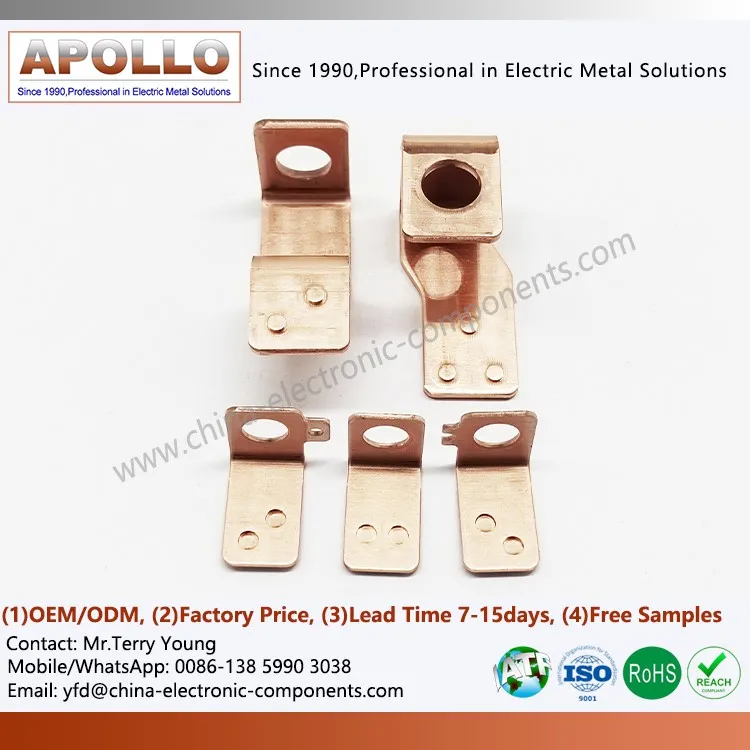
Main Functions
| Current Distribution | As the main current path between battery pack modules, photovoltaic combiner box branches, and UPS parallel units, the bus bar copper gathers or distributes dispersed current. Its low resistance reduces internal I²R losses, improving overall energy efficiency. |
| Potential Equalization | In battery packs, the Copper Ground Bus Bars not only conducts current but also equalizes the potential difference between series and parallel branches through its low impedance, suppressing cell charging and discharging imbalances caused by uneven connection resistance and extending battery system cycle life. |
| Heat Sink Function | The high thermal conductivity of the Bend Copper Busbar makes it a natural heat dissipation extension. Heat from battery terminals or circuit breaker terminals can quickly dissipate along the copper busbar to a larger surface area, reducing hot spot temperatures. |
| Mechanical Positioning Function | Rigid copper busbars also serve as part of the structural framework in battery packs or distribution cabinets, fixing cell spacing, supporting circuit breaker weight, and constraining busbar routing, achieving functional reuse of electrical performance and mechanical structure. |
contact us
Whether it's Copper Busbar for Prismatic Cells for energy storage systems, copper busbar connectors for UPS systems, conductive copper busbars for photovoltaic systems, or internal conductive structures for high-power equipment, we can provide customized engineering support based on your current rating, installation space, temperature rise requirements, and assembly methods, helping projects achieve more efficient and reliable electrical connection solutions from the design stage.
Hot Tags: battery bus bar connector, China battery bus bar connector manufacturers, suppliers, factory, Bus Bar Substation, Copper Grounding Busbar, EV Battery Busbar, Low Voltage BusBar, Nickel Plated Bus Bar, Tinned Copper BusBar
You Might Also Like


Send Inquiry