










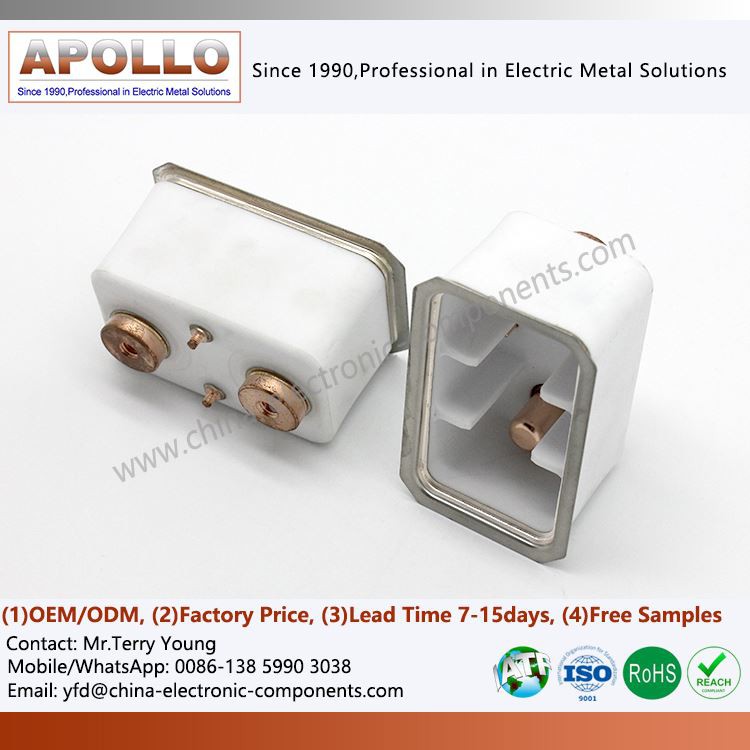
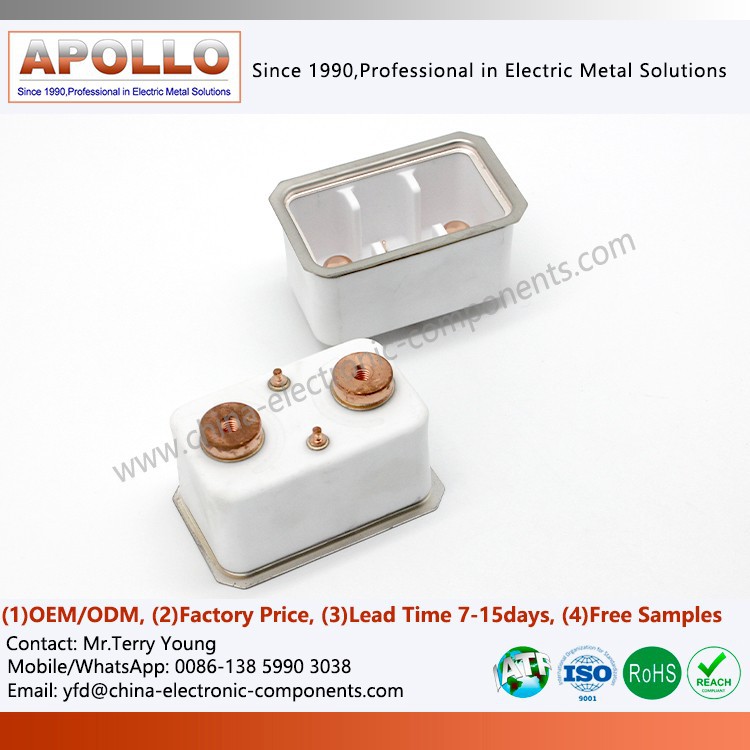
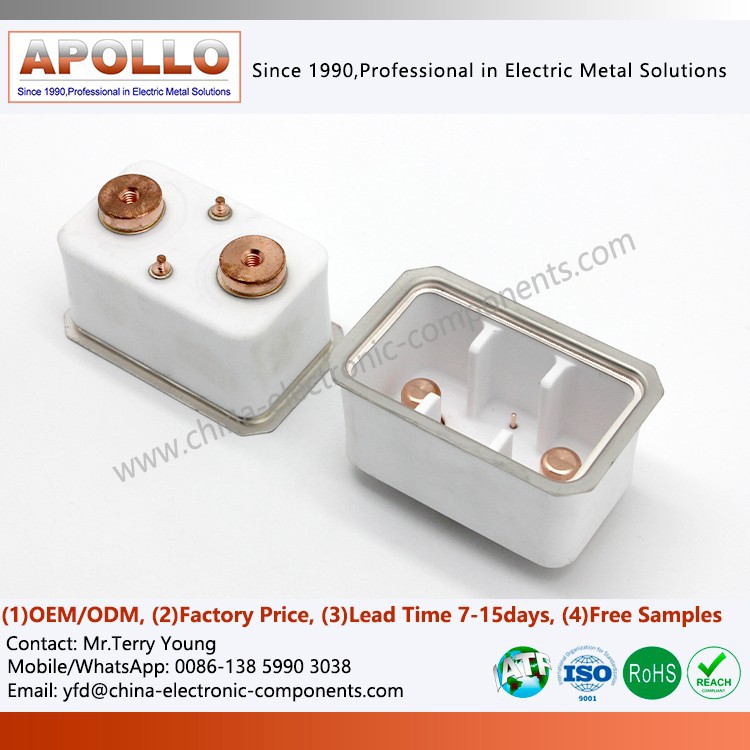
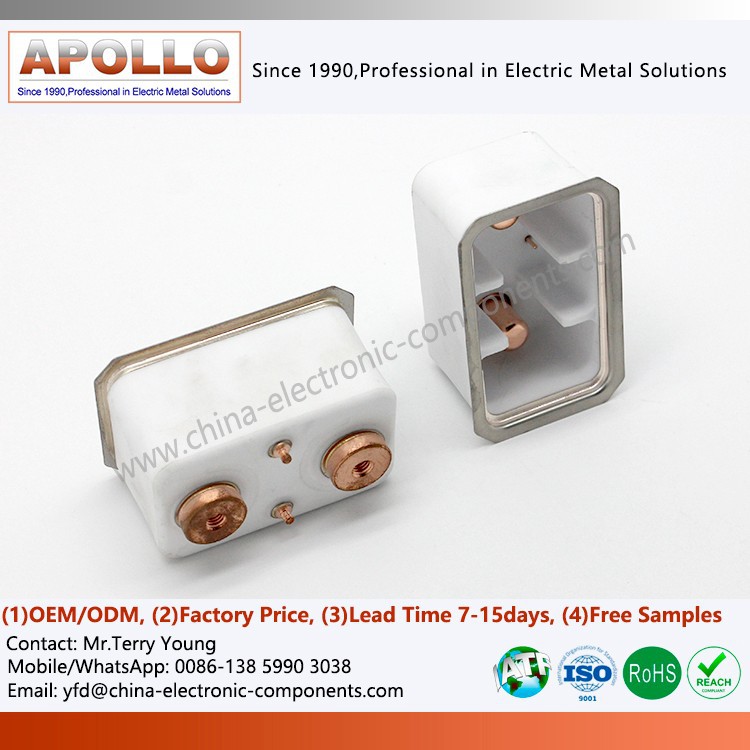
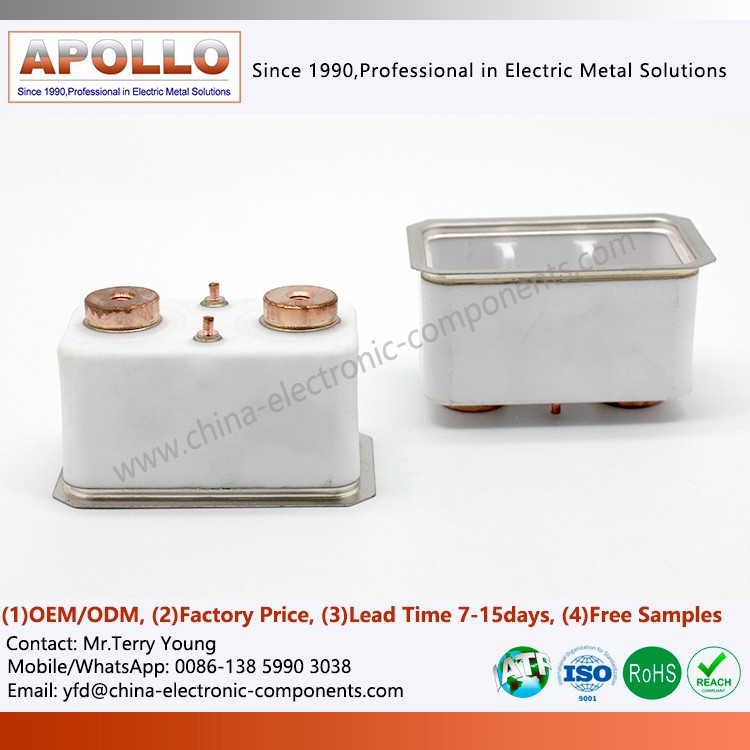
Alumina Metallized Ceramics For Electronic Applications
Products Description
These Alumina Metallized Ceramics for Electronic Applications use high-purity alumina (Al₂O₃) as the matrix material, which is sintered at high temperatures to form a dense structure. A metallization process is then applied to the surface to create a weldable interface, achieving a stable connection with metals such as copper, nickel, and Kovar.
Their core characteristics are:
Excellent electrical insulation performance: Maintains stable dielectric properties even under high voltage conditions, avoiding the risk of breakdown.
High mechanical strength and structural stability: Suitable for complex operating conditions such as vibration and shock.
Good hermetic sealing performance: Meets the vacuum or protective gas environment requirements of sealed relays and contactors.
High temperature resistance and strong thermal stability: Can withstand multiple thermal cycles without failure.
Strong metallization layer bonding: Ensures the reliability of subsequent welding and encapsulation processes.
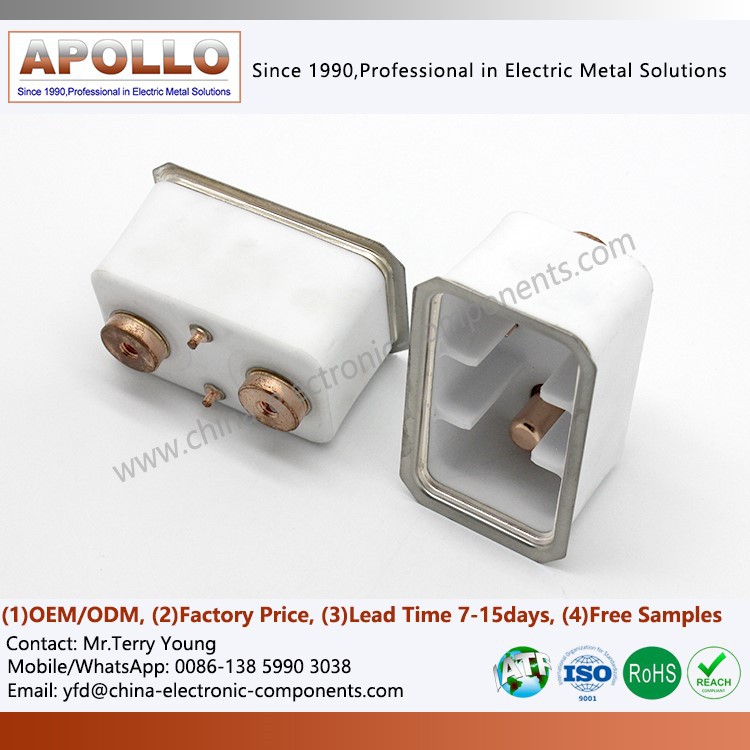
Technical Features and Manufacturing Process: From Powder to Precision Components
Precision dry pressing and isostatic pressing
Ensures uniform density of the Alumina Metallized Ceramics blank, reducing dimensional distortion during sintering.
High-temperature hydrogen atmosphere sintering
Precision Metalized Ceramics are sintered in a reducing atmosphere close to 1700°C, obtaining a dense microstructure and eliminating internal pores.
Screen printing and coating technology
High-precision screen printing ensures consistent thickness and edge clarity in the metallized area, crucial for controlling high-voltage creepage distance.
High-temperature metallization firing control
Secondary firing in a controlled atmosphere furnace allows the glassy phase in the metal slurry to penetrate into the Alumina ceramic parts precision machining matrix, forming an interpenetrating network structure, thus ensuring extremely high bonding strength.
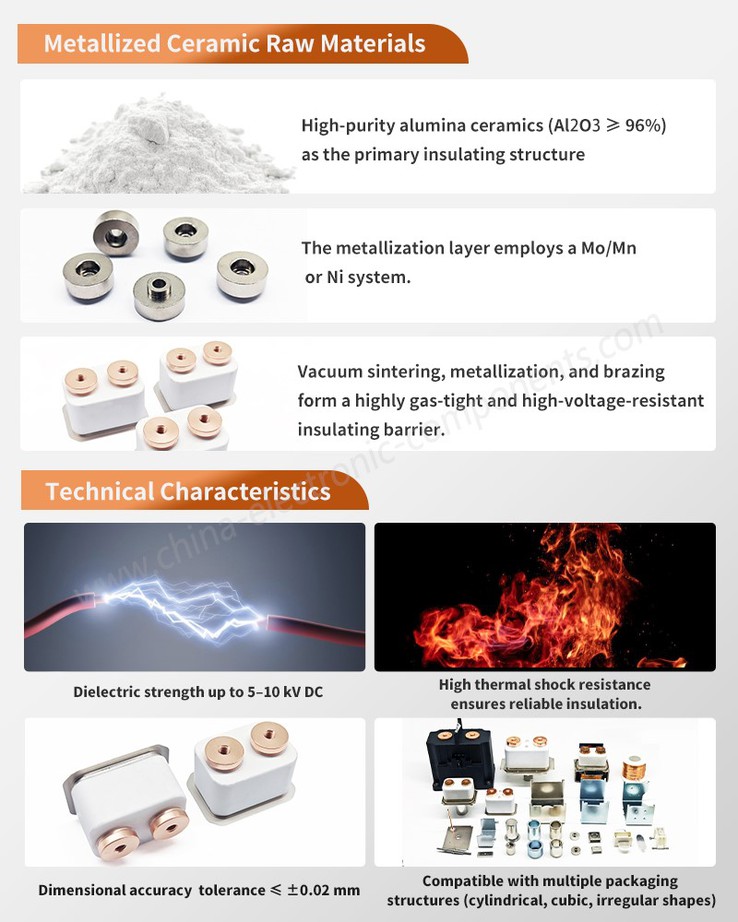
Application Advantages: Practical Verification of Safeguarding the Core Artery of New Energy
| 800V and Above High-Voltage DC Contactors | In the main circuit of the battery pack of pure electric vehicles, contactors need to frequently withstand starting currents of hundreds of amperes and reverse electromotive force during shutdown. Our Metallized Alumina Ceramics for Electrical Components insulated terminals ensure that the arc-extinguishing chamber will not leak or break down during the vehicle's 10-year lifespan and tens of thousands of charge-discharge cycles, safeguarding the lives of passengers. |
| Photovoltaic Inverters and Energy Storage PCS Systems | In extreme temperature environments (-40℃ to +85℃) such as deserts and Gobi, energy storage contactors need to operate under energized conditions for extended periods. The thermal shock resistance of components and the electrochemical migration resistance of the metallized layer ensure maintenance-free, long-term operation of grid-side equipment. |
| Rail Transit and UHVDC Transmission | In higher voltage levels, the requirements for partial discharge (PD) are extremely stringent. Our large-size, multi-lead Metallized Ceramics For Electrical insulators, through extreme surface treatment and field strength optimization, suppress partial discharge to the pico-court (pC) level, meeting the extreme electromagnetic compatibility (EMC) specifications for rail transit. |
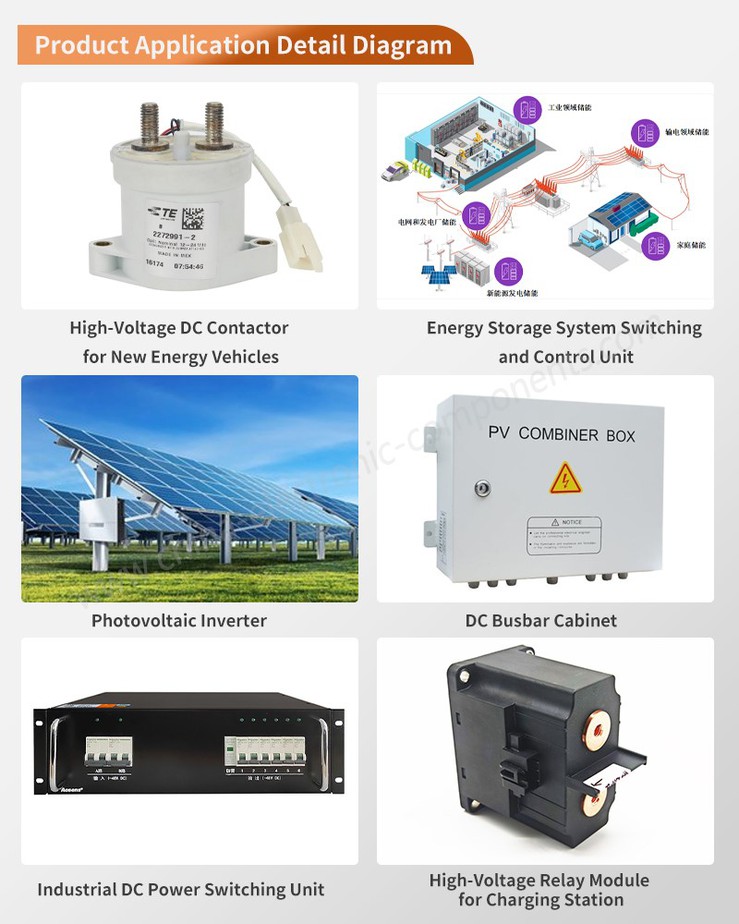
Detail Highlights
Ceramic Substrate
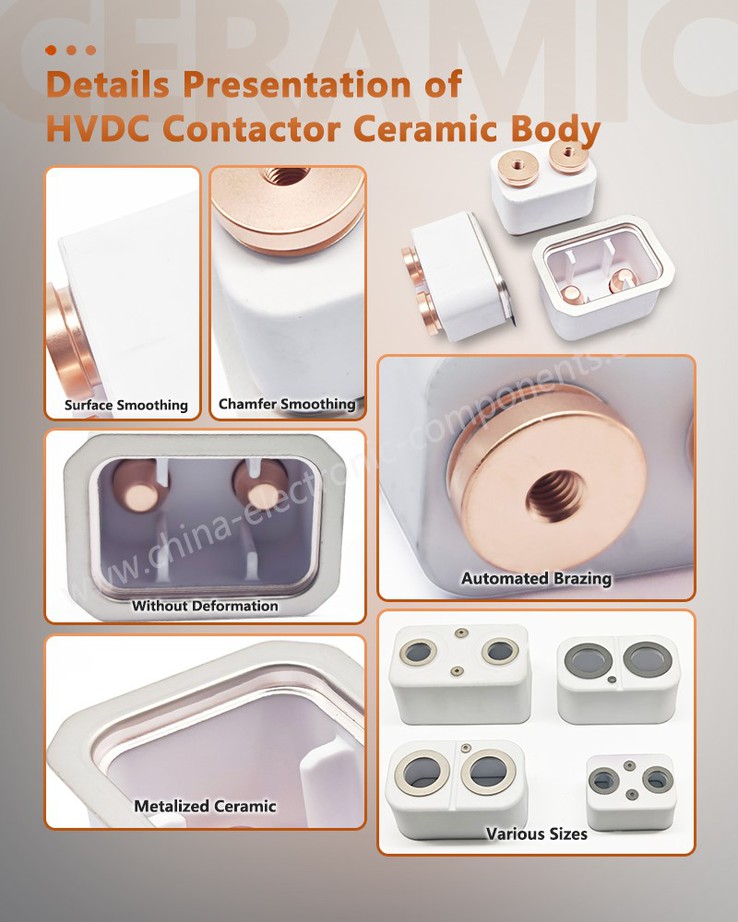
Isostatic pressing and high-temperature sintering ensure a completely dense metallization of the alumina ceramic body with an apparent porosity of <1%, eliminating penetrating pores and guaranteeing airtight boundary integrity.
01
Metallized Layer Surface
Activated molybdenum-manganese paste, after screen printing and sintering, forms a dense and continuous metallized layer free of surface defects such as bubbles, cracks, or grooves.
02
Uniform Nickel Plating
Electroplated nickel uniformly covers the entire surface of the molybdenum-manganese layer, with a thickness tolerance controlled within ±2 μm. Threads and deep hole inner walls are also fully covered.
03
Uniform Edge Chamfering
All Alumina Metallized Ceramics for Bonding components undergo precise chamfering with consistent fillet radii, eliminating stress concentration points.
04
contact us
If you are evaluating the reliability and consistency of the core Metallization of alumina of an HVDC contactor, we can provide engineering-level customization and material-process co-optimization solutions based on specific structures and operating conditions. Please submit your drawings or requirements to obtain matching suggestions.
Hot Tags: alumina metallized ceramics for electronic applications, China alumina metallized ceramics for electronic applications manufacturers, suppliers, factory, HVDC Relay Skeleton Pure Iron, Metallization Ceramic, EV Relay Bracket, New Energy HVDC Parts, Metallized Ceramic Housing For Power Semiconductors, Armature for Electromagnetic Relay
You Might Also Like


Send Inquiry