










What Are The Differences Between T2 Copper And T3 Copper?
Jun 01, 2026
Leave a message
In the electrical stamping, hardware processing, and precision component manufacturing industries, copper is the most widely used basic copper material. Based on purity and impurity content, it can be divided into several grades, such as T1, T2, T3, and T4, with T2 and T3 copper being the most commonly used. These two types of copper differ significantly in compositional purity, mechanical properties, electrical and thermal conductivity, and usage limitations, directly determining the quality and lifespan of various copper part stampings. Accurately distinguishing the characteristics of these two types of copper is a core prerequisite for adapting to electrical component production and controlling product precision and stability during copper alloys metal stamping processing.
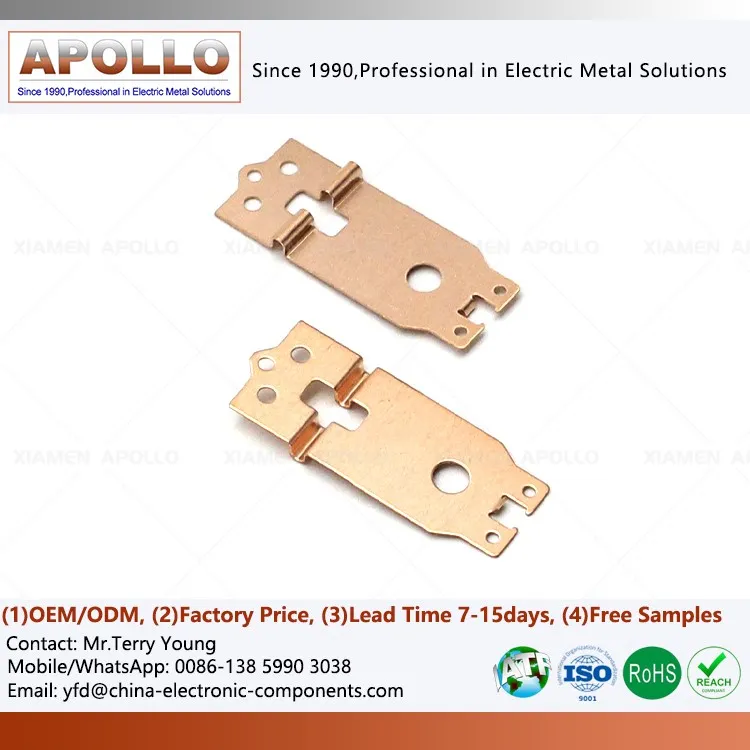
The most fundamental difference between T2 and T3 copper lies in their chemical purity, which is also the core source of all performance differences. According to national standards, T2 copper has a total copper-silver content ≥99.9%, extremely low impurity content, and no strict requirements for phosphorus, classifying it as a high-purity general-purpose copper. In contrast, T3 copper has a total copper-silver content of only ≥99.7%, containing more impurities that affect electrical and thermal conductivity. Compared to high-purity T1 copper (copper-silver content ≥99.95%), T2 has a slightly lower purity, while the difference in purity is more pronounced in T3. In the production of Electrical Contact Metal Copper Stamping Parts, the difference in purity directly affects the conductivity stability and oxidation resistance of the contacts.
The two types of copper also exhibit slight differences in mechanical strength, making them suitable for different stamping processing conditions. In terms of conventional mechanical parameters, T2 copper has a tensile strength ≥195MPa, a Brinell hardness of 35-40HBS, and an elongation after fracture of 45%-50%, exhibiting both good toughness and formability. T3 copper has a tensile strength ≥210MPa, with hardness and elongation essentially on par with T2. Overall, T3 copper has slightly better strength than T2 copper, but the difference in toughness is minimal. Both meet the requirements of conventional stamping, bending, and forming processes, and are suitable for various precision forming processes in OEM Precision Copper Sheet Metal Stamping.
The most critical difference between the two lies in their electrical and thermal conductivity, which is also the core basis for material selection in the industry. T2 copper has lower impurity and oxygen content, resulting in excellent electrical and thermal conductivity and corrosion resistance, meeting the requirements for welding and brazing. Only a trace amount of hydrogen slag is present. T3 copper has higher impurity and oxygen content, resulting in significantly weaker electrical and thermal conductivity than T2 copper. The hydrogen slag problem is more prominent, and annealing and welding are strictly prohibited in high-temperature reducing atmospheres above 370℃. Therefore, for core conductive components like Copper Stamping Contacts for Electrical Switches, T2 copper is generally preferred to ensure stable power delivery.
Due to performance differences, T2 and T3 copper have clearly defined industry application scenarios, suitable for stamping products with different precision and functions. T2 copper offers balanced performance and excellent conductivity, primarily used in core components with high requirements for conductivity and stability, including high-end applications such as wires and cables, precision conductive contacts, and aerospace electrical components. Most core conductive components in Electrical Metal Stamping Parts for Switches and Sockets are made from T2 copper. T3 copper, on the other hand, offers better cost-effectiveness but has moderate conductivity, and is primarily used as a structural material, mainly for hardware stamping parts with lower conductivity requirements and a focus on structural support, such as switch washers, rivets, and ordinary conduits.
Besides T2 and T3 copper, domestic industrial copper also includes three main categories: oxygen-free copper, deoxidized copper, and special alloy copper, each suited to different industrial processing needs. Ordinary copper is primarily used for cost-effective and versatile processing, oxygen-free copper is suitable for high-end precision oxidation-free environments, and deoxidized copper is suitable for high-temperature welding processing. In the large-scale production of electrical metal stamping, precise material selection based on product function can ensure product performance while effectively controlling production costs, avoiding problems of material over-selection or insufficient performance.
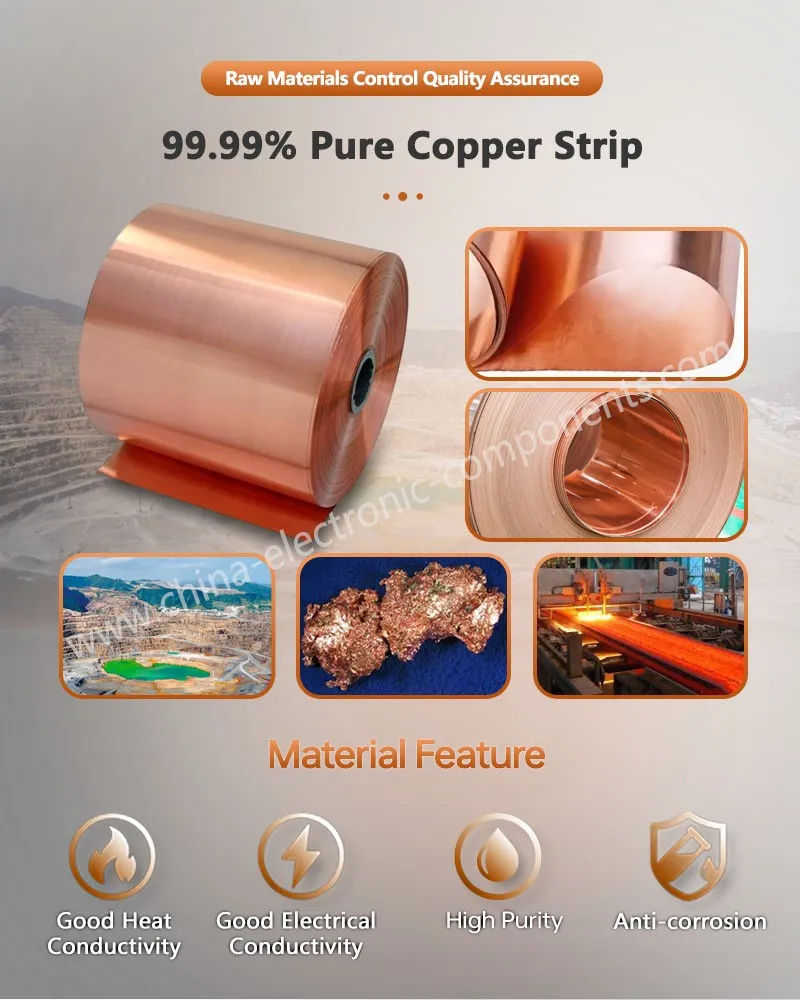
In summary, T2 copper excels in high purity, high conductivity, and stable performance, making it suitable for precision electrical conductive components. T3 copper, with slightly higher strength and better cost-effectiveness, is only suitable for general copper stamping electrical precision parts. The differences in purity, conductivity, and high-temperature processing performance between the two are important criteria for material selection in the electrical stamping industry, directly determining the quality and application scenarios of copper stamping electrical precision parts.
For precise selection of T2 or T3 copper materials based on the working conditions of switches, contacts, and structural components, and to obtain customized copper plate sheet metal part processing solutions, please contact us at any time for professional technical services.
contact us

Send Inquiry