



What Are The Applications Of Fuse Ceramic Body in New Energy Vehicles?
May 26, 2026
Leave a message
As a guardian safeguarding the stable operation of a vehicle's electrical system, the fuse plays a pivotal role within the circuit. Connected in series, it utilizes the thermal effects generated by overcurrents during short circuits or overloads to melt and vaporize its internal element, thereby creating an open circuit and interrupting the faulty path by extinguishing the resulting electrical arc. With new energy vehicles fully entering an era of high-voltage platforms-operating at 800V and even higher-traditional low-voltage fuses are no longer sufficient to meet current demands. Consequently, high-voltage power fuses-typically operating within a range of 60 VDC to 1500 VDC-have emerged as the absolute mainstay for both main and auxiliary circuits. In this demanding application environment, high-performance EV fuse ceramic bodies have become the preferred medium for encapsulating the fuse element and isolating electrical arcs, thanks to their exceptional insulation properties, high-temperature resistance, and thermal shock resilience.
Automotive fuses are generally categorized into two main groups: low-voltage and high-voltage. Among these, the structural design and material selection of high-voltage fuses directly determine the overall electrical safety of the vehicle. Their core components primarily consist of the fuse tube, the fuse element, the fuse holder, and the fuse cap. Specifically, the fuse tube serves as the main housing for the arc-extinguishing medium and the fuse element; it is typically constructed as a hollow cylindrical structure made from specialized ceramics. The fuse element-often composed of lead-antimony or silver alloys-is responsible for sensing current flow and rupturing in the event of an anomaly. Meanwhile, the fuse holder and cap provide secure mechanical mounting and external isolation protection. In the realms of industrial applications and traditional automotive electronics, the classic ceramic body designed for Siemens LV HRC fuses offers a mature and reliable protection solution for a wide array of precision circuits, distinguished by its standardized dimensions and stable physical characteristics.

Addressing the complex operating conditions unique to new energy vehicles, the design of specialized "Ceramic Bodies for EV Fuses" must account for not only standard electrical parameters but also the intense vibrations and wide temperature fluctuations encountered during vehicle operation. High-quality ceramic casings ensure that internal arc-quenching media-such as quartz sand-do not leak or degrade under extreme environmental conditions. This guarantees that, even when interrupting short-circuit currents reaching tens of thousands of amperes, the fuse can rapidly extinguish the arc, thereby preventing secondary damage to the battery pack or electronic control systems. This relentless pursuit of extreme material performance serves as the cornerstone of high-voltage safety design in modern electric vehicles.
Beyond the main circuit housing the drive motor, auxiliary components-such as the vehicle's air conditioning compressor and PTC heaters-also demand rigorous overcurrent protection. "Ceramic Bodies for Electric Vehicle Auxiliary Fuses" are typically more compact in size yet maintain exceptionally high insulation resistance and mechanical strength. They are precisely engineered to match the rated currents of auxiliary systems, activating rapidly in the event of an overload or short circuit. This effectively prevents a single auxiliary component failure from paralyzing the vehicle's entire high-voltage system, thereby significantly enhancing both the user experience and the vehicle's overall safety.
Fundamentally, regardless of the specific circuit in which it is deployed, the core value of a fuse lies in providing an instantaneous and reliable physical disconnection mechanism. "Ceramic Bodies for Overload and Short Circuit Protection Fuses" must possess excellent thermal conductivity to dissipate heat generated during normal operation, while simultaneously withstanding the high-temperature and high-pressure shockwaves produced by the vaporization of the fuse element within milliseconds of a fault occurring. The unique chemical stability of ceramic materials ensures that they do not age or deform over their long service life, thereby guaranteeing the consistent integrity of their protective characteristics.
In high-voltage DC systems, the absence of the natural current zero-crossing points found in AC circuits makes arc extinction exponentially more challenging. Consequently, the specialized material formulations developed for "Ceramics for DC Automotive Fuses" are of critical importance. These ceramics typically feature exceptionally high purity and density, enabling them to effectively confine arc energy. When combined with sophisticated internal fuse element designs, they achieve the robust interruption of DC fault currents, thereby establishing a formidable safety barrier for onboard DC-DC converters and High-Voltage Power Distribution Units (PDUs).
Among the vast array of ceramic materials, steatite ceramic is widely utilized due to its exceptional high-frequency insulation properties and thermal shock resistance. The insulating electrical steatite ceramic fused body not only exhibits excellent machinability-enabling the fabrication of various complex, custom-shaped structures-but also offers relatively controllable production costs. In applications involving cost-sensitive yet high-reliability requirements-such as in certain mid-to-low-end vehicle models or for the protection of specific components-steatite ceramic fuse housings remain a highly cost-effective engineering solution.
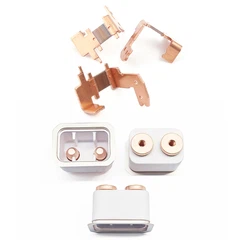
Within a fuse, the junction between the internal fuse element holder and the terminal lead-out typically necessitates ceramic components of extremely high precision to ensure proper fixation and electrical insulation. The ceramic casing for the fuse link directly encases or supports the precisely machined metal fuse element; operating within a confined space, it must provide absolute electrical isolation to prevent surface creepage or dielectric breakdown. The dimensional accuracy and surface finish of these miniature ceramic sleeves directly influence the precision of the fuse's time-current characteristic curve.

As global environmental regulations become increasingly stringent and consumer anxiety regarding driving range subsides, new energy vehicles are evolving toward greater efficiency and lighter weight. The development of ceramics for electric and hybrid vehicle fuses is also undergoing continuous iteration; while retaining their inherent advantages in insulation and voltage withstand capabilities, novel composite ceramic materials have further reduced their own weight and thermal capacity. This contributes to enhancing the overall energy density of the vehicle, perfectly meeting the exacting requirements for components in both pure electric and hybrid models.
contact us

Send Inquiry