











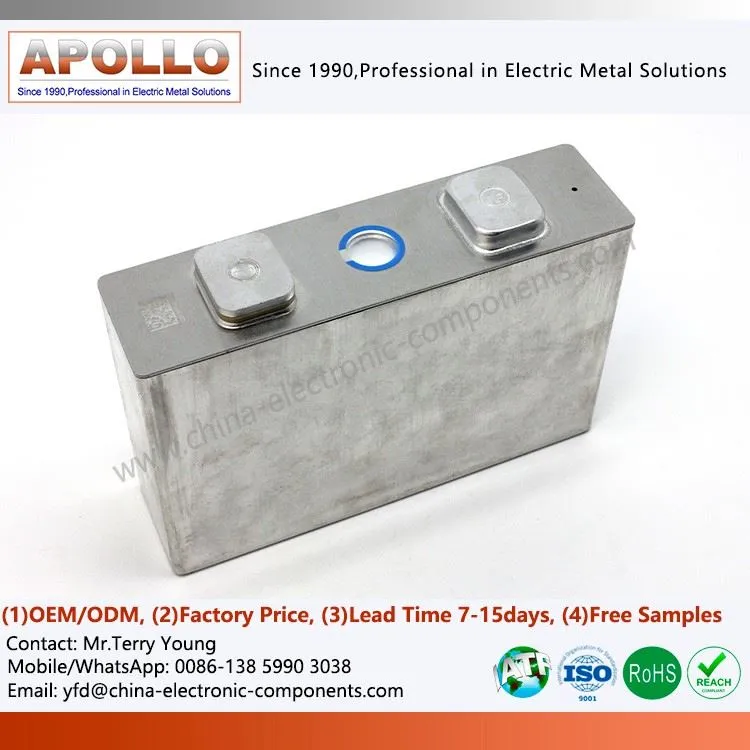


Aluminum Case For EV Electric Bus LiFePO4 Battery Pack
Products Description

As the physical carrier of high-capacity battery cells for electric buses, our Aluminum Case for EV Electric Bus LiFePO4 Battery pack exhibits unique engineering and physical characteristics:
Excellent density and impermeability: The casing is free of any micropores, microcracks, or inclusions, possessing perfect resistance to electrolyte penetration. It can absolutely prevent the evaporation of organic solvents in the electrolyte and the penetration of external water molecules throughout a service life exceeding ten years.
Isotropic anti-expansion mechanical rigidity: During long-term cycling, the graphite anode and cathode materials of lithium iron phosphate cells undergo slight lattice expansion. Our aluminum casing, through grain-oriented deformation control, endows the casing wall with extremely high creep resistance, effectively locking the internal electrode assembly of the cell and mitigating capacity decay caused by localized cell expansion.
High laser welding compatibility: Since the welding quality between the cap/cover and the casing directly determines the cell's sealing performance, our casing has optimized the proportions of trace elements in the material, greatly reducing the spatter rate during laser deep penetration welding and eliminating the potential for porosity and crystallization cracks.
Main Functions
Structural Load-Bearing
As the module-level structural skeleton, the Aluminum Case for Soft Pack LiFePO4 Rechargeable Battery bears the weight of the cells, the pre-tensioning force of the straps, cyclic expansion forces, and the vibration and impact loads of the entire vehicle, maintaining the stability of the cell's geometric position throughout its life cycle and preventing internal micro-short circuits or tab breakage due to structural loosening.
01
Integrated Thermal Management
Liquid cooling channels are embedded in the Aluminum Case for the electric bike battery pack's bottom or side plates, rapidly homogenizing the heat generated by the cells' charging and discharging through the high thermal conductivity of aluminum and transferring it to the coolant. This maintains the cell's operating temperature within its optimal range, inhibiting high-temperature aging and low-temperature lithium plating.
02
Electrical Insulation Boundary
The anodic oxide film provides intrinsic insulation properties to the Aluminum Case for the Li-ion Electric Bike Battery Pack, maintaining reliable insulation between the high-voltage cell assembly and the metal chassis. This reduces the system's reliance on additional insulating gaskets and minimizes assembly variations and long-term aging risks.
03
Safety Protection
In collisions, bottoming-out, or side impacts, the high-rigidity aluminum alloy shell acts as the first physical barrier, absorbing and dispersing impact energy to prevent direct compression and deformation of the battery cells. In thermal runaway scenarios, the shell structure slows the spread of fire, buying time for passenger evacuation and fire response.
04
Lightweighting
Compared to steel battery boxes, the aluminum alloy shell significantly reduces weight while maintaining the same structural rigidity. This helps buses reduce their curb weight while meeting range requirements, increasing passenger capacity, or reducing energy consumption per unit distance.
05

Detailed Showcase: Witnessing the Obsession with Craftsmanship in the Micrometers
Smooth Transition of Corner R-Angles
The R-angle at the junction of the sidewall and base plate is precisely calculated and polished, eliminating any stress concentration points. The coating here is equally dense and complete, preventing insulation breakdown and leakage common during long-term cycling.
Fish-Scale Welds in the Terminal Welding Area
Under high magnification, the weld seam reveals a uniform, dense, and perfectly overlapping fish-scale texture, free of pores and undercut. This is a microscopic mark of extremely low contact resistance and 100% sealing.
Precise Contour of the Explosion-Proof Valve Markings
The bottom of the laser markings is smooth and free of microcracks. The remaining wall thickness is precisely controlled at the micrometer level, ensuring indestructibility under normal operating conditions and instantaneous and precise opening at dangerous thresholds.
Absolutely uniform inner wall insulation coating
The coating surface has a matte texture, with no drips, no bubbles, and no abrupt changes in thickness, providing a perfect and safe space for bonding and wrapping the internal electrode assembly of the cell.

Production Process (Battery Cell-Grade Aluminum CAN) – Making "Cleanliness" a Core Competitive Advantage
Material Acceptance: Control of the chemical composition and grain orientation of aluminum coils/plates (forming anisotropy affects the height of the drawing lugs and the uniformity of wall thickness)
Multi-station progressive deep drawing (Deep) Drawing: Drawing too deep in one step = wall thickness cut off; the mature approach is progressive drawing + intermediate annealing (if needed), allowing material to flow in instead of being stretched to its limit.
Edge trimming/flanging/shaping: Edge finishing → flatness → R-corner finishing → punching explosion-proof valve seat/positioning notch.
Cleaning and descaling (degreasing-ultrasonic washing-rinsing-drying): This step determines "wonderability"-even if the shell looks shiny to the naked eye, residual micro-oil film on the inner wall will carbonize/generate gas under high laser temperature → pinholes.
Surface treatment (according to system requirements): Passivation/chemical conversion film (improves corrosion resistance + improves adhesion to insulating coatings); some pack mounting surfaces undergo localized anodizing or conductive oxidation-but the inner cavity is usually not coated (to avoid contaminating the cell's chemical environment).
100% visual/dimensional inspection: Key dimensions (edge flatness, height, diagonal, R-corner wall thickness sampling inspection) + surface defect scanning + batch traceability coding (laser micro-marking, not on the contact surface).

contact us
We not only provide standardized Aluminum Case for Primary Lithium Iron Battery LiFeS2 but also offer one-stop engineering services tailored to your project needs, from design optimization and mold development to mass production, helping you achieve safe, efficient, and reliable application of your battery systems.

Hot Tags: aluminum case for ev electric bus lifepo4 battery pack, China aluminum case for ev electric bus lifepo4 battery pack manufacturers, suppliers, factory, 3003 H14 Aluminum Case, aluminum battery case, Aluminum Case for Lithium ion Battery Pack, Lithium Cell Aluminum Shell, Lithium Ion Battery Aluminum Shell, Pack Aluminum Housing
You Might Also Like


Send Inquiry