




Analysis of The Lithium-ion Battery Manufacturing Processes and Key Control Points
Oct 23, 2025
Leave a message
As a core energy storage unit in the new energy industry, lithium-ion batteries require complex and precise manufacturing processes. This article uses the 18650 cylindrical lithium-ion battery as an example to analyze the battery manufacturing process, key control points, and the impact of different process steps on battery performance and safety. Furthermore, by combining the structural design of prismatic batteries and aluminum cases for lithium-ion battery packs, the compatibility of different housing types (including prismatic cell cases and pack aluminum housing) with the manufacturing process is explored.
Overview of Lithium-ion Batteries
1. Electrochemical Principles
Lithium-ion batteries consist of a positive electrode, a negative electrode, a separator, and an electrolyte. Charging and discharging are achieved through the intercalation and deintercalation of lithium ions (Li⁺) between the positive and negative electrodes. During charging, Li⁺ is intercalated from the positive electrode into the negative electrode; during discharge, the process reverses. This reversible intercalation reaction gives lithium-ion batteries high energy density and excellent cycling performance.
2. Battery Structure and Casing Type
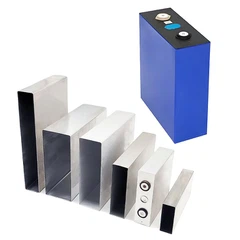
A typical lithium-ion battery cell consists of electrodes, a separator, an electrolyte, tabs, and a casing. Common casing types currently available include steel, nickel, and aluminum. Aluminum battery cases, due to their excellent thermal conductivity, lightweight construction, and corrosion resistance, are widely used in the power and energy storage sectors. Prismatic aluminum casings and lithium cell aluminum shells, in particular, are predominant in new energy vehicles and energy storage power stations.
For example, the 3003-H14 aluminum case, due to its excellent ductility and mechanical strength, demonstrates excellent formability and durability in the manufacture of LFP battery aluminum cases and LiFePo4 prismatic battery aluminum cells.

Lithium-ion Battery Manufacturing Process
The lithium-ion battery manufacturing process is generally divided into three stages: pre-manufacturing, post-manufacturing, and screening and testing. Each stage directly impacts the consistency and reliability of the battery cells.
(I) Front-End Process: Core Formation
The front-end process includes ten steps: slurry mixing, coating, roll pressing, slitting, sheeting, winding, case insertion, bottom welding, roll grooving, and baking. The core goal is to process powdered positive and negative electrode materials into stable cores.
Slurry Mixing and Coating: The positive and negative electrode powders, conductive agent, and binder are mixed in proportion to form a suspension slurry, which is then evenly coated on the current collector. The coating thickness and uniformity directly affect the battery's energy density and cycle life.
Roll Pressing and Slitting: Roll pressing adjusts the density, thickness, and compaction of the electrode sheets. During slitting, burrs and chipping must be avoided to prevent short circuits. This step requires high cleanliness and low humidity control to prevent moisture from affecting electrochemical performance.
Winding and Case Insertion: Cylindrical cells are formed through a winding process, while prismatic cells or Prismatic Cell Case cells are formed using a stacking process. When inserting the core into the case, the case dimensions must be precisely matched. This is especially true for aluminum cases for lithium-ion battery packs, where case tolerance control directly impacts sealing and pressure resistance.
Bottom Welding and Roll Grooving
The negative tab and case are welded together to form the circuit. When welding aluminum prismatic cases, the heat-affected zone (HAZ) must be controlled to prevent oxidation and weakening of the aluminum case.
Baking and Dehumidification
Baking removes moisture from the core, maintaining trace moisture at the ppm level to ensure stable reaction with the electrolyte.
(II) Back-end Process: Packaging and Liquid Filling
Liquid Filling
After electrolyte injection, the electrode must be fully soaked. Controlling the injection volume, temperature, and humidity is crucial. Excessive electrolyte filling can cause battery expansion or premature opening of the safety valve; insufficient electrolyte filling can lead to capacity loss and the risk of lithium plating.
Welding and Sealing
The cover plate welding and sealing formation determines the battery's airtightness. For square pack aluminum housings or lithium cell aluminum shells, precision laser welding technology is required to ensure a complete seal.
Cleaning and Filming
Remove residual liquid and impurities from the outer shell to prevent electrolyte corrosion. External heat shrink film ensures isolation between the positive and negative electrodes, preventing external short circuits and improving appearance quality.
(III) Screening and Testing Stage
After battery cells are formed, they undergo activation, formation, aging, sorting, and capacity grading to ensure factory consistency and safety.
Activation and Formation
Activation ensures that the electrolyte fully permeates the electrodes. Formation is the first charging process, creating a stable SEI film. Controlling current, voltage, and temperature parameters is crucial to extending battery cell life.
Aging and Sorting
Aging involves constant temperature storage to detect voltage drop and internal short circuit risks. Sorting categorizes cells by internal resistance and capacity, ensuring consistency for subsequent module matching.
Capacity and Binning
Shipping is done by capacity grading to ensure performance matching of LiFePo4 Prismatic Battery Aluminum Cells during assembly, improving system energy efficiency and cycle life.
Manufacturing Process and Aluminum Case Compatibility
The lithium-ion battery cell case is not only a mechanical protective layer but also a key component for the stability of the electrochemical system. Using aluminum alloy cases such as 3003-H14 Aluminum Case, Aluminum Prismatic Case, or LFP Battery Aluminum Case significantly improves thermal management and structural strength.
Thermal Conductivity: Aluminum cases dissipate heat more efficiently than steel cases, making them suitable for high-rate discharge and high-temperature environments.
Lightweight Advantage: Aluminum battery cases have a density only one-third that of steel cases, contributing to vehicle weight reduction.
Forming Compatibility: Prismatic cell aluminum shells exhibit excellent ductility during stamping and stretching, making them suitable for mass production.
Corrosion Resistance and Sealing: Aluminum alloy cases can be anodized to form a dense protective layer, enhancing safety.
Thus, from core manufacturing to case forming, the precision manufacturing and surface treatment quality of the aluminum case for lithium-ion battery packs are crucial to ensuring battery safety and consistency.

Conclusion
Lithium-ion battery manufacturing is a systematic project involving materials, electrochemistry, machining, and automated control. With the rapid development of the new energy industry, demand for Prismatic Cell Cases and LiFePo4 Prismatic Battery Aluminum Cells continues to grow, and aluminum alloy casing technology is becoming a key focus for optimizing battery performance.
By optimizing the manufacturing process, precisely controlling ambient humidity, and strictly adhering to casing and packaging standards, the reliability and lifespan of aluminum cases for lithium-ion battery packs can be significantly improved, providing safer and more efficient energy storage solutions for new energy power systems.

contact us

Send Inquiry