




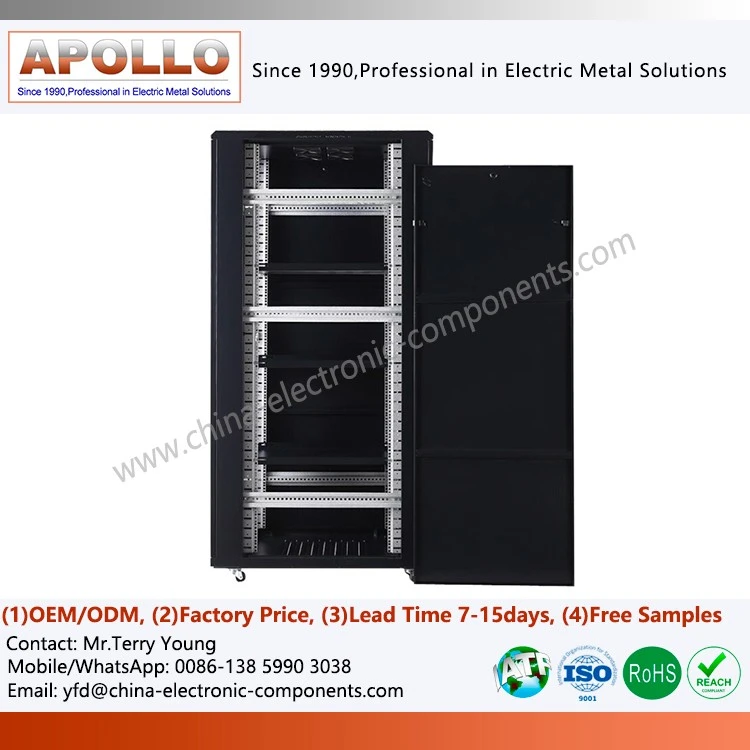
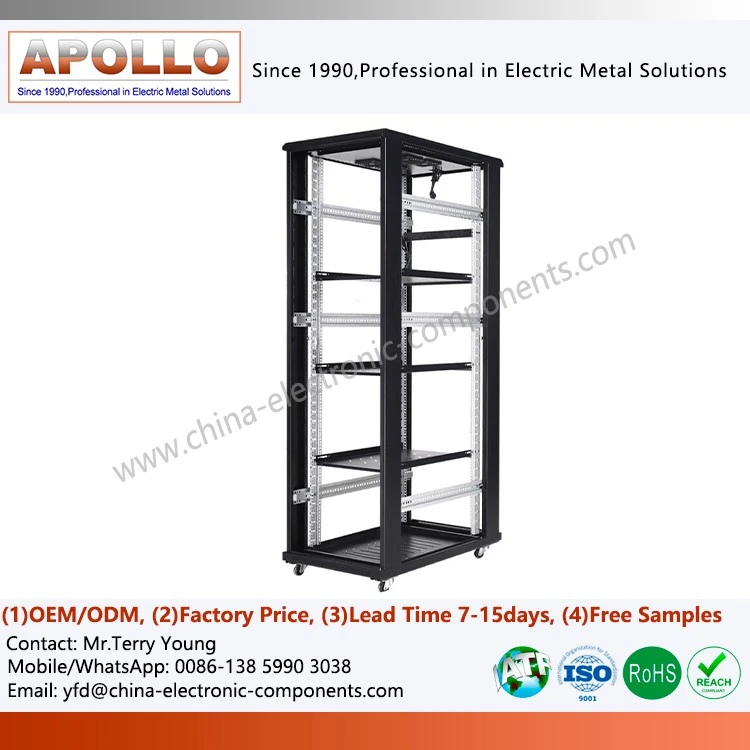
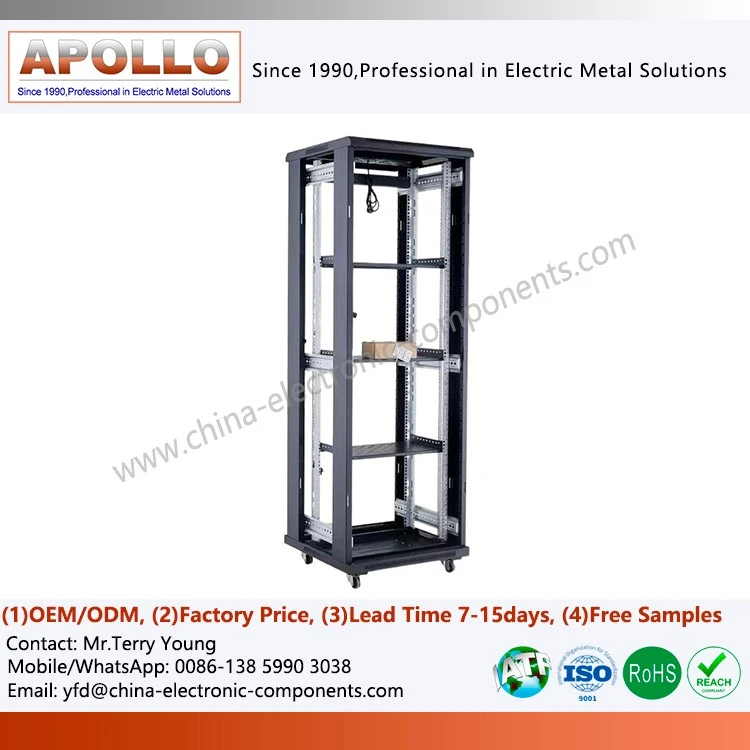
Wall Mount Data Rack
What is a wall-mounted data rack?
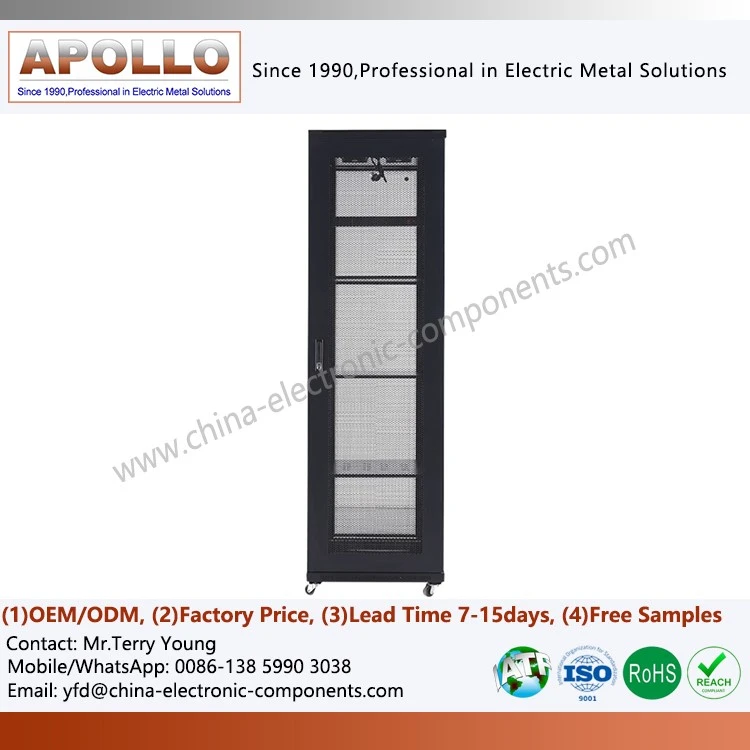
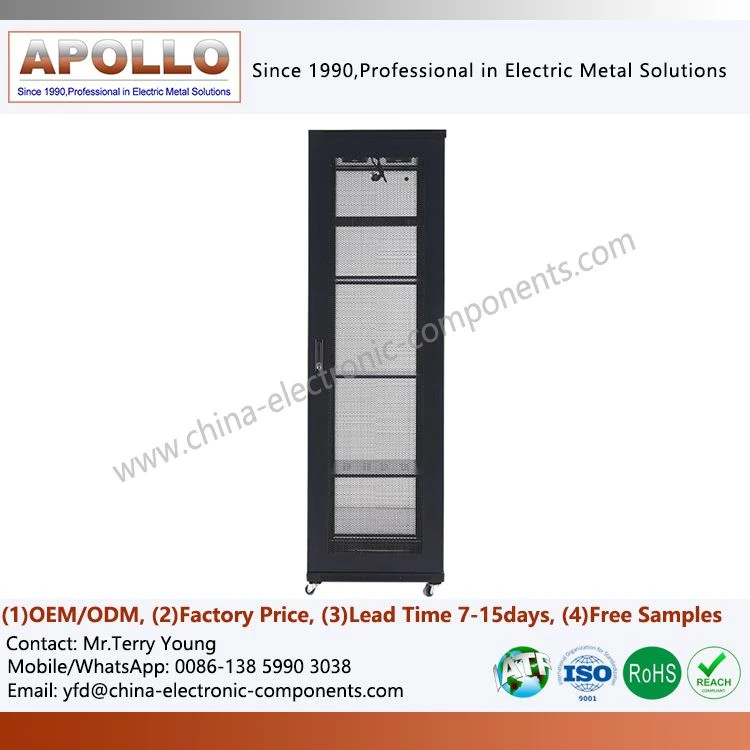
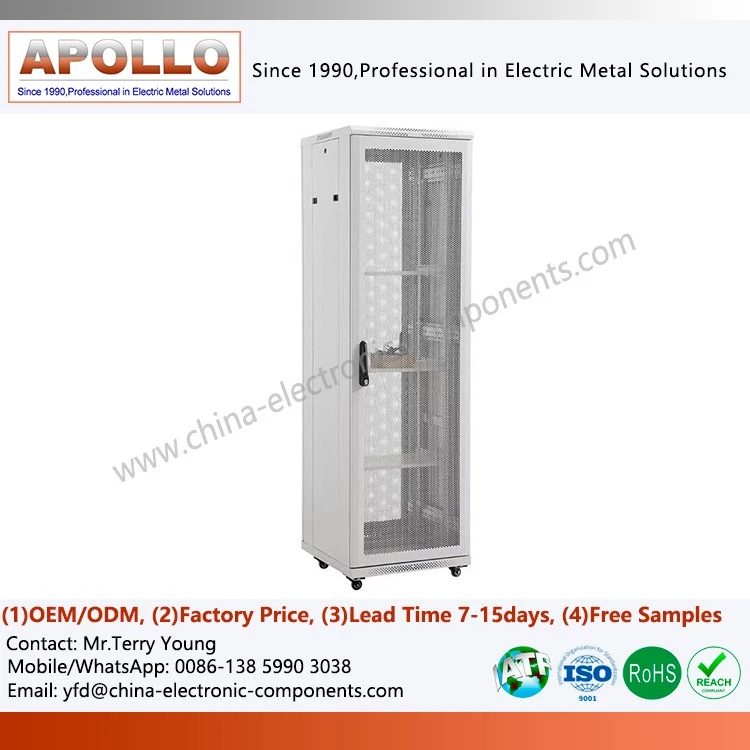
This is a wall-mounted, single-door 19-inch standard enclosure. In essence, it is a structural unit designed to house equipment, manage cabling, facilitate airflow, and ensure electrical safety-all within a single enclosed space.
Its structure consists of five functional layers:
Load-bearing Framework-A four-post frame that forms a closed, load-bearing loop, transferring the weight of the equipment and the door to the wall-mounting points, rather than placing the load on the enclosure's thin-gauge panels.
Mounting Interface-Vertical rails with square-hole mounting patterns that comply with 19-inch equipment standards; these include "U" (rack unit) markings to simplify the installation of standard hardware.
Enclosure Body-A combination of a front door, side panels, a back panel, and top/bottom panels that creates a controlled environment, providing both physical protection and defined boundaries for airflow.
Access Points-The front door serves as the primary interface for daily operations, while removable side panels and an openable back panel facilitate cabling, grounding, and in-depth maintenance.
Advantages in Application Scenarios
Typical deployment scenarios for server cages include:
Small and medium-sized enterprises (SMEs) and retail chains
Serving as lightweight network nodes in areas such as point-of-sale (POS) counters or office corners.
01
Smart buildings and hotels
Housing aggregation-layer wiring and switching equipment within low-voltage utility rooms on each floor.
02
Security and surveillance projects
Providing centralized, wall-mounted management for NVRs, fiber-optic transceivers, and surveillance switches.
03
Industrial and production environments
Protecting network communication equipment located near PLC control cabinets on factory floors.
04
Educational and healthcare institutions
Enabling the standardized management of distributed information access points.
05
Material Advantages
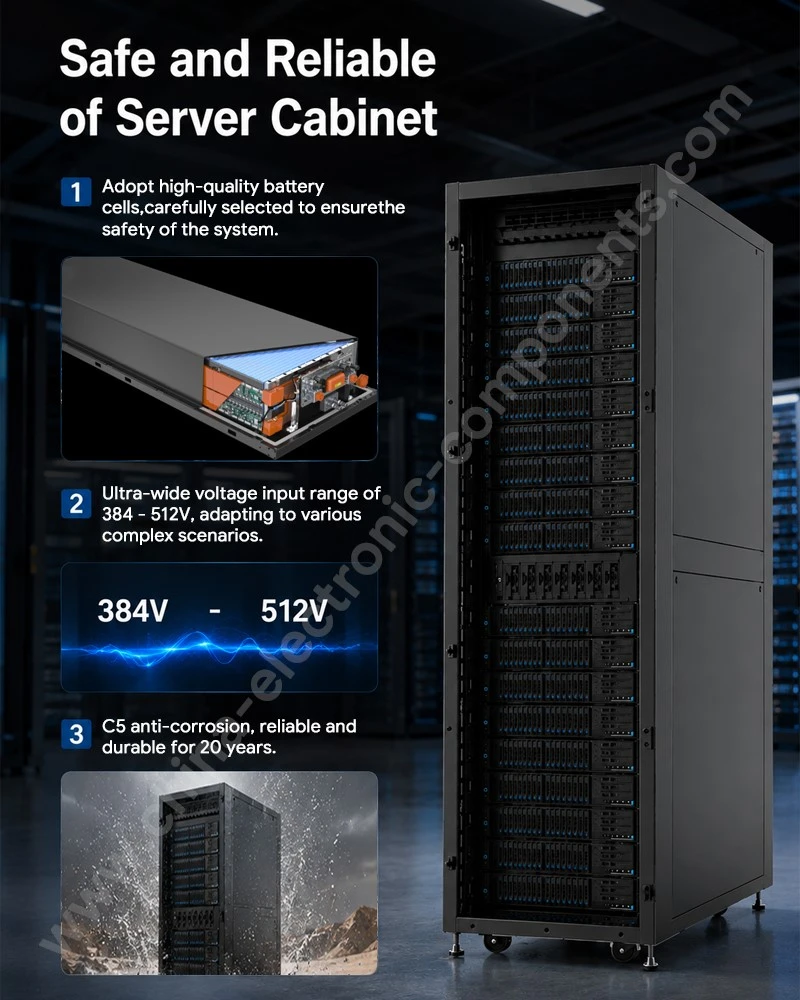
The lifespan of a wall-mount rack enclosure depends on the stability of its materials under the combined conditions of long-term static loading, humidity, and temperature fluctuations.
Cold-Rolled Steel Main Structure
The framework and door panels are constructed from cold-rolled steel, which offers excellent formability and dimensional stability. The bent edges provide high rigidity, preventing the thin sheets from creeping or deforming (denting) under long-term loads.
Galvanized Internal Components
Critical load-bearing parts-such as mounting posts and cable management accessories-are galvanized. This ensures that even cut edges and bends are protected against corrosion-areas that are often difficult to cover effectively with standard spray painting.
Phosphated and Electrostatic Powder-Coated Exterior
Surfaces undergo a phosphating pretreatment before coating to enhance adhesion. The resulting finish is both corrosion-resistant and wear-resistant, minimizing the risk of paint chipping or exposing the underlying metal during handling or cleaning.
Flame-Retardant and Low-Smoke Properties
Internal materials can be selected to meet data center fire safety and low-smoke requirements, reducing secondary risks in the event of a fire.
Frequently Asked Questions for server rack mount
Q1: What is a wall-mount data rack used for?
-
Wall-mount data racks are primarily used for installing and managing network switches, routers, patch panels, fiber optic terminals, and other small-scale IT equipment. They are ideal for environments with limited space, such as offices, low-voltage utility rooms, factories, and telecommunication nodes.
Q2: What is the difference between a wall-mount data rack and a floor-standing server rack?
-
Wall-mount data racks are secured to a wall or a vertical load-bearing structure, making them suitable for smaller, distributed network equipment deployments. Floor-standing server racks typically offer greater internal space and higher load-bearing capacity, making them better suited for data centers or server rooms that house a larger number of devices with more complex configurations.
Q3: Can a wall-mount server rack be customized?
-
Yes. Racks can be customized based on project requirements, including dimensions, depth, internal mounting rails, door types, ventilation structures, cable entry points, mounting hole patterns, and surface finishes.
Q4: How do I choose the right size for a wall-mount network cabinet?
-
It is recommended to first determine the number of devices, their physical dimensions, mounting requirements, cable connection orientation, and necessary space for heat dissipation. Based on these factors, you can then select the appropriate height, width, and depth for the cabinet. Additionally, consider the total weight of the equipment and the load-bearing capacity of the wall.
Q5: Can wall-mount data racks accommodate cooling fans and cable management?
-
Yes. Racks can be configured with fan mounting locations, ventilation vents, cable entry points, and internal cable management systems. The specific configuration should be determined based on the power consumption of the equipment, airflow paths, and on-site cabling requirements.
contact us
Rather than starting with unit prices, we prefer to work from three key inputs-your equipment list, wall conditions, and maintenance requirements-to design a wall-mounted solution that is easy to install, allows for efficient component spacing, and remains adaptable for future modifications. Share your site details when you reach out, and our engineers will provide a tailored configuration.
Hot Tags: Wall Mount Data Rack, Wall Mount Server Rack, Wall Mount Network Cabinet, Wall Mounted Data Cabinet, Wall Mount IT Cabinet, Computer Rack Cabinet, Enclosed Network Rack, Foor Standing Data Cabinet, Micro Center Server Rack, Vertical Network Cabinet, Wall Data Cabinet
You Might Also Like


Send Inquiry