




Copper Bus Bar For Alternative Energy
What is a Copper Bus Bar for Alternative Energy?

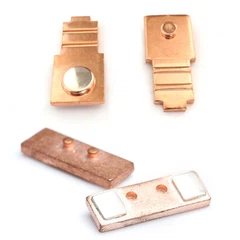
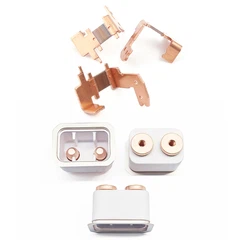
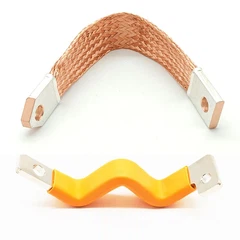
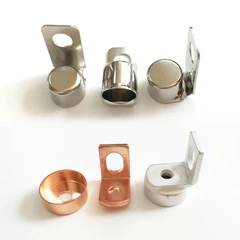
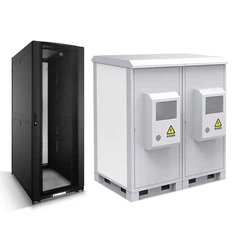
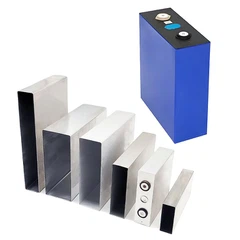
This Copper Bus Bar for Alternative Energy series encompasses both individual high-conductivity copper busbars and multi-layer laminated busbars, primarily serving applications such as high-power wind turbine converters, new energy storage systems (BSS), high-density server racks, and industrial-grade UPS systems.
Laminated Topology: The busbars utilize an alternating "conductor-insulation-conductor" stacked structure to maximize capacitance effects while minimizing loop area.
Precision Stamping and 3D Bending: Supports customized 3D forming with complex spatial routing, perfectly meeting the stringent tolerance requirements of compact enclosures.
Comprehensive Surface Finishing: Offers various surface protection options-such as tin, silver, and nickel plating-to effectively prevent electrochemical corrosion and increases in contact resistance in high-temperature, high-humidity environments.
Design Advantages of Laminated Bus Bar for Telecom Power Distribution
Simulation-Driven Approach
Conductor cross-section distribution is optimized via electromagnetic and thermal rise simulations during the project initiation phase, avoiding the over- or under-engineering often associated with "experience-based design."
Modular Interfaces
Standardized terminal interfaces and fool-proof positioning features allow for power module replacement without rewiring.
Lightweight Design
Topology-based material reduction is applied to non-critical areas-while maintaining necessary current-carrying capacity and structural strength-to reduce the weight of the nacelle.
Visual Identification
Phase sequence and circuit identifiers are etched onto each busbar, minimizing the risk of errors during installation and maintenance.

Laminated Bus Bar for Internet Router Backplane Manufacturing Advantages and Production Processes: Full Traceability at Every Stage
We adhere to the manufacturing philosophy that "process determines consistency." Our core production workflow comprises the following stages:
Blanking and Stamping
We utilize parallel production lines featuring CNC turret punch presses and laser cutting systems, balancing high-volume efficiency with the flexibility required for small-batch prototypes. Hole tolerances and bending dimensions are program-controlled to eliminate deviations associated with manual repositioning.
01
Bending and Forming
CNC bending equipment paired with specialized tooling ensures consistent bending angles across multiple production batches-a critical factor for seamless "plug-and-play" installation on automated assembly lines.
02
Insulation Processing
Dedicated lines handle heat-shrinking, plastic dipping, and powder coating. Coating thickness and dielectric strength are verified through batch sampling, with records of adhesion and breakdown voltage data maintained for traceability.
03
Brazing and Flexible Connection Assembly
Brazing operations joining copper foil flexible connectors to rigid busbars are performed by certified welders; weld penetration inspections ensure the integrity of the joints, guaranteeing freedom from cold joints or slag inclusions.
04
Final Inspection and Packaging
Finished products undergo comprehensive dimensional checks and electrical continuity testing. For overseas shipments, we employ moisture-proof film and custom foam inserts to prevent plating scratches or deformation during transit.
05

Frequently Asked Questions for DC and AC Laminated Bus Bar for Fork Lift Truck
Q1: Can you fully customize bending angles and hole positions based on our drawings?
-
Yes. Our busbars are fully customized products; we conduct a DFM (Design for Manufacturability) review based on the technical drawings provided by the client (supporting DXF, STEP, and PDF formats) before proceeding to mold creation and production. We also provide a first-article sample for client approval before mass production.
Q2: How do you ensure the low-temperature and salt-spray resistance of busbars for wind power applications?
-
We use low-temperature-resistant copper as the base material and apply a tin-plating finish to inhibit salt-spray corrosion. Weather-resistant coatings are selected for the insulation layer based on the installation location, and relevant environmental test reports can be provided upon request.
Q3: What is the minimum spacing between layers for laminated busbars? What is the typical lead time?
-
The interlayer structure is designed based on the type of insulation medium and voltage withstand requirements; specific parameters are evaluated based on the drawings. Prototyping lead times depend on product complexity, while mass production lead times are confirmed in writing following technical validation.
Q4: Do you offer small-batch prototyping? What is the MOQ?
-
We support small-batch prototyping for validation purposes. The Minimum Order Quantity (MOQ) is assessed flexibly based on product complexity; please include details regarding the project stage and estimated annual usage in your inquiry.
Q5: How do you handle export packaging and certification documentation?
-
Products are packaged to prevent moisture and oxidation. We can provide test reports, material certificates, and commercial documentation to meet the requirements of the destination country and support trade terms such as FOB and CIF.

contact us
If your new energy equipment project requires a stable and highly consistent Laminated Bus Bar for a compact IGBT DC Power supply solution, Apollo's engineering team can provide support-ranging from material selection and structural optimization to mass production-based on your electrical design requirements, helping to realize reliable power connection solutions for the new energy sector.

Hot Tags: Copper Bus Bar for Alternative Energy, Wind Power Copper Busbar, Renewable Energy Copper Bus Bar, Custom Copper Busbar Manufacturer
You Might Also Like


Send Inquiry