










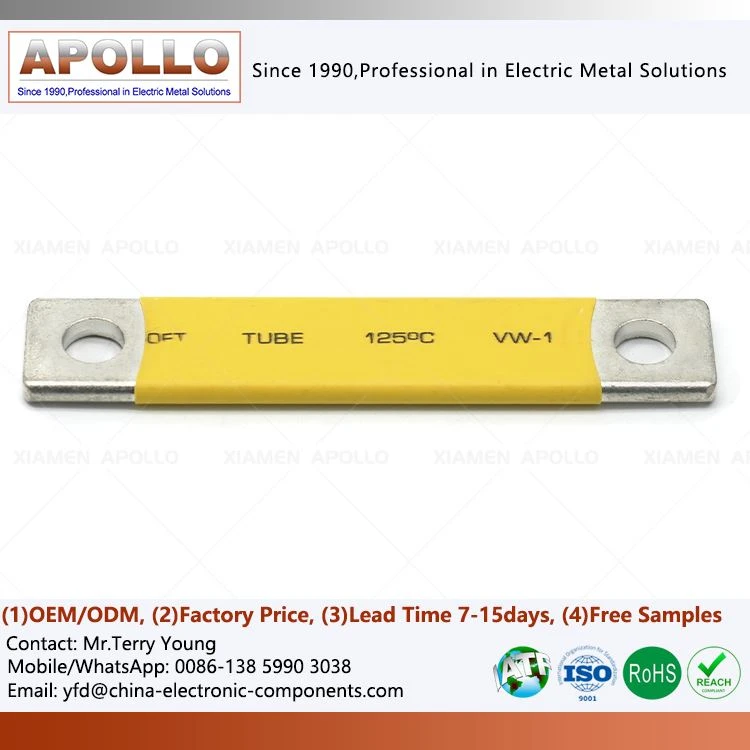
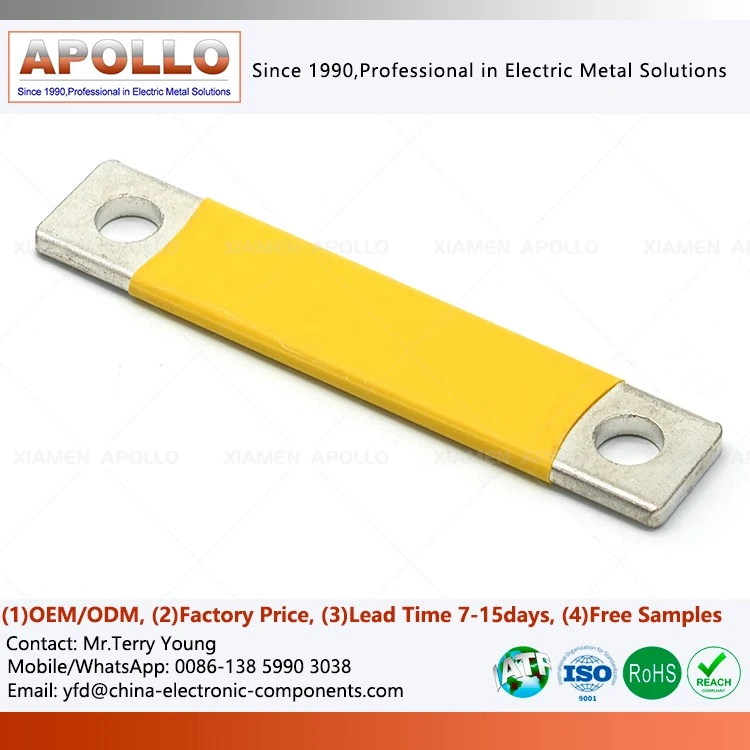
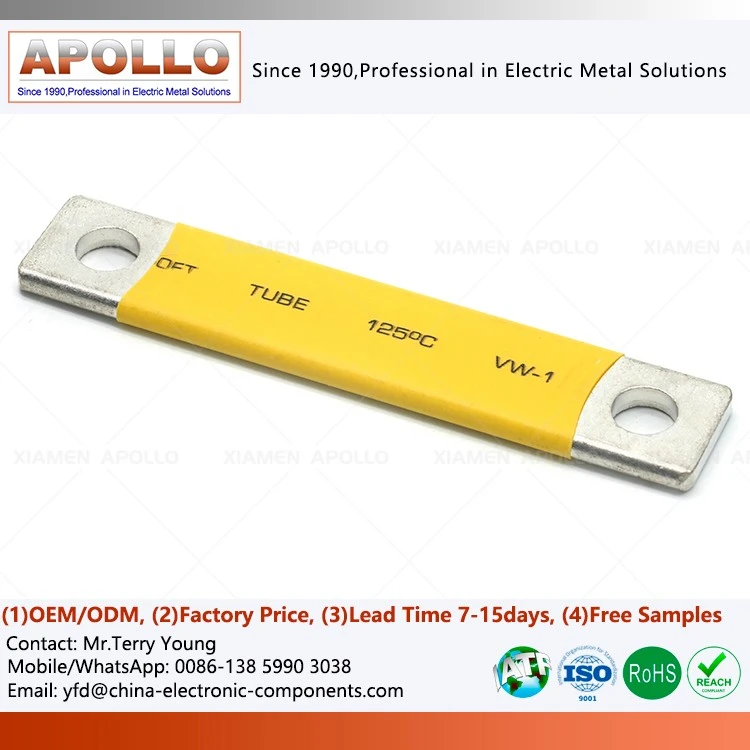
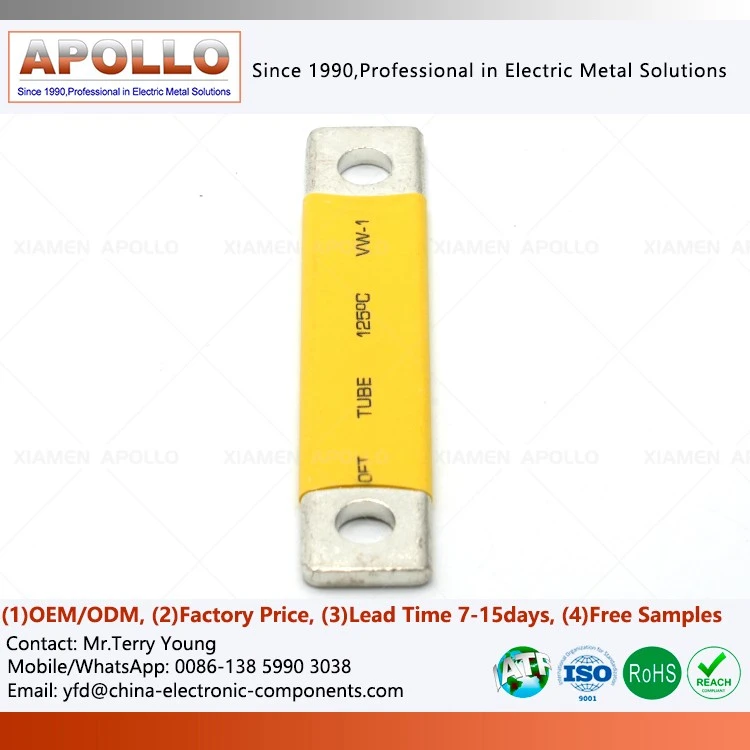
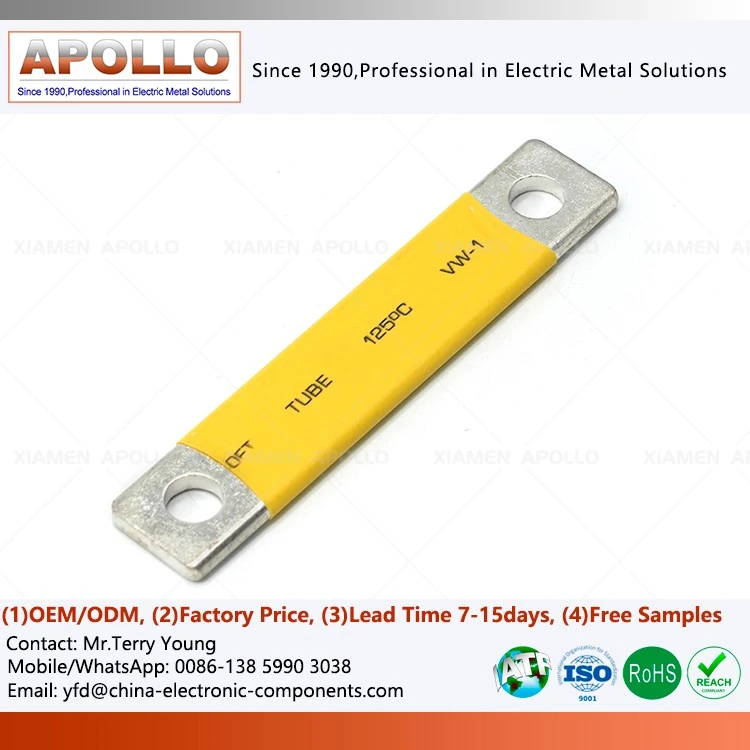
Insulated Heat-Shrinkable Copper Bars
What are insulated heat-shrinkable copper bars?
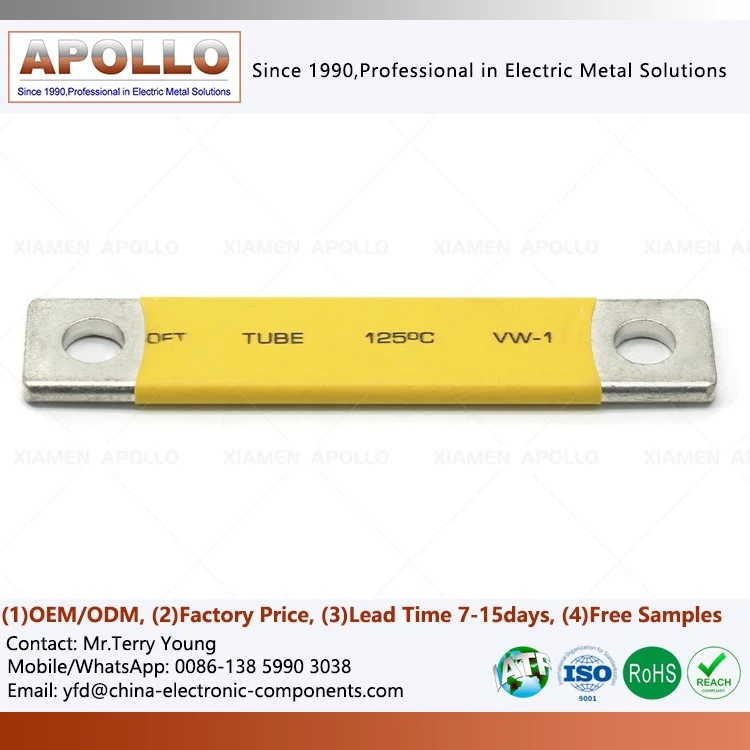
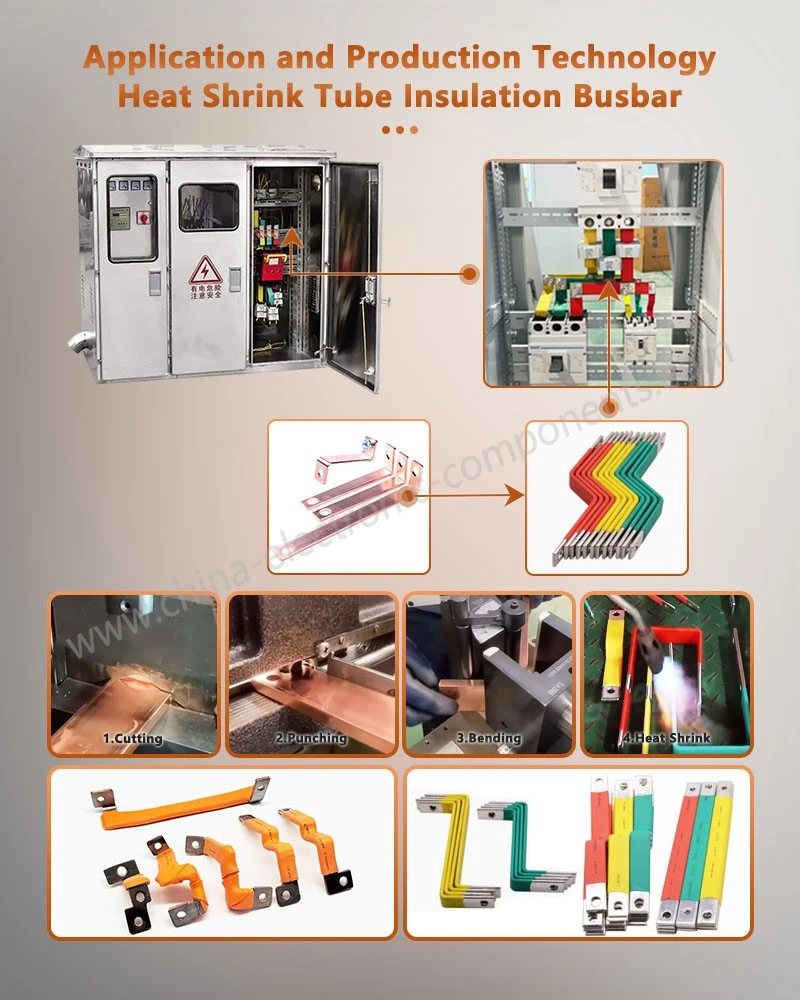
Insulated heat-shrinkable copper busbars are composite electrical connection components that integrate "conductive power transmission" with "high-level insulating protection."
Physically Integrated Design: The copper busbar and its heat-shrinkable insulating sleeve are precision-bonded or pre-shrunk at the factory, creating a tightly fitted, unified assembly. This eliminates common issues associated with traditional sleeving, such as slippage, air bubbles, or localized gaps.
High Dielectric Strength and Space Optimization: Exceptional insulating properties allow for a significant reduction in the required safety clearance between phases, enabling engineers to achieve higher-density layouts within space-constrained environments like switchgear cabinets or battery packs.
Environmental Adaptability and Long Service Life: Engineered for demanding industrial environments, these components offer superior resistance to UV radiation, chemical corrosion, moisture, and salt-spray erosion, ensuring long-term, maintenance-free operation.
Key Inspection Points for Buyers: What to Check on Samples
End-sealing
Examine whether the heat-shrink tubing provides uniform coverage where the conductor enters or exits. Determine whether the end is simply heat-shrunk or features an adhesive-lined, sealed structure. The ends are the primary point of vulnerability for moisture ingress.
Wall thickness consistency at corners and edges
Check for any visible, excessive thinning of the heat-shrink layer at right-angle transitions or chamfered edges. Corners are the first place where issues-such as poor control over the shrinking process-become apparent.
Longitudinal shrinkage and surface condition
A high-quality heat-shrink layer should have a smooth surface, free from wrinkles, localized scorching, or carbonization. Furthermore, longitudinal shrinkage should not result in insufficient coverage at the ends or significant displacement of color-coded markings.
Exposed conductive contact surfaces
Heat-shrink insulation must not cover the conductive contact surfaces used for bolted connections. The edge of the insulation layer should be neat and perpendicular to the axis of the busbar, ensuring it does not encroach upon areas intended for electrical contact.
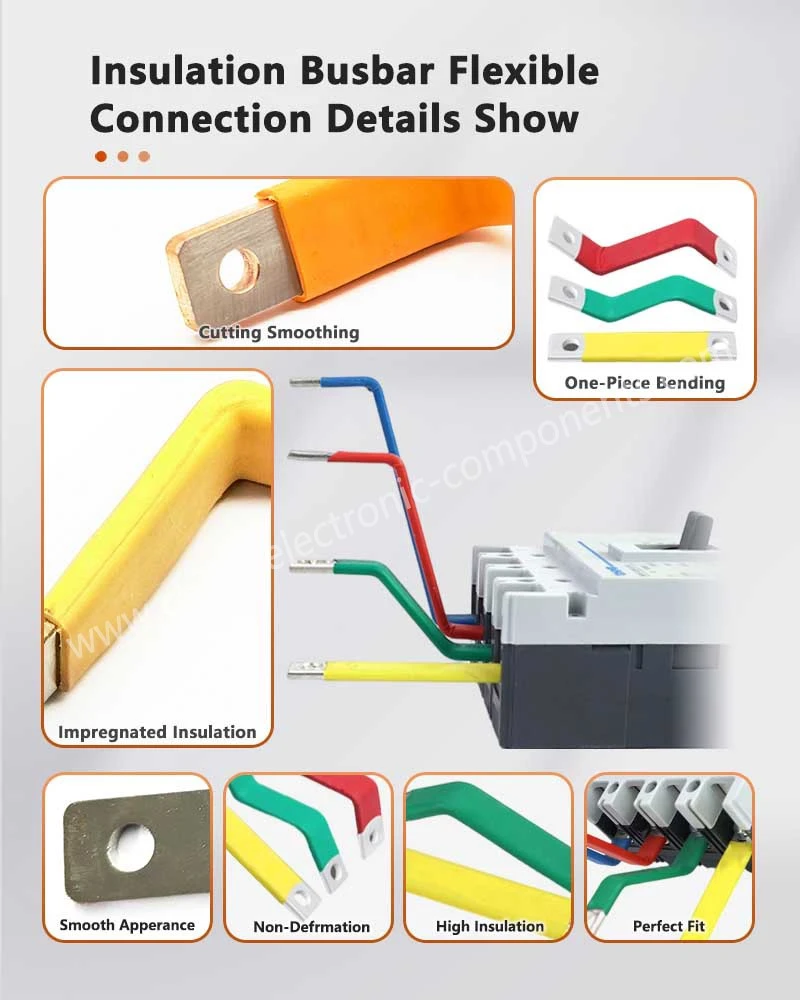
Manufacturing Strengths: Transforming "Processed Parts" into "Reliable Components"
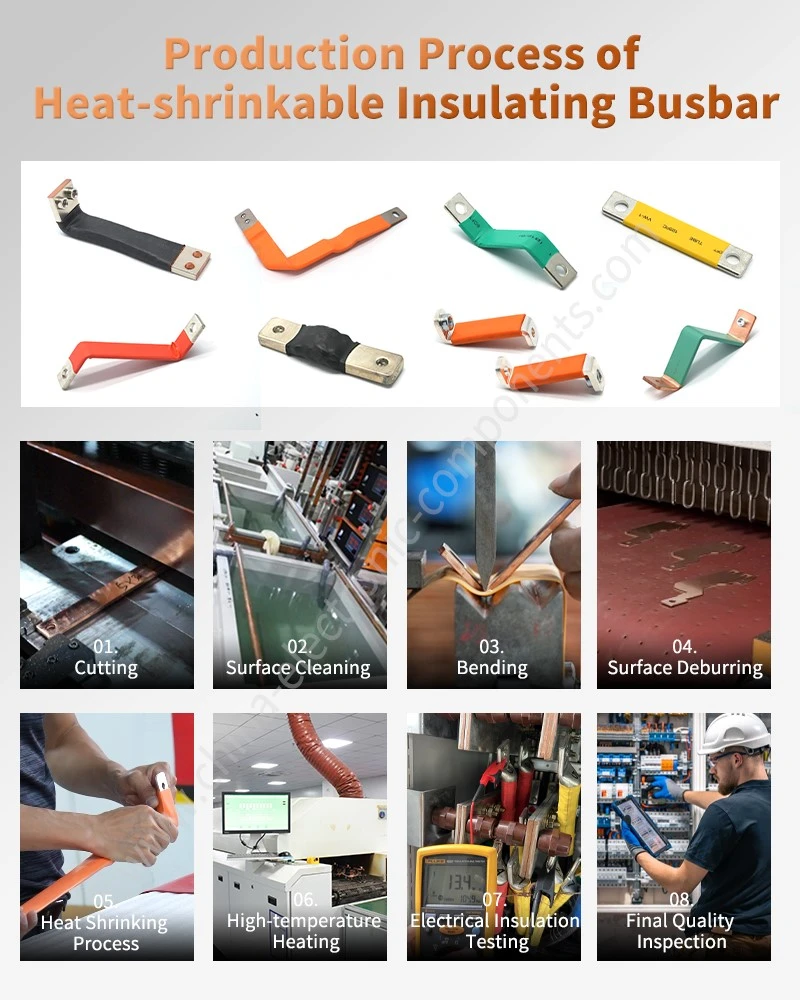
PVC Heat Shrinkable Sleeves for Busbars are products where "manufacturing determines quality"-process capability is even more critical than the raw materials themselves. Our manufacturing strengths lie in our ability to control the entire production process:
Copper Busbar Pre-treatment
After cutting, the busbars undergo leveling and stress-relief processes before punching and bending. This minimizes deformation and cracking caused by residual stress.
01
Edge and Hole Processing
All cut edges and hole perimeters are deburred and chamfered. This prevents sharp edges from damaging the insulation sleeve, which could otherwise lead to partial discharge risks.
02
Optional Surface Plating
Depending on the operating environment, conductors can be tin-plated or silver-plated. This improves contact resistance and corrosion resistance, making them suitable for coastal areas with high humidity or high salt-mist levels.
03
Sleeve Selection and Shrinkage
The wall thickness and shrink ratio of the insulation sleeve are precisely matched to the conductor specifications. Heating temperature and duration are strictly controlled to ensure a uniform coating-free of air bubbles, wrinkles, or edge lifting.
04
Comprehensive Inspection and Traceability
Every batch undergoes rigorous testing for electrical continuity, insulation, and visual quality. Inspection records are included with each shipment, ensuring full traceability.
05
Frequently Asked Questions for Heat Shrink Tube Copper Insulated Busbar
Q1: What are the fundamental differences between factory-applied heat-shrink insulated busbars and on-site heat-shrink application?
-
A: Factory-applied heat-shrink insulation is processed and inspected under controlled conditions, ensuring superior uniformity of the insulation layer and higher interface quality. In contrast, on-site application is more susceptible to variables such as equipment, environmental conditions, and operator technique, making it difficult to guarantee consistent results.
Q2: Can the busbars be custom-bent or left partially exposed to accommodate specific equipment layouts?
-
A: Yes. We can bend or punch the conductive copper busbars as needed. The heat-shrink-covered sections and the contact areas can be defined according to design requirements, allowing for either full insulation or specific exposed (uninsulated) zones.
Q3: Will the heat-shrink tubing loosen or develop gaps during long-term operation?
-
A: When the correct materials are selected and the proper heat-shrink process is applied, the tubing adheres tightly to the copper surface. It is unlikely to loosen under normal thermal expansion and contraction cycles. Success depends on rigorous process control and high-quality surface preparation.
Q4: What voltage and current ratings are these products suitable for?
-
A: Suitability depends on factors such as the copper busbar cross-section, the material and wall thickness of the heat-shrink tubing, and specific system design requirements. We recommend selecting and verifying products based on actual voltage, current, temperature rise, and insulation coordination needs.
Q5: What should be prioritized when evaluating samples?
-
A: When evaluating samples, focus on the uniformity and adhesion of the insulation layer, the quality of the end-treatment, the precision of the fit during assembly, the clarity of markings, and the actual performance under simulated installation conditions-rather than relying solely on nominal specifications.
contact us
If you are planning a project for a next-generation high-voltage power distribution or new energy power system, please click the button below to submit your design drawings and technical specifications. Leveraging our extensive custom manufacturing expertise, our senior engineering team will provide an efficient, reliable Heat Shrink Tube Insulation Copper Busbar solution that delivers exceptional value throughout its lifecycle.
Hot Tags: Insulated Heat-Shrinkable Copper Bars, Heat Shrink Insulated Copper Busbar, Insulated Copper Busbar, Copper Busbar with Heat Shrink Sleeve, Busbar Epoxi Powder Coating, Busbar Insulation Paint, Insulated Busbar Pin Type, Insulation Coating Busbar, PA66 Plastic Insulation Busbar, PE Heat Shrink Tube Insulated Busbar
You Might Also Like


Send Inquiry