












Busbar Automotive
Product Overview
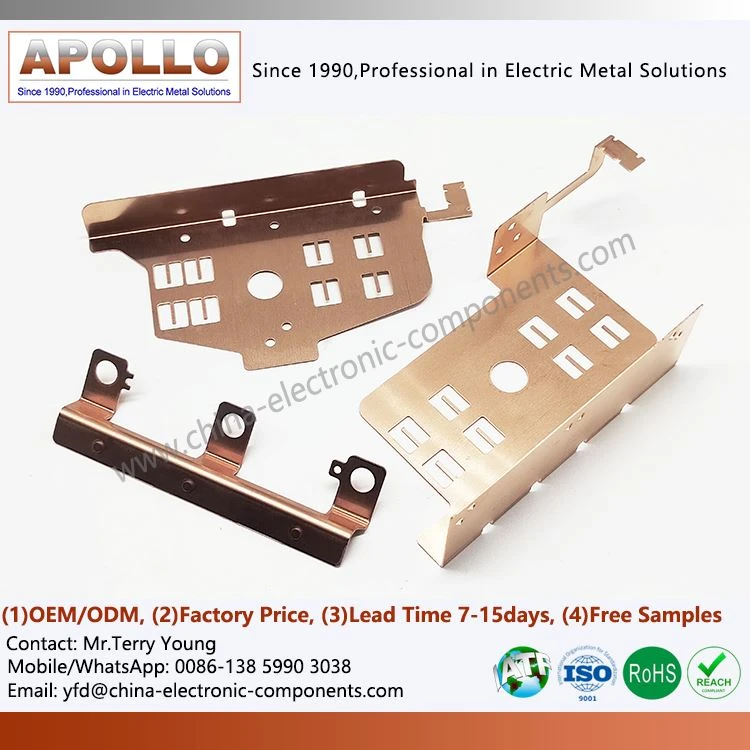
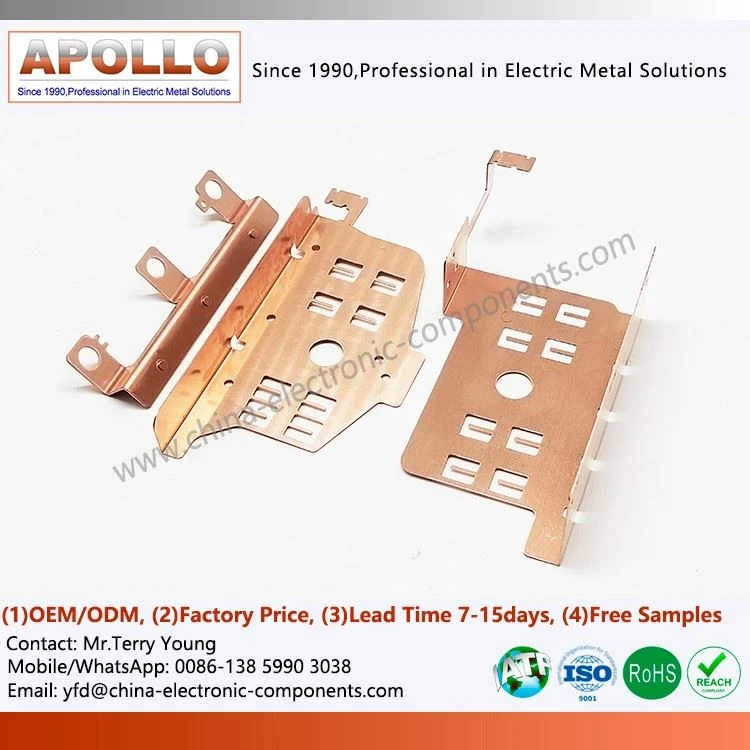
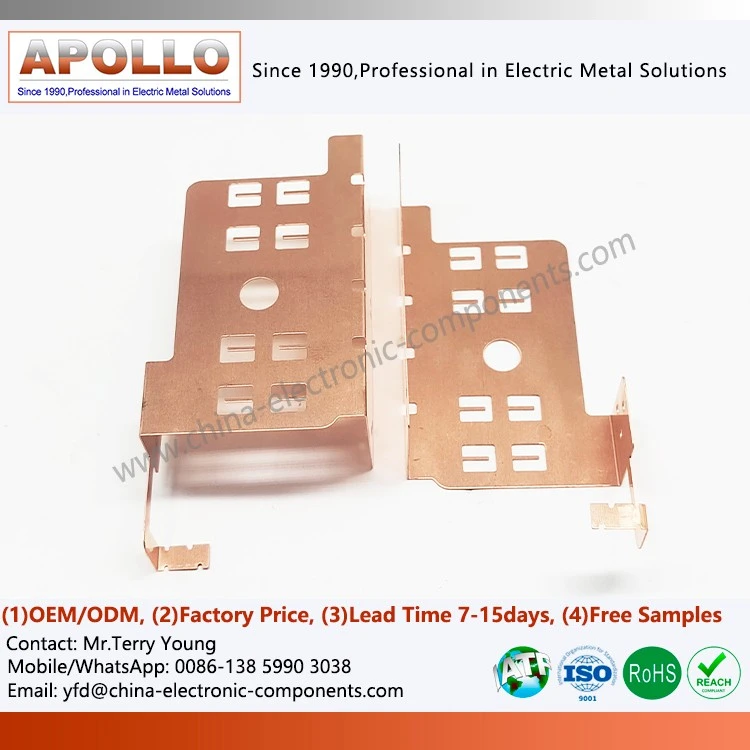
The Busbar Automotive is a multilayer conductive interconnect designed for EV inverter systems, film capacitor modules, battery energy storage equipment, and high-frequency power conversion assemblies.
Unlike conventional copper bars or cable harnesses, this laminated busbar structure integrates multiple conductive layers and insulation films into a compact, low-inductance assembly. The structure is optimized for high-current DC transmission between film capacitors, IGBT modules, SiC power devices, and inverter terminals.
This product is commonly used in:
EV inverter DC-link systems
Film capacitor connection assemblies
Motor controller power distribution
Battery energy storage converters
High-voltage DC power modules
Automotive power electronics platforms
Product Structure and Design Features
1. Multi-layer Composite Structure Design
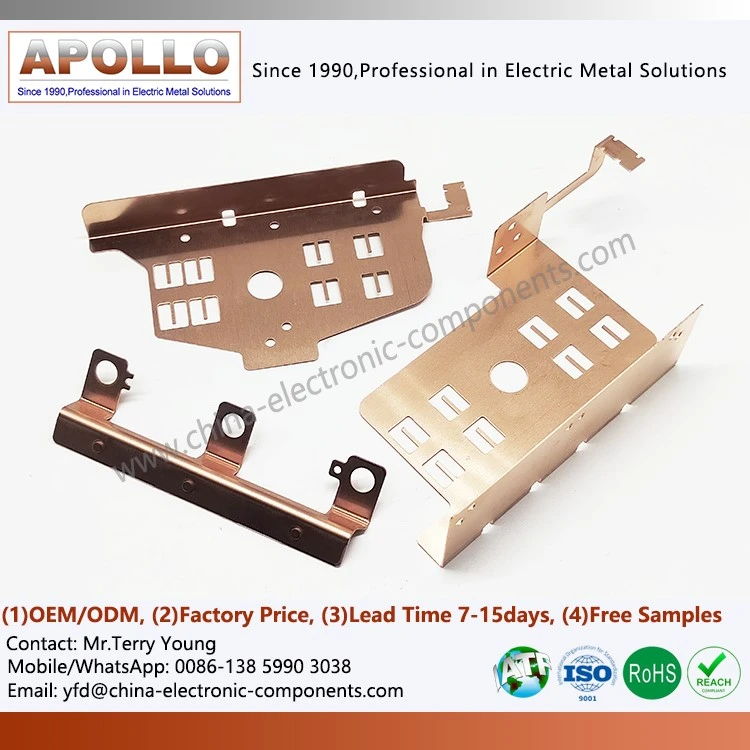
Conductor Layer: Utilizes high-purity copper or aluminum strip, formed into a customized shape through precision stamping, bending, and welding processes;
Insulation Layer: Optional epoxy powder coating, PET film coating, heat shrink tubing coating, etc., ensuring high pressure resistance;
Connection Terminals: Supports various forms such as bolted connections, plug-in ports, and laser-welded ports;
Protective Layer (Optional): The surface can be coated with a wear-resistant or corrosion-resistant coating to improve environmental adaptability.
2. Modularization and Customization
We can provide customized designs based on customer circuit layout, installation space, and heat dissipation requirements, supporting:
Customized bending angle, thickness, number of layers, and hole positions;
Integrated sensor interface or current detection module;
Adaptation to different voltage levels (400V/800V systems);
Compatible with various mainstream power battery and control unit platforms.
3. Thermal Management Optimization
Through finite element thermal simulation analysis (FEA) and copper-aluminum hybrid EV Bus Bars design, a better heat diffusion path is achieved, effectively reducing local heat generation and power loss, ensuring stable vehicle operation under high loads.
Material Advantages – Combining High Conductivity and Lightweight Design
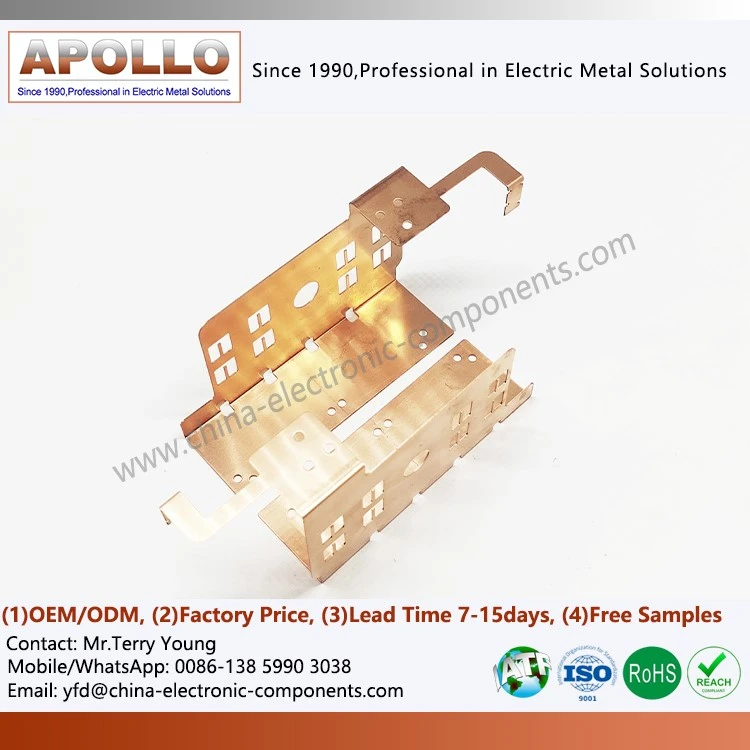
1. High-Purity Electrolytic Copper (T2 / C1100)
High conductivity up to 99.9%, extremely low resistance loss;
High surface finish, facilitating welding and insulation coating;
Excellent corrosion resistance and mechanical strength.
2. Composite Materials (Copper-Aluminum Composite Copper Busbar for DC link EV Film Capacitor)
Combining the conductivity of copper with the lightweight advantages of aluminum;
Achieving a strong bond using friction welding, diffusion welding, or explosive welding techniques;
Achieving a 30%~40% weight reduction while maintaining high conductivity.
Apollo offers a variety of material options to meet the needs of different vehicle models, helping customers achieve the optimal balance between conductivity efficiency, cost control, and lightweight goals.

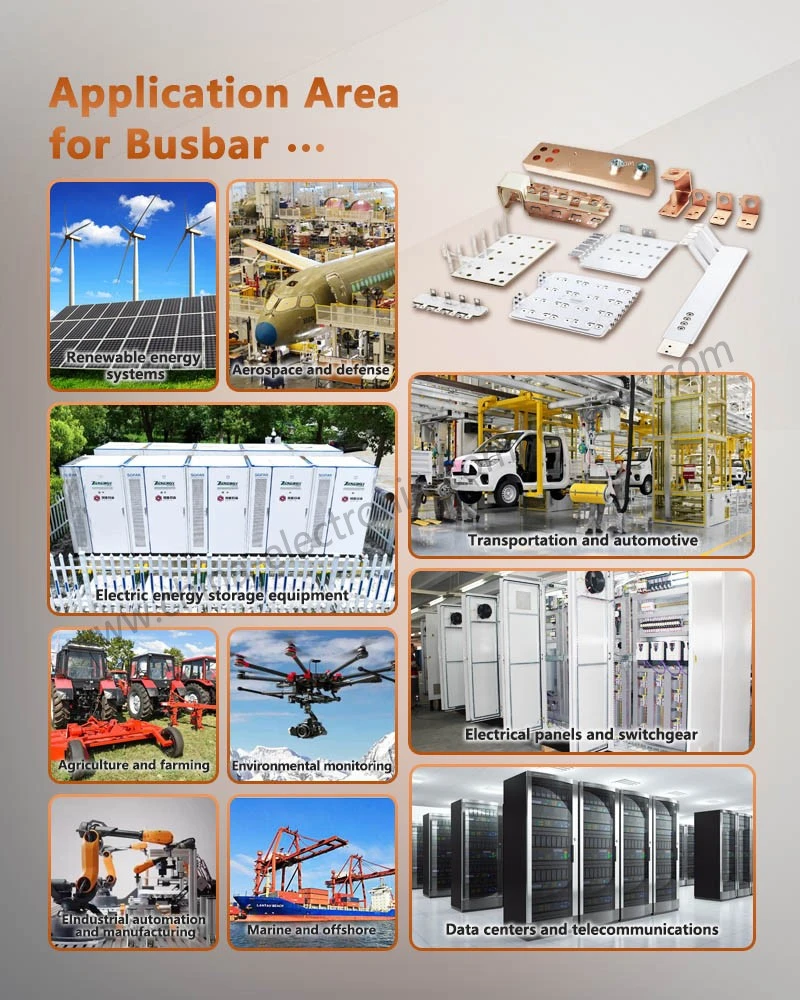
Application Areas
Battery Modules and Pack Systems
Used to connect high-voltage ports within battery cells, modules, and the battery pack, ensuring uniform current distribution and low-loss conduction.
01
Electric Drive Systems and Inverters
High-voltage Copper Busbar for Electric Vehicle Capacitors efficiently transmits power current to the drive motor, ensuring stable and reliable power output.
02
On-Board Charging Systems (OBC)
Copper Busbar for Hybrid Electric Vehicles. Film Capacitors enable efficient switching between charging and discharging paths, improving charging safety and efficiency.
03
High-Voltage Distribution Units (PDUs/DCUs)
These distribute and protect high-voltage power in the vehicle's electrical system, serving as a critical hub for system safety.
04
Extensions to Energy Storage and Charging Facilities
Apollo Film Capacitor Copper Busbar for Electric Vehicles technology is also widely used in Battery Energy Storage Systems (ESS), charging piles, and power control cabinets, providing a unified power connection standard for the entire new energy industry chain.
05
FAQ
What is the main advantage of a laminated busbar compared with cable wiring?
A laminated busbar reduces loop inductance, shortens conductive paths, improves assembly compactness, and provides better electromagnetic compatibility in high-frequency power systems.
Which applications commonly use automotive laminated busbars?
They are commonly used in EV inverter systems, DC-link capacitor modules, battery energy storage systems, and motor control assemblies.
What insulation materials are used in laminated busbars?
Common insulation materials include PET, PI, and PEN films, depending on temperature and voltage requirements.
Can the busbar structure be customized?
Yes. Conductor thickness, layer count, terminal structure, insulation materials, mounting holes, and conductive routing can all be customized according to project requirements.
contact us
Hot Tags: busbar automotive, China busbar automotive manufacturers, suppliers, factory, electrical busbar, Busbar Automotive, ev capacitor busbar, Film Capacitor Busbar, EV BusBar, Automotive Battery Terminal Bus Bar
You Might Also Like


Send Inquiry