



How much do you know about brazing that is used in welding
Mar 24, 2026
Leave a message
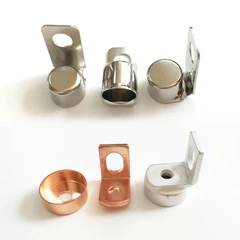
Soldering is a type of welding method in which a filler metal with a lower melting point than the workpiece is simultaneously heated to the melting temperature of the filler metal, and the gaps in the solid workpiece are filled with the liquid filler metal to connect the metals. During the soldering process, it is necessary to first remove the oxide film and oil stains on the contact surface of the base metal to facilitate the functioning of the capillary tubes after the filler metal melts, thereby increasing the wettability and capillary fluidity of the filler metal. Depending on the melting point of the solder, soldering is divided into hard soldering and soft soldering, and this process is also commonly used for reliable connection of Welded Brass Terminal Assemblies.
The brazing process results in minimal deformation and a smooth, aesthetically pleasing joint, making it suitable for welding components with high precision, complex structures, and composed of different materials, such as honeycomb structure plates, turbine blades, hard alloy tools, and printed circuit boards. Before brazing, the workpieces must be carefully processed and thoroughly cleaned to remove oil stains and thick oxide films, ensuring the assembly gap at the interface. The gap is typically required to be between 0.01 and 0.1 millimeters, and this precision requirement also applies to the production and processing of Welded Brass Wall Switch Contacts.
Compared to fusion welding, in brazing, the base material does not melt, only the filler metal melts;
Compared to pressure welding, in brazing, no pressure is applied to the weldment during the process, and this characteristic makes brazing a commonly used forming process for Precision Welding for Brass Parts.
The weld formed by brazing is called a brazed joint.
The filler metal used for brazing is called brazing filler metal. Reasonable selection of the filler metal can effectively enhance the conductivity and connection performance of Welded Brass Socket Contacts.
The surface-cleaned workpieces are assembled together in a lap joint configuration, with the brazing filler metal placed near or between the joint gap. When the workpiece and the solder are heated to a temperature slightly above the melting point of the solder (the workpiece does not melt), the solder melts (the workpiece does not melt), and through capillary action, it is drawn in and fills the gap between the solid workpiece, the liquid solder, and the workpiece metal. After condensation, it diffuses and dissolves, forming a brazed joint. Custom Brass Welded Components often use this process for assembly.

Soldering is not suitable for welding ordinary steel structures and heavy moving parts. It is mainly used for precision instruments, electrical parts, dissimilar metal parts and complex thin plate structures, such as sandwich structures and honeycomb structures, as well as for soldering various different wires and hard alloy tools. It is also the core processing method of Welded Brass Terminal Assemblies. During the soldering process, the contact surfaces of the parts to be soldered are cleaned and then assembled in an overlapping manner. The soldering filler metal is placed near the joint gap or directly in the gap. When the parts and the solder are heated to slightly above the melting temperature of the solder, the solder melts and wets the surface of the parts. The liquid solder flows and diffuses along the joint through capillary action. Subsequently, the solder dissolves and penetrates the base material to form an alloy layer, which then solidifies to form a solder joint.
Soldering has been widely used in departments such as machinery, motors, instruments, and radio, for example, hard alloy cutting tools, drills, bicycle frames, heat exchangers, pipes, and various containers. In the electrical accessories field, it is an indispensable connection process for Brazed Contact Assemblies. Soldering is even the only feasible connection method for manufacturing microwave waveguides, vacuum tubes, and electronic vacuum devices.
Application Features
(1) The brazing heating temperature is low, resulting in smooth joints, minimal changes in structure and mechanical properties, small deformation, precise workpiece dimensions, and it can meet the strict dimensional accuracy requirements of Resistance Brazing Electrical Contacts.
(2) The same metal can be welded, and different materials can also be welded. There are no strict limitations on the thickness difference of the workpiece, which is suitable for the structural characteristics of the multi-material combination of Low Voltage Electrical Contacts.
(3) Some brazing methods can simultaneously weld multiple components and multiple welding joints, resulting in high production efficiency and enabling efficient mass production of Spot Welding Assemblies.
(4) The brazing equipment is simple, the production investment cost is low, which is conducive to controlling the overall manufacturing cost of Welded Brass Wall Switch Contacts.
(5) The welding joint has low strength and poor heat resistance. The pre-weld cleaning and treatment are strict, and the solder price is expensive. When designing Precision Welding for Brass Parts, these factors need to be comprehensively considered.

The characteristics of brazing
Firstly, the joint surface is clean and sealed, with stable shape and size. The microstructure and properties of the welded components are minimally affected. It can connect the same or different metals and some non-metals, and is highly suitable for the performance requirements of Welded Brass Terminal Assemblies. Brazing can heat the entire workpiece, complete multiple weld seams in one operation, and has high productivity. However, the weld strength is relatively low. Usually, lap joints are used, and the strength is increased by increasing the lap length; in addition, the pre-preparation requirements before welding are relatively high.
Secondly, the solder melts while the workpiece does not. To achieve a secure connection and enhance the adhesion of the solder, a flux must be used during brazing to remove the oxides on the surface of the solder and the workpiece. Hard brazing filler metals (such as copper, silver, aluminum, nickel, etc.) have high strength and can be used to connect load-bearing components, are widely used, and can also be used to strengthen the structural strength of Precision Welding for Brass Parts. Soft brazing materials (such as tin, lead, bismuth, etc.) have lower welding strength and are mainly used for non-load-bearing but well-sealing workpieces, such as containers, instrument components, etc.
Soldering uses alloys with a melting point lower than that of the base material as the solder. During heating, the solder melts and fills and remains in the joint gap through wetting and capillary action. The base material remains in a solid state, and the interdiffusion between the liquid solder and the solid base material forms Custom Brass Welded Components. This method has little impact on the physical and chemical properties of the base material, results in low welding stress and deformation, can weld dissimilar metals with significant differences in welding properties, can complete multiple welds simultaneously, and the joint appearance is neat and beautiful. The equipment is simple and the production investment is small. However, the weld joint strength is low and the heat resistance is poor.
Product Recommendation
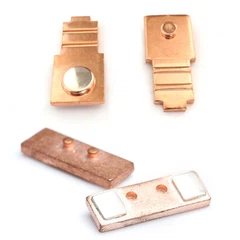
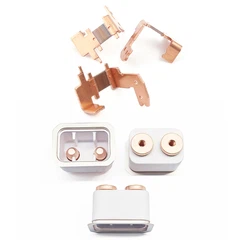
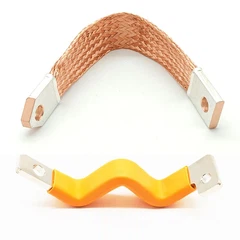
The Welded Brass Terminal Assemblies we have launched strictly adhere to the core standards of brazing. They are made of high-quality brass materials and compatible brazing materials, with precise control over the joint gap and welding temperature. They possess excellent conductivity, sealing performance, and structural stability, and are suitable for various fields such as precision instruments and electrical equipment. They can be customized according to actual scenarios.

contact us
If you have any questions about the specifications, customization requirements, or order intentions regarding our Brazed Contact Assemblies, please feel free to contact us at any time. We will provide you with professional solutions and considerate services.

Send Inquiry